Chuck Carnevale provides an update on Medical Properties Trust (MPW), a hospital real estate investment trust (REIT) he has held for several years.
NATO's new spending pledge eases security concerns but adds to fiscal pressures.
Unlike us mere mortals, time is usually on Tesla Inc.’s side. The launch of its robotaxi service this week has inverted that, and at a moment of particular weakness for the company.
Money Metals Midweek Memo host Mike Maharrey isn’t buying the recent bearish turn in gold forecasts from Wall Street.
There’s plenty of talk about how India’s 600-million-strong workforce gives it a unique edge in the US-China spat over trade and technology.
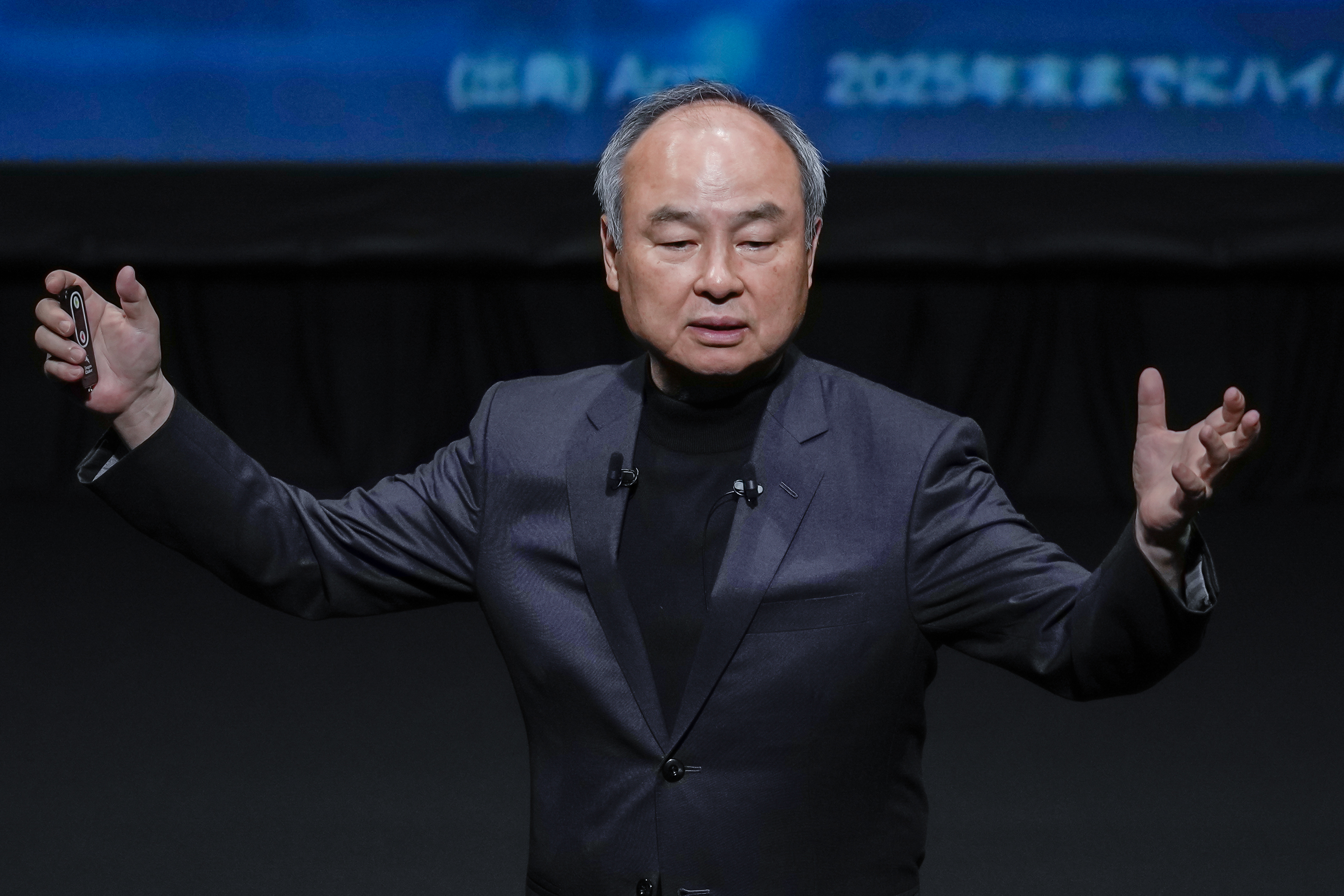
Masayoshi Son acknowledged the outlines of a succession plan at SoftBank Group Corp., addressing what may be investors’ single biggest concern regarding the long-term future of the Japanese company.
The newest generation of college graduates will switch jobs more than a dozen times over the course of their careers. They will juggle side gigs, launch businesses, and step in and out of traditional roles.
The dollar fell and US Treasuries rallied after a report that President Donald Trump is considering naming Federal Reserve Chair Jerome Powell’s successor well before the incumbent’s term is scheduled to end next May.
It wasn’t too long ago that you could confidently proclaim that most of the Street was ebullient, maybe even wildly so, with respect to the greenback’s prospects.
It's not often that UK stocks are singled out as a "favorite geopolitical hedge," as Citigroup Inc. strategists boldly stated last week. So perhaps the elegant stance would be to simply take the rare praise when it's so kindly offered.
Tensions in the Middle East and their effect on oil prices have dominated the recent news headlines—and for good reason. A rise in oil prices, especially if it lasts, can push up inflation and slow down economic growth.
It’s said nothing in life is certain save death and taxes. There is also certainly an increase in investors’ appetites for nontraditional instruments like hedge funds as their wealth grows.
While both valuation and technical factors suggest to us that the dollar may continue to weaken in the near-term, we would caution investors against reading too much concerning the US’ long-term economic stability into further dollar weakness.
If you are considering merging or acquiring another practice, consider having each party answer some of the following questions to see where you both stand.
Just when the International Monetary Fund sees slower growth around the globe, the economy the World Bank ranks 112 out of 196 based on gross domestic product is leading everyone – with the opposite outlook.
One of Europe’s largest pure-play banks, which is controlled by members of Qatar’s ruling family, is expanding a partnership with BlackRock Inc. to bolster its investing services.
The recent decline in the dollar relative to other currencies is well within historical norms. Notably, previous declines were much larger without the “fear-mongering” from the “experts of doom.”
Investors have been waiting years for the chance to buy a stake in hedge fund Millennium Management.
When navigating the unknown, an experienced guide can ensure you don’t veer off the path to your chosen destination, can prevent you from stumbling over hazards, and ensure you have the tools you need to finish the journey safely and soundly.
The U.S. Dollar Index, when measured against a basket of other major currencies, has declined by approximately 10% this year through mid-June and is currently trading at its lowest level in three years.
Like all appetites, the consumer typically reaches some point of appeasement. That could be the case for central bank gold purchases, which have started to show signs of receding. But market experts do not see it faltering anytime soon.
Looking back on it, the first quarter of the year was a complete anomaly. Real GDP declined at a 0.2% annual rate, and the left side of the political spectrum said this proved current policies were a disaster.
Given the uncertainty of future events, global investors seek a “safe haven” for investment dollars. As such, U.S. Treasury Bonds and the U.S. dollar appreciate given their perceived “financial safety.” Last week, global investors were already starting to make that shift with the dollar rising.
529 plans are a popular choice among families looking to save for college due to their flexibility and tax benefits. However, each family’s educational journey and associated costs can vary significantly. This means you may require a tailored savings strategy to best meet your future student’s needs.
With the House passing of The Big Beautiful Bill, the challenges facing chief financial officers and treasurers across health-care systems are likely to grow. The proposed cuts to reimbursements will have varying impacts across organizations depending on their payer mix.
After running a surplus in April thanks to tax day, the federal government was back to business as usual in May, spending massive amounts of money and charting another big budget deficit.
A 529 plan is a popular tool for saving for college expenses. When it comes to who maintains control over the 529 plan’s assets, in most cases, it’s the account owner. This is often a parent or grandparent. The owner also has the ability to make investment choices and manage withdrawals.
When planning for future financial needs, take the time to understand the key differences between a 529 plan vs. IUL insurance. Both are valuable tools, but they serve different purposes and offer unique benefits.
Nvidia Corp. billionaire boss Jensen Huang, clad in his signature leather jacket, has been crisscrossing European capitals and sharing the stage with the likes of Keir Starmer and Emmanuel Macron as he pitches “sovereign” artificial intelligence, a vision of new data centers offering essential compute power within national borders rather than via dominant tech firms from abroad.
Blackstone Inc. sees a $200 billion investment opportunity in European credit over the next 10 years, underscoring the region’s appeal to investors looking for alternatives to the US.
For more than two years, conversations about the biggest, most important technology companies have revolved around the same seven stocks. Now, some on Wall Street are making the case that Broadcom Inc. should be part of that discussion.
The first half of the year has left investors with many questions about the path ahead for the economy and markets. Unfortunately, there haven’t been many concrete answers. Tariff announcements and trade negotiations have commanded the room.
The Iran-Israel conflict and equity markets are now in sharp focus. As direct strikes escalated in June 2025, global financial markets responded immediately. Israel’s airstrikes on Iranian nuclear and energy infrastructure triggered retaliatory missile and drone attacks from Iran.
Smart beta strategies have endured a prolonged stretch of disappointing results, falling short of investor expectations. This article explores the underlying causes of that performance and outlines why the conditions ahead could be more favorable.
A 529 plan can influence financial aid eligibility and the amount awarded. While these savings plans arevaluable for covering education expenses, they are considered parental assets on the Free Applicationfor Federal Student Aid (FAFSA).
A record share of the world’s central banks plans to accumulate more gold over the next 12 months, drawn by bullion’s performance during times of crisis and protection against inflation.
President Donald Trump’s announcement on Wednesday of a new trade agreement with China is the kind of headline that gives markets a sense of relief. As I overheard this week at Wealth Management’s EDGE conference, which I attended in Boca Raton, Florida, we may have dodged a recession.
Venture capitalists are betting on a product that’s close to their hearts: software for venture capitalists. Juniper Square Inc., a software provider for VCs and other private investors, has raised $130 million in a deal that values the company at $1.1 billion.
Lately, the “deficit narrative” has dominated much of the financial media, particularly those channels that are continual “purveyors of doom.” In this post, we will discuss the “deficit narrative,” the likely outcomes, and why the cure for the deficit may be found in Artificial Intelligence.
A 529 plan can play a strategic role in estate planning, especially for families looking to reduce taxes while saving for education. Contributions to a 529 plan may be excluded from your taxable estate, potentially lowering future estate tax liability.
Alex Veroude, Global Head of Fixed Income, believes fixed income investors can prepare for an uncertain journey by recognising trends and diversifying across different assets.
In this video, Chuck Carnevale, co-founder of FAST Graphs, aka Mr. Valuation presents a detailed analysis of Enterprise Products Partners (EPD), a midstream master limited partnership (MLP) known for its high income potential, offering investors a stable and growing dividend yield.
Gold plays a distinct role in the global monetary system. Simply put, it’s perceived as money, and its function as a store of value makes it arguably the world’s most popular hedge against inflation.
Head of EMEA and Asia Pacific Equities Lucas Klein and Head of Americas Equities Marc Pinto argue that progress on the trade impasse, further monetary easing, pro-growth reforms, and an innovation revolution should all prove supportive to equities over the mid term once the market moves past near-term volatility.
BlackRock Inc., the world’s largest asset manager, boosted its annual revenue target for 2030 and set its first-ever firmwide target for private-markets fundraising at $400 billion by then.
While crypto’s roots are libertarian and anti-state, stablecoins could serve to entrench the existing tech and monetary order dominated by the US, as 95% of them are dollar-denominated.
The first half of 2025 has been driven by headlines that have caused volatility in both the stock and bond markets. While tariff negotiations have commanded the most attention, we are now pivoting to the federal budget deficit, which feels like a perpetual headline over the last 15 years.
A new culture of reform at Japanese companies offers exciting potential for equity investors.
US Treasuries surged as easing US consumer inflation prompted traders to increase their wagers on more than one Federal Reserve interest-rate cut this year.
Underlying US inflation rose in May by less than forecast for the fourth month in a row, suggesting companies are largely holding back on passing higher tariff costs through to consumers.