For those who believe that the surge of interest in warehouse automation and robotics was just a pandemic fling that will fade as the labor market loosens, meet Malcolm Wilson.
“The Godfather” has a quote for everything. Maybe, just maybe, it was Putin all along. Or perhaps its was Nikolai Kondratiev.
Don’t get me wrong — this economy is proving hard to understand. It is very strong in some respects and very weak in others.
Given all the confusion in the world around COVID, supply chains, inflation dynamics and war, there are lots of potential externalities that could resolve themselves unexpectedly.
The Northern Trust Economics team shares its outlook for key markets in the month ahead.
In the face of what was the largest first half decline in the S&P 500 since 1970 and the worst ever start to a year for high yield bonds, short duration credit was not immune
President Joe Biden’s signing of the Inflation Reduction Act on Tuesday caps nearly two years of efforts to pass sweeping climate legislation. But the real work is just getting started.
Nearly a year ago, when US Federal Reserve Chair Jerome Powell delivered his speech at the annual economic conference in Jackson Hole, a global audience was hanging on every word for insights into the outlook for growth, inflation and monetary policy in an extremely uncertain environment.
US retailers that stockpiled goods to cushion against supply-chain snarls are finding inventory reduction to be challenging and costly as American households start to pull back from a two-year spending spree.
If Wall Street is right, the big revival in value investing in the post-lockdown era is in danger of falling apart all thanks to the resurgent bond market.
“It is not true that we need to gut our environmental protections in order to scale up green energy,” said Mahyar Sorour, deputy legislative director for Beyond Dirty Fuels at the Sierra Club. And thus goes the next chapter in the political war over whether and how the United States will join the battle against climate change.
Federal Reserve policy makers don’t have an explicit target for US stocks or consumer borrowing costs, but they know something’s off when they see it, and there’s a chance that now is one of those times.
U.S. stocks are subdued following yesterday’s release of the minutes from the Fed’s July monetary policy meeting.
The stores ended up with too many goods that consumers didn’t buy as they shifted their spending to travel and leisure, or got squeezed by inflation.
It is my belief that the bear market is over.
The market contraction presents better opportunities than we’ve seen in years to generate income, which we balance against the need for resilience in the face of a potential recession.
As prologues go, the first six months of this year have been a doozy.
Graphite is a key part of today’s electric vehicle batteries. It’s also tricky for Americans eyeing a tax break for buying climate-friendly cars.
Goldman Sachs Group Inc.’s consumer bank Marcus is offering the highest interest rate for its high-yield savings account since the pandemic began.
American Airlines Group Inc. just agreed to purchase 20 supersonic jets from Boom Supersonic that are designed to carry as many as 80 passengers.
Tyler will answer audience questions about what the future holds for global economies.
Over the weekend, we got a slew of data showing a generally weak economy.
The Democrats in the Senate and House of Representatives narrowly passed the mis-named Inflation Reduction Act last week, which is expected to be signed into law by President Biden this week.
It’s been a tough first half of the year, with the MSCI All Country World Index down by 21.7% and the Bloomberg Global Treasury benchmark losing about 9% as of June 17.
We believe one of the hardest things to do in common stock investing is to hold winners for a long time. This is especially true with what are normally cyclical industries.
After more than 40 years of work in the financial markets, studying all the data I could get my hands on, I’ve found it to be universally true that those who argue “history doesn’t matter” have never actually studied history.
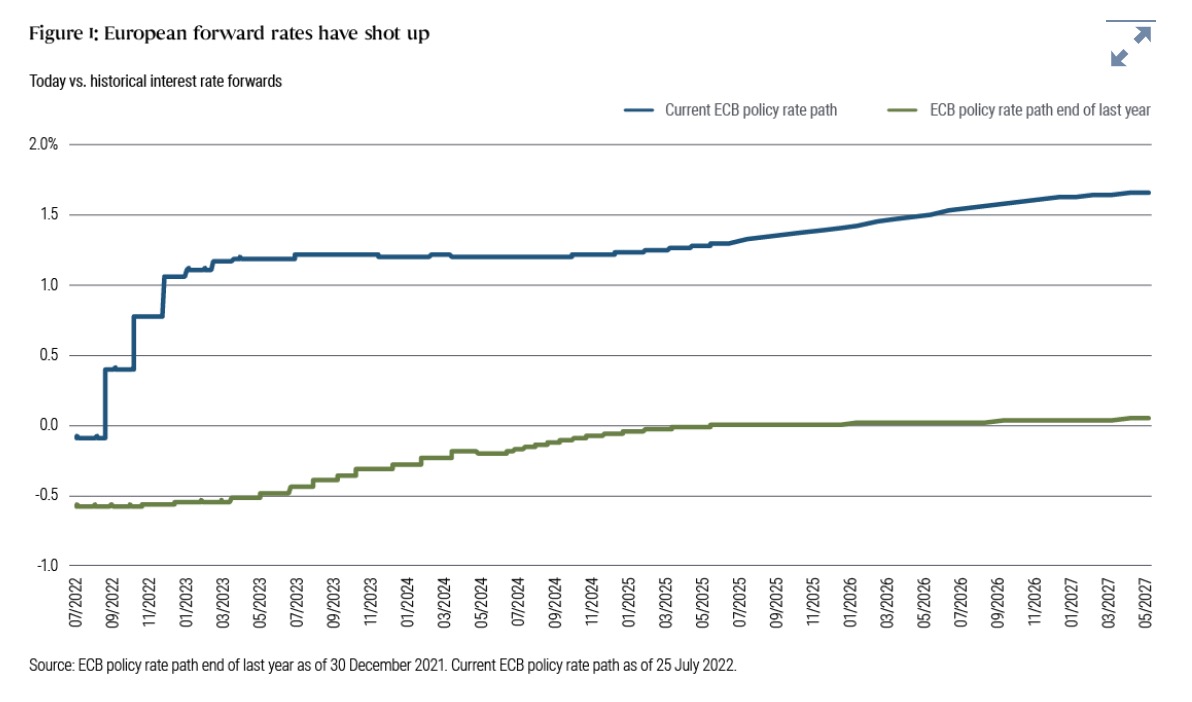
As the European Central Bank leaves negative policy rates behind, attractive valuations herald a much-improved total return potential.
Americans have been warned for years of an impending retirement crisis. Yet the situation is getting worse.
Since the income cutoffs for different tax rates weren’t periodically adjusted for inflation, millions of Americans paid higher rates while their real incomes stayed the same.
Stanley Druckenmiller’s family office took a different approach than the investment firm of his former mentor, George Soros, as US stocks entered a bear market and reached their lows of 2022.
The Inflation Reduction Act, Democrats’ tax, climate and health-care bill that Congress passed last week and is now awaiting President Joe Biden’s signature, calls for a 15% minimum tax on big corporations.
The Fed’s move towards more restrictive policy has rattled bonds and put equities on the brink of a bear market. But what is priced in and where do we go from here? In this month’s webinar, we discuss equity and fixed income valuations and examine how Innovator ETFs can help advisors hedge market risk and capitalize on opportunities.
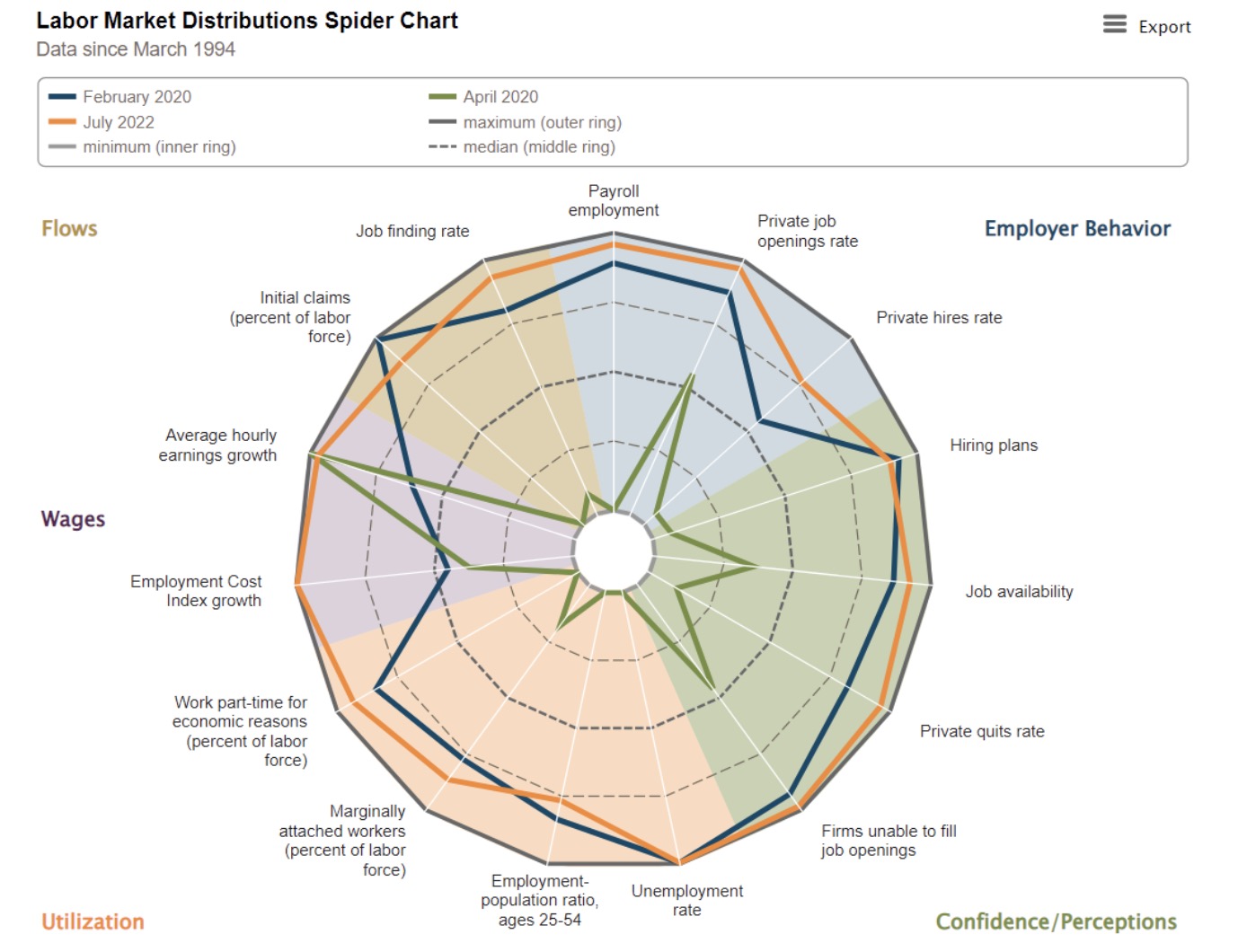
Labor force participation is the greatest shortfall in an otherwise thriving labor market.
Vitaliy Katsenelson will share his outlook for the economy and his approach to active stock management.
In the current unstable economic environment, producing safe, reliable income over the course of an unknown retirement is a daunting goal for any financial professional. As a result, many Americans sub-optimize their retirement experience.
In the last two decades as an investment advisor, I’ve often been wrong – about markets, products and their providers, investors, the government, and the advisory business. Here are my top 10 items I’ve got wrong.
After German troops were defeated in a pivotal battle at El Alamein in 1942, he commented that it was “not the end, not even the beginning of the end but, possibly, the end of the beginning.”
The Consumer Price Index for All Urban Consumers (CPI-U) was unchanged in July on a seasonally adjusted basis after rising 1.3 percent in June, the U.S. Bureau of Labor Statistics reported today. Over the last 12 months, the all items index increased 8.5 percent before seasonal adjustment.
Home price appreciation is slowing fast across the country under the weight of higher mortgage rates, with typical property values even falling month-over-month in about a fifth of major metro areas in July.
Over the last 18 months or so, the quick and easy interpretation of inflation data has turned out to be incorrect. Will it be different going forward?
Investors think a good way to beat inflation is to lean on one of the oldest strategies -- a 60-40 mix of stocks and bonds.
Demography isn’t destiny. If population size was history’s major determinant, China might have conquered Europe in the 15th century, and Britain certainly would not have conquered India in the 18th.
U.S. stocks have come off the worst levels of the day and are threatening a move into positive territory.
Major EMs are more resilient to U.S. interest rate hikes today than they were in past cycles.
With less than three months left before the 2022 mid-term elections, it is officially silly season when it comes to interpreting economic reports.
Pulling forward growth over the last decade remains the Federal Reserve’s primary tool for keeping financial markets stable while economic growth rates and inflation remained weak.
A few billion dollars cannot move a multi-trillion inflation needle. Two types of inflation are in play: one is transitory, but the other is not. The Fed cannot control inflation, but we want to believe it can.
Economists boosted their inflation estimates for each quarter in 2023, a potentially worrying sign for Federal Reserve policy makers trying to keep price expectations anchored.
Thomas Barkin said the central bank needs to keep raising interest rates until it’s clear inflation is running at its 2% target even if the economy weakens to avoid a policy mistake similar to the 1970s.
Equity skeptics obsessed with everything from inflation to pie-in-the-sky earnings estimates have managed to miss a $5 trillion rally being amplified by trends in investor positioning.