Vanguard Group has famously stood apart in the money-management world with its popular mutual funds offering the liquid ETF wrapper.
Gold isn’t losing its allure, according to a dozen money managers who all told Bloomberg News they expect to maintain or raise their exposure to the precious metal in the coming 12 months.
What’s going on with the markets and the economy? Long-term Treasury yields are up substantially since last Fall while the stock market, after a big rally, has stumbled so far this month. Meanwhile, the real economy appears to continue to chug along – even accelerating!
When it comes to large- and mega-cap stocks benefiting from the artificial intelligence (AI) craze, Alphabet (NASDAQ: GOOG), Microsoft (NASDAQ: MSFT), and Nvidia (NASDAQ: NVDA) are among the obvious choices.
With the path of least resistance for stocks seemingly lower for now, key to watch will be a stabilization in interest rate volatility and clarity on the path of monetary policy.
With the Fed’s tightening on monetary policy and the constant threat of a recession looming, policymakers and advisors are closely monitoring economic indicators because the data can ultimately impact business decisions and financial markets.
ETFs have become a popular investment vehicle among many investors and continue to grow in adoption, and so what we’re seeing is that more and more investors are incorporating ETFs into their own portfolios in some way or another.
A marketing firm is helping us rewrite our copy on the website and producing some marketing materials. But the question coming up from my team is, “How do we turn this into an elevator pitch?
Despite the increasing popularity of self-directed brokerage accounts (SDBAs) within 401(k) plans, recent data reveals that women are under-utilizing this investment tool.
When your client conveys vast amounts of information – as is typically the case in a discovery meeting – it’s unrealistic to expect you to retain that information without writing it down. That’s about to change.
BlackRock’s Rachel Aguirre goes in-depth on the firm’s framework for launching new products and highlights the rise of actively managed and options-based ETF strategies. VettaFi’s Stacey Morris offers perspective on the recent strength in the energy sector and looks ahead to the remainder of the year. Parabla’s Phil Hanks explains the Parabla Innovation ETF (LZRD).
Here’s what you can say in response.
The US bond-market selloff resumed Monday, driving 10-year yields to a 16-year high, as the persistently resilient economy has investors positioning for interest rates to remain elevated even after the Federal Reserve winds up its hikes.
Who knew that the subject of US Treasury bond yields could inspire such passion? When, in late June, I argued that they were likely to move considerably higher than the then-prevailing 3.75%, I attracted some vehement pushback.
Whereas the U.S. is investing in new airport infrastructure and modernizing facilities to meet ambitious climate goals, European airports are choosing to combat emissions by restricting the number of flights.
Thanks to NVIDIA stock, the ETF is now up over 50% YTD — and it could keep climbing, as investor interest in AI continues to heat up.
If they’d been offered today’s economy a year ago – with inflation downgraded from emergency to mere headache, still-low unemployment, and growth that’s slowed without stalling – the world’s top central bankers would’ve taken it like a shot.
The Northern Trust Economics team shares its outlook for U.S. growth, employment, interest rates and inflation.
Over the past 12-24 months of rate hikes, short-term and ultra-short-term bond ETFs have served income-seeking investors well. But as interest rates continue to rise, exposures farther out on the curve have begun to offer attractive yields, too.
At the height of the pandemic recession, a prominent economist proclaimed that the dollar would plunge 35% and lose its status as the reserve currency. Why was he so wrong?
Here are five ways to take your COI relationships to the next level – and maximize your business along the way.
I have participated in several industry panels over the years. A question I am often asked is, “What size practice do you need to start your own RIA?”
Equity traders reeling from the market’s worst stretch since February face some pivotal events in the days ahead, and a closely watched speech by Federal Reserve Chair Jerome Powell may not even be the biggest test of all.
Halfway through the third quarter, the economy is looking surprisingly strong. A tracker from the Atlanta branch of the Federal Reserve has real gross domestic product growth, based on the limited data we've gotten so far, tracking at 5.8%, which would be the fastest for a non-pandemic quarter in 20 years.
Former Bridgewater Associates LP executive Bob Elliott’s plan for exchange-traded funds that employ hedge fund strategies has sharpened the debate about whether retail investors should have access to such approaches.
ETFs are investments that can hold: bonds, stocks, gold bullion and cryptocurrencies. Canadian ETFs track a wide range of different asset classes via indexes. Most ETFs are tied to index products, including both equity or fixed income funds.
Investors should take a closer look at companies that help create a more energy-efficient ecosystem for AI.
Government bonds or stocks? If you were picking an asset class to outperform over the next 18-24 months, which would you choose?
Approval of a spot bitcoin exchange traded fund in the U.S. is one of the most widely anticipated and delayed events in the roughly three-decade history of the ETF industry.
My last three letters reviewed Neil Howe’s new book about the Fourth Turning. Today we’ll look at another set of patterns observed by my friend George Friedman in the geopolitical realm. George’s view of how patterns shape countries is different but not inconsistent with Neil’s generational cycles.
There are tools to help you level up in client behavior, experience, and engagement.
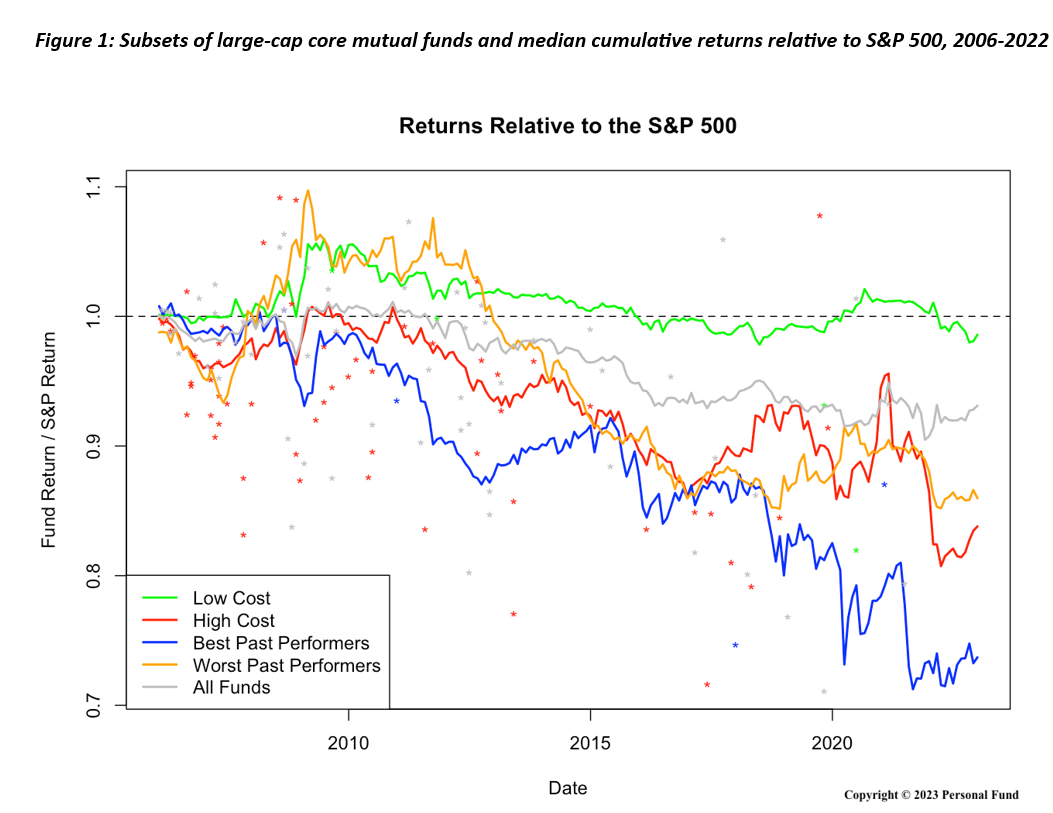
Readers of this publication know the costs of an investment product reduce the net return and consider cost as an important criterion for selecting investments to make up client portfolios. But how do advisors define costs, and how important is cost reduction compared to other portfolio objectives?
Financial journalism has a problem. Apart from a few writers such as Michael Lewis, it is essentially bought and paid for by the financial industry itself – especially, investment management.
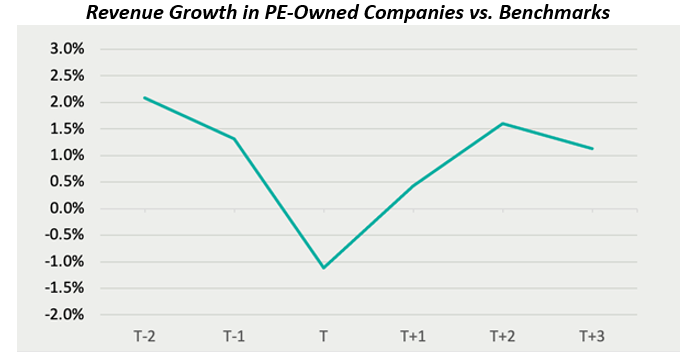
The performance of PE funds has been disappointing. New research explains why this happened: Instead of driving operational efficiencies (as PE investors typically claim they do), those funds relied heavily on increasing the debt burden for the companies they bought.
This weekly update tracks some of the largest cryptocurrencies by market share: bitcoin and ether. We’ve also included XRP, as it was one of the largest cryptocurrencies when this article began.
Progress toward a sustainable world would be hamstrung without the backing of global banks and their sponsorship of green and sustainable bonds.
While some economists may argue that secular stagnation is to blame for China’s economic slowdown, concerns about sustained slower growth are overblown. If the country falls into a recession, it would constitute the next turn of the debt supercycle that began in the US in 2008 and moved to Europe in 2010.
We expect inflation and rates to remain higher than the last decade. We favor tech within growth and cyclicals within value.
Todd Rosenbluth appeared on TD Ameritrade to discuss artificial intelligence in advance of VettaFi’s upcoming August 30th AI Symposium.
This year has been the year of innovation, with artificial intelligence (AI) all the rage. Yet, many advisors are focusing on other investment styles to round out client portfolios.
Argentina’s leading presidential candidate, Javier Milei, has some unorthodox ideas about policy (he wants to abolish central banks), politics (he is libertarian) and pets (he has five cloned dogs). One of his proposals, however, is simple common sense: dollarizing Argentina’s economy.
European banks are rightly being criticized for failing to pass on interest-rate increases to customers. But is it any wonder they’re so unafraid of losing business? Compared to their US counterparts, European financial institutions often face less competition from alternative cash-like investments.
The fresh boom in stock options that expire within 24 hours has grabbed all the attention on Wall Street trading desks — spurring a Goldman Sachs Group Inc. warning that the activity is fueling the recent market selloff.
The advisor of the future needs to embrace a new value proposition, according to John Kutz, Head of Workplace Retirement Distribution at Franklin Templeton. This means moving beyond the “three F’s” and taking a more holistic approach to changing client needs.
Today was a disaster for Chinese economic data. In the table below, we can see that every single data point missed consensus expectations in the wrong direction. Activity undershot expectations across the board.
With so much uncertainty remaining around the Fed’s rate cycle and the potential for recession, many investors are beginning to look toward international equity markets for the means to build income. Yields continue to look attractive for international dividend ETFs, in particular.
With so many moving pieces, and under such unconventional conditions, navigating today’s global economic landscape would be challenging for anyone. But even if we cannot anticipate every contingency, we can understand quite a lot by assessing the US Federal Reserve’s prospects for engineering a soft economic landing in the near term.
In 2023, it’s fair to say that artificial intelligence (AI) is one of this year’s most captivating investment themes. Add to that, from the perspectives of adoption, applications, and investing, AI is still in its infancy. This indicates market participants will be hearing about it for years to come.
Ether-futures ETFs could be coming to the US soon, but the cryptocurrency market doesn’t seem to care.
VettaFi’s vice chairman Tom Lydon discussed the Sprott Uranium Miners ETF (URNM) on this week’s “ETF of the Week” podcast with Chuck Jaffe of “Money Life."