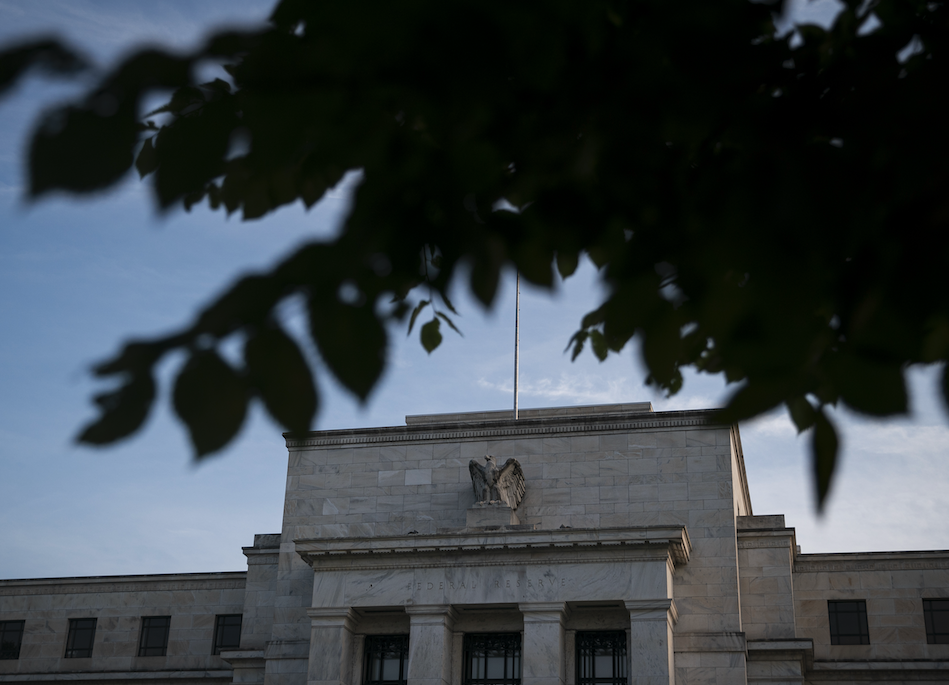
The U.S. Federal Reserve today implemented an interest rate cut of 25 basis points. The question remains: Just how aggressive will they be the rest of the year and beyond? That may cause anxiety for fixed income investors who have long been accustomed to higher yields in an environment of persistent, sticky inflation.
Wall Street took profits in high flying technology stocks on Wednesday, rotating into cheaper corners of the market after the Federal Reserve delivered a widely expected interest rate cut under what Chair Jerome Powell described as an “unusual” situation of emerging labor-market weakness while inflation remains elevated.
In our last discussion, we spent some time reviewing the use of tariffs in the 19th century. Since contemporary discussions of tariffs usually begin and end with the Smoot-Hawley Tariff Act of 1930, there is a tendency to view tariffs myopically through the lens of the Great Depression.
The S&P 500 is often recommended as the default choice for individual investors. While it has delivered strong long-term results, today’s valuations and concentration raise important questions about whether it suits every investor’s goals.
One question we’ve been fielding quite a bit of late is what do you think the Treasury (UST) yield curve will do?
Cuts are in store, but decisions will be weighed carefully.
Last week's economic data presented a challenging picture for the U.S. economy with key inflation reports delivering conflicting signals and a timely labor market indicator added to the narrative of a softening labor market. Read through the major economic news from the week of September 8th - 12th.
Customization can significantly impact after-tax yield. Explore powerful tools for tailoring investment strategies to meet unique client objectives.
Mortgage bond reinvestment could be the Federal Reserve’s most effective and immediate tool to unlock the housing market – without even touching interest rates.
Global bond markets have sold off recently due to uncertainty surrounding key political changes most notably in France and Japan.
Nick Goetze discusses fixed income market conditions and offers insight for bond investors.
The late-summer calm in financial markets shows an undercurrent of optimism. Stocks have been on a tear, with the S&P 500 rebounding strongly to notch roughly 18% gains for the year, while overseas equities are up even more.
Treasuries have powered into first place among major sovereign bond markets this year as the prospect of a new round of Federal Reserve interest-rate cuts overturns widely held bearish views on US debt.
Wall Street traders gearing up for the Federal Reserve decision refrained from making big bets as they awaited clues on the path of rates that will shape the outlook for markets over the next few months.
JPMorgan Chase & Co. will cut the weight of the largest bond issuers in its flagship emerging-market index, diverting investor flows from the likes of China and India toward smaller nations.
On this week’s edition of Market Week in Review, Pierre Dongo-Soria, principal investment strategist for EMEA, unpacked what the latest economic data from the United States could mean for interest rate cuts.
We will examine five major investment strategies: value, growth, momentum, dividend, and index investing. Each comes with strengths and weaknesses. More importantly, each offers lessons from history’s greatest investors, including Benjamin Graham and Warren Buffett.
VettaFi’s Head of Research Todd Rosenbluth discussed the Thornburg Multi Sector Bond ETF (TMB) on this week’s “ETF of the Week” podcast with Chuck Jaffe of “Money Life.”
Gold rose near a record high as traders geared up for an anticipated easing of the US Federal Reserve’s monetary policy this week and looked for clues on further rate cuts this year.
A key question for investors this week is whether Federal Reserve officials push back against market bets on a series of interest-rate cuts extending into next year.
Despite the slowdown, the Federal Reserve remains hesitant. Chair Powell noted softening labor conditions at Jackson Hole and suggested the door is open to rate cuts. But no concrete shift in policy has occurred.
No one wants to be a party pooper. It drives away friends and makes you generally unpopular. But if you are a monetary policymaker, ending the party before it gets too wild is quite literally your job.
A Federal Reserve rate cut won't necessarily lower longer-term bond yields or mortgage rates.
Last week's economic data presented a challenging picture for the U.S. economy with key inflation reports delivering conflicting signals and a timely labor market indicator added to the narrative of a softening labor market.
Investor and consumer surveys indicate that confidence is stabilizing following the initial tariff agreements, and consumers’ spending and income remain robust.
A key theme dominating global financial markets in recent weeks has been the general upward pressure on sovereign bond yields, particularly at the long end of government bond market curves.
It is certainly possible for the Federal Reserve, as the biggest player on the block, to lower money market rates over the course of the next few meetings. However, if it turns out to have been orchestrated out of political expediency rather than as stimulation for a weak economy, inflation will result. We saw a similar movie in August 1971.
Rising yields in global government bond markets reflect expectations that interest rates will remain higher, rather than concern over brewing fiscal crises, according to BlackRock Inc.
Companies are moving some of the excess cash on their books into longer-term securities, betting that rate cuts from the Federal Reserve will make these holdings more lucrative.
Treasuries rose as traders latched onto fresh signs that the US labor market is softening, bolstering their outlook for how much the Federal Reserve might cut interest rates in the coming months.
While equity markets are buoyant worldwide, emerging markets stocks and bonds are the only assets that merit an 'overweight' allocation.
It’s no understatement to say this could have been the most anticipated jobs report in quite some time.
Markets now see more than an 80% chance of a rate cut from the Fed this month, and it may be a good time to reallocate short-term cash positions to medium-term fixed income positions with maturities between 5 and 10 years.
Emerging markets are becoming more attractive as the prospect of an upcoming US rate cut — combined with softer local inflation and relatively low public debt — strengthens the investment case, according to Navin Hingorani, Singapore-based portfolio manager at Eastspring Investments.
Global macro conditions remain constructive for risk assets, according to Franklin Templeton Investment Solutions. Get the team’s views across global assets in the latest “Allocation Views.”
The financial world is replete with terms and definitions, many of which overlap in concept or application. Perhaps I can simplify a familiar concept for most investors who strive to grow and preserve their wealth.
Markets cheered an imminent Fed rate cut, with small caps outpacing the S&P 500, but rising unemployment, sticky inflation, and slowing job growth point to stagflation risks. Advisors face a market both buoyed by near-term catalysts and shadowed by longer-term vulnerabilities.
Making the case for potential rate cuts in his recent speech at Jackson Hole, Fed Chair Powell noted that policy is presently in restrictive territory.
DoubleLine CEO/CIO Jeffrey Gundlach, widely known in the capital markets as the "Bond King," spoke at a Total Return Webcast.
The U.S. labor market continued to show signs of cooling, with all major labor indicators pointing to a softening trend and a weak hiring environment. Read through the major economic news from the week of September 2nd - 5th.
Investors are leaning into bullish bets on US Treasuries ahead of this week’s inflation report, as a recent run of softer-than-expected data opens the door for the Federal Reserve to cut interest rates in September and further ease monetary policy in the months ahead.
Market uncertainty continues to linger in the back of fixed income investors’ minds. But that can force much-needed recalibration of portfolios as tariffs and rate cuts loom. A compelling option to consider: corporate bonds.
Progress on reducing fiscal deficits has stalled in some large economies around the world. Should investors be worried?
The U.S. dollar is experiencing a rare volatility squeeze, indicating that a major move is near. While the most likely direction is downward, any move will have a big impact on precious metals.
Surface-level diversification is no longer enough in a market increasingly driven by passive flows and dominated by a few mega-cap names. Owning multiple funds or asset classes does not guarantee protection if the underlying exposures overlap. Investors must go deeper and look beyond labels and into the actual drivers of risk and return.
US job growth was far less robust in the year through March than previously reported, adding to mounting pressure on the Federal Reserve to lower interest rates.
On this week’s edition of Market Week in Review, Global Chief Investment Strategist Paul Eitelman discussed new records for the U.S. stock market as well as the resilience of the American economy. He also covered bond-market volatility in Japan, France and the UK.
The market got exactly what it needed last week: confirmation that the economy is slowing—not collapsing—and that the Federal Reserve has the green light to start cutting rates. Payroll gains softened, manufacturing remains weak, and broader job slack is showing up with U-6 underemployment rising to 8.1%.
Buy-now-pay-later firm Klarna Group Plc is among a string of companies bringing US public stock offerings in what looks like an extremely busy September for investment bankers.
Bond investors may need to look elsewhere to supplant income lost from falling yields — they may want to try heading overseas. It's not just a weaker dollar that's been diverting attention to international bonds, but U.S. debt itself.