Our entire financial system revolves around credit. This includes the ability to access credit for new loans, and more importantly, the refinancing of existing loans.
Start me up! This iconic Rolling Stones song keeps racing through our minds as we glance across the investing landscape. Why? Because it feels like the drivers of this turbulent market – Federal Reserve (Fed) tightening, inflation, recession worries, geopolitical fears – will never stop.
Housing stress may spread to other sectors.
Thanks to the recent banking crisis, the Fed’s “dual mandate” has taken on a new meaning. The increased economic uncertainty during the first quarter drove investors towards safer assets, boosting investment grade bonds.
Having presided over America’s first banking crisis since 2008, Federal Reserve officials are rightly focused on reforming regulation. That said, they should keep in mind some lessons for monetary policy, too.
BlackRock Inc. strategists are ditching the 60/40 portfolio in favor of public and private investments as well as tactical holdings of bonds to navigate higher interest rates.
Two brutal weeks for banks have mostly scuttled hopes in markets that a US recession can be avoided. But a close read of the cross-asset landscape still finds investors unconvinced the stress portends a genuine financial crisis.
VettaFi’s Roxanna Islam discusses the evolving Communication Services sector, along with ETFs covering the space. Hashdex’s Marcelo Sampaio explains the first 1933 Act bitcoin futures ETF (DEFI) and offers perspective on the future of crypto. Amplify ETFs’ Christian Magoon spotlights several ETFs including the Amplify CWP Enhanced Dividend Income ETF (DIVO).
In his latest memo, Howard Marks discusses the significance of the Silicon Valley Bank collapse. He argues that it likely doesn’t portend a wave of banking failures but may amplify preexisting wariness among investors and lenders, leading to further credit tightening and additional pain across a range of industries and sectors.
With inflation easing around the world and many central banks nearing the end of their interest rate hikes, a growing chorus of investors say the best place for bond buyers to juice returns is in emerging markets.
There are a lot of dramatic and profound questions about AI, but some of the most important ones are mundane. For instance: Should AI agents, when they perform productive work, be required to pay taxes?
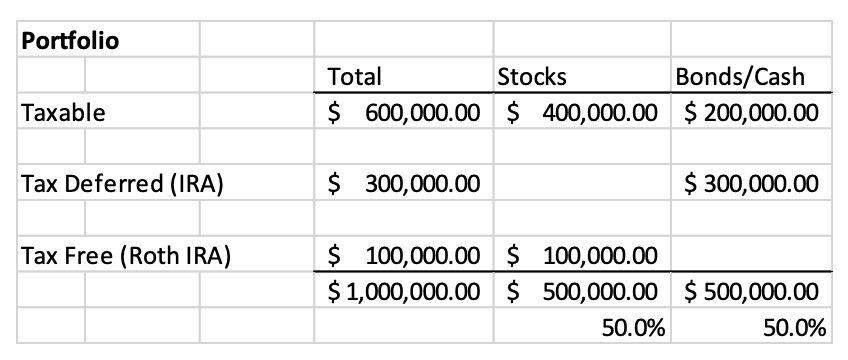
One of the toughest dilemmas I wrestle with is whether to consider future tax liabilities from unrealized gains in the portfolio and taxes from withdrawing from traditional retirement accounts.
Keto diets are a proven regimen to reduce weight and foster a healthy lifestyle. The financial equivalent – the keto annuity – will drive successful outcomes for your female clients and build a stronger practice.
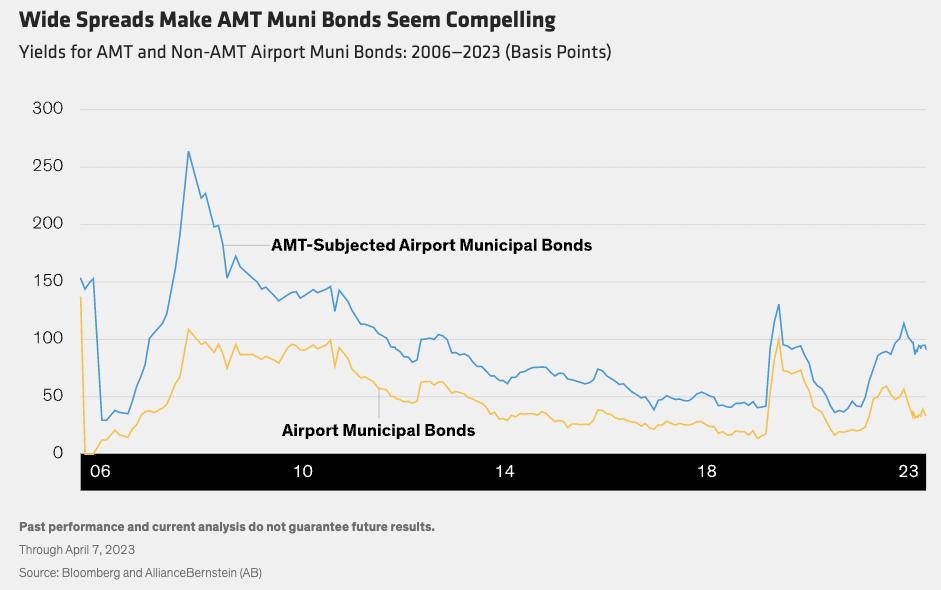
For years, investors seeking tax-efficient income grappled with a key question: Are municipal bonds that are subject to the alternative minimum tax (AMT) worth their higher yields? After all, an attractive bond yield didn’t hold as much luster once the AMT shaved off up to 28%.
Recession odds have climbed considerably since Jerome Powell’s testimony before Congress and the latest FOMC meeting. However, the recent failures of Silicon Valley Bank (SVB) and Credit Suisse (CS), as higher rates impact regional bank liquidity, also added to the risks.
What does a potential change in Federal Reserve policy mean for markets and the economy?
Just as it is getting ever-more important to anticipate changes in Fed policy, those changes are becoming more uncertain. One way to help resolve this dilemma is by explicitly incorporating political and public policy goals into the monetary policy calculus.
The Northern Trust Economics team shares its outlook for U.S. growth, employment, interest rates and inflation.
2023 has already been an eventful year, featuring a banking crisis and more Fed rate hikes. In our view, this is not a “set it and forget it” type of market – investors need to stay vigilant.
After the market selloff in 2022—a period that was particularly hard on growth stocks—we think our companies are attractively priced for the next five years, which is our baseline investment horizon.
Given market uncertainty and the risk of a US recession, is now the time for defensive stocks? Making a case for low-volatility, high-dividend equities with Franklin Templeton Investment Solutions’ Vaneet Chadha and Michael LaBella.
The lack of diversification benefits of government bonds in 2022 was painful for multi-asset investors. The sell-off in US Treasuries in particular was sharp, and we saw correlations versus stocks move well into positive territory.
The stakes are high, and it appears likely that our deeply divided government is headed for another debt-ceiling showdown. Divided governments have typically been good for the markets; however, they often spell trouble when it comes to negotiating fiscal matters.
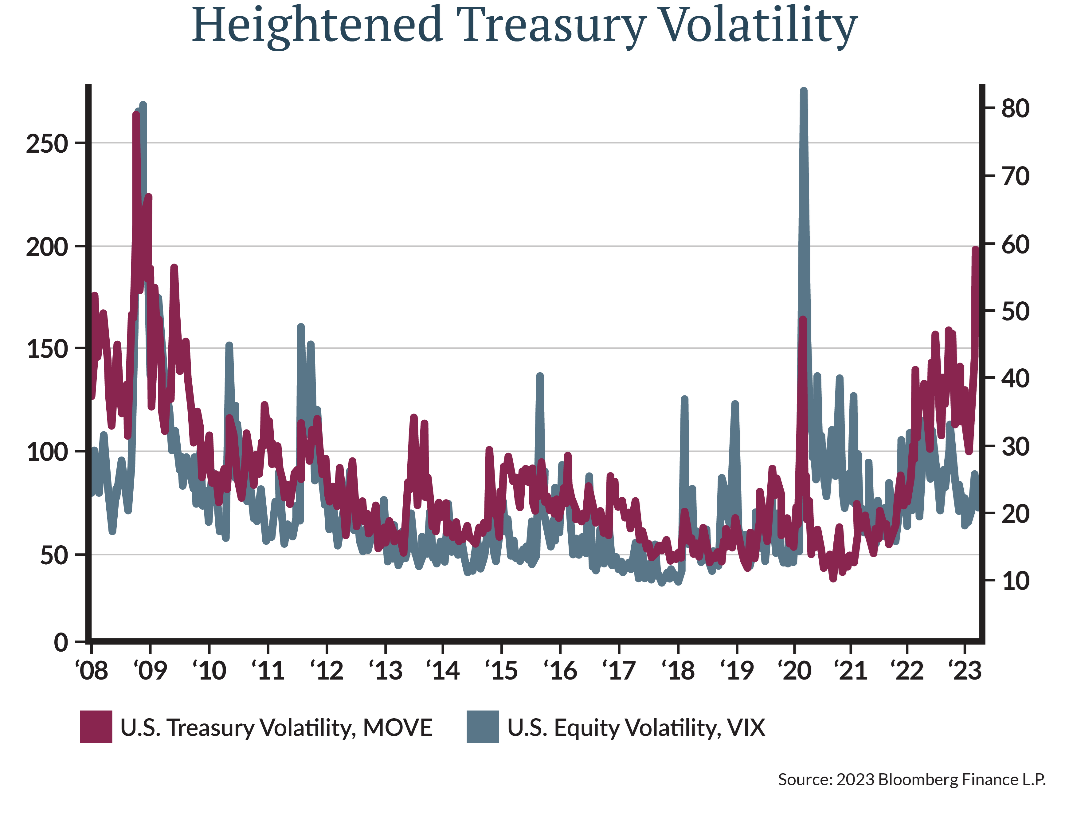
During his spring break, Johnson Financial Group Portfolio Manager Brian Schaefer had the time to read “A Gentleman in Moscow,” which got him thinking about the how the current market moves could impact the American experiment. In this investment commentary, Schaefer discusses the MOVE and VIX indexes and what they might say about the markets.
Two of the biggest proposals Biden introduced in his recent budget were a big increase to the long-term capital gains tax and a new tax on the wealthiest Americans.
Tax-managed investing has gained in popularity in recent years. But what exactly is a tax-managed mutual fund? We do a deep dive into the concept.
Born of the Global Financial Crisis, additional tier-1 securities were designed to absorb bank losses in times of turbulence and maintain financial safety at no cost to taxpayers. Despite good intentions, we’ve found AT1s to be flawed instruments that are contingently junior to common equity in practice.
With higher bond yields, it is instructive to understand what drives interest rates in cash sweeps.
Why finding ways to break the tie to these variables is so important, and outline a few ideas for how to do it.
Trading might be muted today as the market pivots, awaiting earnings and inflation data this week.
Doug Drabik discusses fixed income market conditions and offers insight for bond investors.
We think dividend-income strategies can be effective across multiple environments, provided that they’re designed to tap into a wider opportunity set beyond traditional dividend payers alone.
As central banks wrestle with how to respond to volatile economic data and banking turmoil, while also fighting inflation, Franklin Templeton’s economists provided their perspectives on what’s next for economic growth, interest rates, inflation and fixed income markets.
Model portfolios have become an essential component of virtually every advisor’s investment processes. Models can be constructed to meet investor profiles, including their level of risk tolerance, need for income, or tax considerations. Countless third parties, including many asset managers, offer models. That has led other firms to create model marketplaces, where advisors can research and choose from commercially available model portfolios.
My guest today is Lee Andreatta of Advyzon Investment Management, and his firm just announced that it has added a model marketplace that enhances its TAMP offering and moves Advyzon closer to offering a fully comprehensive solution for financial advisors and investment managers to run their firms.
Western countries have become increasingly wary of sharing technology with China, with the US and Netherlands recently imposing new restrictions on exports of semiconductors and the equipment used to make them.
Almost $1.5 trillion of US commercial real estate debt comes due for repayment before the end of 2025. The big question facing those borrowers is who’s going to lend to them?
Volatility can be challenging but it also creates opportunities. In our view, rotating across sectors within the investment grade market is the most effective way to take advantage of price fluctuations and generate alpha.
Fifteen years ago, in 2008, the Federal Reserve started an experiment in monetary policy, switching from a “scarce reserve” system to one based on “abundant reserves.” This switch has created massive problems that are hitting not just the private banking system but the Fed itself.
There is a lot riding on the monthly jobs report, which comes out tomorrow. For the economy, more jobs are good: more workers, more wage income, more spending ability, and so forth. There’s no real downside.
Safe and risky: the final frontier. These are the voyages of the retiree on her lifecycle mission: to explore strange new investments. To seek out safety and protect against inflation. To boldly go where no woman has gone before!
When banks started going belly-up, the reaction in bonds was emphatic. Two-year Treasury yields slid a percentage point over three days in March, the most since 1982.
To understand the common mistakes high-net-worth individuals make and how to address them, I spoke to experts in the field.
Shares of China’s state-owned enterprises have been a hot trade in a mostly lackluster equities market this year, but disappointing earnings are causing investors to reassess their bullish bets.
First, Goldman Sachs Group Inc. highlighted Bitcoin as the best-performing asset in terms of absolute and risk-adjusted returns earlier this year. Then the banking crisis happened and the largest digital coin rose to its highest price in ten months. It's enough to make even some naysayers reconsider.
Rick Rieder and team argue that a major shift in market perception of growth, inflation and policy trajectories means investors should consider calling a "time-out" to reassess portfolios.
Implications of the ongoing volatility in the banking sector, and what it means for markets in Europe and globally—check out highlights from our most recent discussion with Kim Catechis, Investment Strategist, Franklin Templeton Institute.
Everyone knows it by now: 2022 was not a kind year for investors, particularly balanced fund investors. There were no silver linings, no shelter from the storm; it seemed that no matter what levers you had in place to protect clients’ wealth, there was very little to cheer about on investor return statements.
In the face of banking stress and a hawkish Federal Reserve, stocks have advanced impressively so far this year, but narrow breadth doesn't bode well for continued strength.
Senior Fixed Income Analyst Bedford Lydon shares three factors that may affect states' creditworthiness in a downturn.
Inflation regimes often coincide with changing political regimes and agendas, much of which stems from the rise of populism and fiscal dominance. As a result of decades of globalisation and rising wealth inequality, we may well be entering a new regime - one of higher inflation and higher inflation volatility.