The 60/40 approach has not been what it was just a few years ago. Fortunately, there are alternatives.
By incorporating growth CDs into a diversified retirement plan, retirees can take advantage of equity market growth, protect their lifestyle, and avoid the fear of market downturns diminishing their savings.
Moody’s Friday downgrade of the U.S. credit rating may not seem particularly earthshaking, given that Fitch and Standard & Poor’s had gotten there quite a while ago.
President Donald Trump’s first overseas trip since returning to the White House is turning heads across the aerospace & defense and semiconductor industries.
With financial markets whipsawing on every tweet and press release, Maharrey urged listeners to step back, take a breath, and consider the big picture — particularly on the issues of debt, inflation, and de-dollarization.
President Trump’s tariff maneuvers sent financial markets on a rollercoaster. The shock from his aggressive trade policies triggered a surge in volatility, briefly pushing the VIX above 50 – an extremely rare event.
Imagine an institutional investor that allocates a big chunk of its portfolio to illiquid private assets but then needs to sell some of those investments to raise cash. Or a fund company that makes a fortune on actively managed mutual funds for decades, but its investors move their money to low-cost index trackers.
Macroeconomic and structural trends are finally moving in favor of emerging local currency bonds, after recent setbacks.
Head of U.S. Fixed Income Greg Wilensky and John Lloyd, Lead, Multi-Sector Credit Strategies, discuss Moody’s rating downgrade of the U.S. and what the implications may be for the Treasury market, the Federal Reserve (Fed), and fixed income investors.
The signal of announcing trade pacts is an important start.
The geography of employment in the US is being shaped by two distinct trends. The first is low levels of housing churn and, therefore, interstate migration, a normal part of the business cycle that should eventually turn around.
A new report demonstrating that central banks can port their monetary policy tools into a tokenized financial system is an important step in transforming how we trade securities including stocks and bonds.
QTR Family Wealth, a full-service wealth management firm owned and led by brothers Wes and Chad Hunter, proudly announces the official launch of its independent Registered Investment Advisory (RIA) firm.
Milton Friedman, Art Laffer and other market-believing economists had their long day in the sun during the 1980s and 1990s. Tax rates fell and government spending declined relative to GDP. But – ironically, in the long run, and long after he passed away – John Maynard Keynes got his revenge.
Recent revisions to the IMF’s World Economic Outlook reflect a sobering message: the world economy is entering a more volatile and fragmented era.
Bitcoin was launched in 2008. It was the following year when it was initially used as an actual currency.
Over the past ten years, we’ve discussed this question with about 50 of our friends and clients, resulting in many animated and productive conversations.
After Friday’s close, Moody’s downgraded U.S. treasuries, as S&P had 14 years ago, in 2011. I criticized the downgrade then…and I do now. The government cannot technically default, as the Fed can always buy the bonds for any auction.
On this episode of the “ETF of the Week” podcast, VettaFi’s Head of Research, Todd Rosenbluth, discussed the Thornburg International Equity ETF (TXUE) with Chuck Jaffe of Money Life. The pair discussed several topics related to the fund to give investors a deeper understanding of the ETF overall.
The shareholder meeting began to be streamed about ten years ago, but that has had no impact on attendance. This is one reason why I think Buffett is at peace with the idea of no longer presiding at the meeting – people will still come to Omaha the weekend before Mother’s Day.
Given the recent market volatility and the possibility of an adverse wealth effect, it's worth quantifying the relationship between stock returns and economic activity.
Don’t allow your middle-aged clients depending on their 401(k) plan to fool themselves. Markets can’t rescue a failure to save until it hurts. And don’t let them kid themselves that a smoother ride with bonds won’t come at the cost of increased shortfall risk.
As markets rebound from a brief but sharp correction, Journey’s investment team reflects on the impact of tariffs, global diversification, and the evolving role of alternatives in investor portfolios. With caution as the theme, this month’s commentary urges investors to revisit risk tolerance and stay grounded in disciplined, long-term strategies amidst ongoing economic uncertainty.
This is the story of how we got to a moment in history defined by global and national crises. It is the story about how a radical geopolitical transition is taking place as old socio-economic and institutional cycles in the US end and new ones begin.
Fisher Investments recently wrote an interesting article asking whether corporate stock buybacks affect markets.
US stocks delivered their second-best weekly gain of the year on Friday, as Big Tech fueled a rally that brought the S&P 500 Index closer to an all-time high set nearly three months ago.
Nvidia Corp. Chief Executive Officer Jensen Huang outlined plans to let customers deploy rivals’ chips in data centers built around its technology, a move that acknowledges the growth of in-house semiconductor development by major clients from Microsoft Corp. to Amazon.com Inc.
Long-dated Treasuries fell on Monday as investor attention turned to the US’ ballooning debt after Moody’s Ratings stripped the nation of its last top credit rating.
Wall Street’s emerging-market faithful are finally seeing better returns after missing out for years as US stocks soared.
The recent rally began when Treasury Secretary Scott Bessent struck a more conciliatory tone with China, saying he expected a de-escalation shortly.
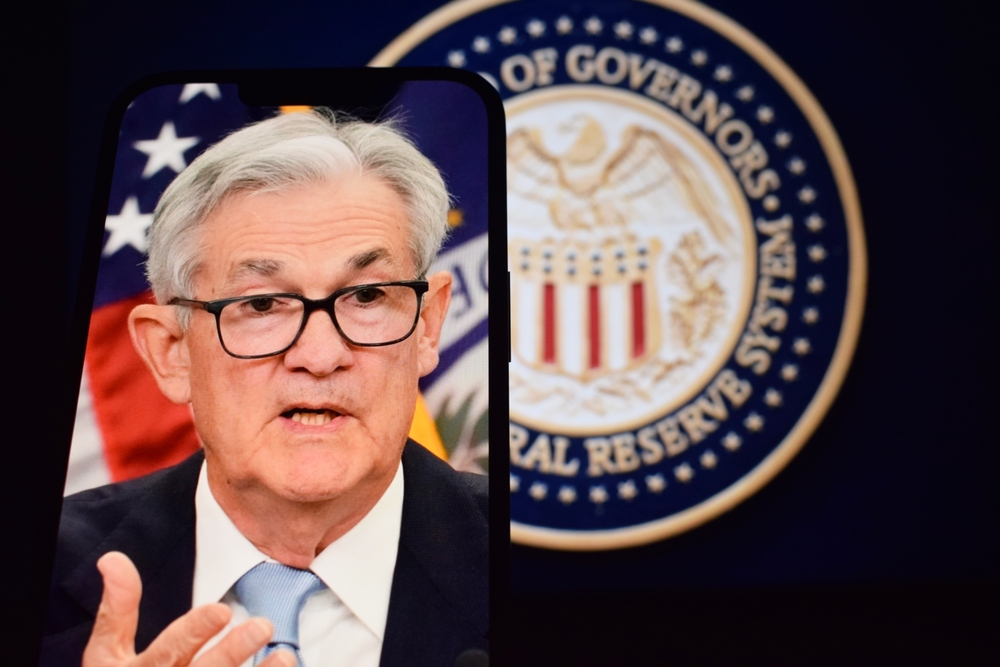
In a speech Thursday, Federal Reserve Chair Jerome Powell hinted that the central bank’s five-year framework review will focus on the particulars of its maximum employment and stable price goals, as well as efforts to communicate clearly with the public.
One of the first and most promising uses scientists envision for the rapidly evolving technology of quantum computing is a new approach to drug development.
Chief Economist Eugenio J. Alemán discusses current economic conditions.
Stocks have rebounded since the White House delayed steep tariffs that were announced in early April, but trade policy remains a potential driver of volatility.
The House Ways & Means Committee advanced a comprehensive tax bill this week. Our Bill Cass discusses the key provisions and how they may impact taxpayers.
Retirement. It’s a phase of life that brings with it unique challenges, particularly when it comes to healthcare. In the U.S., the average lifespan is 79 years (compared to the global average of 73 years).
While April brought further welcome news on the inflation front, underlying consumer fundamentals painted a more concerning picture.
A recent Gallup poll shows gold just passed stocks as Americans’ favorite long-term investment. We explore why it might deserve the top spot.
Major gauges of investment-grade corporate bonds were stung by the April bout of volatility that permeated the bond market.
Technology and trends have made individual investors an important part of the private market.
A rushed exit from conservatorship could increase mortgage rates and worsen home affordability.
While equities are on their way to recovering January 1 levels, enhanced volatility lends itself to active ETF strategies this year.
If only Europe could offer property investors the kind of buffet the US provides. For now, its listed real estate sector is fragmented and dysfunctional, the raison d’etre seemingly to create cheap takeover targets for buyout firms.
President Donald Trump said he would set tariff rates for US trading partners “over the next two to three weeks,” saying his administration lacks the capacity to negotiate deals with all of its trading partners.
Global funds are pouring money back into India, driving billion-dollar corporate financing deals and sending stocks prices to near a seven-month high, as investors bet that Asia’s third-largest economy can emerge as a winner in President Donald Trump’s trade war.
Warren Buffett’s Berkshire Hathaway Inc. made no major purchases during the market slump that preceded President Donald Trump’s trade war, instead whittling or selling off holdings in financial stocks during the first quarter.
Technology stocks have been buffeted by market volatility in early 2025, with shares tied to artificial intelligence (AI) hit especially hard.
Emirates Global Aluminium plans to start building a $4 billion plant in Oklahoma next year as Donald Trump pushes for massive investments from oil-rich Gulf states to avoid his tariffs.
The share of outstanding US consumer debt that’s in delinquency rose in the first quarter to the highest in five years, reflecting an end to the pandemic-era pause on reporting delinquent student loan payments on credit reports.
The 90-day reduction on tariffs between the US and China is a positive development, but some questions remain.