Not sure which to choose? Here are some things to consider about individual bonds vs. bond funds.
As inflation concerns continue to influence 2025 market dynamics, investors seek equity-based strategies to provide rising-price protection.
Low volatility exchange traded funds are a compelling solution for those looking to dampen risk while staying invested.
The RAFI™ Fundamental Index has a value tilt, but to characterize it as a value index would be an oversimplification that misses the important advantages that the fundamental index offers above standard “value” index approaches.
Every year around this time, we update our Periodic Table of Commodities Returns to reflect the performance of raw materials in the first six months. I’m biased, but few tools do a better job of providing a clear, interactive picture of the commodities landscape than ours.
Bond investors worried about rising fiscal deficits are turning to an unusual haven: emerging markets.
The valuation of small-cap stocks relative to large caps remains historically attractive, and small-cap recoveries in the past have resulted in meaningful periods of outperformance.
After mid-level performance in Q1, financials sector earnings are seen slowing in Q2, according to analysts, though favorable signs like the yield curve could help margins.
Franklin Mutual Series shares its mid-year outlook, focusing on corporate fundamentals as a catalyst to unlock value in the midst of ongoing market volatility.
Liberation Day seems like a lifetime ago. But the 90-day pause is almost over, and—thus far—there are few deals that have been consummated.
Our long-time investors are probably wondering why we haven’t made any gains over the last 18 months.
ClearBridge Investments believes positive forces from One Big Beautiful Bill Act passage and future interest rate cuts should soon outweigh negative forces of tariff actions.
Most of us grew up in an era in which you simply had to figure things out on your own, but that’s no longer how it works in business today. The stakes are higher, the competition is fierce.
Wall Street’s latest tax dodge doesn’t hide in the Cayman Islands or rely on complex derivatives.
Wall Street’s latest tax dodge doesn’t hide in the Cayman Islands or rely on complex derivatives. It’s engineered to turn a publicly traded fund into a tax-minimizing machine that hums quietly on autopilot.
If you’ve been following the mainstream financial media lately, you might think the airline industry is in crisis. From headlines about tariffs and labor costs to geopolitical tensions and delays at Newark Airport, it sounds like air travel should be tanking.
It was a positive quarter for emerging markets equities.
Sharp U.S. policy shift and elevated uncertainty reflect an evolution of the new macro regime. What matters: getting a grip on uncertainty by identifying its core features.
The first half of 2025 may not have been kind to private equity, but new data suggests that things could turn around soon.
With mortgage rates still near 7%, even relatively wealthy households are choosing to rent rather than buy, and it’s easy to understand why.
Israel-Iran hostilities brought a short-term market focus on oil. Longer term, artificial intelligence (AI) electricity needs could create a power shortage, as well as opportunities and risks for investors.
On the latest edition of Market Week in Review, Global Chief Investment Strategist Paul Eitelman explored key drivers behind the strong performance in markets. He also provided an update on a proposed U.S. tax measure.
In recent months, markets have whipsawed amid changes in trade policy, geopolitical shocks, concerns about fiscal sustainability, challenges to central bank independence, technological advancements, and earnings surprises in both directions. Despite this, stocks and bonds in much of the world are close to where they began the year.
For good reasons, many investors have a love-hate relationship with commodity investments. Operationally, the annoying K-1 form complicates tax filing, although thankfully the industry has started to launch “no K-1” funds.
Your firm's culture should reflect your values and your mission.
This year’s formidable challenges have clarified strategic lessons for equity investors to apply in the coming months
Netflix Inc. investors face a dilemma: Continue to bet on a stock that has delivered best-in-class returns over the past year or reconsider shares that increasingly look like they’re priced for perfection.
Readers of a certain age will no doubt recall President Ronald Reagan launching one of the most ambitious military buildups in American history.
Until that US government debt-crisis moment arrives, which we will get through, things will muddle along.
Surprisingly, oil prices are receding after U.S. strikes on Iranian nuclear facilities over the weekend.
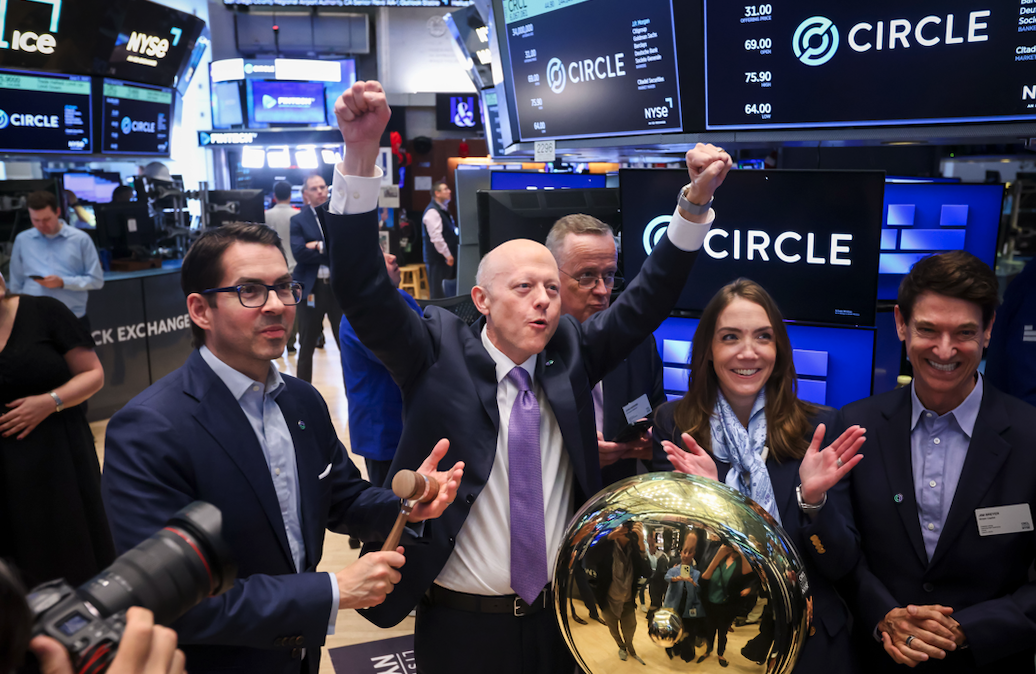
Roaring returns for US IPOs are driving fresh optimism that activity will pick up steam later this year and into 2026, even as worries over geopolitics and President Donald Trump’s tariffs hang over the market.
While both valuation and technical factors suggest to us that the dollar may continue to weaken in the near-term, we would caution investors against reading too much concerning the US’ long-term economic stability into further dollar weakness.
The U.S. Dollar Index, when measured against a basket of other major currencies, has declined by approximately 10% this year through mid-June and is currently trading at its lowest level in three years.
Like all appetites, the consumer typically reaches some point of appeasement. That could be the case for central bank gold purchases, which have started to show signs of receding. But market experts do not see it faltering anytime soon.
Looking back on it, the first quarter of the year was a complete anomaly. Real GDP declined at a 0.2% annual rate, and the left side of the political spectrum said this proved current policies were a disaster.
VettaFi’s Head of Research Todd Rosenbluth discussed the Invesco S&P 500 Momentum ETF (SPMO) on this week’s “ETF of the Week” podcast with Chuck Jaffe of “Money Life.”
While the bond market is in general pretty efficient in its pricing, there may be times when it can be significantly out of line with investor expectations. At such moments, investors should be well-rewarded for making the effort to decode what the bond market is saying.
Given the uncertainty of future events, global investors seek a “safe haven” for investment dollars. As such, U.S. Treasury Bonds and the U.S. dollar appreciate given their perceived “financial safety.” Last week, global investors were already starting to make that shift with the dollar rising.
Market concentration rewarded passive investors who held market weights in the surging mega-caps. Since late 2014, passive index returns ranked in the 10th percentile of all portfolios in eVestment’s US Large Cap Growth Equity universe. In other words, only 10% of active managers outperformed.
At Parametric, our years of experience have taught us that markets can swing up and down quickly and without warning. Since no one can time these swings, we believe it's imperative to seek both loss harvesting and benchmark tracking simultaneously.
A 529 plan is a popular tool for saving for college expenses. When it comes to who maintains control over the 529 plan’s assets, in most cases, it’s the account owner. This is often a parent or grandparent. The owner also has the ability to make investment choices and manage withdrawals.
How big data, AI and the human element can combine to better pursue consistent alpha.
Nvidia Corp. billionaire boss Jensen Huang, clad in his signature leather jacket, has been crisscrossing European capitals and sharing the stage with the likes of Keir Starmer and Emmanuel Macron as he pitches “sovereign” artificial intelligence, a vision of new data centers offering essential compute power within national borders rather than via dominant tech firms from abroad.
Smart beta strategies have endured a prolonged stretch of disappointing results, falling short of investor expectations. This article explores the underlying causes of that performance and outlines why the conditions ahead could be more favorable.
A record share of the world’s central banks plans to accumulate more gold over the next 12 months, drawn by bullion’s performance during times of crisis and protection against inflation.
Bonds hit a headwind in May as rates rose, but year to date, they have helped offset some of the volatility seen in stocks. See Table 2 for bond index returns for May 2025, Q1 2025, and YTD.
President Donald Trump’s announcement on Wednesday of a new trade agreement with China is the kind of headline that gives markets a sense of relief. As I overheard this week at Wealth Management’s EDGE conference, which I attended in Boca Raton, Florida, we may have dodged a recession.
This week’s market resilience in the face of rising geopolitical tensions underscores an important structural shift. The Israeli strikes and broader Middle East dynamics, while concerning, sparked only a modest reaction—a far cry from the volatility such events triggered in past decades.
It sounded like something that should have come from the sports desk — a $14.3 billion transfer fee for a young up-and-coming prospect as Meta Platforms Inc. looks to rebuild its team for the tough season ahead.
Tariff policy has clouded expectations for the second half of the year, but there are ways to navigate through the fog.