Economic growth in the US is off to a better start than expected this year, thanks largely to a long-awaited pickup in consumers buying “stuff” again after they shifted spending to experiences in 2022.
The US Treasury boosted the size of its quarterly issuance of longer-term debt for a third straight time and suggested that no more increases are likely until next year.
Trading in bonds these days means having to put up with more frequent market gyrations — and that’s just fine with big investors like Pimco and BlackRock Inc.
Market expectations have established a high bar for central banks' rate cuts. Any disappointment like stronger inflation or economic growth could spark market volatility.
The economy is still growing. Real GDP rose at a solid 3.3% annual rate in the fourth quarter, and consumer spending was strong in December meaning the first quarter is off to a good start.
Andy Rothman reviews data points that offer insights into the coming quarters.
Given the interplay of economic data, cognitive biases, and political agendas, it’s no wonder that our views on inflation are complex and may not reflect economic reality.
C.S. Lewis coined the term ‘chronological snobbery’. According to Lewis, the definition of chronological snobbery is “the uncritical acceptance of the intellectual climate of our own age and the assumption that whatever has gone out of date is on that count discredited.”
Lenders in the world’s two most-populous nations are having very different problems with monetary and fiscal taps. In China, creditors are drowning in cheap central bank cash, but loan demand is muted. In India, banks are in the middle of their fastest expansion in a decade, but they’re parched for liquidity.
The latest economic data for the US are better than most dared hope a year ago. Inflation has fallen much faster than the Federal Reserve expected, and so far without the abrupt economic slowdown and higher unemployment that many economists thought likely.
Investors’ lingering fears of recession have prompted Wall Street banks to hawk a complex hedge: exotic options that pay off if stocks fall and bond yields also drop.
The stock market’s rally to record highs heading into this week’s Federal Reserve meeting has some of Wall Street’s biggest optimists growing concerned that the good vibes are sending a contrarian signal.
Wall Street is widely expecting the US Treasury to announce a final increase to its sales of long-term debt this week, after a steady ramp up in supply that’s sometimes tested buyers’ appetites for funding a widening budget deficit.
Last July, I issued an open letter to the annuity industry requesting the introduction of a product to meet the needs of independent advisors who adhere to a safety-first, goals-based investing philosophy. That call has been answered.
Can inflation continue to decline, and what will drive it down?
Emerging markets debt proved sturdy in 2023. And more of the same could be on the way this year. That’s because fixed income investors are looking outside of the U.S. for elevated levels of income.
More institutional investors are exploring infrastructure for diversification, income and stable return potential as well as inflation protection. Investors are looking at both the traditional segments and newer digital sectors along with renewables.
In the middle of 2023 we argued that, according to our forecast for GDP at the time for the whole of 2023, employment was growing too fast and that it would have to slow considerably during the second half of the year.
Falling inflation hasn’t yet translated into good feelings among US consumers. Based on the latest data, that might be changing.
The European Central Bank left interest rates unchanged, without conveying any urgency to start cutting rates in the next few months. David Zahn, Franklin Templeton Fixed Income’s Head of European Fixed Income, weighs in on the implications for investors—and why lengthening duration may make sense.
Investors wondering where the S&P 500 is headed, at least for the next month or so, will want to pay attention to three key days this week.
Jeff and Ron Muhlenkamp provide a recap of 2023 and look at the state of the economy at the start of 2024. They also explain their reason behind why they have significant portfolio holdings in certain industries.
Bond traders looking for something to jolt the $27 trillion Treasury market out of its recent rut will probably still be left waiting for answers, even after a busy week packed with a Federal Reserve meeting, the government’s quarterly debt-sale plans and a slew of economic data.
One of last year’s best wagers in emerging-market debt is getting a fresh boost from bets the Federal Reserve will finally begin cutting interest rates.
As the stock market hit all-time highs this past week, there remains an interesting disconnect from the more dour economic concerns of the average American. A recent survey by Axios, a left-leaning website that supports the current Administration, addressed this issue.
The fourth quarter of 2023 was a more favorable environment for active managers in the UK, Europe, Emerging Markets, U.S. Small Cap and Listed Infrastructure, while being more challenging for U.S. Large Cap, Global, Global ex-U.S., Japan, Australia, Canada, Long/Short and Global Real Estate managers.
Interest rates in most parts of the world appear to be stabilizing, as inflation trends continue to decline from the high levels seen in the summer of 2022. Learn more about the implications for hedge fund strategies from K2 Advisors.
While interest rates have presumably peaked, we remain skeptical that rate cuts will be delivered as forcefully as the market expects.
Mega-cap tech-related names (MAGMAN) drove equity returns in 2023. However, heading into 2024 market consensus expected returns to broaden to other equity sectors and market cap sizes.
In thinking about the 2020s, I often find myself looking back to the 1920s. That decade began with a deep recession/depression and ended with a stock market crash. While we now see the 1920s as a kind of “in between” period, people at the time didn’t know another depression and war were coming.
A new report by BMO Capital Markets suggests that the price of gold is no longer being driven by real interest rates. What replaced them? I unveil the answer below.
The Federal Reserve’s preferred gauge of underlying inflation rose at the slowest annual pace in nearly three years while consumers spent at a robust rate, keeping the debate alive as to whether officials will soon cut borrowing costs.
Investors who wait too long to get off the sidelines may find they’ve missed out.
Economic growth is barely positive in the Eurozone, and the Chinese stock market has been in freefall. But for all its doubters, the US economy and markets continue to shock the world. For a moment at least, that’s worth celebrating.
Two big things have happened in the crypto world this month: a public validation and a semi-private snub. Both of them bode poorly for its future.
When the Treasury Department previews its note and bond auction sizes for the next three months on Jan. 31, some of the projected sizes are likely to be the biggest investors have ever seen.
Defensive equity strategies that limit downside losses but lag too much in up-markets may be missing the mark. Is there another way to reduce volatility?
The economy slowed substantially in the last quarter of 2023 from the rapid pace of the third quarter, but, as we explain below, still expanded at a moderate rate.
When markets are volatile, it's tempting to move into cash. But those high yields on short-term cash instruments aren't as attractive once taxes and inflation are factored in.
According to my guest today, the lagging effects of central bank tightening will lead to a further deceleration in growth, a mild U.S. recession, anemic growth in Europe, but more resilience in emerging markets. Past episodes of high U.S. inflation suggest it will take about two years to bring core inflation down by half from its peak level. Equity valuations are stretched, particularly in big tech. Monetary authorities have decreased their support. And governments have probably already reached the limits of the fiscal stimulus they can provide.
Given those challenges, you will learn about the opportunities for investors across a range of asset classes. There are quality U.S. and international stocks that trade at reasonable valuations and stand to benefit from important technology and secular trends. The expectation of lower interest rates in the future is creating opportunities in fixed income markets. That is in longer duration and in niche parts of the market like cat bonds and agencies.
The markets never fail to keep us guessing, but this year has shown even more evidence that predicting markets is a fool's game. What's in store for 2024? We have some ideas...
The Federal Reserve’s asset purchase program, known as quantitative easing, has twice helped save the US economy — first during the financial crisis and then again with the Covid-19 pandemic.
Nomura Asset Management’s Richard Hodges began the year by buying credit default swaps, worried that rate-cut bets were becoming too aggressive. He reduced the hedge when the cost of protection increased, and now stands ready to dip in again.
There will be a lot of firsts for the economic history books if this business cycle can survive a labor market slowdown, 525 basis points (bps) of rate hikes and an extremely inverted U.S. Treasury yield curve.
Improve your income potential with a tactical, unconstrained strategy that sources opportunities across geographies and asset classes. BlackRock Multi-Asset Income Fund takes a risk-first approach while seeking to deliver a consistently attractive yield.
As we get ready to review the Q4 earnings report, stocks have rallied sharply over the last two months
In the rapidly evolving outlook for interest rates, some things are still sacrosanct. The pace of price increases has slowed significantly, and the argument is now how much — rather than when — borrowing costs will be lowered this year.
Forecasters who follow the US economy found themselves in a familiar place after a recent retail sales report: revising up their estimates for GDP.
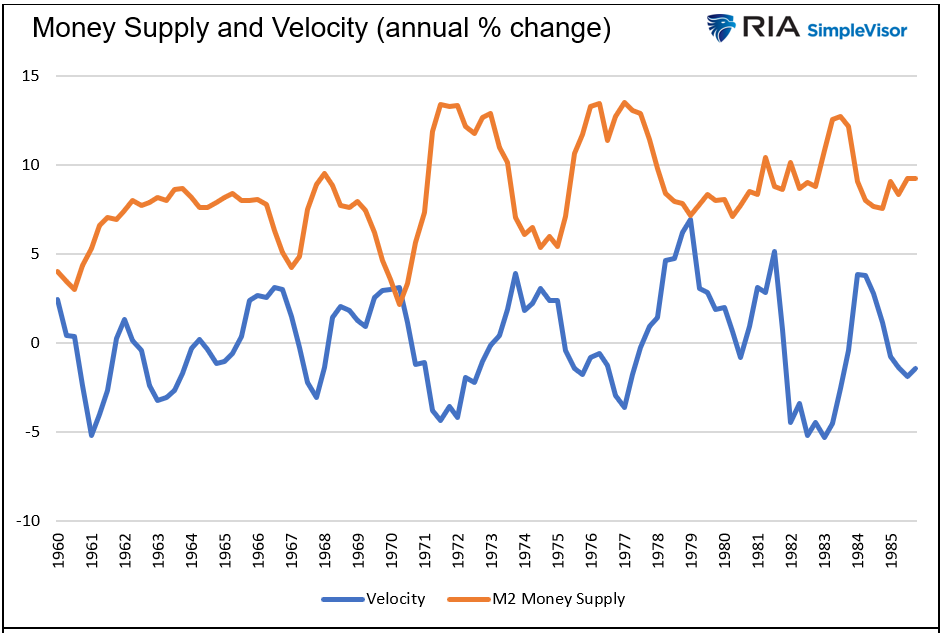
The Fed may have set the inflation fire, but the same Fed under Paul Volcker also helped extinguish it. I will examine the change in mindset at the Fed in the mid- to late 1970s.
Bank loan income may decline if the Federal Reserve cuts interest rates. That doesn't mean investors should avoid them altogether, but it's important to understand the risks.