For South Korea’s economy, it’s not quite a case of first in, first out. But it could be close: Despite some bullish growth forecasts, interest-rate cuts are coming.
When the Federal Reserve signals the likely path of monetary policy to investors this week, including an anticipated start to interest rate cuts in September, it can no longer be complacent about the labor market.
President Joe Biden’s withdrawal and endorsement of Vice President Kamala Harris has sent shockwaves through the political establishment, and while former President Donald Trump remains the frontrunner, the wind has certainly shifted in Harris’s favor.
Progress toward a goal usually isn’t linear. The first 50% isn’t too bad, the next 40% is harder, and the last 10% consumes most of the effort and resources. Business strategists call this the “last mile” problem… and it applies to inflation, too.
As we approach the end of the fiscal year, investors should be focusing on the Treasury General Account as one factor of many that may impact global liquidity, and in turn, market performance in the coming two quarters.
With growth moderating and inflation cooling, the US seems on track for a soft landing—as markets digest a stream of incoming information. Equity performance may be on the verge of broadening beyond a handful of stocks, and still-sizable bond yields bolster return potential.
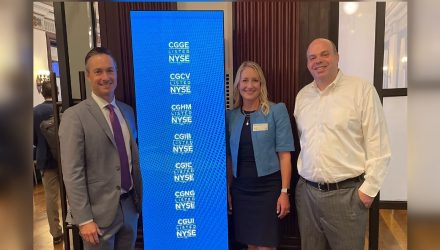
In June, Capital Group added seven new actively managed products. Its executives were in New York last week to ring the NYSE closing bell.
The second quarter began with inflation concerns causing a negative return in April, but improved inflation led to a more hopeful market in May and June, with AI and semiconductor stocks leading.
It's been another strong first half for the U.S. ETF industry, with overall flows set to challenge or surpass historic records.
Increasing the tax efficiency of a retiree’s income portfolio with the NEOS ETF suite may offer several benefits.
Goldman Sachs Asset Management is launching four new municipal-bond exchange-traded funds, adding to the $129 billion corner of the state and local government debt market.
The big story making the rounds this summer is the spike in the small-cap Russell 2000 since the release of the latest Consumer Price Index (CPI) report, which shocked the market by printing 0.0% month-over-month in June.
Western demand and monetary policy are having an important impact on economic prospects for the Asia-Pacific region.
I almost exclusively talk about stocks here in Dividend Digest because dividends are at the root of my strategy. But most income investing includes some level of exposure to debt.
US stock markets have remained bullish in the face of deepening domestic and international risks, owing to three key factors. But with two of these coming under pressure, the durability of the current cycle will depend on the third: the US Federal Reserve.
The ongoing global electrification is spurring a demand for copper, but supply shortages could portend higher prices in the future.
This symposium brings the brightest minds in the ETF and mutual fund industry together for panel discussions spanning nine critical fixed income topics.
The US inflation rate, which had surged to over 9% two years ago, is now around 3%. Based on current trends, it should settle at 2.5%-3%, a range that most economists would deem consistent with financial stability, including a firm anchoring of inflationary expectations.
For taxable investors, an appreciating portfolio can be a mixed blessing. But regular loss harvesting isn’t the only way to reduce your portfolio’s tax bill, especially as its value rises. We share some important tax-management techniques for the future.
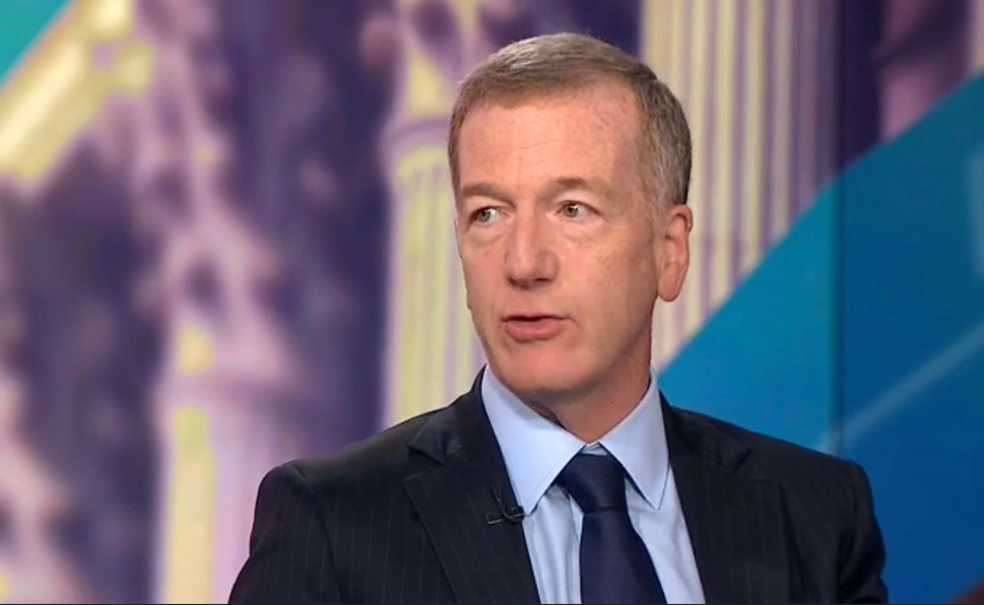
Following the historic decision by President Biden to drop out of the 2024 race, Raymond James CIO Larry Adam provides insight into his team's economic and market outlook.
With a recent IRS announcement, heirs now have clarity on the 10-year rule for distributions from inherited retirement accounts. Our Bill Cass details the final regulations.
The bitcoin halving event in April 2024 reduced the block reward for miners, which is expected to increase bitcoin’s price.
Qraft Technologies took AI-driven investment products to the next level with the launch of the LG-QRAFT AI-Powered U.S. Large Cap Core ETF (LQAI) in November of 2023. The firm partnered with LG AI Research, an artificial intelligence (AI) research hub of South Korea's LG Group, to create LQAI.
When looking to pair yield and credit quality, corporate bonds are an ideal option, especially when it comes to investment-grade.
The momentum we've seen in U.S. equity markets over the past year continued in the second quarter of 2024. With large technology stocks leading the wave, the S&P 500 index has risen 23% in the 12 months ended June 30.
US exchange-traded funds investing directly in Ether achieved overall net inflows of $107 million on their first day of trading in launches that will provide a window onto mainstream crypto demand outside of Bitcoin.
Real estate stocks have taken a hefty beating this year, with REITs having the sole distinction of being the lone S&P 500 group in the red.
While it's too early to declare small caps' recent outperformance as a meaningful trend shift, we continue to think high-quality companies and industries will likely perform well.
Slower spending is a part of the return to normal economic conditions.
In a recent The Wall Street Journal article, Jason Zweig correctly pointed out that 85% of active stock-picking funds and ETFs had underperformed their benchmark.
Experts from the third-largest ETF manager by AUM make their predictions regarding active, retail, and inheritances.
Financial advisors are increasingly turning to social media platforms to expand their client base. But in today’s rapidly evolving digital landscape, the traditional marketing funnel model – comprising awareness, engagement, and conversion stages – often falls short when applied to these platforms.
If you’re finding referrals aren’t as plentiful or as easy to activate as they used to be, it’s time to ask yourself: is concentrating on referral hunting really worth your time?
VettaFi discusses the impact of hurricanes on energy companies — upstream, midstream, and downstream.
Local currency rates and FX screen attractive, while credit is neutral. In our Quarterly Valuation Update, we provide our Q2 assessment.
The latest Consumer Price Index (CPI) release has brought some much-needed respite, indicating a slowdown in inflation. Yet, underlying economic conditions suggest that this reprieve may be temporary, with potential for inflationary pressures to reassert themselves in the coming months.
There are many advantages and risks associated with any investment. Whether you are buying a stock, a house, a business, or a bond, each investment has unique characteristics that allow an investor to gain from particular investment features with varying risks.
The stock market is not a balloon that gets bigger when money “flows into” it. It doesn’t get smaller because money “flows out” of it. Holding the number of shares constant, the stock market gets bigger if investors pay a higher price for those shares. Period.
Fed speakers will deny any notion that its monetary policy aims in part to help the government fund her debts. Regardless of what they say, we are already in an age of fiscal dominance. Monetary policy must consider the nation’s debt situation.
On this episode of the “ETF of the Week” podcast, VettaFi’s Head of Research Todd Rosenbluth discussed the PIMCO Active Bond Exchange-Traded Fund (BOND) with Chuck Jaffe of “Money Life.” The pair talked about several topics regarding the fund to give investors a deeper understanding of the ETF overall.
The incorporation of artificial intelligence in the crypto space could push AI-focused exchange-traded funds even higher.
The recent out-performance of US small-caps is facing technical resistance and lacks fundamental drivers to carry on for a longer period of time, according to Morgan Stanley’s chief US equity strategist Mike Wilson.
Canola oil — invented in Canada 50 years ago as a healthier, shelf-stable cooking fat — may soon venture beyond the world’s kitchen cupboards to a spot in the airways.
With both economic and inflation data continuing to weaken, expectations of Fed rate cuts are rising. Notably, following the latest consumer price index (CPI) report, which was weaker than expected, the odds of Fed rate cuts by September rose sharply. According to the CME, the odds of a 0.25% cut to the Fed rate are now 90%.
The inflation picture is getting better but we still have too much of it. Inflation is going but not gone, and probably won’t be gone anytime soon. Today I’ll tell you why.
A seismic shift is taking place in corporate America as even more companies announce plans to relocate from blue states to more business-friendly jurisdictions like Texas.
Relatively high yields mean investors who have been focusing on short-term securities wouldn't need to sacrifice much yield if they chose MBS to help limit their reinvestment risk.
As we start the second half of 2024 and we approach next week’s release of the preliminary report on real GDP for 2Q, we continue to expect 2H economic growth and inflation to downshift versus what we saw during 1H of this year.
In this article, we look at three indicators from the past week: retail sales, industrial production, and the Conference Board’s Leading Economic Index (LEI). At first, these indicators might seem unrelated. However, they all have a role in predicting economic trends.
Earlier interest-rate cuts would come as good news for the US economy.