As GMO celebrates its 30th anniversary managing emerging debt this year, we offer our comprehensive guide to emerging debt markets. Given the tumultuous recent events – a global pandemic, defaults, repricing of interest rates, relentless strength in the U.S. dollar – we’ll focus on the Why as a starting point. Then we’ll dive into the proliferating How, covering strategies and vehicles.
From "how" to "why now," here are four things investors should understand about bond investing.
The Northern Trust Economics team reacts to the Fed's decision and shares its outlook for U.S. growth, employment and inflation.
Despite forthcoming volatility, it's an ideal time to get municipal debt exposure, especially in the current market environment.
Trend-following is an exercise in technical analysis, systematic rules following, and signals reading that’s objective and agnostic.
With interest rates on the decline, investors may want to consider filling gaps in small- and mid-cap quality ETF exposure.
Now that the Fed has begun the rate-cut cycle, investors can use option income ETFs to provide long-term income and risk protection.
Earlier this month, OpenAI released its most-advanced models yet, saying they had the ability to “reason” and solve complex math and coding problems. The industry-leading startup, valued at some $150 billion, also acknowledged that they raised the risk artificial intelligence could be misused to create biological weapons.
What history can tell us about seasonal returns.
Sometimes that means lower priority tasks fall through the cracks. Here are four tips for managing procrastination tendencies.
Americans might be forgiven for basking in self-satisfaction when it comes to the economy. The country’s most prominent CEO, Jamie Dimon, has called the country’s boom “unbelievable,” and its most stimulating magazine, The Atlantic, has dubbed it a “superstar.”
The rise of artificial intelligence has reordered the American stock market, pushing the likes of Nvidia Corp. and other chipmakers into the upper echelons. There’s one storied corner, though, where the changes wrought by AI haven’t shown up: the Dow Jones Industrial Average.
An action-packed week on Wall Street ends with a bang as index-tracking funds are set to reshuffle $250 billion of shares, just as a “triple witching” trading event hits.
Conference season brings about its own set of volatility catalysts. Portfolio managers and traders must keep their ears out for clues on the state of the broad economy, specific industries, and individual companies.
The Fed enacted a 0.50% interest rate cut, the first in the Fed’s historic fight against inflation that’s lasted over two years.
As the back-to-school season fills your social media feed with first-day photos and ads for the latest school supplies, it is also a prime opportunity for financial advisors to reconnect with clients about their education savings plans.
An ETF that just last month was dubbed the most volatile to ever hit Wall Street has already been upstaged, after the debut of a competing product that adds even more leverage.
In the long-running popular series about what’s wrong with economics, there is a new entry: Our profession is too insular. “Economists generally agree that competition is good, and that markets with only a few dominant players are inefficient,” writes the economist David Deming in the Atlantic. “We may need to take a hard look in the mirror.”
In the frothy business of selling artificial intelligence service, Salesforce Inc. has been punching above its own weight. “Salesforce?” I hear you wonder. The folks in the dull business of selling customer relationship management software?
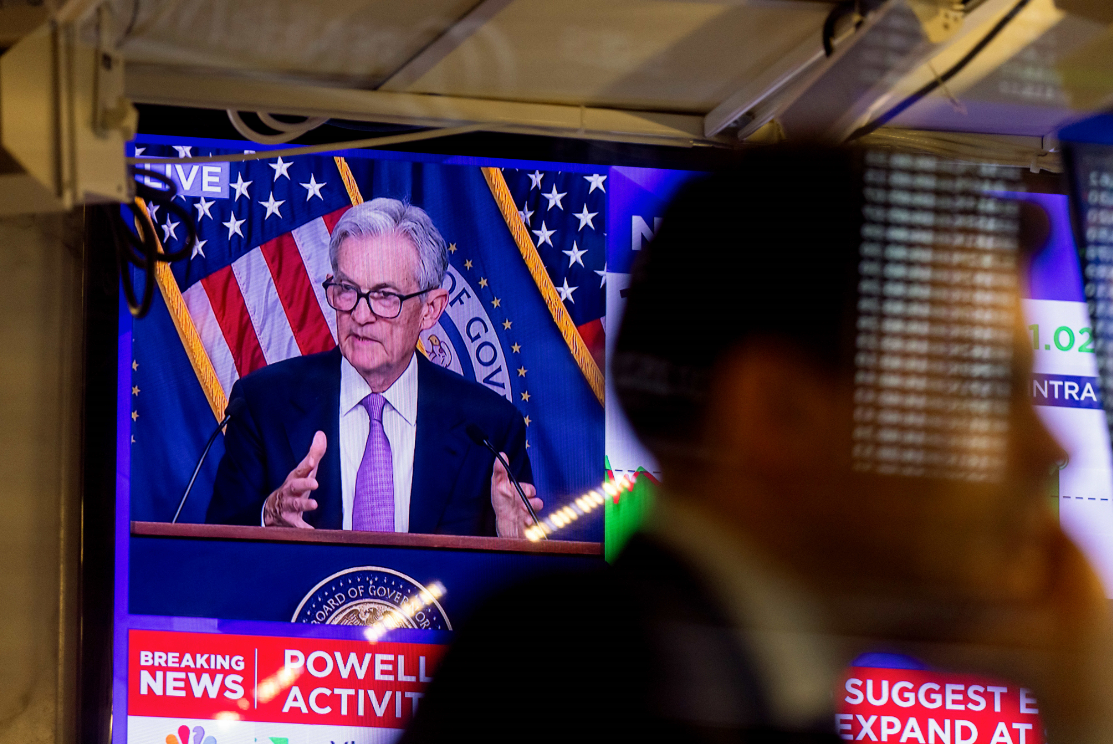
The Federal Reserve on Wednesday began its policy easing with a bang. Much of the focus was on its decision to cut interest rates by half a percentage point from a two-decade high. But the key question for the bond market is where rates will land once all is said and done. Nobody knows for sure, and Chair Jerome Powell injected enough uncertainty to ensure a choppy ride ahead.
Jerome Powell delivered exactly what traders up and down Wall Street had long hoped for: A big interest-rate cut that would justify this year’s steep rally in stocks and bonds as the era of tight monetary policy finally began to reverse.
MSCI boosted India’s weighting in the MSCI Emerging Markets Index and reduced China’s in its latest quarterly rebalance, continuing long-term trends.
While the beach version of SoCal has had an epic, non-marine layer summer, it seems to have been enjoyed by few locals who instead violate the cardinal rule of adult life without children living at home and nevertheless travel to Europe in summer. We haven’t missed you.
With the Fed nearing its first interest rate cut since 2020, enthusiasm for fixed income assets is increasing. Enter the ALPS Intermediate Municipal Bond ETF.
A client recently refused to complete my risk tolerance questionnaire. After looking through our instrument, with its fairly standard hypotheticals about market movements and portfolio returns, they said, “That’s not how I think about risk.”
The price increments at which thousands of stocks and ETFs are quoted look set for an overhaul Wednesday, when the US Securities and Exchange Commission votes on final rules to reduce them to less than 1 cent.
The Federal Reserve is widely expected to begin cutting interest rates this week as moderating inflation allows the central bank to roll back some of its previous rate increases. I expect that some investors will be tempted to chase stocks given the stubborn conventional wisdom that interest rates and stock prices move in opposite directions. They should reconsider.
Munis cemented their best “summer” since 2010 after another month of strong performance. Some near-term caution is warranted given that September has been historically challenging. Robust issuance ahead of the election should provide opportunities in the primary market.
It might just be the most audacious bid on Wall Street to exploit newfangled AI tools to mimic the legends of finance.
Vanguard, one of the world’s biggest asset managers, is buying the dollar this week on the view that market bets on Federal Reserve interest-rate cuts are overdone.
The last five years have bombarded investors with a seemingly never-ending array of challenges. Yet despite all these obstacles the S&P 500 is up almost 90% as of this writing.
History suggests Presidential elections are not nearly as important to the financial markets as the media plays them up to be, and a focus on fundamentals rather than political slogans has generally been beneficial. Historical asset class and sector performance shows virtually no consistent performance pattern under Democratic or Republican Presidents.
Panic is never a good investment strategy—nor is greed. Here's how disciplined investing helps navigate through volatile environments.
The August jobs report highlighted a critical reality: the labor market is cooling off. While the headline figures seemed decent, the underlying data reveals clear warning signs that worker demand is slowing.
The yield curve measures the difference between short-term, intermediate-term, and long-term Treasury yields.
Active fixed income ETFs have taken a big leap this year per new research about active ETFs that may draw new investor eyes.
VettaFi’s Cinthia Murphy provides an in-depth look at the recent wave of private credit ETF filings and what may come next. ETF industry veteran Dave Nadig discusses the challenges of packaging private assets within the ETF structure and also offers perspective on the current state of product development overall.
When buying or selling an RIA practice, one of the most important documents you'll encounter is the Asset Purchase Agreement (APA). This agreement is like the foundation of the deal, spelling out exactly what is being bought or sold, how much will be paid, and the responsibilities of both parties.
Alphabet Inc. shares have been struggling for the past two months amid mounting regulatory uncertainty. For some bulls, that’s a buying opportunity.
Microsoft Corp. raised its quarterly dividend 10% and unveiled a new $60 billion stock-buyback program, matching the size of a repurchase plan three years ago.
Investors piled money into exchange-traded funds that buy emerging-market bonds on Friday amid optimism that developing-nation debt will get a boost from a highly anticipated Federal Reserve rate cut this week.
The Federal Reserve (Fed), and markets, overreacted to the slightly higher inflation seen during the first quarter of the year. After that scare, the Fed went from expecting three cuts in the federal funds rate in 2024 to just one cut during its June dot plot release.
The Federal Reserve is widely expected to begin cutting interest rates at its September meeting. Market performance may depend on whether the pace of cuts is fast or slow.
You don’t have to read or listen for long these days before you hear a politician, pundit, or politically-inclined person say: “Government spending causes inflation.”
The longest continuous yield curve inversion has finally come to an end. Or has it? The answer depends on how you measure it.
Market participants don’t need to pick names in search of chip stock value, because the ETF SMH holds chip equities sporting favorable valuations.
I have looked at market data on inflation expectations, Fed Funds futures, and other factors that influence interest rates. Today, I add an unorthodox factor to the list: cash cows.
The money manager who hasn’t cracked open the Journal of Finance, Journal of Financial Economics, Journal of Portfolio Management, or Financial Analysts Journal for the past few years probably hasn’t lost any steps.
The time has come! After the most aggressive tightening cycle in modern history, the Fed is ready to turn the page and begin dialing back its policy restraint after the second longest ‘on hold’ period (14 months) in history. Barring any surprises, the Fed should lower interest rates at its meeting next week—the first rate cut in over four years—in the hopes of preserving a soft landing for the economy.
BlackRock Inc. strategists turned underweight short-dated US Treasuries from overweight, saying the extent of Federal Reserve interest-rate cuts the market is betting on is unlikely to pan out.