Supply chain disruptions related to the port workers’ strike loom, the impacts of which we know can be incredibly destructive.
Long-term US Treasury yields rose last week as investors digested mixed economic data that reinforced the idea of a "Goldilocks" economy.
Join the experts at Invesco for an educational webcast exploring strategies and ETFs for tax optimization.
Alpha (α) is a fundamental yet poorly understood concept in finance. Simply put, it is the difference between the return of an investment and that of a risk-adjusted benchmark. In a more advanced definition, alpha is the residual in an asset pricing equation (see Appendix A). Alpha is what active managers strive to achieve and passive managers do not pursue.
A return to lower yields has been every bond fund manager's dream since the nightmare of 2022. But now, with expectations dashed that they’d get their wish this year, it appears they’ll have to hang their hopes on 2025.
Investors who buy bundles of loans packaged into bonds are increasingly using exchange-traded funds to do so, according to a report from Bank of America.
Private capital – encompassing private equity and private credit – is in the midst of a bit of a renaissance at the moment. IPO activity hit a peak in 2021, the year after the pandemic and then promptly plunged to levels not seen in years.
The Fed’s “recalibration” of monetary policy is more than just about shifting to rate cuts. It also involves where the policy maker is now placing its greater emphasis on setting the course for easing in the future. Rather than inflation being the primary driver in the decision-making process, labor market activity has now taken center stage, and with that, one could argue, for the Fed, it’s now about the economy.
With interest rates declining, enthusiasm for muni bond ETFs could be reborn in income investors, including retirees.
Market participation broadened beyond technology stocks during the third quarter.
Elon Musk went all-in to get robotaxis onto roads, sacrificing a widely anticipated cheaper car, gutting teams focused on other projects and downplaying Tesla Inc.’s sales slowdown.
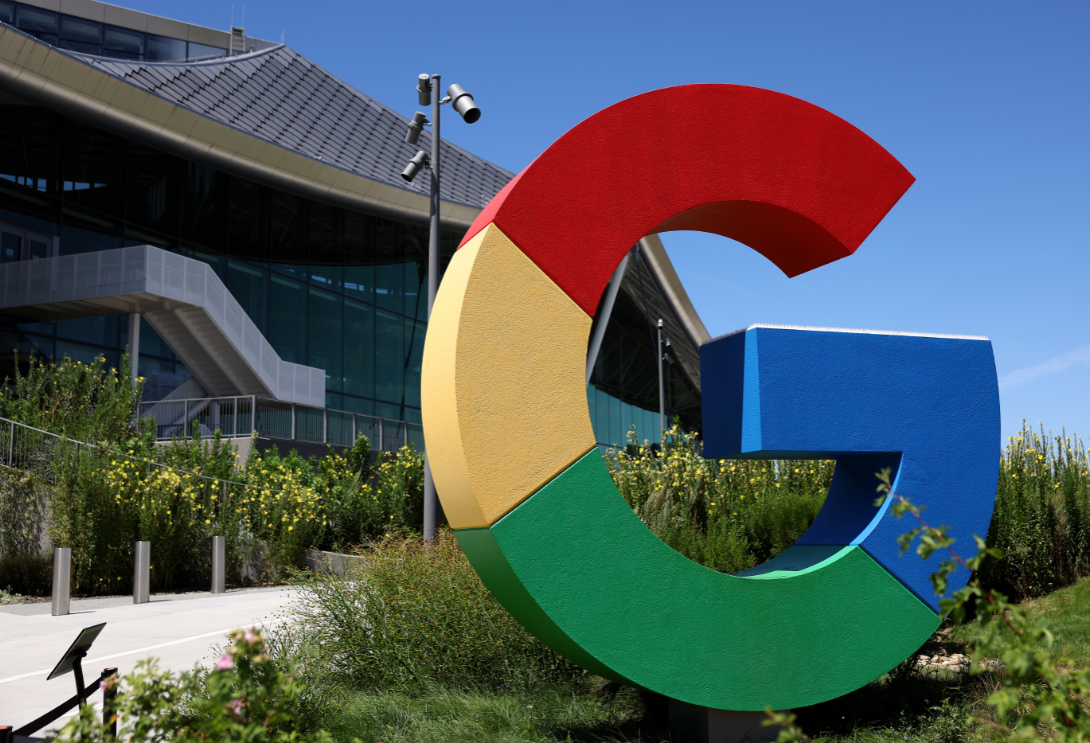
The US Justice Department is considering asking a federal judge to force Google to sell off parts of its business in what would be a historic breakup of one of the world’s biggest tech companies.
It is hard to be “the most pro-union president in American history,” as Joe Biden likes to claim, while also leading an effort to “reimagine and rebuild a new economy,” as he has also promised. That’s because these goals are fundamentally incompatible: America’s unions no longer fit the modern economy.
If investors in Alphabet Inc. weren’t all that worried at first about the possible consequences of Google losing its search antitrust case, they perhaps should be now.
Many emerging markets have delivered a robust performance this quarter amid a number of headwinds and we expect key geographies to build on that in the coming months.
As the November 2024 election draws near, the election outcome will profoundly affect the financial markets. Whether Donald Trump or Kamala Harris wins the presidency, each administration will bring distinct policies creating investment opportunities and potential risks for investors. With a divisive political landscape, it is crucial to understand how these potential outcomes can shape the stock market and your portfolio strategy.
Last week marked the beginning of the end of one of the most rapid interest rate hiking cycles in U.S. history.
Real estate stocks are notoriously rate-sensitive assets. It’s not surprising the delivery of the rate cuts were beneficial to the sector.
A crystal ball enlightening a trader about the rate cut headlines would have been costly. However, a trader with the crystal ball and proper context may have been more successful.
Palmer Square Founder Chris Long discusses the $32 billion firm’s ETF entrance, spotlighting their Credit Opportunities ETF (PSQO) and CLO Senior Debt ETF (PSQA). VettaFi’s Todd Rosenbluth offers perspective on Bitwise’s XRP ETF filing, CLO ETFs, and the continued rise of actively managed ETFs.
Foreign Agents provides a powerful and depressing master class in the famous warning of Hamilton’s Federalist No. 21. To quote another founding father, Benjamin Franklin, “a republic, if you can keep it” indeed.
China’s recent stimulus announcements sparked a massive rally in its stocks, and a growing chorus of analysts see more gains ahead. Is this a reawakening of the country’s long slumbering stock market or just another false start? Bloomberg Opinion’s Nir Kaissar and Shuli Ren, based in the US and Hong Kong respectively, met online to discuss the risks and opportunities.
Judging from the public commentary, last Friday’s US jobs report confused economists in terms of their understanding of economic developments in the world’s largest economy and the policy approach of the Federal Reserve.
The rout in US government debt extended slightly on Tuesday, with longer-dated yields at the highest levels since late July and inflation data later in the week expected to enable Federal Reserve interest-rate cuts.
It’s no secret that betting on defense suppliers when geopolitical tensions ratchet higher pays off — at least in the short term. But Wall Street says there’s more to this latest rally.
Global monetary easing and modest growth are creating a fairy tale story for investors. Their very high conviction in the outcome of that story, however, belies a number of serious risks.
The Federal Reserve began cutting interest rates. Whether the economy falls into recession, hard or soft, is anyone’s guess.
Gold and the related exchange traded funds are among this year’s best-performing assets, helped in part by interest rate cuts.
Building a TIPS ladder gives us a license to spend and creates a spending floor. My TIPS ladder combined with Social Security provides a $10,000 monthly inflation-adjusted cash flow, though I’m delaying taking Social Security until age 70, of course.
GAO reports are intended to improve industry practices. GAO failed in its target date fund report but succeeded in its conflicts of interest report.
In the 1989 blockbuster Back to the Future II, time travel enables Michael J. Fox’s nemesis, Biff, to become a gazillionaire by bringing an almanac with sports match outcomes back from the future. We thought it might be instructive, and certainly entertaining, to make a less fanciful version of this dream a reality – for a few lucky people.
The strong gain of 254,000 jobs in September was a welcome surprise after months of cooling in the labor market and reinforced other signs of strength in the US economy. However, one month does not make a trend, and even with the Federal Reserve cutting interest rates, a sustained turnaround in hiring will take time.
Oil futures posted their largest gain in more than a year last week. And the frenzy was even bigger in the options market.
The “no landing” scenario – a situation where the US economy keeps growing, inflation reignites and the Federal Reserve has little room to cut interest rates – had largely disappeared as a bond-market talking point in recent months.
t.
On this episode of the “ETF of the Week” podcast, VettaFi’s Head of Research Todd Rosenbluth discussed the Vanguard Core Plus Bond ETF (VPLS) with Chuck Jaffe of Money Life. The pair discussed several topics related to the fund to give investors a deeper understanding of the ETF overall.
How will the U.S. dollar respond to Federal Reserve rate cuts? The factors that have supported a strong dollar for years remain largely intact.
We are currently in the “everything market.” It doesn’t matter what you have probably invested in; it is currently increasing in value. However, it isn’t likely for the reasons you think. A recent Marketwatch interview with the always bullish Jim Paulson got his reasoning for the rally.
It’s my birthday week and I have guests and family gathering in the next room, so this will hopefully be a quick letter as well as ending with what will likely be controversial food for thought.
As we approach the final stretch of 2024, much of the nation’s focus is on the upcoming U.S. presidential election. But while the political landscape remains uncertain, the markets are painting a different picture. September, traditionally a sluggish month for global equities, delivered an unexpected surge.
Market conditions are shifting fast. But making impulsive changes to equity portfolios and allocations can be counterproductive.
Options-based ETFs are one of the fastest-growing categories in the market today, with product proliferation and adoption rising quickly.
Rate cut expectations pushed more investors into investment-grade corporate bonds, giving them their best quarter in nearly a year.
In suburban Texas, a neighborhood complete with an amphitheater, dance hall and goat farm is scheduled to be erected 40 miles from Houston’s downtown — providing municipal-bond investors a window to bet on one of the fastest-growing areas of the US.
Traders slashed their bets on the pace of future Federal Reserve interest-rate cuts after September US employment data blew past estimates and signaled a robust hiring trend.
OpenAI has tapped global banks for a $4 billion revolving line of credit on top of its recent $6.6 billion fundraising, building a massive war chest to stay ahead in the costly race to develop more sophisticated artificial intelligence.
Mohamed El-Erian says the Federal Reserve needs to renew its focus on its fight against rising prices after September’s surprisingly hot jobs report served as a reminder that “inflation is not dead.”
If the risk of stepping too far out into the yield curve is too much to bear, consider using intermediate bond options.
Flashing green light – crowd will determine path forward.
As we look at today’s economy and financial markets, we are at a crossroads: Will it be a long straight highway to a soft landing, or will it be a bumpy road to recession?
When looking at the increasingly complex structure of corporate lending in the present day, it can be easy to lose sight of the purpose of private credit and its lasting value to investors.