Leading asset managers T. Rowe Price announced the acquisition of $19 billion F/m Investments in a press release Thursday afternoon. The deal brings F/m’s suite of leading fixed income strategies and ETFs into T. Rowe Price’s fund stable, reinforcing those areas in the latter’s list.
For years, Russell index reconstitutions have been treated as a routine maintenance event. Thousands of stocks are ranked, memberships are adjusted, and markets move on
High-yield municipal bonds are one of the best performing asset classes this year but that doesn't mean we think all investors should consider adding them to their portfolio.
After recovering from the “tariff tantrum” that saw stocks of all sizes and styles bottoming out in early April of 2025, equities finished 2025 in admirable shape, carrying the positive momentum into 2026.
The headline U.S. unemployment rate has been falling for several months, but a closer look at who is leaving the workforce – and who isn’t entering or returning to it – reveals why average wages are stagnating, and why labor markets aren’t a source of inflationary pressure.
There’s new life in the gold market, and that momentum could represent a buying opportunity for bullion-enthused investors seeking income. The NEOS Gold High Income ETF (IAUI) is ready to meet the moment.
Alibaba Group Holding Ltd.’s profit plunged more than 75% after the Chinese company ratcheted up quarterly capital spending to almost $10 billion, aiming to safeguard its position in a fiercely competitive global AI arena.
With a slew of unexpected maneuvers this year, Scott Bessent has emerged as the most interventionist Treasury secretary in financial markets in decades — putting his credibility on the line in an effort to quell a potentially damaging rise in US borrowing costs.
It has been a stellar Q2 earnings season, but we aren’t done yet. After the big retailers this week, Jensen Huang and NVIDIA grab the spotlight on Wednesday, August 26. Then Kevin Warsh takes the podium on the 28th. Through it all, daily market swings hinge on the latest AI developments, along with consumer trends and what’s happening geopolitically.
Market leadership has broadened beyond mega-cap tech, but the next phase is likely to reward disciplined, diversified investors, write Chris Galipeau and Lukasz Kalwak of Franklin Templeton Institute.
Hedged equity as a liquid alternative uses an options-based equity strategy — specifically Swan Global Investments’ Defined Risk Strategy (DRS), in continuous operation since 1997 — as a permanent alternatives allocation that stays invested in the equity market while actively managing downside risk through LEAPS put options
U.S. equities were mostly higher last week, though gains were modest and trading was quiet. The S&P 500, an index of the largest U.S. companies, rose 0.4 per cent and closed on Thursday at a new record high.
Investor appetite for fixed income continues to expand, as evidenced by the latest weekly ETF inflows report from TD Securities. For the week ending August 14, 2026, U.S.-listed ETFs gathered $41.0 billion in total weekly net inflows, which included $13.2 billion into fixed income funds.
The nation’s affordable-housing shortage is fueling a fast-growing corner of the municipal bond market, as lenders securitize portfolios of multifamily mortgages to free up capital for new loans.
Global business activity is showing signs of stabilization, but beneath the surface, the world economy remains divided. Growth momentum has improved in several major developed economies, led by a stronger U.S. expansion and a tentative recovery in parts of Europe.
Margin of safety has nearly vanished from today’s market, as heavy AI debt, off-balance-sheet financing, and a stressed bond market leave stocks little room for error.
Anthropic’s preliminary second-quarter results reignited enthusiasm across the artificial intelligence sector, lifting semiconductor stocks 1% on Monday despite broader tech sector declines. Q2 revenue topped $11.5 billion — a 14x surge year-over-year and more than 2x last quarter’s figures.
FactSet finds core clients still favor cheap funds, while active ETF buyers pay a premium for performance, a trade-off advisors should watch.
With the US fiscal year 2027 (FY27) state budget season now largely complete, several important trends have emerged. Most states and local governments adopted their budgets without major delays or political impasses, an encouraging sign for two important credit considerations: governance and financial management.
BDC bonds have recovered most of their underperformance while equities continue to lag, suggesting investors are demanding a higher risk premium to compensate for uncertainty around portfolio valuations.
Equity markets continued to push higher this week, with nearly all major indices in the U.S. and abroad closing near or at record highs. While longer-term interest rates continued to drift higher, shorter-term interest rates moved lower as investors pushed out both the timing and magnitude of potential Federal Reserve rate hikes.
The biggest political news of recent months is the rise of the Democratic Socialists of America. We suppose this started in New York City, with the election of Mayor Zohran Mamdani, but it has spread to Michigan and other states.
America remains the best country in the world to get rich. Some see this as cause for celebration, while others view it as evidence of a broken capitalist system. As an economist, I am less interested in debating whether billionaires (or trillionaires) should exist than in asking what the alternative is.
Discounted municipal bonds could expose you to unexpected taxes. Here's what to know before you buy.
Join the experts at State Street Investment Management for an educational webcast exploring sector performance, key macro drivers, and income-focused opportunities that may help support client outcomes.
As growth accelerates, the first question a leadership team has to answer is not how big the firm can get. It is where the frontier sits, the exact point at which scale stops generating lift and starts generating drag.
The yield on 30-year US Treasuries hit the highest in almost two decades, reflecting investor angst over surging government spending, a flood of long-dated bond sales and inflation that’s been stuck over the Federal Reserve’s target for the past five years.
I’ve said it before, and I’ll say it again: it’s not the political party that matters, but the policies. Investors, I believe, are better served when they focus not on the partisan noise and headlines but the policies that bring about change.
There is no one-size-fits-all approach to choosing between individual bonds and bond funds. The choice depends on an investor’s goals, time horizon, risk tolerance, need for predictable income, and available assets.
Global equity markets continued their strong summer run this week, supported by what has been an exceptionally strong second-quarter earnings season.
The first step in recovery is recognizing a problem. For decades, some U.S. states have had problems with indebtedness. But as we take stock of state finances today, we see many examples of recovery.
This bargain-hunting environment sets up a stark divide for upcoming earnings. Walmart (WMT) remains uniquely positioned as its dominant grocery business continues to draw trade-down traffic from higher-income households, whereas Target (TGT) faces headwinds due to its heavier mix of discretionary home and apparel goods.
For savers, it drives them to seek bigger and bigger returns to keep up with the government’s monetary devaluation. At first, a simple savings account with a relatively low yield will do the trick. But as the dollar loses purchasing power, you need a better return to keep up. So, maybe you stick your money in a higher-interest-yielding CD.
Join the experts at Eaton Vance for an educational webcast that unpacks the nuances of preferreds amid the new Fed regime, geopolitical landscape, and economic backdrop.
Chris Galipeau discusses high-conviction insights that go beyond media headlines.
Hoisington Investment Management — managed by Hunt and Hoisington — sharply reduced its clients’ bond duration and put the proceeds in Treasury bills. That reversal of such long-held opinions deserves serious attention. I will summarize Hunt’s new views and some counterpoints to help you assess his new stance.
Gone are the days of capital-light and cash-flow-rich technology businesses such as internet search, e-commerce and social media. The game now is artificial intelligence, and you had better have hard assets and deep pockets to play, the kind of money few companies have laying around.
As investors debate whether and when the Federal Reserve will raise interest rates, market expectations for further tightening are building around the world — and spelling trouble for bonds.
Reasons to be wary about stocks are quickly disappearing and a Goldilocks scenario looks increasingly likely. That’s precisely why it’s a perfect time to hedge against a market priced for perfection.
Investors are remaining cautious about the markets, according to our U.S. stocks and economy report this month. Our report notes that while investors have continued to pile into the market via strong ETF flows and high margin debt balances, they've done so reluctantly with more subdued attitudes.
Recent trends are sending confusing signals about the health of the U.S. labor market. Since late 2025, the employment/population ratio has moved lower even as the unemployment rate has declined.
The softening inflation data for June and July was broadly supportive of our view that monetary policymakers should keep interest rates unchanged for the remainder of the year. Unfortunately, the picture is likely to become less favorable over the next several months, particularly if oil and gasoline prices continue to move higher. While lower gasoline prices contributed to the improvement in inflation during June and July, they do not tell the whole story.
Whether fixed income investors are focused on locking in yield, managing duration risk, or building resilient core portfolios, bond ETFs have been seeing elevated demand this year.
Many things in healthcare really have gotten dramatically better and cheaper. Sequencing a human genome, for instance, cost close to a billion dollars in 2003. Today, under $1,500, making CRISPR therapy available to treat a plethora of diseases that once had no cure.
In 3Q26, global fixed-income markets continue to navigate a complex backdrop as resilient growth, elevated inflation, hawkish central-bank pricing and the AI infrastructure buildout intersect. Growth remains supported by the US consumer, fiscal spending in Europe and AI-related capital investment, while inflation is expected to moderate through 2026 and into 2027.
Franklin Templeton Institute finds valuations across fixed income sectors becoming more attractive, with all-in yields approaching compelling levels—a signal to consider moving from a short-duration bias toward core bond portfolios.
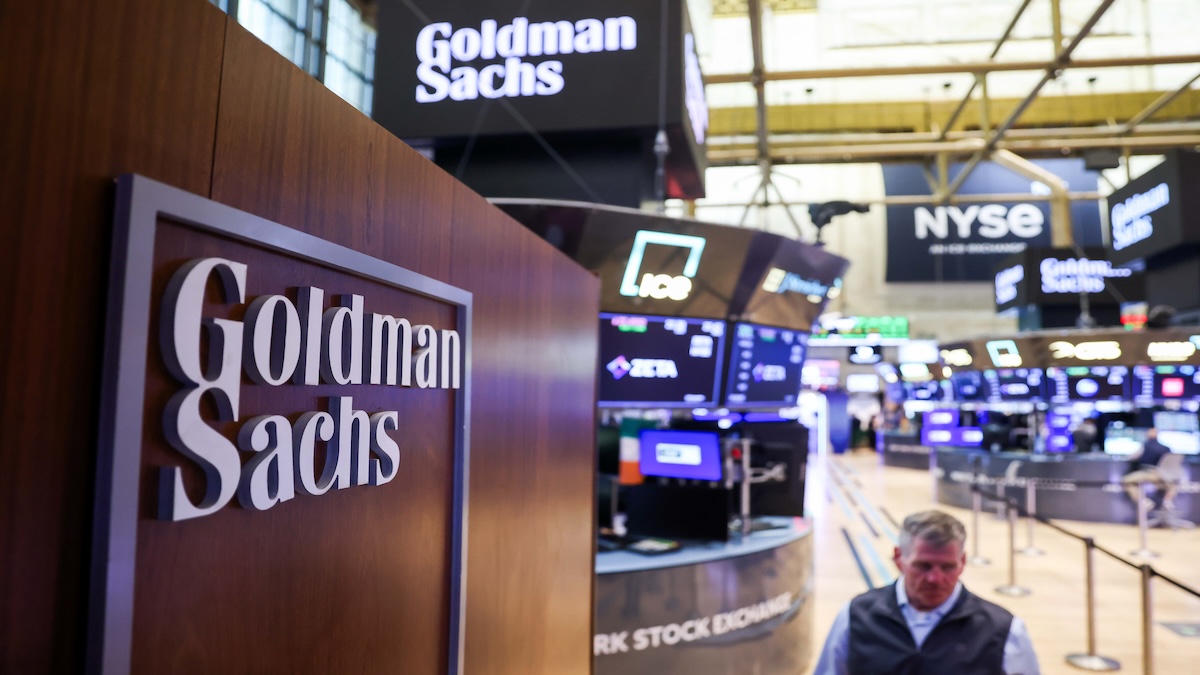
Goldman Sachs Group Inc.’s agreement to buy Neos Investments for as much as $2.25 billion marks a new front in Wall Street’s ETF battle: paying up for specialist firms that have found growth beyond the industry’s low-fee giants.
For most high-net-worth investors, the bond sleeve of a portfolio isn't there to generate eye-popping returns or provide cocktail party fodder. Its job is much more mainstream: support a targeted lifestyle, cover tax bills, dampen equity market volatility, and provide "dry powder" when the world turns sideways.
The S&P 500 towed an anchor for much of the summer as a historic momentum and leverage unwind under the surface dragged on the equity benchmark before breaking out to fresh records last week.