Reasons to be wary about stocks are quickly disappearing and a Goldilocks scenario looks increasingly likely. That’s precisely why it’s a perfect time to hedge against a market priced for perfection.
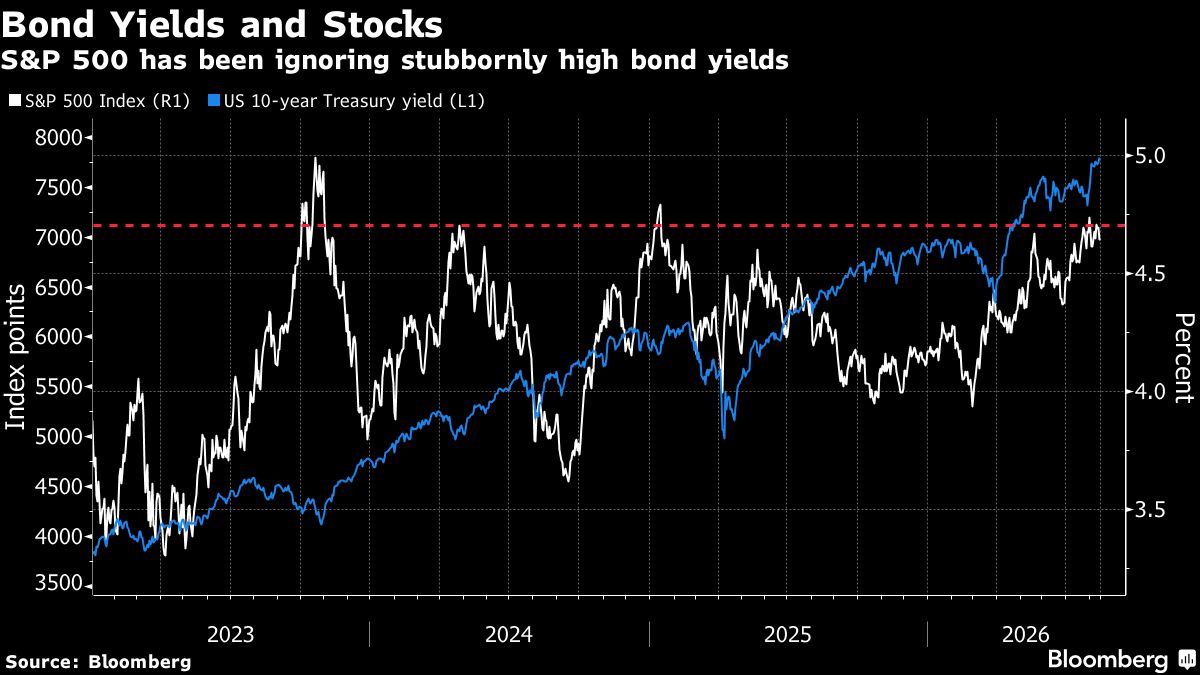
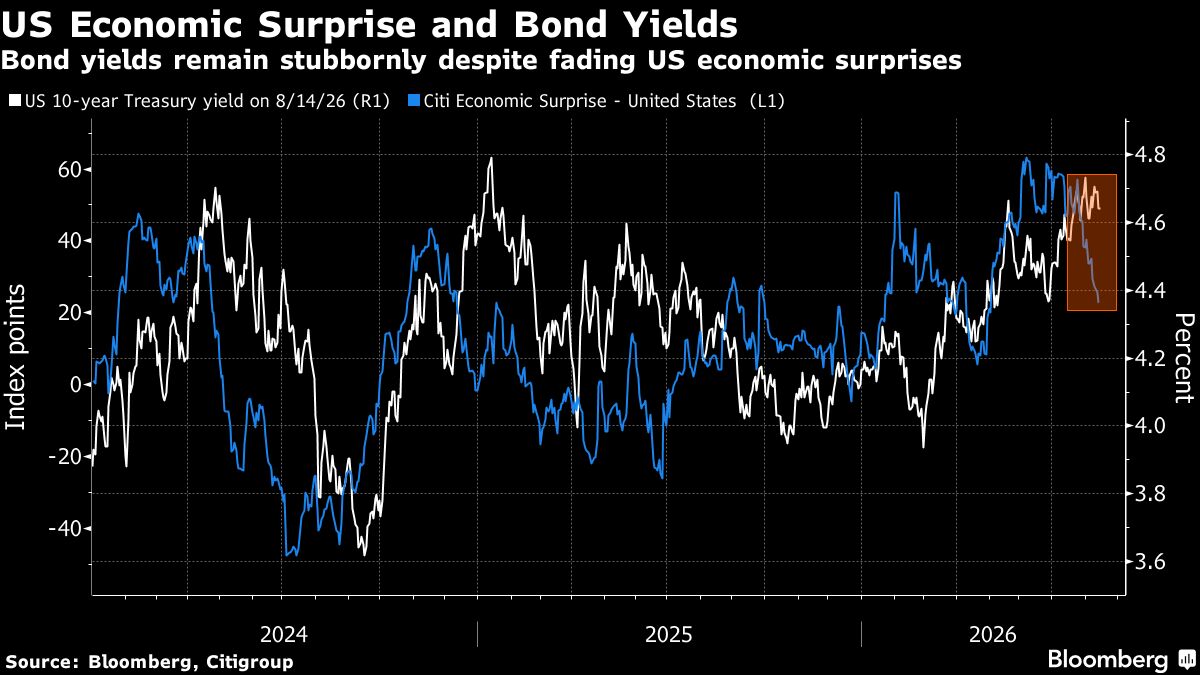
Global indexes are chalking up fresh records after the earnings season confirmed just how much companies are prospering globally, with positive macro economic news giving further support. In the US, the latest inflation data showed easing price pressures, removing expectations of an imminent Federal Reserve interest-rate hike. And yet, the bond market hasn’t given the all-clear.
“The Goldilocks-ish shift in macro data should be supportive, especially for fixed income, as pressure on the Fed to tighten further continues to abate,” said Barclays Plc strategists led by Emmanuel Cau. “However, bond yields have so far remained stubbornly close to recent highs, which may be due to volatile oil prices and rates investors staying in wait-and-see mode” before the Jackson Hole, Wyoming, gathering of central bankers later this month, they said.
The strategists added that for the moment, if near-term hawkish expectations around the Fed have peaked and financial conditions ease somewhat, both yields and the dollar are likely to be capped. Those conditions would also help stabilize the momentum trade and be positive for technology stocks.
On the data front, US wholesale inflation decelerated in July by more than estimated as energy and food costs fell, a report that landed after a subdued underlying inflation reading. The probability of a rate hike before the October meeting, a given at the start of the month, has vanished. The swap market now prices a hike in January. Still, some Fed officials remain relatively hawkish.
This not-too-hot, not-too-cold setup, combined with those strong earnings, has encouraged investors to pile into technology stocks and broaden their exposure to Europe and to other sectors. Profit growth for S&P 500 members is tracking 32%, compared with the 23% projected before reporting began. More than 90% of technology stocks have beaten estimates, according to a Bloomberg Intelligence tracker.
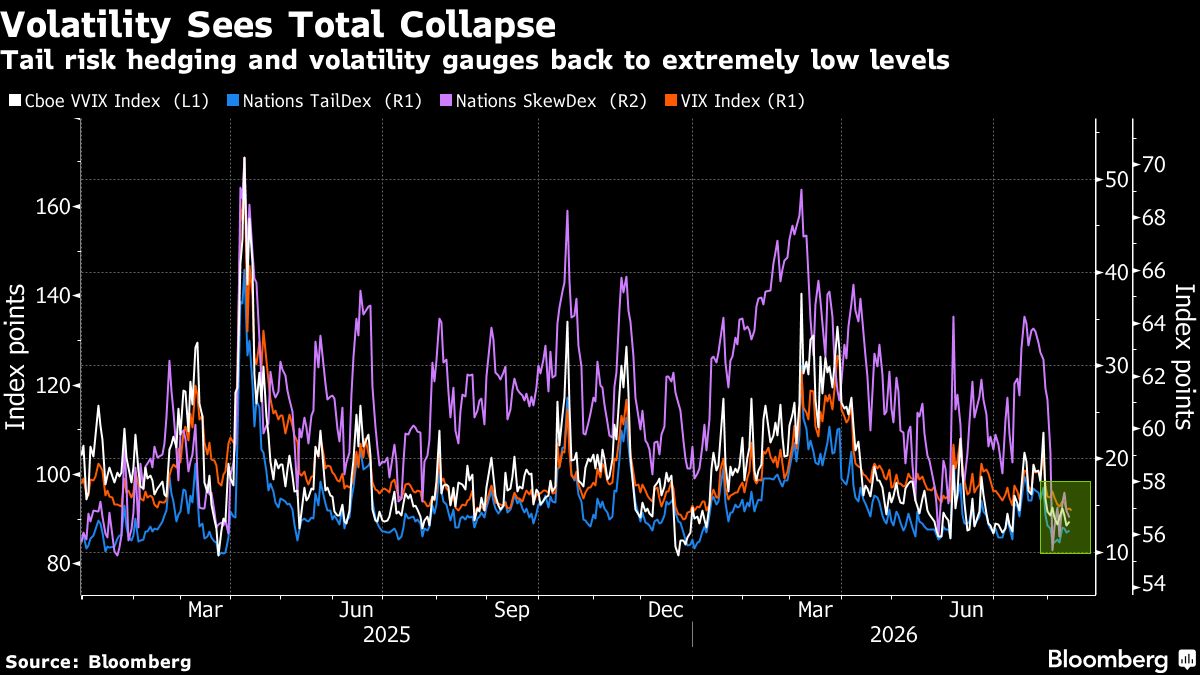
Investors have clearly decided that the gains are worth chasing. For Bloomberg Intelligence chief global derivatives strategist Tanvir Sandhu, the result is a skew exhibiting a dynamic requiring the fast monetization of downside protection and renewed pursuit of the rally through calls. There’s been a sharp shift in the balance between demand for downside and upside convexity. “S&P 500 skew has collapsed in a market regime that remains dominated by upside risk,” he said.
Even so, there are plenty of risk events on the way. The earnings season has a final key calendar item in Nvidia Corp.’s results, due Aug. 26 in the week of Jackson Hole. A little further out, the build-up to November’s midterms could prove volatile, if history is any guide.
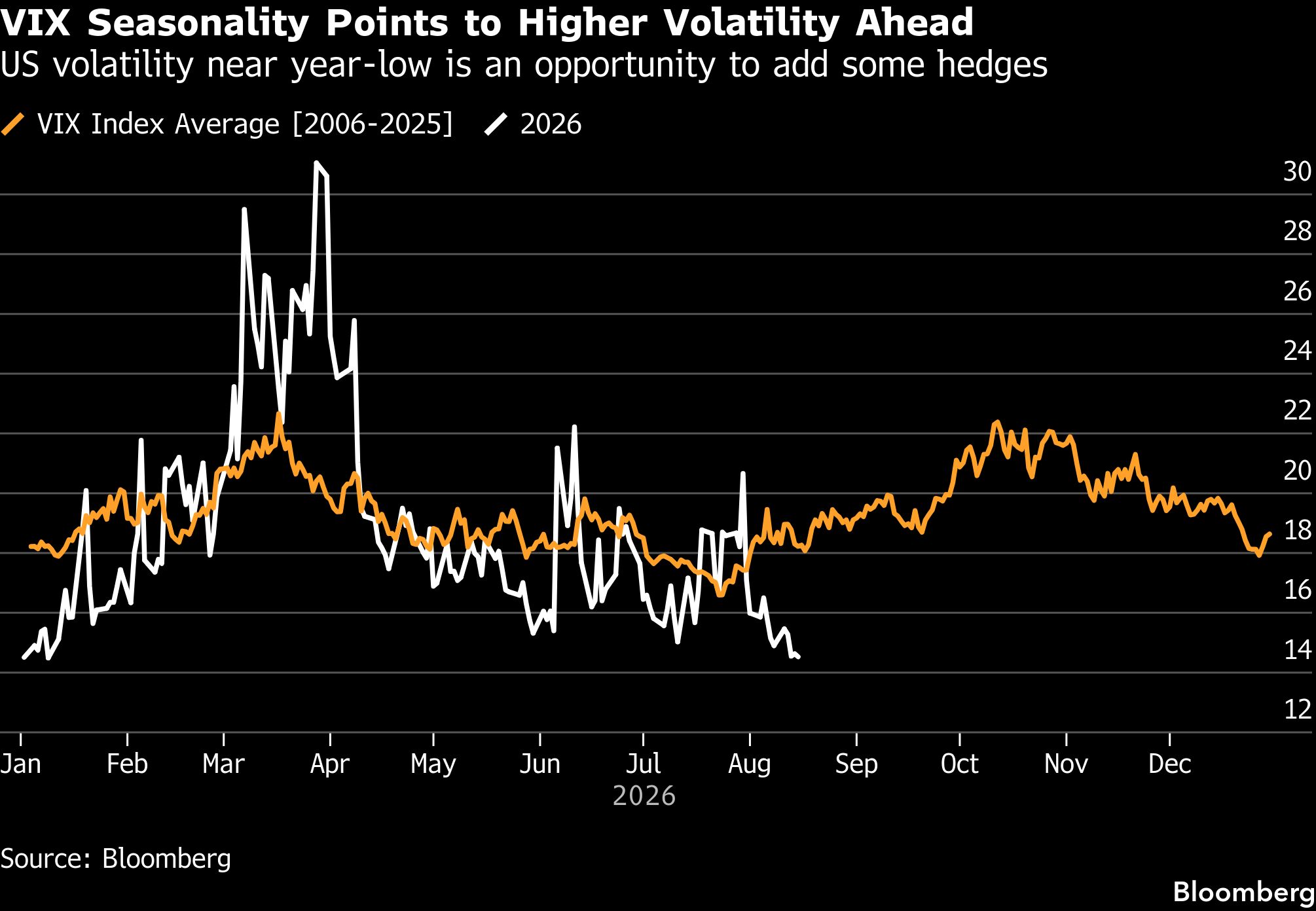
Right now, there is a lull, with the VIX closing below 15 on a weekly basis in August for the first time this year. The absence of wild swings supports risk appetite and reduces the cost of portfolio hedges. But this is also an opportune moment to put protection in place, taking advantage of benign conditions like these, rather being forced to move at a time of dire need.
“With volatility near cycle lows and seasonal risks rising in the August-October months, current levels may offer opportunity to add protection to new risk or year-to-date gains, while it remains relatively inexpensive,” said Bank of America Corp. technical analyst Paul Ciana.
There’s ample evidence to back the suggestion of poor seasonality. The August-September period is typically the weakest for global stocks, historically handing investors losses and with one of the highest frequency of negative readings at about 50%. After chasing the rally and releveraging bets on AI-related stocks, a pause could be in order.
Veteran investor Louis Navellier advised caution, given August’s lackluster track record. “I think the best time to invest if you have money to deploy is the last week of September,” he said.