Investor appetite for fixed income continues to expand, as evidenced by the latest weekly ETF inflows report from TD Securities. For the week ending August 14, 2026, U.S.-listed ETFs gathered $41.0 billion in total weekly net inflows, which included $13.2 billion into fixed income funds. The accumulation of fixed income assets signals an emerging rotation toward bonds as investors are taking a more defensive portfolio posture, capturing yield in this higher-for-longer rate environment, and managing duration to mitigate rate risk.
Key Takeaways:
- Driven by broader market volatility and higher yields, U.S.-listed fixed income ETFs captured $13.2 billion in net inflows for the week ending August 14, 2026, anchoring a broader $41.0 billion influx across the total ETF market as investors adopted a defensive posture.
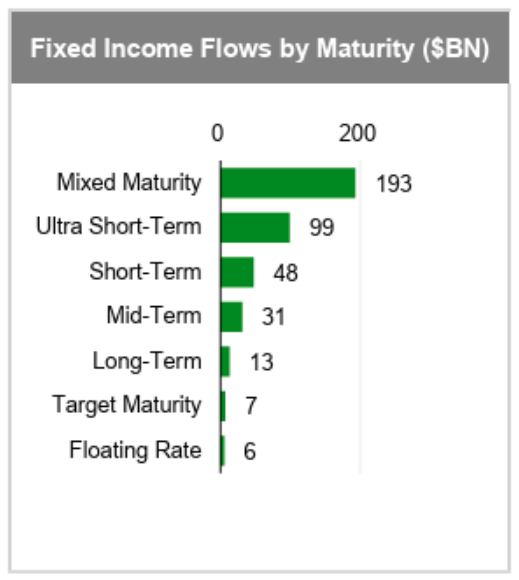
- Broad aggregate bond strategies led the fixed income sub-asset classes with $5.6 billion in weekly flows, while flexible mixed-maturity and ultra-short structures captured the vast majority of duration-focused capital.
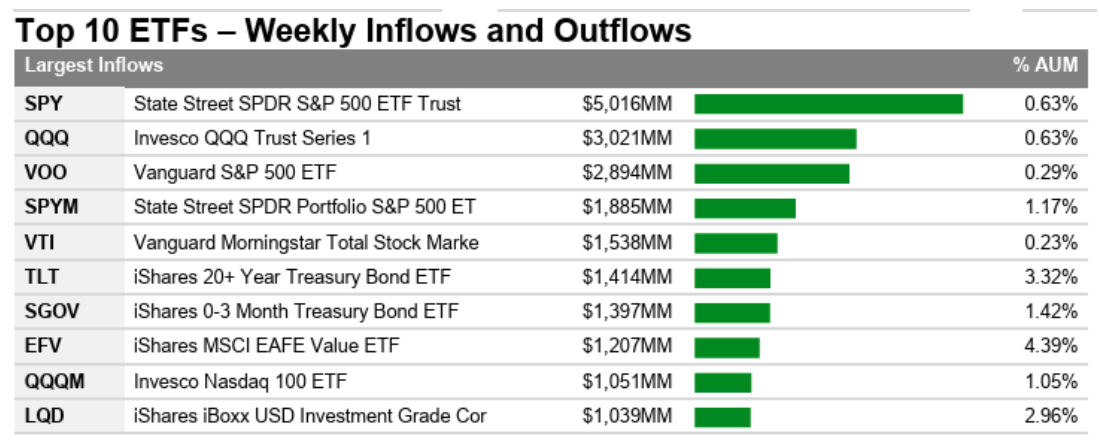
- Top individual flow targets reflected this strong flight to quality and liquidity, led by substantial weekly inflows into specific bond funds.
See More: Tackle Interest Rate Uncertainty With Structured Credit
Core Aggregates and Treasuries Lead
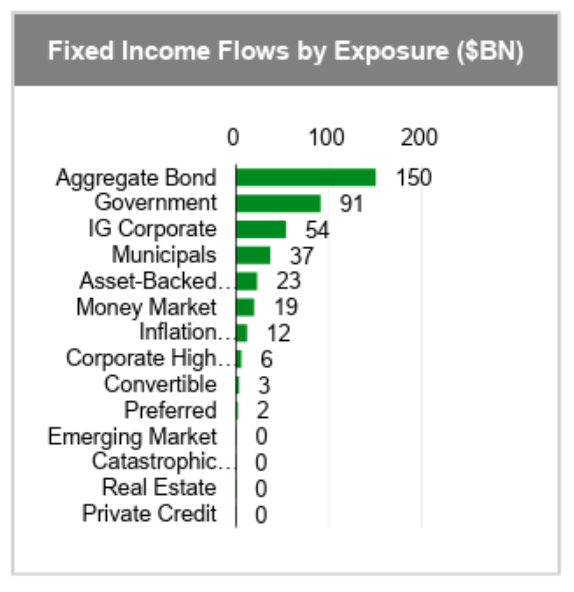
Volatility in equities due to high inflation, geopolitical tensions, and other factors is causing investors to seek the refuge of bonds. As noted in the TD Securities report, demand across fixed income sub-asset classes during the week was concentrated in high-quality, broad-market ballast and government debt. Aggregate bond strategies led all fixed income exposures with $5.6 billion in inflows last week. They also hold a dominant position on a broader scale with $150 billion in total category inflows year-to-date (YTD).
Government debt gathered $3.2 billion for the week and stands as the second-largest exposure overall with $91 billion in total inflows YTD. Additionally, investment-grade corporate bonds generated steady demand by accumulating $54 billion in YTD inflows, while municipals and asset-backed securities captured $37 billion and $23 billion in overall inflows YTD, respectively.
Money market exposure thus far this year has reached $19 billion, while inflation-protected debt accumulated $12 billion. The push for quality is apparent, as higher-risk or niche credit saw less inflow activity versus the aforementioned bond sub-categories. That said, high yield attracted $6 billion, convertible debt took in $3 billion, and preferreds gathered $2 billion in cumulative flows.