Defaults among auto loans are noteworthy because these had been seen as a safe form of lending. Living without a car is impossible in much of the United States; in the GFC, borrowers were more likely to surrender their home than their car.
EM stocks have increasingly become tied to the fortunes and risks of the growth in AI. Should the AI capex race continue, and earnings estimates are realized, EM stocks have the potential to continue to rise, because valuations are not yet extended.
At the heart of value investing is the concept of buying an undervalued stock that appears to be mispriced by the market and holding that stock until its intrinsic value is reached. Investors determine intrinsic value in several ways, including analyzing a company’s financial statements, evaluating management, and identifying competitive advantages.
Raymond James Chief Economist Eugenio J. Alemán evaluates economic conditions heading into 2026.
Market experts from the WisdomTree recently discussed how the market is responding to the latest headlines, and where opportunities lie.
DoubleLine CEO/CIO Jeffrey Gundlach looked back at 2025 and ahead in 2026 for opportunities, with charts to support his assertions.
In a year where moderation, not momentum, may define returns, options-enhanced ETFs offer an attractive way to stay invested while monetizing the more limited upside many expect.
The bullish AI narrative that dominated in 2025 is unlikely to continue overshadowing other lingering uncertainties, many of which reflect deeper structural shifts. Traditional factors underlying economic activity will be increasingly sidelined by national-security concerns, geopolitics, and domestic political machinations.
The US economy remains resilient. The gross domestic product (GDP) growth estimate from the Atlanta Federal Reserve (Fed) GDPNow model as of January 8 shows 5.4% real growth for the fourth quarter (Q4) of 2025.
If you’ve been around anyone under the age of 25 lately, you have likely been exposed to the “Six-Seven” phenomenon, whereby kids react excitedly upon hearing or seeing the numbers 6 and 7 in sequence. It can come from anywhere at any time…
The Wall Street consensus forecast for 2026 earnings growth is strong by historical standards. Analysts are giddy and projecting another year of double-digit growth in S&P 500 earnings per share (EPS).
Mao Zedong once warned that power grows out of the barrel of a gun. In recent decades, global institutions and markets that make kinetic interventions less common. But when those mechanisms fail, power will fill the void.
Drew O’Neil discusses fixed income market conditions and offers insight for bond investors.
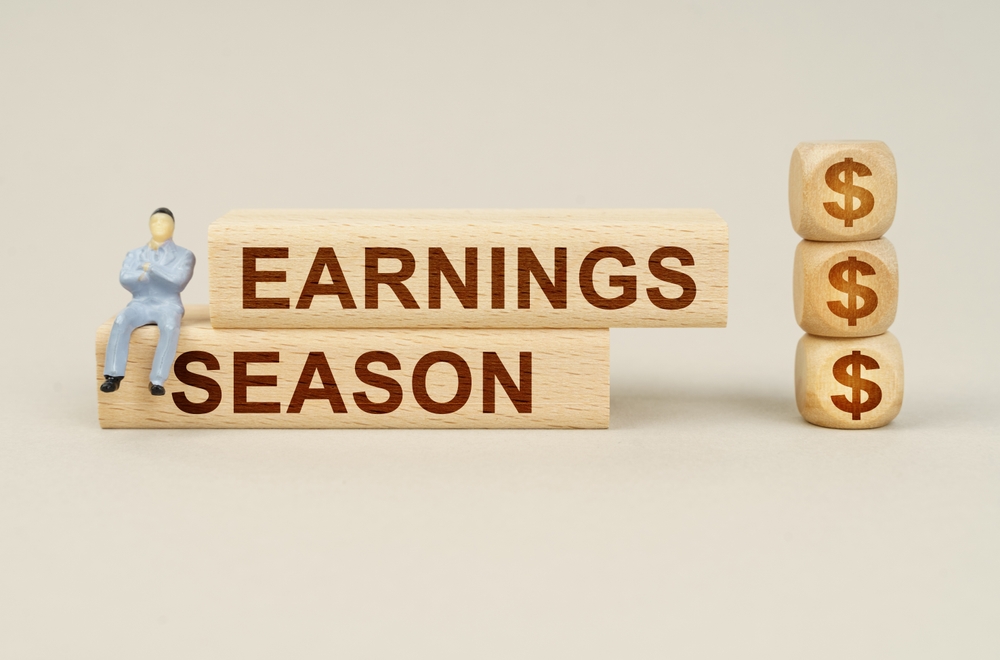
LPL Research takes a look at fourth quarter earnings season as it unofficially kicks off this week with a dozen banks and asset managers in the S&P 500 slated to report.
Nuclear energy has seen a hot start to 2026, benefitting from positive sentiment around artificial intelligence, ongoing support from the US government, and notable nuclear news from Meta (META).
JPMorgan Chase and Delta Air Lines have both posted fascinating Q4 earnings, creating compelling opportunities for crafty advisors.
As the S&P 500 continues its record-breaking ascent into early 2026, financial advisors are prioritizing diversification.
Big banks begin reporting tomorrow with JPMorgan Chase. Fundamentals may need to be robust to match the sector's recent Wall Street gains, and loan demand could get a close look.
Midstream is unique from the rest of energy in being able to provide EBITDA guidance for the year ahead or multi-year periods without depending on specific commodity prices. Companies provide services for fees under long-term contracts, which results in stable and predictable cash flows.
We just closed another banner year for asset prices. The S&P 500 was up 16% in 2025, and many overseas exchanges saw gains of more than 25%. Bond prices rose, and most housing markets held onto high values. There were even some signs of recovery in commercial real estate.
What happened in Venezuela last weekend may turn out to be the most consequential energy and geopolitical event of the decade. In a swift, coordinated operation that stunned the world, U.S. forces captured Venezuela’s longtime socialist dictator, Nicolás Maduro.
The data are mixed and trying to draw definitive conclusions from it is virtually impossible. This fog should lead everyone to maintain a cautious investment stance. What does that mean? Be careful concentrating too much in high priced sectors of the market. Broaden out. When driving in fog, drive more defensively.
The materiality of ESG factors differs across sectors and markets. Investors need to understand how.
As we step into the new year, many of us are setting personal and professional goals for what we hope to accomplish in the months ahead. The same holds true for financial markets, where Wall Street strategists have been busy refining their outlooks for where the S&P 500 might finish the year.
“Party like it’s 1999” is a phrase made famous by the musician Prince’s 1982 song, which experienced a renaissance amid Y2K fears and has since entered the lexicon meaning to celebrate intensely because the future is uncertain.
As index investing continues to evolve, it does not have to be towards ever-expanding complexity. Sometimes progress comes from asking simpler questions and answering them consistently.
Last week delivered some of the more surprising macro data I’ve seen in years: very slow job growth, but stable unemployment, and a sudden surge in output that materially lifts the outlook for earnings heading into 2026.
Rising operational costs & complex market conditions are forcing some advisors to reconsider how they deliver investment insights to clients.
The ETF universe continued to expand in 2025, with a growing number of high-income products incorporating options strategies to enhance payouts. However, for many investors and advisors, traditional ETFs that own dividend-paying stocks remain a core component of a well-rounded portfolio.
The goal isn’t to be perfect; it’s to make fewer mistakes than last year because investing success doesn’t come from reading motivational quotes or watching market TikToks at midnight.
Our forecast for 2026 is for a strengthening US economy on the back of a strong fiscal spending profile due to the implementation of the One Big Beautiful Bill Act (OBBBA).
Retirement planning often focuses on risks: not saving enough or outliving hard-earned savings, enduring a sharp market downturn and possible surprise expenses. While these pitfalls are very real, it’s understandable that they may make individuals hesitant to spend their savings in retirement.
It’s only been a few days since the start of 2026, but global equity markets are already reaching new all-time highs. Major benchmarks—including the Dow Jones Industrial Average in the U.S., Canada’s S&P/TSX Composite Index, and Japan’s TOPIX—posted strong gains this week.
We find that roughly two in five Americans are on track to meet their retirement spending needs. But retirement readiness is not black and white. The typical American will have a $5,000 annual spending shortfall in retirement. That means possibly needing to cut back on spending, work a year or two longer, tap into home equity, or lean on family.
Looking ahead, we enter the new year with cautious optimism. Trade agreements have removed the most severe tail risks, but the underlying picture is mixed: inflation remains above target in the U.S., labor markets are softening, and central banks are no longer moving in unison. The key question for 2026 is whether the Fed can continue easing or whether persistent inflation forces a pause.
Living in a bipolar economy is hard. Last year saw wild swings in attitudes about the economy and financial markets. Not a bad year overall, but it was a rough ride at times. Today and next week, we’ll look ahead to 2026, drawing on my expert network and my own ideas as well.
The removal of Venezuelan President Nicolás Maduro under “Operation Absolute Resolve” has materially improved the country’s outlook by breaking a long-standing political and economic impasse that had prevented reform, external engagement and debt resolution.
Well-known factors such as value and momentum are widely recognized to have predictive power. Advanced systematic approaches, however, seek to identify additional drivers of performance—including proprietary factors—to integrate into their multifactor models.
This week, my friend Lyric Hughes Hale and special guest Eric Huang of Taiwan share with us the details of what could be another massive fallacy of composition. Oddly, this time the risk lies with one of the US’s largest creditors.
With the Consumer Electronics Show (CES) taking place in Las Vegas, investors’ eyes are on Nvidia (NVDA). A predictable response, but one that underscores the importance of the semiconductor behemoth in the artificial intelligence (AI) space.
The ETF ecosystem grew once more in December with more than 100 new launches joining the fray. Three funds invite a closer look.
Global equities closed 2025 with solid gains, supported by strong headline returns from the world’s largest firms, along with a surprising combination of smaller companies, many of which handily outperformed the top ten in the MSCI World Index.
In 2025, the S&P 500 delivered double-digit returns for a third straight year. Heading into the fourth year of the bull market, Raymond James Chief Investment Officer Larry Adam identifies 10 themes to watch in 2026.
In a turbulent 2025 dominated by US trade policy shocks and geopolitical tensions, the global economy proved resilient. Fears of tariff-related slowdown and renewed inflation proved misplaced, as growth surprised to the upside and inflation continued to soften.
In 2026 new tax deductions and inflation adjustments impact tax brackets, rates and contribution limits. Our Bill Cass talks about what is changing in 2026 and shares planning considerations.
2025 capped off another strong year for fixed income ETFs, as ongoing market uncertainty pushed more investors into the safe confines of bonds. When it came to inflows, it was Vanguard that was well-represented with four funds cracking the top 10.
While stablecoins are a form of tokenization, tokenization is a broader concept than stablecoins. Tokenization is the process of creating and recording a digital representation of traditional assets (e.g., securities, deposits, real estate, commodities, etc.) so ownership and transfer can happen in more automated, accessible ways.
2026 promises to be anything but dull. Rapid AI investment and adoption will likely continue to dominate market sentiment, and given the pace of technological advancement, it is hard to imagine this won’t ultimately deliver meaningful productivity gains.
JPAPM forecasts the global fixed income ETF market to grow to $6 trillion by 2030, up from approximately $3.2 trillion today.
After three consecutive years of increasing stock prices, it can feel comfortable and certainly satisfying to ride the trend. Investors may want to capture the boon rather than be complacent with it. Long-term financial health can go hand-in-hand with the opportunities the markets have laid out.