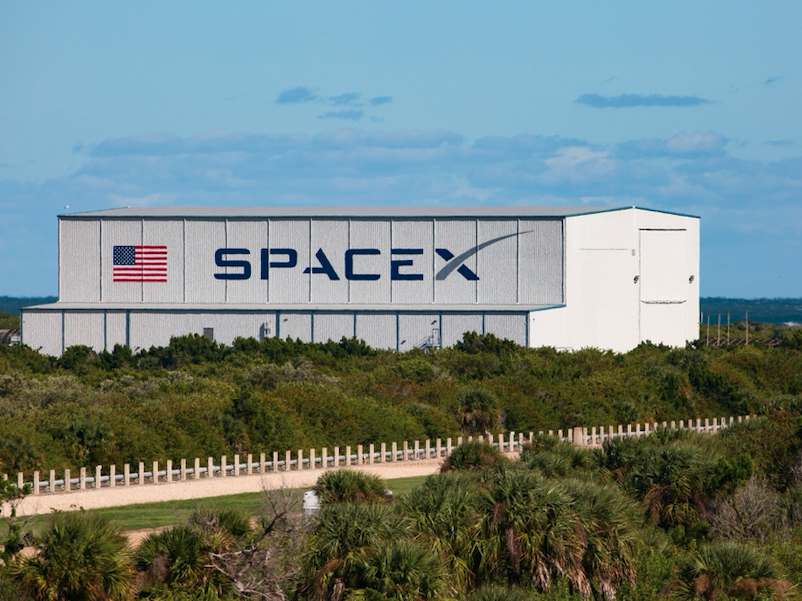
On June 12, SpaceX went public with a US$2 trillion valuation—the largest initial public offering (IPO) ever, by far. It has been the most anticipated IPO in more than two decades and likely ushers in a series of high-profile IPOs in the coming months, including for OpenAI and Anthropic.
One of the most debated topics in private credit is the size of the investment opportunity – or, in industry parlance, the total addressable market (TAM). But the way TAM is typically framed can be misleading.
Markets returned to positive territory for the week, with the turning point occurring Thursday after the announcement of a potential deal with Iran that would extend the ceasefire while reopening the Strait of Hormuz for the first time since February 27.
The Iran conflict, inflation reports, and the largest initial public offering of all time each took its turn in the spotlight last week. The fragile ceasefire with Iran looked ready to collapse after Iran shot down a U.S. Apache helicopter, and the U.S. retaliated with strikes on Iran.
J.P. Morgan converted two mutual funds into active muni ETFs for California and New York investors seeking tax-free income.
A massive advisor retirement wave is reshaping wealth management. Discover how $2.5 trillion in assets may fuel industry transformation.
Tariff rates will vary, but their persistence is certain.
New Federal Reserve Chairman Kevin Warsh will preside over his first Federal Open Market Committee (FOMC) meeting on June 16-17, stepping in at a complex moment with inflation at a three-year high as oil prices remain elevated, labor market risks easing with job growth averaging ~140,000 year to date versus only 10,000 last year, and hawkish voices on the Fed gaining traction.
As we go to press, fighting in the Mideast has escalated, sending crude higher, but stocks, in early Monday trade, have shown remarkable stability following Friday’s deep selloff.
The U.S. initial public offering (IPO) market appears to be entering one of its most consequential periods in years. After a long drought following the 2021 issuance boom, a healthier macro backdrop, improved risk appetite, and a long queue of mature private companies have reopened the new-issue window.
For many investors, retirement planning becomes most tangible at the start and end of the year. Goals are set in January, then revisited during year-end tax and financial planning discussions. But the middle of the year offers an equally valuable opportunity: a chance to evaluate progress, reassess assumptions, and make adjustments before small issues become larger challenges.
As expected, the European Central Bank (ECB) raised its three key interest rates by 25 basis points (bps) on June 11, responding to the energy shock from the Iran war. Inflation was revised higher for 2026 and 2027, and it is expected to fall to target in 2028. Although we expect one more hike, the timing is uncertain as the ECB is keeping all options open—including the possibility of not raising rates again.
This week the Fed has its first meeting under new Chair Kevin Warsh. For only the third time in US history, the former Chair, Jerome Powell, will still participate as a regular member of the Board of Governors.
Gold has always had a way of testing investors’ expectations. Just when the headlines appear most supportive—inflation is rising, geopolitical risk is escalating and confidence in fiat currency is being questioned—gold can suddenly move in the opposite direction.
Advisors searching for diversification from a concentrated S&P 500 Index often reach for equal-weight strategies. However, a new report argues that all equal-weight approaches are not interchangeable.
Several ETFs have added exposure to Space Exploration Technologies (SPCX) after the aerospace giant completed the largest initial public offering in market history. Trading on the Nasdaq, SpaceX surged 19% from its initial $135 offering price to close at $160.95 per share, notching a historic $2.1 trillion valuation. Actively managed ETF vehicles were able to use their operational flexibility to add positions in SpaceX at its debut.
VettaFi’s core mission is to provide the index and distribution solutions that help asset managers build, grow, and navigate the markets with precision. Last week we took a massive, transformational step forward. TMX VettaFi signed a definitive agreement to acquire RAFI Indices from Research Affiliates, the undisputed pioneer of fundamental indexing and smart beta strategies.
Chris Galipeau discusses high-conviction insights that go beyond media headlines.
This week’s inflation data highlights a growing disconnect between how markets interpret inflation and how consumers experience it. The May Consumer Price Index (CPI) report delivered a nuanced message: While headline inflation accelerated, core inflation remained relatively contained, an outcome that provides some comfort to policymakers.
Given all the interest and hype over the SpaceX IPO, many advisors and investors have been increasingly gravitating towards thematic ETFs that focus on the space industry. Given that the SpaceX IPO is the largest IPO in history, this should not come as a surprise to anyone.
The K-shaped economy has become shorthand for a tidy story. The rich pull away while everyone else falls behind. It fits the mood, and it makes for a sharp headline. The problem is that it’s mostly wrong.
GMO has posted a new 7-Year asset class forecast as of May 31, 2026.
Recent economic data continues to point to a resilient U.S. economy. The unemployment rate held steady at 4.3% in May, while payrolls increased by 172,000 jobs. Hiring remained strongest in leisure and hospitality, though there were also encouraging signs from more cyclical areas of the economy.
During this time of year, we like to take stock of what happened in the first half of the year and compare it with the expectations we had at the beginning of the year when we published our full-year outlooks.
The U.S. economy faced intensifying headwinds in May as both consumer and wholesale inflation metrics surged to multi-year highs.
Discover how Capital Group’s active CGGR ETF navigates this mega-cap divergence to uncover secular growth beyond tech.
Despite everything we have seen in the economic data, which can be confusing, the US consumer has refused to crack. My friend Dr. Ed Yardeni, whom I have known since '98, has the most compelling explanation I have heard for why.
The current economic downturn is best described as hybrid and structurally driven. It leans heavily on demand constraints, though it is triggered and complicated by ongoing supply shocks.
What do you do if you have a standard that’s not being met? Move the goalposts! Of course, you could work harder to meet the goal. But that’s hard. So, why not just change the standard and make it easier to meet?
Goldman Sachs and Innovator panelists say buffer ETFs can help advisors move cash-shy clients into stocks with built-in downside limits.
In this video, Chuck Carnevale responds to a viewer's question about building a retirement income portfolio for a 63-year-old investor. Rather than recommending specific stocks, Chuck focuses on the process he uses to identify high-quality income investments using the principles of value investing and the FAST Graphs platform.
The ETF industry has reached a historic turning point. Vanguard has officially surpassed BlackRock’s iShares to become the largest ETF provider. The milestone underscores a broader structural shift among investors prioritizing low-cost investments in portfolio allocations.
At a time when the cost of living is rising and market volatility appears to be rising, too, investors may be looking for current income to bolster their portfolios. Current income can especially help investors at or near retirement to adapt to retired life.
The word seems to be spreading that small- and micro-cap stocks have so far been enjoying a stellar 2026. What seems less well known is that the current cycle of market leadership for the two asset classes stretches back to 2025 and has been in place for 14 months.
Dispersion continues to be the definitive story of 2026. As we progress through June and approach the conclusion of the first half of the year, the equity landscape remains distinctly bifurcated. Pockets of deep structural growth stand in contrast to areas grappling with macro headwinds.
In this month’s Allocation Views, strong corporate fundamentals and resilient growth fuel our continued optimism toward equities into June, despite persistent inflation and more restrictive monetary policy.
In addition to a greater range of chips supporting AI development, several factors could cause the current cycle to last longer than expected.
While owning a significant amount of a successful stock can be incredibly lucrative – especially in a company on the rise – the more you own of a single equity, the more closely your personal financial fate is tied to its performance.
For many investors, wealth management still feels segmented. Investments are handled in one meeting, taxes in another, estate planning somewhere else, and major life decisions often happen independently of all three.
Since early 2025, value stocks have enjoyed a strong run, defying market volatility driven by trade tensions, geopolitical stress and macroeconomic uncertainty. That resilience may seem counterintuitive given value’s historically cyclical profile. Yet, we believe the underlying characteristics of value stocks are proving particularly well suited to today’s evolving market landscape.
For many registered investment advisors (RIAs), success has traditionally been measured in assets under management (AUM). As the industry evolves and consolidation accelerates, a broader question is emerging: are you building a practice or an enterprise?
Silver's chart also weakened substantially, although the metal remains near important longer-term support levels and has not yet confirmed the same degree of structural breakdown seen in gold.
Inflation and geopolitical uncertainty are pushing advisors and investors to rethink how they build diversified portfolios.
This past week, the market hit an all-time high. At the same time, Alphabet (GOOG) told investors it would raise $80 billion by selling stock to fund its AI buildout, and the shares fell about 4% on the news.
May saw 148 new ETF launches in May alone – although launch figures were partially driven by a 37-fund rollout from Corgi Insurance Services.
For more than four decades, PIMCO’s Secular Forum has provided a disciplined framework for stepping back from short-term market noise to assess the structural forces that will shape the global economy and markets over the next five years. Yet rarely has this exercise been more consequential than it has recently.
After more than three years of underperformance, our prognosis for global health care stocks remains positive. The sector now offers a broader set of high-quality companies at valuations that appear increasingly disconnected from fair value.
Many advisors deliver capital markets commentary as if the goal were simply to explain what’s happening. They assemble charts, cite data, summarize headlines and hope the client will draw the “right” conclusion.
Equity issuance is all the rage. The SpaceX (SPCX) IPO on Friday, Alphabet’s (GOOGL) up-sized secondary announced last week, and a slew of other major go-public names over the remainder of 2026 (Anthropic, OpenAI) buck the years-long trend of intense buybacks and shareholder-friendly activities by the world’s most valuable companies.
All major U.S. stock indices fell last week, ending a remarkable run of nine straight weekly gains for the S&P 500. But the headline numbers hide an unusually lopsided story.