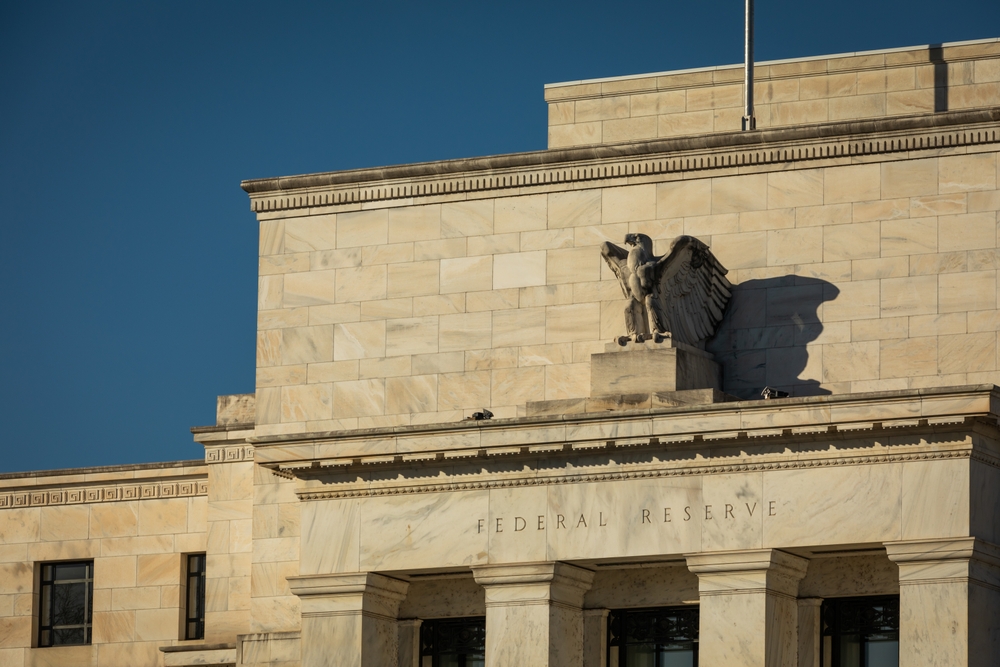
So far this year, the US equity market has shown remarkable resilience and US inflation has remained sticky. Against this backdrop, a recent survey of our chief investment officers offers analyses and perspectives on key areas, such as Federal Reserve rate cut expectations, geopolitical risks, uncertain corporate earnings and opportunities in different asset classes.
Traders can continue riding the strength of the AI wave with the Direxion Daily Semiconductor Bull and Bear 3X Shares (SOXL).
Investing in private markets has obvious upsides, including potential higher returns, access to a broader opportunity set, and greater diversification.
Three months of discouraging inflation data coupled with some hot economic data points are considered headwinds for U.S. Treasurys.
Reviewing the basics can keep you from being caught off guard if your investment is returned to you before the stated maturity date.
Have you seen the price of natural gas lately?
Just as a GPS navigator analyzes real-time data to recalibrate routes efficiently, active management interprets market conditions to steer portfolios towards investment goals.
Inflation, one of many inputs to multi-asset decision-making, cooled substantially last year, but upside surprises in early 2024 for the US and Europe have many investors concerned that the path back to normal has hit a roadblock.
The Northern Trust Economics team shares its outlook for key APAC markets.
Nouriel Roubini, Stephen S. Roach, Nancy Qian, and more assess what it will take to improve the country’s economic prospects.
Oftentimes, we’re best able to understand something we’re interested in through analogies that clarify the matter by establishing connections between it and other parts of life.
A staggering 75% of advisory clients left or considered leaving their advisors in 2023, according to a recent YCharts survey. This alarming trend highlights the shift in the financial advisory landscape, with clients increasingly seeking better communication, service, and guidance from their advisors.
In this edition of Bull vs. Bear, staff writers Nick Wodeshick and Nick Peters-Golden ask whether rate cuts will still happen in 2024.
Q2 weakness is causing traders to up their bearish bets on bond prices, but it presents an opportunity for value-seeking investors.
The Northern Trust Economics team shares its outlook for U.S. growth, employment, interest rates and inflation.
GMO has published a new 7-Year Asset Class Forecast.
Ali Dibadj, CEO, shares the industry topics he’s hearing most in conversations with asset allocators, family offices, end-clients, colleagues, investors, and others he meets around the world.
For the last several years, world leaders have made big promises and laid out bold plans to mitigate the climate crisis and help the neediest countries adapt. At this year's World Bank/IMF Spring Meetings, they must demonstrate that they can fulfill these promises, rather than simply touting new ones.
For a typical consumer, the two most hot-button topics are food and energy. Both play a significant role in household spending, and just as importantly, both are highly visible.
The Chinese yuan is softening in line with the nation's economic outlook.
The S&P 500 index reached a record close this week, rising 0.4% and marking its strongest Q1 in five years with a 10% increase since the end of 2023.
Japan has had two big moments in the last month, with the Nikkei 225 equity index breaking above the highs set in 1989, and the Bank of Japan (BoJ) raising interest rates for the first time in 17 years.
Advisors weigh in on how you should approach account withdrawals after retirement in order to make your assets last.
It appears investors are heading for the exits on U.S. Treasuries and towards the entranceway of European bonds.
While immigration has positively impacted economic growth and disinflation, this story has a dark side.
Mistakes in both geopolitical and fiscal policies compound over time, often leading to more mistakes.
We had expected the Federal Reserve to start cutting rates in June. But as more of our audiences asked why, we saw the case was not strong. This week’s inflation reading seals the deal: we now expect the easing cycle to start in September.
Fed Funds Rate: According to Bloomberg calculations based on where Fed Funds futures are currently trading, there is a 20% chance that the FOMC cuts the overnight rate in June and a ~50% chance that they cut in July.
We have always maintained it is better to accept what the market has on offer than to stretch for returns. Thanks to the inverted yield curve and our flexible mandate, the current environment is making it easier than ever to be patient while we wait for fat pitches.
Our investment leadership team convened twice on Sunday to discuss the conflict between Iran and Israel, its key watchpoints in the days ahead, and the pertinent risks onto markets, our investment portfolios, and our clients. The team broadly agreed that maintaining a slightly defensive posture across portfolio strategies remained appropriate.
Today’s technology boom is being driven by real efficiency gains, which is why we think comparisons with the dot-com bubble are misguided.
Gold prices have shot up to historic highs – outshining broader markets and driving up demand for gold ETFs.
Last week, the S&P 500 notched its worst weekly performance since last October. Small-cap indexes weren’t immune from the weakness.
While major indexes have seemingly been calm this year, there are notable and stealthy sector leadership shifts that have happened under the surface.
In the most recent report from FINRA, margin debt levels have surged as bullish investors leverage their bets in the equity market. The increase in leverage is not surprising, as it represents increased risk-taking by investors in the stock market.
Growth and inflation have remained remarkably resilient since the start of the year, causing the market to once again rethink the Fed’s rate path. As a result, the odds of a June rate cut have collapsed
Despite expectations for interest rate cuts by the Fed, yields have risen since the start of the year, with the government 10-year bond yield climbing nearly 70 bps this year through April 10. This is a sharp reversal from what occurred in Q4 2023 when the 10-year yield collapsed by 71 bps.
Economic indicators are essential tools that provide insight into the overall health and performance of an economy.
We’ve covered some of the issues related to America’s fiscal crisis in recent months.
On the latest edition of Market Week in Review, Investment Strategist BeiChen Lin and Product Operations Analyst McKenna Painter unpacked the latest U.S. inflation numbers. They also discussed recent rate decisions by the European Central Bank (ECB) and the Bank of Canada (BoC) as well as the economic and market outlook for China.
Improve your income potential with a tactical, unconstrained strategy that sources opportunities across geographies and asset classes. BlackRock Multi-Asset Income Fund takes a risk-first approach while seeking to deliver a consistently attractive yield.
For investors looking to position their portfolios amid ongoing uncertainty, many options strategies benefit from increased volatility.
Why the current momentum trade, despite stretched valuations, could continue.
Jeff and Ron Muhlenkamp share that although it was a quiet first quarter in economic news, the markets were not so quiet. Jeff and Ron are still watching for signs of a recession due to the inverted yield curve but also think that there is a possibility of an inflationary boom. They feel they are prepared for either scenario and give their reasons why.
There are signs that some previous "rolling recessions" are starting to turn into rolling recoveries.
Before we start discussing the Consumer Price Index again, we want to remind readers that CPI inflation is not what Federal Reserve officials use to determine monetary policy. It is true that markets put a lot of emphasis on this measure, but we would like to caution giving too much importance to it.
April 15 is undoubtedly one day that is not enthusiastically celebrated by most people. It is safe to say that the discomfort around Tax Day likely ranks right up there with your annual physical or renewing your driver’s license.
While the European Central Bank refrained from declaring victory at its April meeting, a June rate cut seems increasingly likely.
Fixed income poses big challenges and opportunities in 2024, with ETF leaders from several firms sharing their thoughts at ETF Exchange.
In the first quarter of 2024, fixed income investors turned to investment-grade corporate bond ETFs.