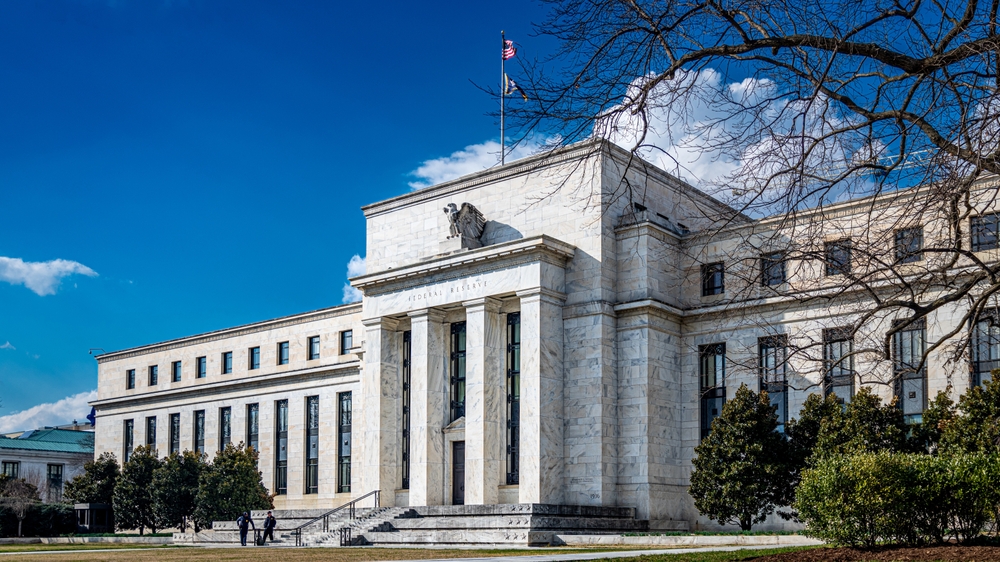
The Federal Reserve (Fed) Chairman seems to be happy with the market’s new wisdom regarding the path of interest rates going forward.
AI chip-leader Nvidia reports Wednesday after recent guidance from cloud providers suggests the demand powering its shares could continue. Its own guidance, however, could be key.
The Q3 earnings season is coming to a close in its usual fashion, with a word from retailers. With 93% of S&P 500 companies reporting at this point, YoY S&P 500 EPS growth has settled around 5.4%, while revenue growth increased 5.5% for the quarter.
In our lifetimes, the best comparison for Trump’s election win is Ronald Reagan’s in 1980. That election, like this one, pitted big spenders and champions of government against tax cutters and critics of government.
Two weeks ago, I opened this letter by noting the election uncertainty, once over, would give way to a different uncertainty about what comes next. That’s where we are now.
With President-elect Donald Trump set to assume office in January, the U.S. military and cybersecurity sectors could experience sweeping changes, creating opportunities for investors who recognize the long-term growth potential in defense and technology.
In this video, Part 1 of 2, Chuck Carnevale, Co-Founder of FAST Graphs, a.k.a. Mr. Valuation will be looking for value in the Consumer Discretionary Sector, 15 consumer discretionary stocks that look reasonably valued.
The Northern Trust Economics team shares its outlook for U.S. growth, employment, inflation and interest rates.
Declining inflation has been a theme for the economy since mid-2022, but we still believe the road may have some curves.
The last three months have seen bursts of excitement that the Chinese government was about to open the floodgates of stimulus, followed by disappointment as follow-on announcements have lacked detail on the actual scale of measures.
The new Trump Administration hasn’t wasted any time since last week’s election win, with new information around economic policy and staffing appointments making news on a daily basis. In our opinion, the recent announcement of a new Department of Government Efficiency or “DOGE” headed by Elon Musk (who obviously came up with this name and acronym) and Vivek Ramaswamy, has been the most important so far.
Municipal bonds broke their winning streak in October, posting negative total returns alongside broader fixed income assets.
The 10 largest stocks in the S&P 500 returned a staggering 104.6% from January 2023 through June 2024—more than double the broader index return
The economy played a critical role in the 2024 presidential race, creating the conditions not only for Donald Trump to trounce Kamala Harris, but also for a counter-elite to usher in a new power structure. Will the Democrats and “establishment” experts get the message?
Healthcare companies often grab headlines for their exciting drug innovations. But we think the focus should be on business fundamentals.
A year-round focus on taxes can unlock value for investors in higher brackets—and it can help advisors prove their own value.
U.S. rate cuts of up to 200bps are anticipated by the end of 2025 but with significant further downside if recession risks materialize.
Before the year 2024 comes to a close, it's time to optimize your tax strategy. Our Bill Cass shares some tips including timing deductions and harvesting losses.
One of the core principles of a long-term dividend portfolio is to invest in companies that are integral to society and will be for many years to come. Transportation falls into that category.
Much of modern finance falls into one of two camps, neoclassical finance and behavioral finance. The former posits efficient markets, the latter posits the opposite.
Following a tense presidential election, equity markets roared to record highs – the S&P 500 put on its best weekly showing in over a year.
As a major corn and soybean consumer, China is keeping prices in limbo. A potential trade war could add additional intrigue.
In addition to the headlines championing new heights, here are five things everyone should know about bitcoin.
In many ways it didn’t matter what those answers were, just that they were out of the way and investors and US companies could begin to plan accordingly for Q4, 2025 and beyond.
Recent data, early results, and a relatively firm economy point toward possible improvement in Q3 retail earnings as Walmart, Target, and other big-box stores prepare to report.
Your fixed income strategy does not necessarily need to be adjusted based on every personnel or environmental change.
While history shows that U.S. markets tend to perform regardless of political leadership, the full impact of Trump’s policies could bring new challenges and opportunities for investors globally once he is in office.
Change is on the horizon for hard working Americans saving for their future, as 401(k) plans are now embracing private market investments. Savers may soon have access to opportunities previously reserved for institutional investors.
Emerging-market (EM) corporates have a track record of resilience across market cycles.
The election results triggered a positive market response. The S&P 500 rose +2.5% on Wednesday following the election.
Recent insights from Natixis Investment Managers breaks down a few fixed income risks that investors may not be aware of.
Last week’s developments mark one of the most pivotal weeks in recent memory.
With the outcome of the election now known, we will continue to assess how policy changes impact our broader view.
From beginning to end, the 2024 election cycle will be looked back on as historic
For DC plan sponsors, developing a short list of income solutions is a good first step.
As the year winds down, many investors focus on year-end charitable giving and tax planning. Finding a charity and donating money is the easy part. Taking slightly different approaches to gifting can yield dramatically different results from a tax perspective.
October’s market activity can be neatly summarized in a single chart: the dollar (BBDXY) was strong and U.S. stocks (the VOO ETF tracks the S&P 500 index) meaningfully outperformed international stocks (VXUS).
Republicans won the White House and Senate in the 2024 U.S. election, while vote counting continues for the House of Representatives. Here's a look at the policies that could affect markets.
Here’s our outlook on what to expect and how investors might navigate this new phase.
Microsoft, Meta, Apple, Alphabet, and Amazon all experienced fluctuations in their shares, leading to a two-week losing streak in October after five months of gains. Despite this, Financials, Communications Services, and Energy sectors remained positive. Looking ahead, we're analyzing President-elect Trump's platform and its potential implications for corporate taxes, regulations, tariffs, inflation, and economic growth.
Even with Republicans poised to control the White House, the Senate, and the House of Representatives, slim congressional majorities could hinder the president’s efforts to enact his agenda.
For investors who have been considering active investing, the post-election market swing could be the trigger to dive in.
With a "Red Sweep" in Washington likely, markets are now pricing in a more aggressive policy agenda.
In this video, Chuck Carnevale, Co-Founder of FAST Graphs, a.k.a. Mr. Valuation will cover the Communication Services Sector.
With the Russell 2000 Index rallying in response to the U.S. election results—the benchmark index of small cap stocks soared by nearly 6% on Nov. 6 alone—small cap managers are re-evaluating their positioning ahead of President-elect Trump taking office in January.
Instead of dreading volatile markets, the savvy advisor understands that during these times, her professional skill is most valuable and she can fulfill the vital role that she was hired to accomplish.
The yield on the 10-year Treasury surged to about 4.4% just after the election, even though it has come back down close to pre-election levels recently.
Retirement plan savers looking to mitigate the risk of higher taxes in the future may benefit from making after-tax contributions to employer plans, which may be transferred to Roth accounts. Our Bill Cass details a “mega backdoor” Roth strategy.
The Fed cut rates by 0.25%, with limited changes to the statement, while Powell's blunt "no" response about any coming political pressure to resign was headline grabbing.
In a week with a U.S. presidential election and market volatility, the Federal Reserve cut its policy rate 25 basis points (bps) as expected. Amid this noise and the generally positive messages from recent macro data, Fed Chair Jerome Powell emphasized that downside economic risks had decreased, but the policy rate remains above neutral, suggesting that gradual cuts are still likely to come over time.