Funds will begin paying out their 2023 distributions this month which could lead to a tax bill for your clients. While capital gains distributions will likely be lower this year than in recent years, interest income is expected to be higher.
Persuasive architecture is an effective strategy to create a website that answers your ideal clients’ questions and concerns while guiding them down a path that leads to conversion.
CNBC Journalist Laments How the Fed Now Essentially Controls the Market.
As interest rates have risen dramatically over the past year, income-oriented funds have become more attractive. With the income finally back in fixed income, advisors are searching for new opportunities to generate yield while mitigating risk in their bond investments. That’s why Madison Investments, an independently owned investment firm managing $22.9 billion in assets, recently launched its first suite of four income-oriented ETFs. The firm provides a range of investment strategies across mutual funds, managed accounts and customized investment portfolios. It added ETFs to its offerings in August. Two of the funds in its suite – the Madison Aggregate Bond ETF (NYSE: MAGG) and the Madison Short Term Strategic Income ETF (NYSE: MSTI) – seek to capitalize on the growing demand for dynamic, risk-managed fixed income strategies. My guest today will discuss how advisors can use these actively managed ETFs to get the most value out of their fixed income allocation.
The spike in bond yields presents an opportunity for fixed income investors to earn capital gains and diversify portfolios.
Energy and Gold Produces Face Increasing Pressures, Crimping Supply.
Forced deleveraging to be chaotic, causing a new Fed and banking panic.
This article explores how promoting individual strengths and skills, advocating for enhanced diversity and inclusion, fostering a collegial environment, encouraging diversification, and attracting a broader range of clients helps RIAs stand out in a competitive industry.
As investors look for clues about what monetary central planners are thinking at Jackson Hole, the BRICS countries – Brazil, Russia, India, China, and South Africa – are holding a summit of their own in Johannesburg.
Precious metals markets are extending their losing streak as the U.S. dollar pushes higher.
The sovereign credit rating cut is unlikely to significantly change views toward U.S. Treasuries, but questions about debt sustainability may grow louder over time.
It will be increasingly important to consider the best ways to connect with and support Gen Z as they make some of their biggest financial decisions.
Your web site is an excellent conversion tool to grow your email list. Here’s how to capture leads on your web site using an incentive-based opt-in.
Opportunities and risk abound in the fixed income space as questions remain about whether or not the Fed will continue to tighten. With the long end of the curve starting to look appealing, but short end yields still being attractive, investors need to unpack how they are approaching the fixed income space. Join iMGP and VettaFi for a webcast that digs into how investors can capitalize on the return of fixed income.
Topics covered will include:
Top Silver Mining CEO: "On the demand side, it’s pretty phenomenal…"
The first step in winning the “war for talent” is understanding what your potential employees want.
As the debt ceiling fight in Washington heads down to the wire with the risk of a technical default looming, investors are growing nervous.
Rising rates in today's fixed-income markets have led to more attractive bond prices and higher yields, alleviating some of the challenges facing income investors.
Review the latest portfolio strategy commentary from Mike Gibbs.
What exactly does a trust company do to earn their fee that my family member or friend can’t do?
Over the last week, the market saw volatility pick up after approaching the upper end of what we believe is the near-term trading range.
How can advisors ensure that clients will keep their assets with you?
Tax-managed investing has gained in popularity in recent years. But what exactly is a tax-managed mutual fund? We do a deep dive into the concept.
Here are six compliance-friendly ways to incorporate social proof into your website to establish trust and capture new leads.
As interest rates show signs of peaking, gold prices are nearing new all-time highs.
Fears of bank runs precipitating a broader financial crisis helped spark a surge in bullion buying this week.
Review the latest portfolio strategy commentary from Mike Gibbs, managing director of Equity Portfolio and Technical Strategy.
We believe municipal bonds boast several key factors that position them as an attractive asset class in general, but especially so when markets are volatile.
Surveying your clients and prospects is essential, especially as we continue to confront a major shift in how we live our lives.
Northern Trust Asset Management (NTAM) is a leading global investment manager with $1 trillion in assets under management. It released “The Risk Report” late last year, which is an aggregated analysis of 280 institutional equity portfolios across the globe. The report revealed six common drivers of unintended investment results. As an investment manager that employs a quantitative risk-aware approach, NTAM regularly partners with investors and their consultants to provide them with a distinct analysis of underlying risk components impacting their portfolios’ ability to achieve intended outcomes. Of utmost importance to our Advisor Perspectives listeners and readers, the findings of the research are as applicable to portfolios managed by advisors for individual investors as they are to institutional investors. NTAM does indeed serve individual advisors through a number of offerings, including Northern Mutual Funds, FlexShares ETFs, and Diversified Strategist model portfolios. NTAM’s purpose in conducting the research behind the Risk Report was to help investors make needed adjustments consistent with NTAM’s core philosophy, which is that investors should get paid for the risks they take – in all market environments and in any investment strategy.
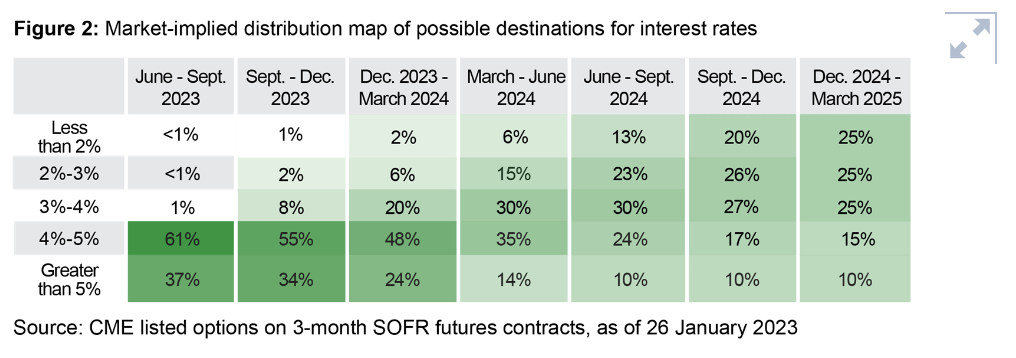
As investors seek to pinpoint market expectations for Federal Reserve policy, it’s critical to consider not just rate projections and derivatives pricing, but the degree of uncertainty and distribution of outcomes.
It is a challenge to design a website that addresses the needs and questions of multiple client types.
As investors hope for a Santa Claus rally in the days ahead, the Grinch is looking to steal their holiday cheer.
As warning signs for the economy mount, investors are cheering for more bad news. That's because they expect economic weakness will force the Federal Reserve to stop raising interest rates and eventually re-embrace loose monetary policy.
A hybrid model that combines sophisticated digital capabilities with human expertise and advice is not just today’s reality but will be a key differentiator for winning customer relationships.
Precious metals investors remain cautious following the Federal Reserve’s latest jumbo rate hike.
As investors weigh conflicting economic data and the prospects for a Fed pivot, precious metals markets are quietly basing out.
I cannot emphasize enough the importance of including a conversion page in a site build.
Is a recession lurking around the corner in 2023? If so, how might it impact defined benefit (DB) plan sponsors—and what steps, if any, should they consider taking?
As new inflation data pushes the Fed toward continuing with rate hikes, precious metals markets are struggling to make headway.
Precious metals markets are trying to tough this week despite another large rate hike by the Federal Reserve.