As many of you are no doubt aware by now, France’s left-wing New Popular Front alliance thwarted Marine Le Pen’s National Rally party in a stunning upset, leaving the country without a clear majority in parliament.
Following Russia's invasion of Ukraine in the early months of 2022, and the subsequent sanctions imposed by the U.S., some investors were forced to liquidate their Russian investments. Many investors, uncertain about the potential scope of the coming war, also took the opportunity to liquidate their investments in all of Eastern Europe.
As we survey the economic landscape, we are reminded of Otis Redding’s classic hit, which is all about patience. “Looks like nothing’s gonna change, everything still remains the same.”
Welcome to our new weekly blog series, “Navigating the Earnings Season.” In this series, I dive into the world of earnings reports from major companies, spanning giants like JP Morgan and Pepsi, as well as niche players in various sectors.
Net interest income helped big banks, which begin reporting second-quarter earnings July 12, but there's concern about how long it can keep going.
The second half narrative remains dominated by the path of interest rates, inflation, and the looming election.
Comparing public fixed income and private credit markets involves weighing factors related to liquidity, transparency, credit quality, risk premium, and opportunity costs.
The UST yield curve has been inverted, but there is speculation about when it will “un-invert" and move out of negative territory.
After a fruitful career and plenty of practice paying taxes, you may feel prepared for the tax man in retirement. But a review of your post-retirement taxable income may yield some surprising insights.
Treasury yields tumbled after benign inflation data renewed confidence that the Federal Reserve will cut interest rates at least twice this year.
Provisions in the SECURE 2.0 Act introduced new ways this year to avoid a 10% early withdrawal penalty from retirement accounts. Our Bill Cass explains the implications for savers.
The economy is off to a strong start in 2024, with a strong employment picture and the Dow Jones Industrial Average crossing 40,000 for the first time. But even with those tailwinds, questions about the economy and the markets remain as we head into the second half of 2024.
President Joe Biden, as you’ve no doubt heard, has had a rough few weeks. Yet on Tuesday, he signed a bill into law that could well prove transformative for America’s energy future. Here’s hoping — whatever happens in November’s election — that more progress lies ahead.
Thursday’s wildly encouraging consumer price index report shows that the Federal Reserve should be cutting policy rates at its meeting later this month. Unfortunately, they’ll probably keep us waiting until September.
Bond investors who’ve been positioning for a rally in the Treasury market are now looking for an endorsement from Thursday’s US inflation data.
European stocks edged higher, extending gains into a second day, ahead of a key US inflation print that’s expected to show price pressures continuing to ease.
The outlook for the Federal Reserve (Fed) through the first six months of 2024 has been a bit of a roller-coaster ride to say the least. While one could argue the overarching premise has been for rate cuts, it has certainly not been a smooth ride.
Explore the complexities of the high-yield market through comprehensive insights from our experts.
With so much uncertainty in the political landscape, investors may be nervous — and they may be reluctant to remain in the market. This is why an advisor's role as a behavioral coach is so important.
Investors continue to pile into bond funds, looking to add yield now before the Federal Reserve starts instituting rate cuts.
Life has been getting busier for investment bankers, but dealmakers aren’t cashing any checks yet. A stream of big-ticket merger and acquisition announcements this year bodes well for future revenue and bonuses, but no one gets paid until deals are completed. And that might not happen until late 2024 or even next year.
The global population has surpassed 8 billion and according to the United Nations, it is projected to reach 9.7 billion in 2050.¹ However, the rate of population growth is slowing and is expected to continue to decline. Seems counterintuitive, no?
Over the last four years, we have maintained that the U.S. middle-class consumer is on firmer ground than many believe. The first wave of inflation that seems to be receding is just that—the first wave of a set—and oil and gas companies are fundamentally well-positioned for the next decade.
While the temperatures were rising, the U.S. stock market continued its climb higher as well. The S&P 500 returned 3.5% and Emerging Market stocks delivered an impressive 3.9%. Bonds also returned positively in June.
Morgan Stanley recently discussed the outsized impact of fiscal policy as well as the U.S. dollar looking ahead.
We think all signs point to the labor market as the oracle – personal consumption supports earnings upside.
VettaFi discusses the upcoming election and potential implications for the energy sector.
If the companies that derive revenue from products and services that help reduce carbon emissions were taken as a single industry group, they would have had the second-best financial performance of any equity sector over the past decade.
The labor market continues to normalize and soften, but we think any further weakening might push the Fed to cut rates before the 2% inflation target is reached.
The employment report from last Friday, in my view, was weak. Although the headline number came in slightly above expectations, the composition was troublesome, with more than 110k jobs subtracted from the last two months and private sector jobs lagging.
Despite the Fed’s “significant progress” in lowering inflation, most citizens are outraged and confused by economists’ relatively rosy inflation observations. Most citizens believe inflation is still rampant.
Large-cap U.S. stocks, as measured by the S&P 500, have dominated in both absolute and risk-adjusted terms. They are soaring. It’s the Roaring ’20s again!
In the week ending on June 3, the SPDR S&P 500 ETF Trust (SPY) rose 1.09% while the Invesco S&P 500® Equal Weight ETF (RSP) was down 0.13%.
The bond trade that some of Wall Street’s biggest banks say will dominate the rest of 2024 is gaining steam before a crucial inflation reading that will help seal the wager’s fate.
Jerome Powell will face pressure this week from lawmakers growing impatient for the Federal Reserve to cut interest rates and others who are unhappy with its latest plan to boost capital requirements for Wall Street lenders.
Wall Street analysts continue significantly lowering the earnings bar as we enter the Q2 reporting period. Even as analysts lower that earnings bar, stocks have rallied sharply over the last few months.
The reason I mention silver, oil and gold is because they were the top performing commodities in the first half of 2024. Let’s dive into what’s driving these trends and what they might mean for investors.
Despite narrow market concentration, we see opportunities in high-quality stocks that haven’t yet been rewarded.
The Canadian labor market unexpectedly lost jobs for the second time in four months, keeping the central bank on track to further cut rates this year.
Worried that inflation is coming down too gradually? The Romans had a not-so-subtle solution: Anyone suspected of ratcheting up prices faced execution. If you’re currently anxious about declining fertility across today’s major economies, they had an answer for that, too: Celibacy was discouraged among women, Vestal Virgins excluded. Offenders might forfeit their inheritance.
Tariffs do more harm than good to nations that impose them.
On the surface, the US employment report for June looked pretty good. Some 206,000 jobs were added, which exceeded the 190,000 median estimate of more than five dozen economists surveyed by Bloomberg. Also, wage growth continued to moderate, easing concern that fast-rising earnings would underpin inflation.
Between McDonald’s $5 value meal, Taco Bell’s $7 cravings box and budget breakfasts from Starbucks and Wendy’s Co., fast food chains are fighting hard to win over hungry Americans this summer. Why now? It comes down to price-sensitive customers voting with their wallets and forcing companies to chase traffic to grow revenue and profits.
Having hit 31 record highs since January and up more than 15% year to date, the S&P 500 is off to its best start to the year since 2019 and the best start to an election year ever, driven by mega-cap tech stocks and artificial intelligence (AI) tailwinds.
US Treasuries gained, pushing yields lower, after a mixed report on the US labor market left traders holding tight to bets that Federal Reserve officials will lower interest rates this year.
In trying to block China’s climb up the ladder of technological sophistication, the US may inadvertently be giving its rival a hand up.
An extended period of calm means investors must be vigilant and not become complacent. However, it's not necessarily a harbinger of an impending volatility event.
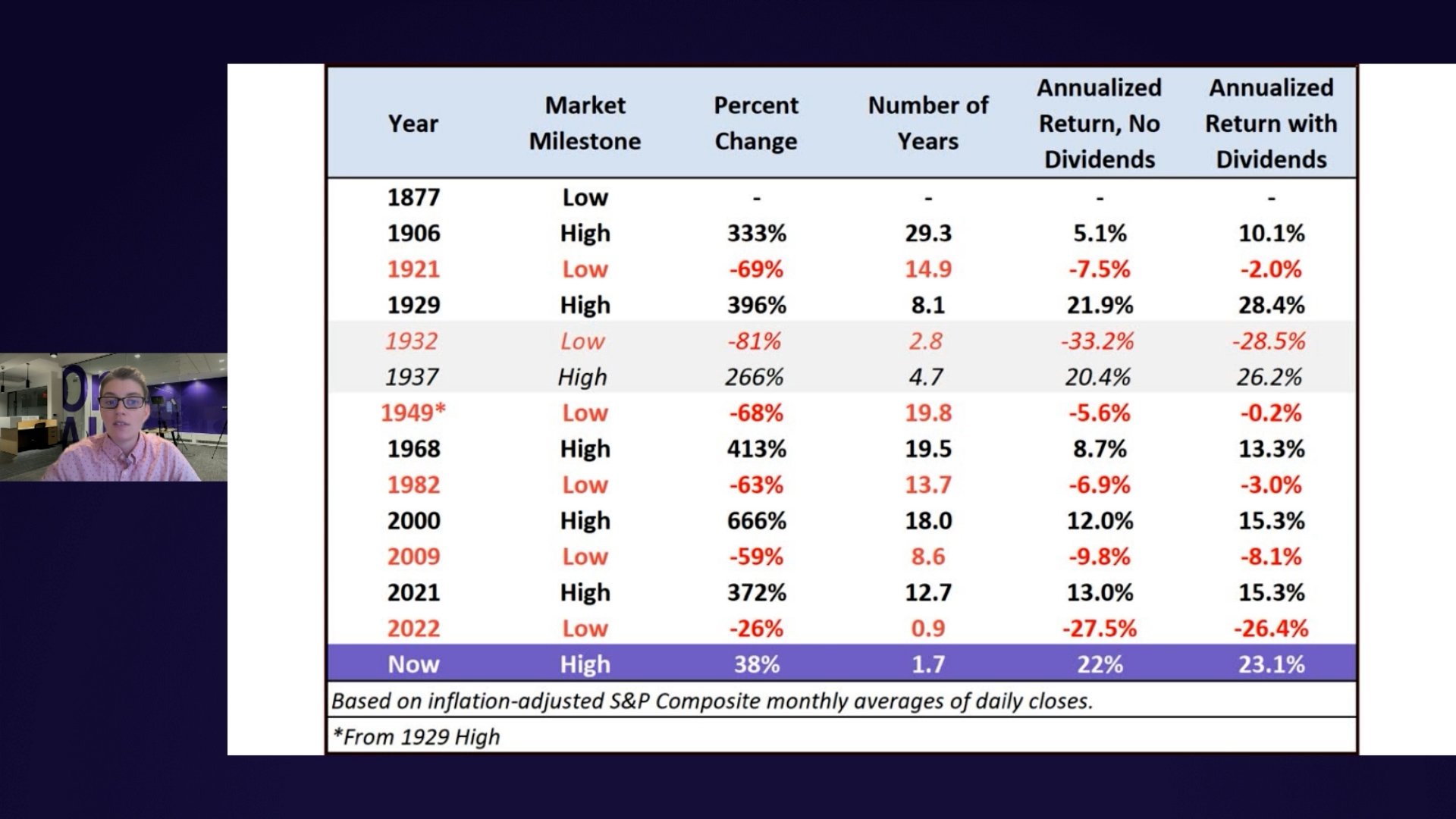
A bull market occurs when stocks are rising, the economy is expanding, and there is overall optimism towards market conditions. On the contrary, a bear market occurs when stock prices are falling, the economy is contracting, and there is overall pessimism towards market conditions. There are a handful of theories as to where the "bear" and "bull" names originated from for describing the stock market but the one that I find the most helpful is that they are derived from the way the animals attack their opponents. A bull thrusts its horns up in the air; a bear swipes its paws down.
US hiring and wage growth stepped down in June while the jobless rate rose to the highest since late 2021, bolstering prospects that the Federal Reserve will begin cutting interest rates in coming months.
Gold headed for a back-to-back weekly gain on expectations that the Federal Reserve will trim interest rates before year-end, with traders looking ahead to US payrolls data for the next batch of clues on the outlook.