Recently, stock market numbness closes the trading day. No wholesale crash, just a little wobbling for now with positive numbers for half of January. But I have a sense it’s in need of a cane to steady its momentum.
The key point is that nothing in the incoming data since December has undermined the Fed’s prior message. The economy remains strong, jobless claims are hovering near 200,000, and recession fears continue to recede.
Mathematics in the investment field is almost 100% phony. Virtually all that is really needed are the four arithmetic operations students learn by the third grade: addition, subtraction, multiplication, and division. The rest of the mathematics used in the investment field serves no purpose other than to impress people.
The circular investing phenomenon that is currently occurring among the Magnificent Seven companies is very similar to the Japanese Keiretsu concept. Under this business model, companies with interlocking business relationships and shareholders dominate a country’s economy.
This endless sequence of numbers that form ratios, known as the Fibonacci sequence, provides a technical analysis tool for managing financial securities. Before you assume we've lost our minds —relying on biology or, even worse, mysticism to predict stock prices — let us explain.
An increasingly unstable global geopolitical order has turbocharged stocks of military contractors in recent months. Now, with some of the biggest names in the industry set to report earnings this week, investors are eager for evidence that the rally is rooted in reality.
By asking New York traders to confirm the price of the Japanese yen against the dollar on Friday, US authorities handed investors yet another reason to sell the greenback.
It is critical to understand that 2026 will not deliver certainty. Instead, investors should focus and make decisions based on probabilities backed by data, earnings trends, policy shifts, and macro signals.
Today we continue anticipating 2026, this time shifting for the first part of the letter from economic issues to geopolitics before making some of my personal general forecasts.
The Bank of Japan’s recent policy shift is sending shockwaves through global markets. Headlines this week highlight the dollar’s tumble against the yen and renewed chatter of an unwind to the massive yen carry trade, estimated at over $500 billion.
It was a volatile week in financial markets, largely driven by geopolitical developments. Last weekend, the U.S. administration proposed new tariffs on several European countries linked to tensions around Greenland.
Year-end S&P 500 price targets implicitly assume continuity and fail to recognize volatility and macro forces that affect markets throughout any given year.
Investors were thrown another tariff curveball, with the U.S. administration declaring that unless a deal for the U.S. to acquire Greenland can be reached, a 10% tariff will be imposed on eight European countries (Denmark, Norway, Sweden, France, Germany, the United Kingdom, the Netherlands and Finland) effective Feb. 1.
LPL Financial LLC announced today that financial advisors Jeffrey J. Wilson, CFP®, and Michael Sadowski, CFP®, of Wilson Peak Wealth Management Inc. have joined LPL Financial’s broker-dealer and Registered Investment Advisor (RIA) platform and will be leveraging Private Advisor Group’s infrastructure for the next stage of their growth.
A quiet but telling shift is unfolding in the crypto derivatives market, as one of the most reliable money-making trades shows signs of breaking down.
Despite the broadening-out call in early 2024, narrow market breadth persisted through 2025. In 2025, around one-third of S&P 500 constituents beat the overall Index, but more than 60% are outperforming year to date in 2026.
The $5 trillion hedge fund industry posted its best returns since the Global Financial Crisis last year, a welcoming reprieve for an asset class that has been overshadowed by the rise of private alternatives. Before declaring the worst is over however, boutique funds have one more myth to bust.
Geopolitical tensions have escalated following President Trump’s renewed intent to acquire Greenland. Franklin Templeton Institute’s Kim Catechis explores the implications.
A unified platform brings direct client benefits: strategies scale smoothly, adjustments happen safely, and proactive alerts keep portfolios aligned. With fewer handoffs and cleaner data flows, advisors can focus on what matters most, deepening client relationships.
These are times in life where any sort of note, acknowledgement or thoughtful gift is likely to be appreciated. You want to be supportive, but you also want to be careful you are taking your client’s feelings into consideration in all ways possible.
Netflix Inc. shares tumbled in early trading Wednesday after giving a disappointing forecast for earnings in the months ahead as it spends more on programming and works to close its $82.7 billion deal with Warner Bros. Discovery Inc.
Seven hundred billion dollars. That’s the figure being floated as the potential price tag for acquiring Greenland, according to recent reporting. Call me skeptical, but I don’t think anyone’s cutting a $700 billion check anytime soon. For comparison’s sake, that’s more than half of the Defense Department’s entire 2024 budget.
For advisors breaking away to start their own practice, there’s no avoiding the risks that come with entrepreneurship — but in the current economic climate that includes high inflation, market volatility and heightened uncertainty — advisors need to be doubly prepared when going out on their own.
Gaining recognition in the media and on third-party websites can feel daunting. However, you can learn from financial advisors who have established a strong off-site strategy that increases the likelihood of appearing in AI-generated answers.
AI productivity gains will demand active solutions, not government gifts. Skill development, apprenticeships, employer-based training, wage insurance, and mobility support. These tools address displacement directly, while UBI does not.
Today, we continue my 2026 economic and market forecast. Last week, I described our current environment as The Bipolar Economy, and noted that the real goal here isn’t to tell you what will happen. It’s to help you know what could happen so you can be prepared.
Precious metals surged out of the gate to begin 2026, not dissimilar to how they closed out 2025. Gold has already made two record highs this year alone, is currently trading above $4,600 per ounce, and is up over 6% in 2026.
Silver has been on a tear, rising fourfold in the last few years. To help investors assess whether silver is in a bubble, we take a new approach by examining a recent phenomenon: the recurring pattern of micro-bubbles.
Big banks’ share traders are raking it in right now. Sure, stock market indexes have been flying high, but it’s been far from certain in recent years that traditional Wall Street firms would reap the benefits with electronic market makers storming the zone.
EMs are entering 2026 from a position of renewed strength. A weakening U.S. dollar, improving fundamentals, and broadening country and sector leadership have created a favorable backdrop for investors—and we believe
It’s a brave new world for educational savers — and none too soon. In 2025, lawmakers outdid themselves by expanding ways families can help their children or grandchildren obtain a degree or certificate.
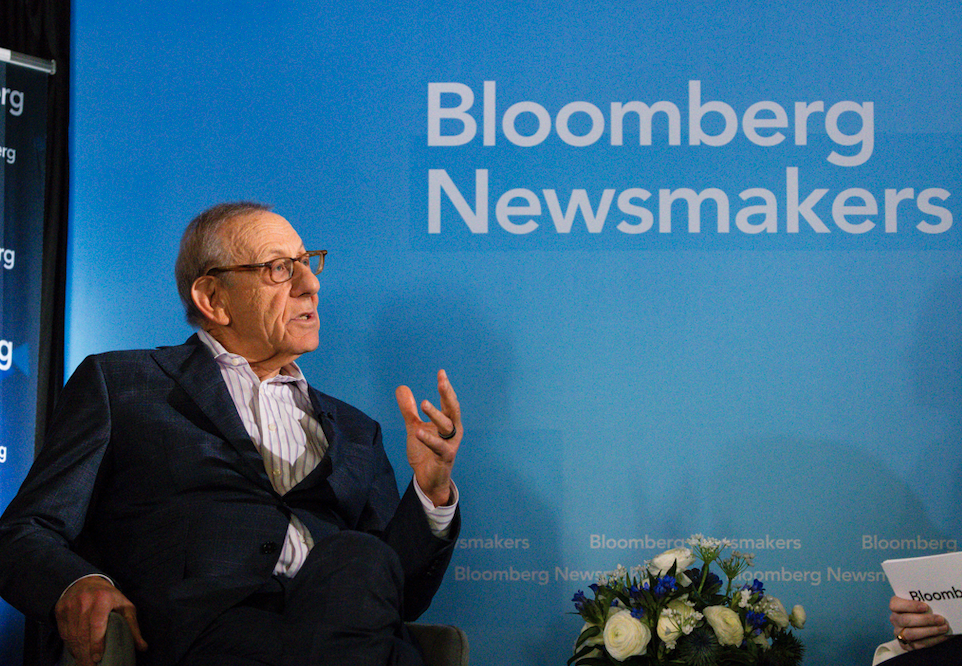
Billionaire Stephen Ross aims to position Florida’s Palm Beach County as the next Silicon Valley, calling the region a more business-friendly environment for tech investors and executives than California.
The billionaire Ellison family said this week that it will try to overhaul the board of Warner Bros Discovery Inc. unless the Hollywood studio engages with their $108 billion takeover bid. But winning support in a corporate fight won’t be easy as long as their offer contains holes.
Fixed income performed well in 2025, but we are proceeding cautiously, as we believe headwinds in the new year could cause the rally to stall.
Defaults among auto loans are noteworthy because these had been seen as a safe form of lending. Living without a car is impossible in much of the United States; in the GFC, borrowers were more likely to surrender their home than their car.
Raymond James Chief Economist Eugenio J. Alemán evaluates economic conditions heading into 2026.
Bank of America Corp.’s equity traders posted their best fourth quarter ever as the company reaped the benefits of volatile markets and net interest income topped analysts’ estimates.
The bullish AI narrative that dominated in 2025 is unlikely to continue overshadowing other lingering uncertainties, many of which reflect deeper structural shifts. Traditional factors underlying economic activity will be increasingly sidelined by national-security concerns, geopolitics, and domestic political machinations.
If you’ve been around anyone under the age of 25 lately, you have likely been exposed to the “Six-Seven” phenomenon, whereby kids react excitedly upon hearing or seeing the numbers 6 and 7 in sequence. It can come from anywhere at any time…
The Wall Street consensus forecast for 2026 earnings growth is strong by historical standards. Analysts are giddy and projecting another year of double-digit growth in S&P 500 earnings per share (EPS).
LPL Research takes a look at fourth quarter earnings season as it unofficially kicks off this week with a dozen banks and asset managers in the S&P 500 slated to report.
Midstream is unique from the rest of energy in being able to provide EBITDA guidance for the year ahead or multi-year periods without depending on specific commodity prices. Companies provide services for fees under long-term contracts, which results in stable and predictable cash flows.
Investors’ newfound affinity for companies that benefit most from an accelerating economy is in for a tough test as the latest earnings season kicks off.
As we step into the new year, many of us are setting personal and professional goals for what we hope to accomplish in the months ahead. The same holds true for financial markets, where Wall Street strategists have been busy refining their outlooks for where the S&P 500 might finish the year.
“Party like it’s 1999” is a phrase made famous by the musician Prince’s 1982 song, which experienced a renaissance amid Y2K fears and has since entered the lexicon meaning to celebrate intensely because the future is uncertain.
Last week delivered some of the more surprising macro data I’ve seen in years: very slow job growth, but stable unemployment, and a sudden surge in output that materially lifts the outlook for earnings heading into 2026.
Instead of offering a forecast, let us consider the potential events and factors that could influence investor sentiment and move markets this year. Inevitably, no matter how many events we and others are considering today, there will be market-moving ones that are not on anyone's radar currently.
IRMAA (Income Related Monthly Adjustment Amounts) acts as a penalty on prosperity, lightly touching the truly wealthy and passing over the poor and those doing okay. It is a dagger aimed at the heart of affluent professionals who diligently saved for retirement and are now drawing down their ample 401(k) funds.
It’s only been a few days since the start of 2026, but global equity markets are already reaching new all-time highs. Major benchmarks—including the Dow Jones Industrial Average in the U.S., Canada’s S&P/TSX Composite Index, and Japan’s TOPIX—posted strong gains this week.
In 2025, the S&P 500 delivered double-digit returns for a third straight year. Heading into the fourth year of the bull market, Raymond James Chief Investment Officer Larry Adam identifies 10 themes to watch in 2026.