Equity markets are facing a variety of headwinds, but the economy remains strong, and we believe there will be ample opportunities to invest in attractively valued quality growth companies in 2025.
Markets responded positively during Trump's first week in office, despite threats of tariffs on the three largest trading partners of the U.S. Are trade risks being dismissed?
China will struggle to maintain momentum without addressing deeply-rooted problems.
You’ve likely heard the saying “when the going gets tough, the tough get going.” A similar principle can apply to investing: “when the going gets tough, stay in the market.”
US Treasuries were lower as traders parsed tweaks to the Federal Reserve’s policy statement regarding progress on the fight against inflation.
In this article, we will demonstrate how the use of daily options within a covered call strategy has the potential to generate substantial income while also targeting the total return of equities.
Fixed income comes into 2025 on the heels of an explosive 2024. But with 2025’s landscape shifting, investors need guidance.
“Debanking” is about to get a lot of airtime in US politics, but be warned: This debate is a chimera. Crypto enthusiasts, culture warriors and banks all have dogs in the hunt, with each leaning on the others’ interests and narratives to advance their own.
Every year, millions of Americans living abroad suffer a profound administrative indignity: complying with a US income-tax regime that treats them like miscreants and complicates the lives even of those who owe nothing.
New York Governor Kathy Hochul has proposed restrictions on large financial firms buying homes, and state legislators in Virginia and Nebraska have similar ideas.
In our view, active investors face opportunities to outperform created by looming policy changes and the macro landscape.
The market for washing machines offers lessons for future trade actions.
Doug Drabik discusses fixed income market conditions and offers insight for bond investors.
While planning for a CMA (Capital Market Assumptions) at the close of the year—and in the wake of an unexpected U.S. election result—it’s tempting to adopt a short-term perspective, focusing on the uncertainties and anxieties generated by President-elect Trump’s policies and their potentially disruptive impact on the economy and the market.
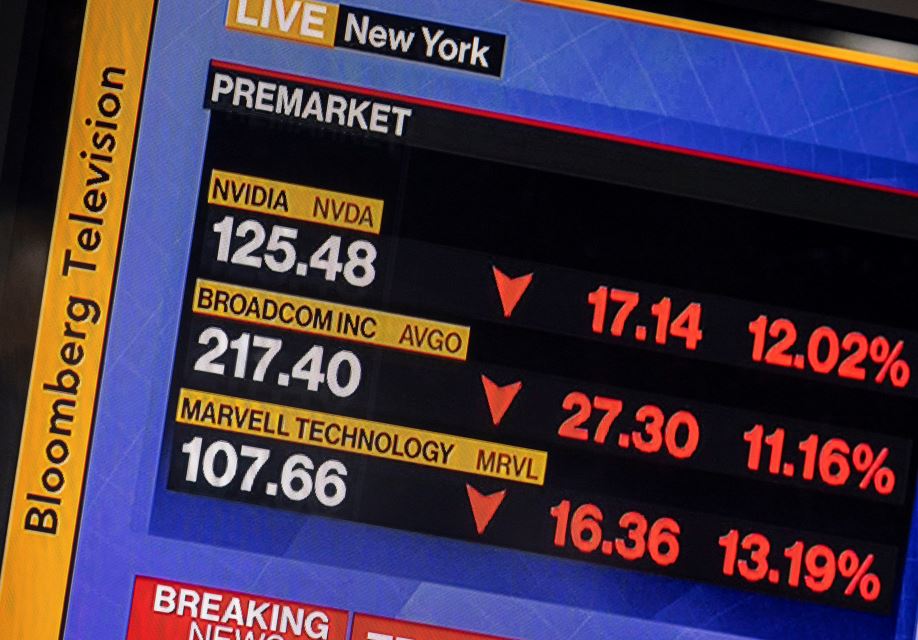
The S&P 500 Index plummeted as much as 2.3% on Monday over DeepSeek, a Chinese artificial intelligence startup that developed a model competitive with the US’s very best — and, supposedly, on the cheap.
Tech leaders gathered at the White House to announce Stargate Project, a new venture that plans to invest $500 billion over the next four years on AI infrastructure and datacenters.
Retail investors are the most optimistic about higher stock prices in 2025 by the most on record. Unsurprisingly, that sentiment resulted in the psychological rush to overpay for assets, pushing forward 1-year valuations sharply higher.
We still believe the odds of a recession are higher than most investors think. Monetary policy tightening started back in 2022 and inflation remains above the Federal Reserve’s 2.0% target, which means the Fed will be reluctant to get loose anytime soon.
Tax and spending cuts will face Congressional roadblocks.
We explore how evolving priorities under the new U.S. administration may influence markets and investor outlooks.
Next week we will have the first Federal Open Market Committee (FOMC) meeting decision on interest rates of the year, where Federal Reserve (Fed) officials are expected to leave the federal funds rate unchanged.
High expected fixed income returns imply many non-profit investors could de-risk while still expecting to achieve their stated return objective.
I recently read three very different books which were published in the last three years, all of them speaking to the problems created by the neoliberal order that has been in the ascendancy since the late ’70s but has faltered of late. The solutions that these books offer are, respectively: tweaking; evolution; and revolution.
Treasuries rallied on Monday as investors flocked to the safety of US government bonds after equities slumped in a selloff driven by technology shares.
Markets have responded with gusto since November’s presidential election, especially in a few key—and perhaps expected—industries. The biggest winner so far is the automobile industry...
As we kick off 2025, the landscape is rich with competing narratives and evolving dynamics.
Four strategies for navigating crosswinds in the municipal bond market.
Bonds look attractive again after the most recent rise in interest rates. Markets are likely to continue to overreact to every new employment report and inflation reading, keeping interest rate volatility elevated as yields dance up and down with each data point.
On this episode of “ETF of the Week” podcast, VettaFi’s Head of Research Todd Rosenbluth joined Chuck Jaffe of Money Life to talk about the WisdomTree US Quality Dividend Growth Fund (DGRW).
US bond funds actively managed by industry heavyweights like Pacific Investment Management Co. attracted the most new investment last year as money returned after a two-year dry spell.
Apple Inc.’s stock has had a rough start to the year and is now flirting with a key level that could signal more downside ahead if breached.
In a small Texas city nearly 200 miles west of Dallas, the first data center associated with the $100 billion Stargate venture from OpenAI, SoftBank Group Corp. and Oracle Corp. is taking shape.
For stocks, Christmas came with a 'Santa Clause' rally soon after the election. Since then, there's been a correction in US markets.
This article provides the Beaumont Capital Management Q4 2024 Market and Strategy Commentary - Decathlon Strategies.
Changpeng “CZ” Zhao, a few months out of prison and worth $70 billion thanks to the relentless crypto rally, is turning the former venture capital arm of his Binance Holdings Ltd. into a family office.
General Electric Co., known now as GE Aerospace, has reclaimed its position as the largest industrial company by market value as jet engine production and after-market service both ramp up.
As growth extends to more regions, we see expanding opportunities across countries and assets.
While every new year arrives with its own unique set of opportunities and challenges for institutional investors, we believe 2025 could offer more than the typical share.
We explore how advancements in indexing solutions have allowed investors to tailor their portfolios according to their specific objectives or risk profiles.
When investors have been looking to allocate funds within the U.S. fixed income markets, credit has seemingly been viewed as being perhaps too “rich,” or expensive, in relative terms.
Senior Investment Strategist Tracey Manzi notes that the Federal Reserve's ongoing easing cycle should benefit short to intermediate maturities.
A few months ago, the Census Bureau released its annual report on household income data for 2023. During 2023, the median (middle) average household income rose 8.0% to $80,730. Let's take a closer look at the quintile averages, which dates from 1967, along with the statistics for the top 5%.
A tech-powered approach to bond trading that helps firms move hundreds of securities in one go has just posted its best year yet.
An exchange-traded fund from a relatively unknown shop is catching the attention of online traders and gathering flows after investing in Elon Musk’s SpaceX.
Free trade is in trouble. That’s hardly startling news when the US has an avowed protectionist in the White House, but the problem runs deeper than it may at first appear.
The gap between US federal spending and tax revenue is currently bigger, as a share of gross domestic product, than it’s ever been outside of major war or other crisis.
Saudi Arabia’s Crown Prince Mohammed Bin Salman told President Donald Trump he’s willing to expand investments and trade with the US in the coming four years by $600 billion, according to the kingdom’s state-run news agency SPA.
Investors, many of whom were worried about stock valuations before the election, have much to consider heading into 2025. There seems reason for some exuberance—but a rational exuberance, based upon a plausible foundation of corporate and economic health.
From the start of December to their recent peaks, 10-year yields have gained 68 basis points in the U.K., 60 basis points in the U.S., 55 basis points in Germany and 48 basis points in Canada.
European equity markets may look vulnerable to fallout from new US policies. But some companies offer investors reasons to cheer.