U.S. stocks are choppy in pre-market trading on the heels of yesterday's drop ahead of tomorrow's comments from Fed Chairman Jerome Powell.
Doug Drabik discusses fixed income market conditions and offers insight for bond investors.
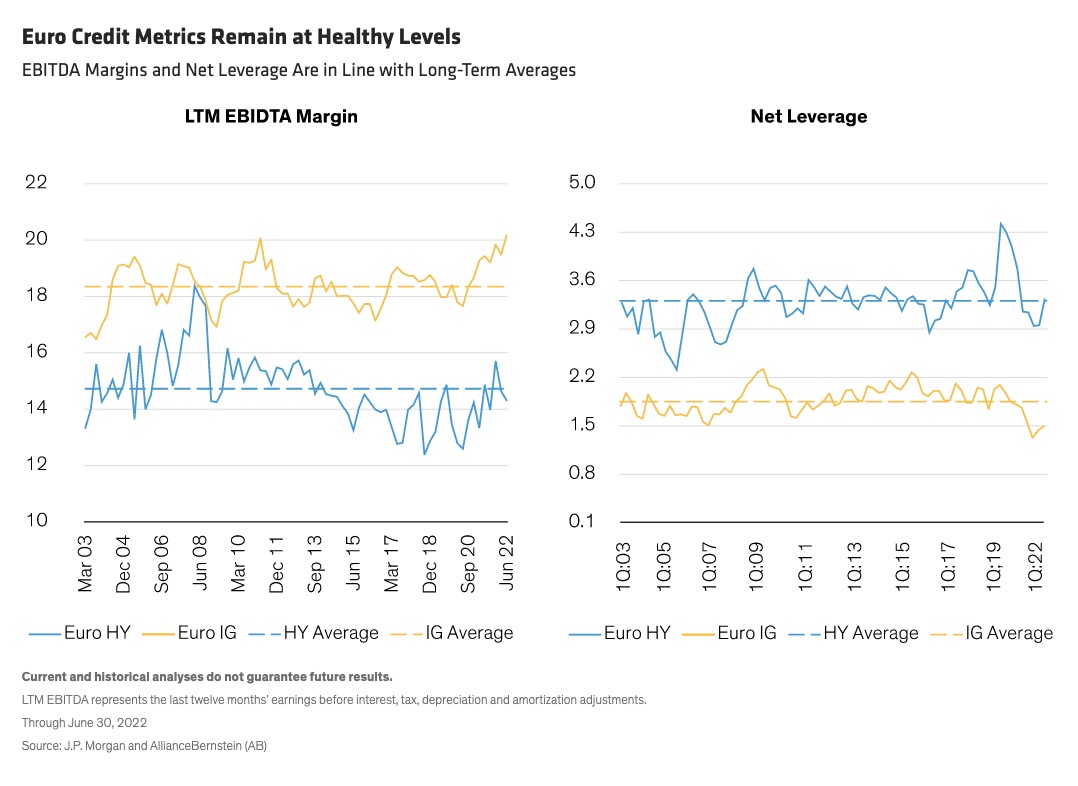
As Europe struggles with war, costly energy, record inflation and slowing growth, it’s no surprise that European corporate credit is out of favor.
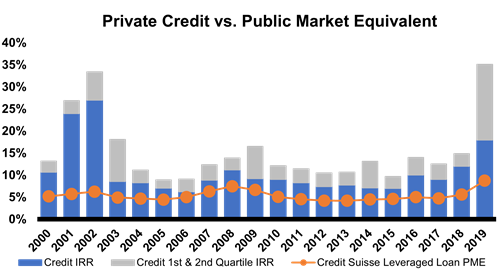
We believe private credit is an attractive investment with greater market coverage and a timely opportunity to benefit from the scarcity of fresh capital.
Doll’s Deliberations this week summarizes some short-term expectations and some longer-term issues.
This article explores the efficacy of PLIBs against a retirement income strategy that does not include an annuity, as well as strategies which allocate to either a SPIA, a DIA, or a GLWB. I used a utility framework for this analysis.
Commodities are heading for a challenging finish to a year of turmoil, with geopolitical tensions and global demand uncertainty set to buffet markets from oil to copper and crops through December.
Under the surface of one of the quietest weeks on Wall Street all year, some money managers are renewing speculative bets, hoping against hope that a more friendly -- or at least less-hostile -- Fed, is back in their corner.
U.S. equities are mixed in pre-market trading, but the markets are on track to post weekly gains for the holiday-shortened week.
In one of the most challenging years for markets, 2022 brought persistently high inflation, aggressive central bank tightening and heightened geopolitical risks, leaving investors with few places to hide.
Franklin Templeton recently hosted an investment forum in Singapore, and much of the dialog pointed to a growing gap in growth outlook emerging between Asia and the West.
Federal Reserve officials at their meeting earlier this month concluded it would soon be appropriate to slow the pace of rate increases, signaling the central bank was leaning toward downshifting to a 50 basis-point hike in December.
U.S. equities are rising, although no notable directional drivers seem to be in play amid the holiday-shortened week, with the markets closed on Thursday for Thanksgiving and trading in a half day on Friday.
The US has had 12 recessions since 1945. Chief Economist Brian Horrigan contemplates the potential for unlucky #13.
And up and down.
Recessions are like forest fires – small ones are healthy for the forest. However, the longer you suppress fire, the more dead material the forest accumulates. Eventually, when it does pay a visit, it is more devastating and its effects are more long-lasting. The recession that is coming could be a big fire.
Right now, investors are getting worried because the yield curve has gotten very inverted — more inverted than it was in the lead-up to either the 2001 or 2008 recessions.
For years leading up to the pandemic, low inflation and stable growth created a favorable environment for investors that supported sustained periods of robust stock and bond returns. With inflation virtually non-existent, economic downturns were met with monetary and fiscal stimulus that provided a backstop for financial markets.
As warning signs for the economy mount, investors are cheering for more bad news. That's because they expect economic weakness will force the Federal Reserve to stop raising interest rates and eventually re-embrace loose monetary policy.
Being glued to crypto news this week meant missing adventures in regular markets that while lacking the same high drama, made up for it in terms of money at stake.
Despite stubbornly high inflation and recessionary fears, spending by consumers may not slow down as we approach the busy holiday shopping season.
Two aspects of the financial markets operate simultaneously. Emphatically, they do not operate alternately, but simultaneously. One aspect is driven entirely by arithmetic. Every security is a claim to some long-term stream of cash flows that will be delivered to the holder, or series of holders, over time.
When market investors suffer losses — or get taken for a ride — they’re often eligible for a tax write-off to soften the blow. Users of the bankrupt crypto exchange FTX won’t be so lucky.
As we approach Thanksgiving, it’s the perfect time to reflect on all we are grateful for. From an investor’s perspective, this year’s bear market will certainly not make this list. But even though it has been a challenging year performance-wise, we still believe that investors have a cornucopia of economic and financial market blessings to count!
Oaktree Capital Group LLC co-founder Howard Marks is gearing up for one of the best buying opportunities since the global financial crisis as higher interest rates and a looming recession push more companies into distress.
Mortgage rates in the US faced the biggest weekly decline in nearly 41 years, providing some relief after a rapid run-up that quickly priced out homebuyers.
If the last few weeks are any guide, the coveted soft landing for the economy may be coming into view.
Review the latest portfolio strategy commentary from Mike Gibbs, managing director of Equity Portfolio and Technical Strategy.
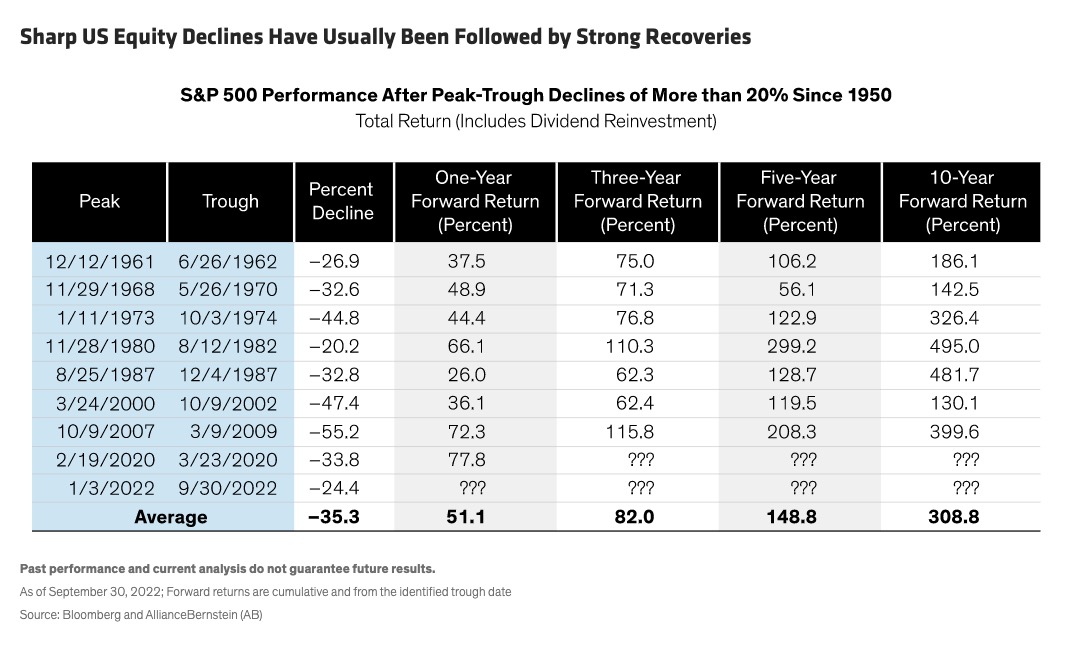
After a tough year for equities, is a recovery imminent?
What do Bill Hwang, the disgraced US investor, and Liz Truss, Britain’s shortest-serving prime minister, have in common?
Franklin Mutual Series believes dividend payers can give value investors better total returns over the longer term.
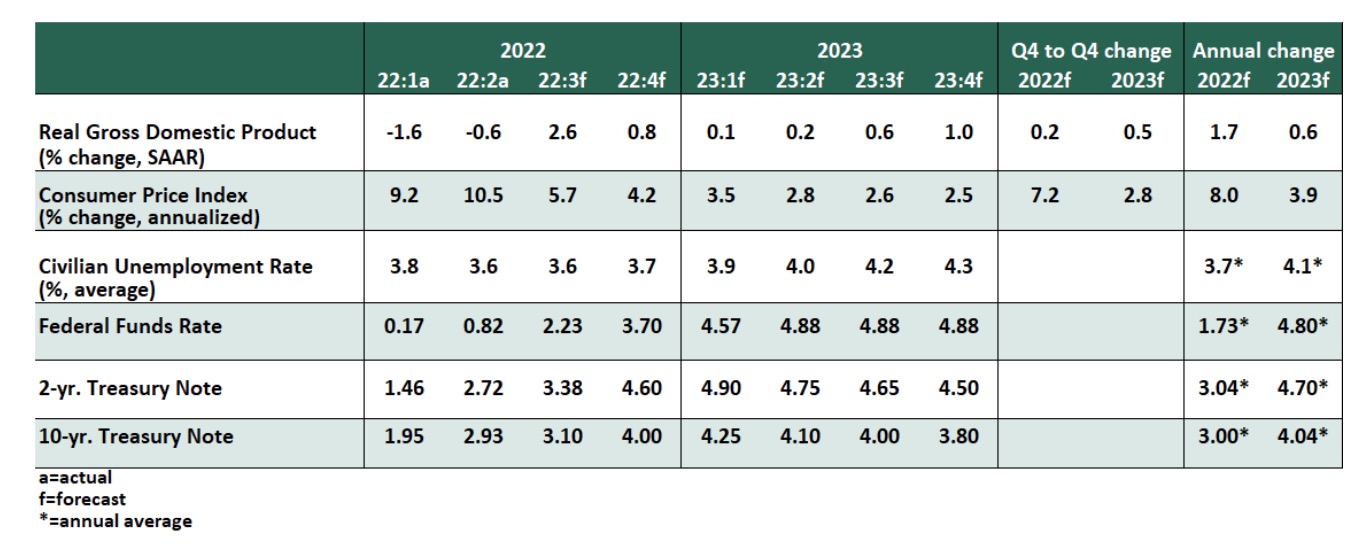
The Northern Trust Economics team shares its outlook for inflation, growth, employment and interest rates.
The recent implosion of FTX is explained and why the inevitable crypto and pension fund collapse was precipitated by Fed policy.
With interest rates higher amid a challenging macro environment, we see a compelling case for bond allocations and are cautious about higher-risk investments.
Wall Street is struggling to whittle down the roughly $37.5 billion in risky corporate loans stuck on their books -- and the pile of so-called hung debt may be about to swell further as another large buyout financing stumbles.
The most crowded trade on Wall Street -- long inflation -- is suddenly getting crushed like never before in the post-lockdown era, sparking a spate of forced deleveraging among a broad cohort of institutional funds.
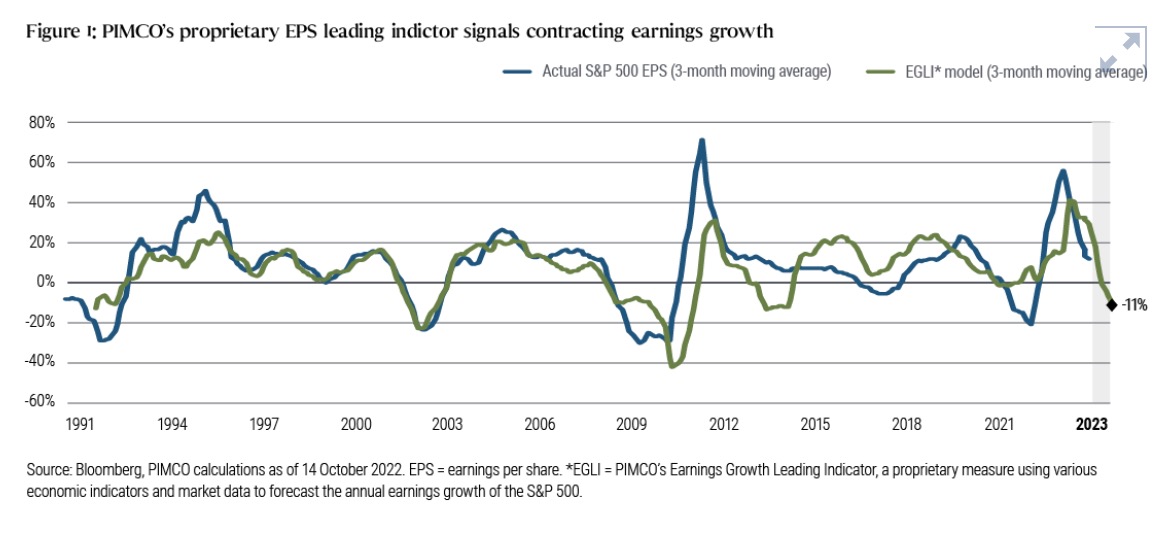
They say a picture is worth 1,000 words and a good chart fulfills a similar function.
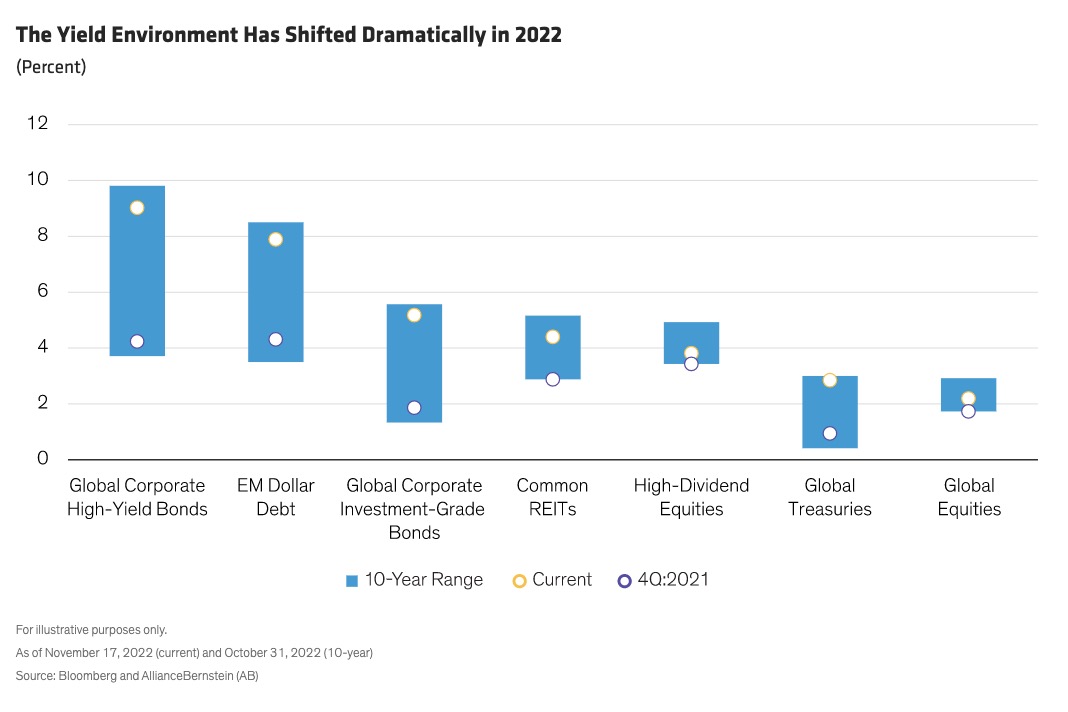
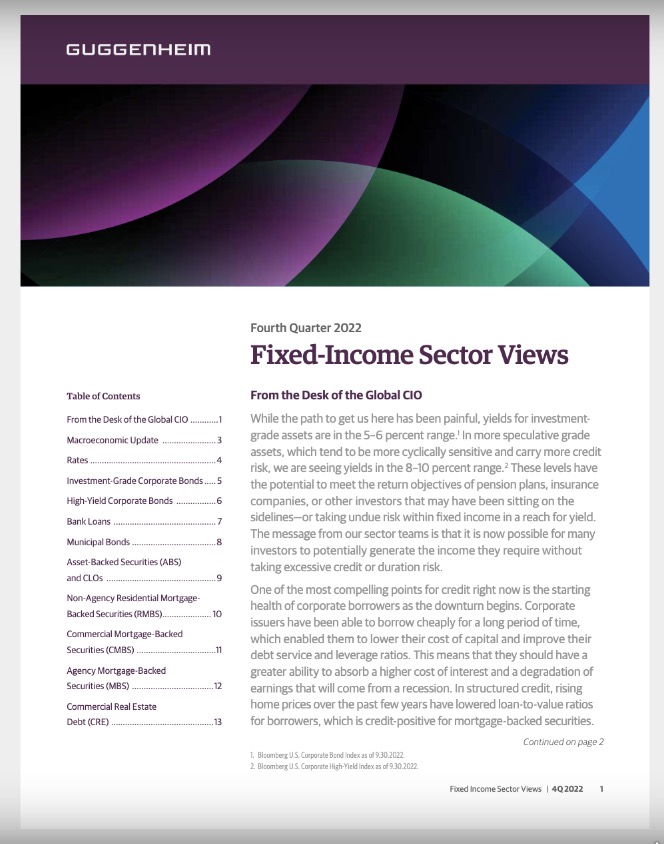
While the path to get us here has been painful, investable yields have the potential to meet the return objectives of pension plans, insurance companies, or other investors that may have been sitting on the sidelines—or taking undue risk within fixed income in a reach for yield.
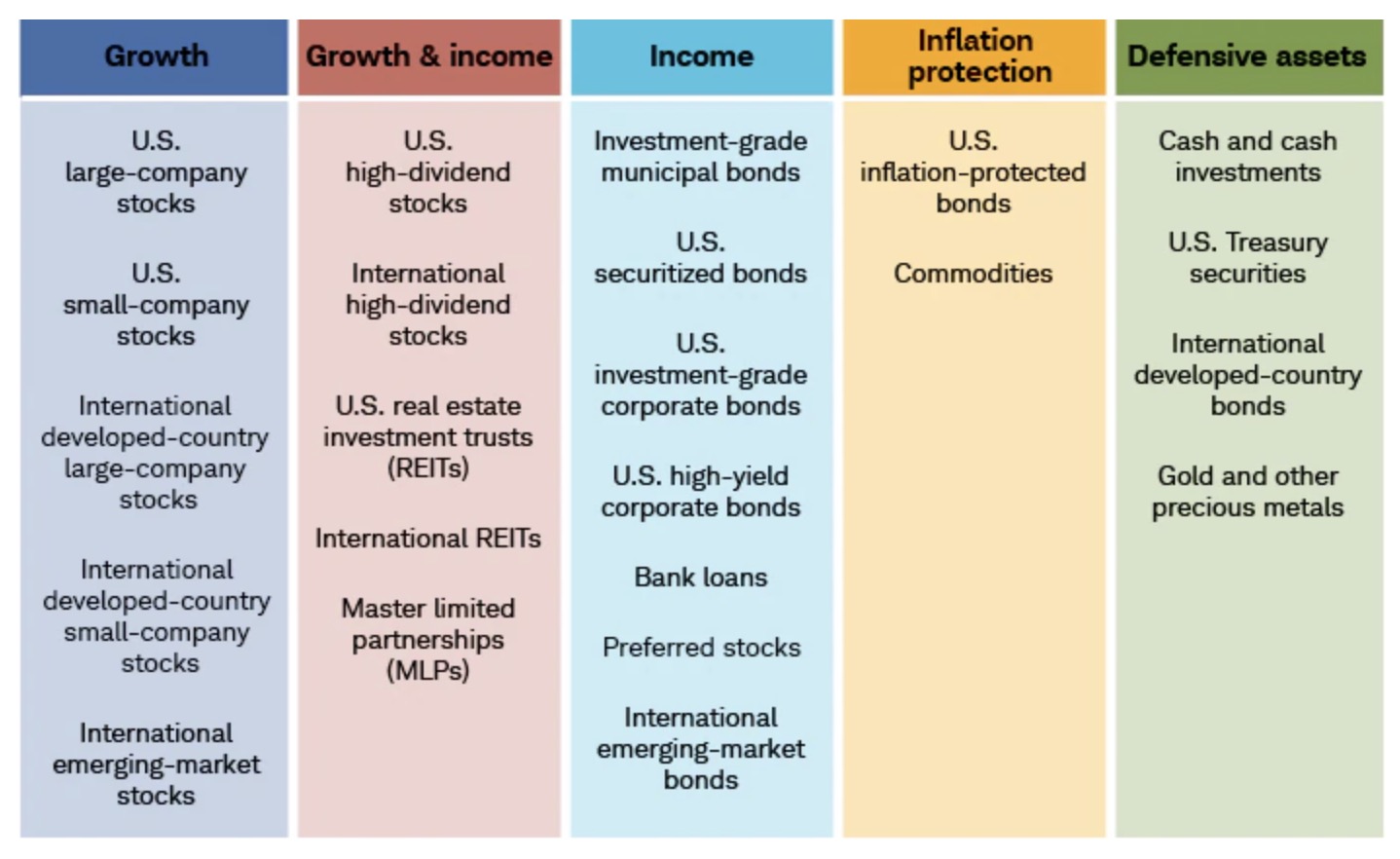
High inflation and slow economic growth are a problem for investors. Here's how to shore up your portfolio.
We believe highly innovative companies, when accounted for properly, are cheaper than their non-innovative peers in all regions of the world.
US stocks will end 2023 almost unchanged from their current level -- but will have a bumpy ride to get there, according to Morgan Stanley’s Michael Wilson.
Treasuries fell across the curve and the dollar strengthened against most of its major peers after Federal Reserve Governor Christoper Waller pushed back on bets the US central bank was nearing the end of its hiking cycle, while traders were also on alert for a scheduled appearance by his colleague Lael Brainard.
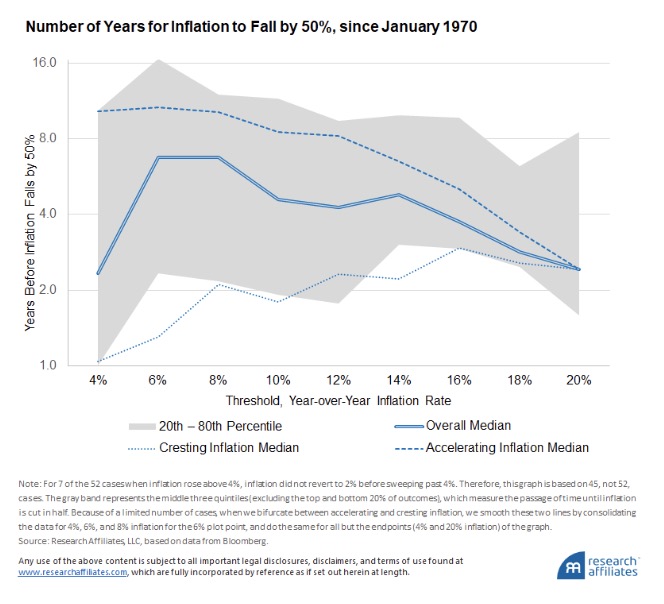
The US Federal Reserve Bank’s expectations for the speed of reverting to 2% inflation levels remains dangerously optimistic.
U.S. equities are mixed in restrained trading, with investors awaiting the next two pieces to complete the October inflation picture.
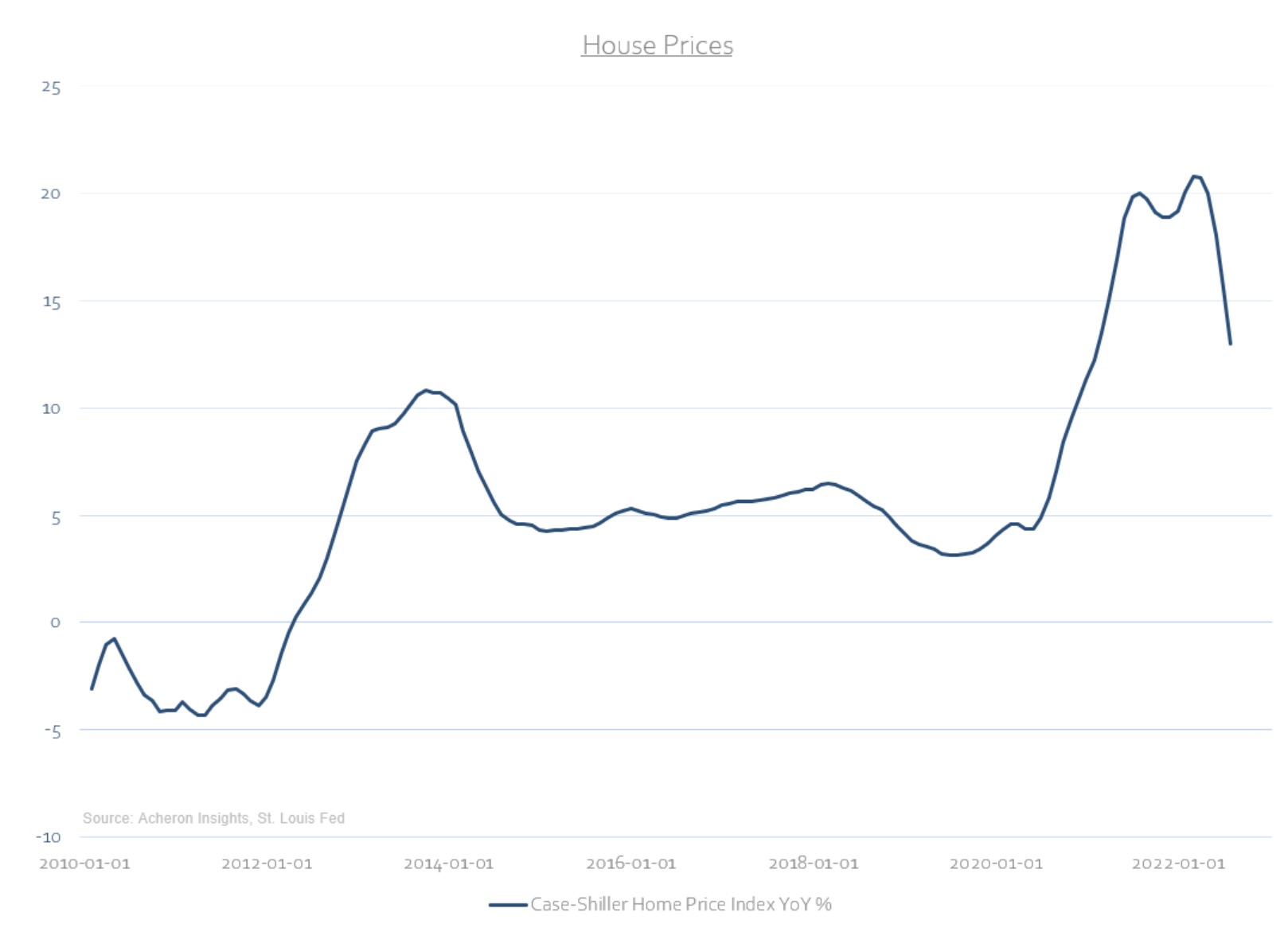
As a result of higher mortgage rates, an oversupply of housing and falling demand, the downturn in the housing market is only just getting started.
The nation’s inflation problem is far from solved, and the Federal Reserve remains committed to keeping short-term interest rates elevated. But longer-term government bonds may finally be worth a second look after some 14 months of carnage.
U.S. stocks posted its biggest daily gain since 2020 following data on October’s consumer price inflation (CPI), which came in cooler-than-expected.
The Federal Reserve looked closer to moderating aggressive interest-rate increases after welcome news on inflation, with three officials backing a downshift even as they stressed that policy needs to stay tight.
A cooling in US consumer prices offered cheer to households, investors and Federal Reserve officials, but there’s still a long way before high inflation becomes history.