Unfortunately, most people still don’t start thinking about their retirement until they are in their forties. Better late than never, but I believe there is a massive missed opportunity here.
Alphabet Inc. has this week embarked on the next leg of its debt program to meet the voracious funding needs of its artificial intelligence program. Nothing quite signifies global domination like issuing bonds with ease across all of the world’s major bond markets and at a range of maturities, including the ultra-long arena that’s typically reserved for the most favored of borrowers.
Recent tech headlines have stirred up fresh disruption fears, weighing on software stocks and the sector more broadly. Below, we break down key takeaways from 4Q25 earnings and share our latest views on tech:
This past week, I had the privilege of attending the 2026 Harvard Presidents’ Seminar alongside some of the nation’s top executives and thought leaders. One of the most compelling speakers was Ambassador Kevin Rudd, former prime minister of Australia.
Dollar positives include relatively high U.S. interest rates and robust growth. But dollar negatives are building. The political will for a stronger dollar isn't there and valuations aren't helping.
Whether you follow Japan or not, its situation is incredibly important for investors because it is a major provider of global liquidity. Instead of being overly dramatic about the slim chance of a near-term Japanese crisis, we prefer to focus on how Japan normalizes policy after years of artificially suppressed interest rates and how that process will impact the yen carry trade.
After several years dominated by macro shocks, markets are transitioning into a phase where dispersion, selectivity, and disciplined portfolio construction matter more than broad directional bets.
Alphabet Inc. is looking to raise about $15 billion from a US high-grade dollar bond sale, according to people with knowledge of the matter, adding to a borrowing spree by companies at the forefront of the artificial intelligence investment boom.
Hedge funds are betting on more pound weakness as UK Prime Minister Keir Starmer’s future hangs in the balance.
Markets are efficient after all. This does not mean that prices are always “correct,” just that they generally reflect the available information. When investors learn that software firms’ products may be displaced by AI, their prices fall, as they did last week.
For nearly two years, markets were driven by the same speculative narrative that “this time is different.” Speculative narratives are not only seductive but also contribute to investment behaviors that obscure reality. Speculation disguised as investing is a losing proposition.
Another signal of earnings strength is the ISM Index. Historically, the Institute for Supply Management (ISM) Manufacturing Index has correlated well with S&P 500 earnings growth because earnings are more manufacturing-driven than the more consumer-oriented economy measured by gross domestic product (GDP).
On an evening in late September, a few dozen wealth managers gathered at a $63 million French château-style mansion owned by Paris Hilton and venture capitalist Carter Reum in the exclusive Los Angeles enclave of Beverly Park.
Vanguard Group Chief Executive Officer Salim Ramji is putting his imprint on the world’s second-largest asset manager by siphoning talent from Wall Street firms to fill key roles.
Earnings results are shaping up to be quite solid this season, albeit a bit weaker relative to prior quarters when it comes to beat rates and price reactions.
Client demand for tax planning is high, yet many advisors may still fall short of meeting expectations. Direct indexing can offer tax benefits such as the potential for tax-loss harvesting but remains underutilized across the advisor community.
The temptation to automate grows as the tools improve. That does not mean everything benefits from it. Some activities rely on emotional intelligence and personal history; they involve nuance that AI cannot reliably interpret.
There’s an ongoing shift in how investors access income through ETFs. No longer is sourcing income a pursuit centered solely on fixed income assets. Today, it increasingly includes the use of derivatives to boost yield and total return, and to capitalize on equity volatility.
After much speculation and wild swings in market expectations, President Trump has nominated Kevin Warsh as his Fed chairman. If confirmed, he is expected to replace current Chair Jerome Powell in May at the end of his term.
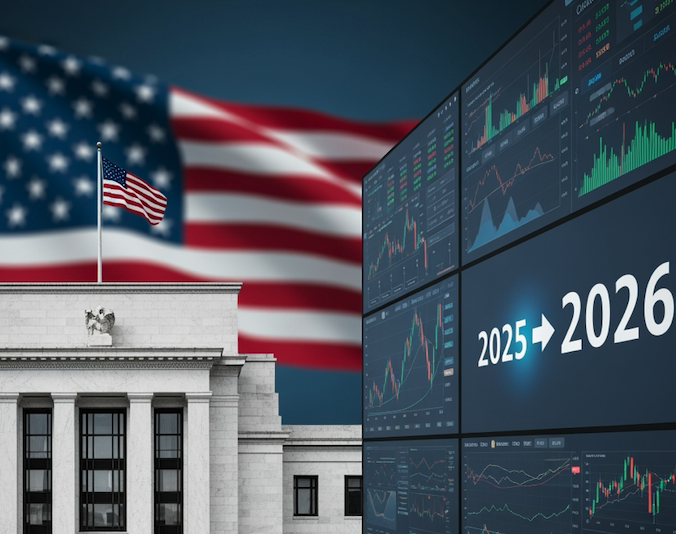
LPL Research examines how the Fed is entering 2026 amid constrained conditions and as growth and inflation meet an unsustainable fiscal trajectory.
A common proclamation made by tech leaders is that while artificial intelligence will destroy jobs, it will also create many new ones. But what kinds of new careers will AI spark? And, more importantly, will they last?
Since ChatGPT burst onto the scene in 2022, artificial intelligence (AI) has moved from science-fiction to reality. For many, AI has become a necessity. The transformation has been swift. Nearly every company now wants to integrate generative AI into their business model, while governments are scrambling to develop sovereign AI infrastructure.
Climatically, Europe has been fortunate: its winter has been moderate so far. But Europe’s need for fuel remains substantial, and the cooling of relations between the U.S. and the European Union (EU) may make it more difficult to keep EU homes and the EU economy warm.
No one knows what the future holds — especially not with burgeoning technologies such as AI. The best opportunities in AI may not be in today’s high-fliers but in lesser-known companies — some of which may still be private or not yet formed.
The concepts underlying our suggestions are straightforward, grounded in basic portfolio theory, and eminently practical. Most importantly, they align the committee’s focus with the endowment’s true objective: maximizing the sustainable resources available to beneficiaries over the long run.
In this episode of ETF of the Week, Chuck Jaffe sits down with Todd Rosenbluth, Head of Research at VettaFi, to break down why this "computer-enhanced" active fund is outperforming its peers and its benchmark by massive margins
Money managers at BlackRock Inc., Bridgewater Associates and Pacific Investment Management Co. are shoring up their portfolios against a fresh bout of inflation.
There are calls in Europe to “sell America” and invest that money at home in response to political tensions over Greenland.
Mainstream expectations, those from Wall Street, economists, and corporate strategists, have congealed around a bullish economic outlook for 2026. Most forecasts project stronger economic growth, with contained inflation, and continued investment in technology and capital expenditure.
Today we’re going to explore this “affordability” issue, looking at economic facts, survey data and simple intuition. As you’ll see, it’s not as simple as some people think. I also make a quick comment about the appointment of Kevin Warsh as Fed chair at the end.
At its January meeting, the U.S. Federal Reserve (Fed) voted to pause its rate-cutting cycle, a move that aligns with recent signs of stabilizing labor markets and easing inflation pressures.
Investing in common stocks is rarely a smooth experience. Stock prices fluctuate daily, sometimes dramatically, driven by market sentiment, economic data, and short-term news. Even company earnings, while more stable than prices, can experience cycles and periods of volatility.
A sharp productivity jump shows firms doing more with fewer workers. But the upside surprise also highlights growing risks about how these gains affect the workforce.
In our view, 2025 reinforced a familiar conclusion that tax management remains as relevant as ever, even though tax policy may no longer be a moving target.
Buying a house is expensive enough these days. But the costs of owning one have been rising, too — not least because of soaring insurance premiums. As policymakers of both parties have made housing affordability a top priority in recent years, they’ve done far too little to address this crisis in the making.
Apple Inc. had a very, very merry Christmas. “Unprecedented” demand for the latest iPhone pushed revenue for its top device up 23% year-on-year to a staggering $85.27 billion in the holiday quarter.
In this article, we look both back and forward, first at the 2025 capital markets to analyze not just what happened but also how it fits in the historical context and what we believe it means for 2026 and beyond. We then pivot to our return expectations for major asset classes in the next decade.
The federal funds rate will remain 3.5% to 3.75%. While the market still expects two rate cuts late this year, the Fed is likely to tread cautiously given the economic backdrop.
Coming into 2026, investors face a landscape shaped by persistent inflation, evolving US monetary policy and global uncertainty. At Parametric, our systematic and customized approach is designed to help clients navigate these complexities while preserving after-tax returns.
In our 2026 Outlook, we examine three themes that we believe will shape the economy in the coming year and impact the U.S. and global markets. Theme 1: Everyday Impacts of an Uneven Recovery. Theme 2: AI From Hype to Real-World Results. Theme 3: Adding Private Income and Diversification
What appeared just months ago to be a stable and predictable transatlantic trade environment now looks conditional. The ground underneath transatlantic trade relations is once again shifting…even though critical portions of it are covered by permafrost.
Investors are returning to health care stocks, but $1 trillion in government funding cuts and a looming pharma "patent cliff" are among the risks as Q4 earnings reports come due.
The AI boom has pushed technology stocks to new highs, but it has also masked headwinds in other sectors of the economy.
LPL Research examines how rising productivity, AI adoption, and structural shifts toward services are supporting U.S. economic growth in 2026.
By assessing the macro and market drivers that shape each outlook, we can lay out clear, practical tactics to prepare your portfolio for either path. Whether the bullish or bearish case prevails in 2026, your edge will come from disciplined risk management, not from guessing the future.
As geopolitical tensions reshape global trade, capital flows and investor risk appetite, gold is once again surfacing as an important component of asset allocation. Some investors and central banks are arguably viewing gold as a risk hedge, supplanting US Treasuries as a safe-haven asset.
The Federal Reserve is widely expected to halt its interest-rate-cutting cycle this week, as a steadier jobs market restores a degree of consensus at the central bank after months of growing division.
Standard Nuclear Inc., a uranium startup, raised $140 million to boost production of fuel for advanced reactors in an effort to expand the US energy supply chain amid surging interest in fission power.
Blackstone Inc. is planning to hire more people across Asia to tap growing opportunities in private markets, said Ed Huang, the firm’s head of Asia Pacific private wealth.
The Fed meets on Wednesday to discuss the direction of monetary policy. With the futures market pricing the odds of “no change in rates” at 97.2%, no one should expect a rate cut at this meeting…or, we think, anytime soon.