In this presentation, our Equity Strategist Team examines why client goals guide effective core portfolio construction and how ETFs can serve as essential building blocks to help clients achieve their objectives. Factor-based strategies, in particular, provide exposure to the long-term drivers of returns, and they are now available in the cost-effective and tax-efficient ETF wrapper. Join us as we examine how factor-based ETFs can be used in combination to address clients’ specific risk, return and income objectives.
When many fixed income investors think about the November US election, they tend to focus on how the presidential and congressional race outcomes could affect national policies. However, our municipal bond team delves into state and local government elections, too. Here, they share their analysis of how election outcomes at all three levels of government could affect muni bonds.
Investors should consider many angles when evaluating what active managers can offer through a global crisis and an indefinite period of uncertainty.
Escalating trade tensions between the US and China could affect Chinese corporate bonds, but not all credits are vulnerable.
Asset managers that had been longtime ETF holdouts -- including Wells Fargo, Federated Investors and Dimensional Fund Advisors -- are finally diving in.
It is well-established that “lottery” stocks – those offering the potential for outsized returns, like penny and growth stocks – deliver poor performance. While one might expect that naïve, retail investors are the ones buying those stocks, new research shows that is not the case.
Investors and analysts are bullish about the devices, partly because 5G networks are more built out in China.
Value stocks are going down today because they are sold to buy stocks that go up because they go up.
There are many benefits of using a rules-based approach using Relative Strength (RS), one of the main cornerstones of our research. Relative Strength, also known as Momentum, is a time-tested investment factor that permeates our work, allowing us to identify where both strength and weakness exists across securities, sectors, and asset classes using just one objective input - price.
As portfolio manager Russ Koesterich discusses, negative real interest rates help explain why gold is moving more in tandem with stocks these days.
The pandemic has amplified four long-term macroeconomic disruptors, and fiscal policy – a key swing factor – may hold the key to upside or downside surprises. Read our long-term outlook and learn implications to consider when investing.
Many of my clients have found success by focusing to serve a particular market or offer specialized services. Here’s why this works.
Rates are likely to continue being low for a long period of time. Where can bond investors turn for income? Diversifying with credit in fixed income can improve a strategy’s potential to deliver income, provide capital appreciation and help defend against risk. Different from simply cap-weighting, applying certain factors in a rules-based approach can improve outcomes. Given recent market volatility, investors are encouraged by these alternative fixed-income strategies. Join our experts as they provide an in-depth discuss that will cover:
· Uncovering the most attractive risk-adjusted returns for your clients· Multi-sector / multi-factor solutions· Positioning portfolios to exploit pockets of yield, quality and liquidity
Investments Expert
CFA
She is taking a number of steps to position herself more defensively.
The U.S. economy improved significantly this quarter, but investors continue to face several serious risks. In late September, confirmed COVID-19 cases were rising worldwide, and the pandemic may intensify as winter approaches. A combative U.S. presidential election looms.
We have a modest economic calendar including the ISM non-manufacturing index, JOLTS, jobless claims data, and the NFIB index. The Fed minutes from September’s meeting will be released. The Vice-Presidential debate is set for Wednesday.
Rick Rieder and team highlight the critical facts that will drive the markets in the year ahead, as well as the myths that could mislead investors.
Despite stellar equity returns over the last decade, the funded status for many defined-benefit plan sponsors has either stagnated or fallen. Here's why.
Ever wonder why Americans enjoy a substantially higher standard of living than any other large country? According to Matt Ridley, it is because the liberal democracy we have nurtured over the last 250 years is the essential catalyst to foster innovation.
Key Takeaways
Equity markets advanced in the third quarter but pulled back during September. Market moves were dominated by a small group of giant US stocks. How should investors react?
U.S. Healthcare Reform Proposals, Childcare Needed to Support Workers, Past U.S. Debt Recovery Won’t Repeat.
The best explanation for why stock markets remain so bullish despite a massive recession is that major publicly traded companies have not borne the brunt of the pandemic's economic fallout. But having been spared by the virus, they could soon find themselves squarely in the sights of a populist backlash.
I will try to make the case for a much slower recovery thus much higher debt by 2030. Note first, I’m not saying there will be no recovery. I am simply postulating it will look like the slow recovery from the Great Recession, unless the government makes it worse, which is a nontrivial possibility.
As high-tax states like California, New Jersey and New York contemplate spending less or taxing even more, the backlash is growing.
Investing in businesses that strive for a better climate through decarbonization doesn’t necessarily assume a lower bar for performance. Just the opposite. Besides contributing to a healthier environment, low-carbon equity investing can also offer attractive return potential.
The fastest, most economically destructive recession is now in investors’ rearview mirrors. CIO Larry Adam shares his perspective on the unfolding recovery.
CIO Austin Hawley discusses the dramatic underperformance of value stocks relative to growth stocks over the past decade—and why a strategy focused on intrinsic value is still relevant. A shift toward a service- and knowledge-based economy focused on intangible assets, and the emergence of internet-based businesses means traditional definitions of value have become less useful. However, price remains an important factor in determining future returns.
The US inflation rate has hovered around 1.5% over the last decade, well below the Fed’s target rate of 2% most of the time. Such low inflation for such an extended stretch is quite unusual given historical economic relationships, especially with the economy strong and the unemployment rate near historic lows late last year and earlier this year before the pandemic hit.
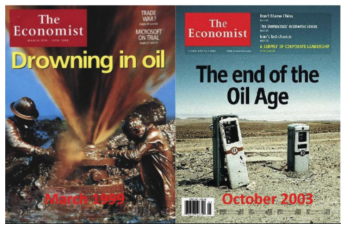
We became extremely bearish on energy in 2011. At the time, we saw interest in Seattle for hybrid and electric cars. This convinced us that 10% of the cars on the road nationwide might be hybrid and electric by 2020.
The biggest political risk facing investors may be the potential for politicians to implement national lockdowns in response to a rise in new COVID-19 cases that could lead to renewed recession and a new bear market for stocks.
We have a huge economic calendar and the first of three scheduled Presidential debates. The employment report will be the last one before the election, so I expect it to get special attention. Most of the other important economic data will also be reported during the week.
Behavioral factors can significantly impact a client’s financial wellness. This executive brief focuses on four — Future Concept, Impulsiveness, Materialism and Financial Literacy — to provide insights into identifying and addressing each factor during financial coaching, which financial professionals can use to create the optimal plan for each client.
Even as markets were rocked by uncertainty as the coronavirus lockdowns began, the seeds of stability were sown in the massive fiscal and monetary policy response.
Investors, especially those with limited experience, are declaring that value is dead. Those who act on that belief will suffer at the hands of Mr. Market.
Imagine if you could show your clients the impact of taxes between funds and categories. Now you can. Here’s an exclusive first look at our Tax Impact Comparison Tool.
When you hear or see the word “threat,” it triggers you in some way. Associating that word with referrals will evoke a terrifying shiver. This is, of course, assuming you’re interested in wanting to acquire more referrals.
I got very excited when I came across an excerpt from Jordan Ellenberg’s book, How Not to Be Wrong. His book was written to teach readers how much logic and common sense is provided by math. He tells the story of Abraham Wald during World War II, who worked for the Statistical Research Group (SRG).
In a new white paper, Mustafa Ulukan and Sergey Sobolev from GMO’s Emerging Country Debt Team examine the notable rise of State-owned Enterprises (SOEs) in international capital markets since the Global Financial Crisis.
We have a light economic calendar with important data on home sales, jobless claims, and durable goods orders. None of these is likely to stimulate higher heartbeats. I expect politics and the election to get plenty of attention in the financial media, especially with an open Supreme Court seat as a new issue.
Investors underestimate the negative consequences of high environmental, social and governance (ESG) risks, and underreact to prior negative ESG events. High ESG risks destroy shareholder value.
In the revised edition of The Incredible Shrinking Alpha, Larry Swedroe and Andrew Berkin make the case that investors are better off choosing passive investments because markets have become more efficient as managers became more skilled.
This “exodus,” as some are already calling it, may end up being among the biggest in U.S. history, or at least the biggest since the 1950s and 60s. A record 27.4 percent of homebuyers sought to move out of their metro areas in the second quarter, according to Redfin data.
With U.S. shares reaching lofty valuations and fundamentals firming up in many other countries, financial advisors would be wise to consider increasing a client’s non-U.S. holdings. So why do many advisors hesitate making this allocation?
Many investors are attempting to justify higher stock “valuations” because interest rates are at historical lows. I would agree that lower interest rates could affect “market valuations” based on the simple law of supply and demand. The concept is simple, when fixed income offers lower returns it logically stimulates more demand for equities where higher returns can be found.
Adding intangible assets to book value provides a more robust measure of firm capital. But, just as a home buyer considers a host of variables when evaluating the price of a new house, we prefer to use multiple metrics, not book value alone, to get the most complete picture possible of a firm’s valuation.
Ed Perks and Gene Podkaminer of Franklin Templeton’s Multi-Asset Solutions team discuss the attractions of alternative assets that can offer natural portfolio diversification. Over a longer-term horizon, they continue to believe global stocks have greater performance potential than global bonds, or alternatives, but this outlook will not be reached along a smooth path.
In the past six months since the onset of the pandemic, technology and healthcare have become increasingly intertwined.
The third generation of financial planning mathematical infrastructure has emerged, which incorporates additional variables to more realistically reflect potential future outcomes.
The U.S. stock market hit pause in early September, as investors took a harder look at market overconcentration and frothy sentiment. Meanwhile, global economies may be entering a new phase, and the Federal Reserve’s newly announced inflation policy is likely to keep U.S. rates lower for longer.