In the year 2020, lower coupon bonds are cannibalizing higher coupon bonds.
Recently, Ed Yardeni discussed his view of why another “Roaring 20’s” may lie ahead. However, while I certainly can appreciate his always “bullish optimism,” there is a significant fundamental problem with his view.
Two weeks ago I talked about Peter Turchin’s idea of “elite overproduction” leading to social and economic crisis. While he doesn’t have any solutions, Turchin helps illuminate how we reached this point. Today we’ll go a little deeper and think about the implications.
Some changes unfold over time and it’s possible to see them coming. There are demographic changes coming in the next decade that will change the direction of the U.S. since the Silent Generation and the Baby Boomers hold a different view of government than Gen Z’s and Millennials.
Will support for ESG investing in the U.S. increase under the administration of President-elect Joe Biden?
Each market milestone passed in 2020 is a reminder of the Federal Reserve’s extraordinary efforts to hold things aloft -- and a belief that it’ll continue.
The Covid-19 pandemic was supposed to put the final nail in the coffin of globalization and prompt a retreat into a new era of protectionism. Instead, some are now calling the crisis the Great Accelerator.
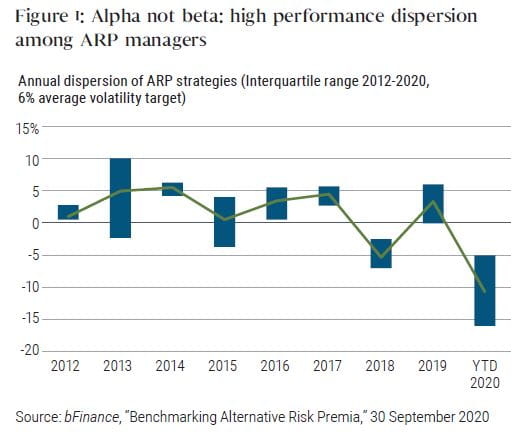
Wide performance dispersion underscores the importance of portfolio construction.
George Serafeim wants to revolutionize the way businesses calculate their success.
Zombies are firms that are neither dead or alive. They are in so much debt that virtually all their free cash is used to service their debt, and that is very damaging to GDP growth. This month, we explain why there are more and more zombies all over the world, and why they do immense damage to the global economy.
Small-cap stocks have underperformed the broader markets since the “discovery” of the size premium in 1981. But research shows that a segment of those small-cap stocks have performed well and that now is a compelling time to invest in them.
To the extent that stock prices reflect expectations of future value, investors don’t like the prospects for oil, and oil’s demise signals muted prospects for economic growth.
We expect the municipal bond market to return to a sense of normalcy in 2021.
When we explore the specifics of an advisor’s business, there are commonly asked questions around the nuances between the SEC and FINRA.
Military veterans seeking the guidance of a financial advisor have a background and career that is different from civilian clients.
The data used to construct ESG portfolios differs widely among providers, meaning that funds may not be aligned with your clients’ objectives and beliefs.
Value managers often use static point in time multiples such as Book to Price to identify attractive companies. P/B is a “cheapness” indicator rather than a measure of a company’s intrinsic value, as it does not include the essential components to value a company: profitability, growth, competition, and risk. On the other hand, growth managers focus on a companies ability to growth their business assuming it will lead to creating shareholder value.
In our view, inflation-fighting asset classes look considerably cheaper and offer higher long-term estimated returns than mainstream stocks and bonds.
By now you may have heard that President Donald Trump signed an executive order banning Americans from investing in a select number of Chinese firms that have ties to China’s military.
I updated Bill Bengen’s groundbreaking analysis to examine the impact of investment expenses on historical retirement outcomes.
The advantages of DAFs are increasingly being put to use by selecting them as IRA beneficiaries.
Monday, November 9th, was the largest laggard outperformance we have in the Nasdaq Dorsey Wright (NDW) data with laggards outperforming leaders by more than 16%. Momentum crashes are not a new thing. All types of things drive the leaders/laggards spread on a day-to-day basis.
The Franklin Templeton–Gallup Economics of Recovery Study has heralded some interesting results in regard to the attitudes and behavior of Americans in response to the ongoing pandemic—and what developments could change both.
Global equity markets rallied on Monday after major networks declared Joe Biden the winner of the US presidential election, and early analysis of a COVID-19 vaccine from a large US drugmaker showed promising results.
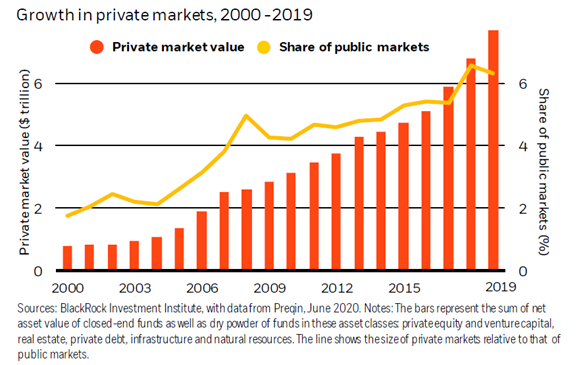
Amid the ongoing COVID-19 crisis, we believe that investing in private markets may offer a raft of potential opportunities. Here's why.
Recent research shows how fixed annuities can add value in the context of retirement income. In addition to being able to guarantee income for life, tax benefits are often advertised as a key advantage of using annuities. This article discusses the mechanics of tax deferral in annuity products.
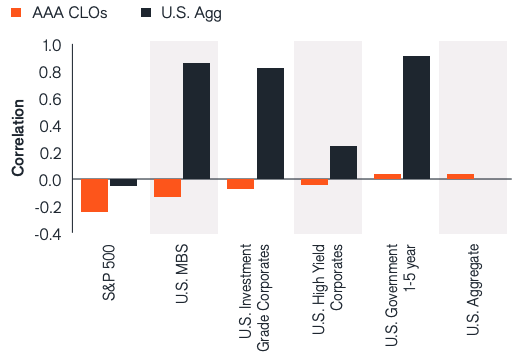
In an environment where interest rates are low and the risk of higher Treasury yields has risen, Portfolio Managers from Janus Henderson Investors discuss how allocations to AAA rated CLOs may help investors diversify a traditional fixed income portfolio, offering lower volatility, higher credit-quality and less sensitivity to any rise in interest rates.
In today’s blog, I will update the current status of the election results, extend the conversation with regards to the market reaction at this point and revisit what we see as the most important factors investors should be considering going forward.
While the election remains too close to call, investor attention will soon turn back to Capitol Hill, where senators will reconvene on Nov. 9 and House members on Nov. 16 for what is known as a “lame duck” session of Congress.
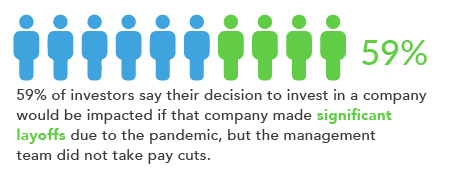
In the wake of the COVID-19 pandemic and the social justice movement, investors are paying much more attention to the social element of ESG -- specifically, how companies treat their employees, respond to political issues, and philanthropic efforts.
Almost nothing has felt certain in 2020. The presidential and congressional election results are two more things to add to the list. Markets had largely expected a blue wave, which has not materialized.
In our latest Election Pulse, our Head of Equities Stephen Dover is joined by Franklin Templeton Fixed Income CIO Sonal Desai and Gallup’s Jonathan Rothwell to discuss survey findings on COVID-19 and its impact on the consumer. They discuss attitudes about vaccines, mask-wearing, and where they think the research may lead them post-election.
The controversy surrounding wearing a mask boldly illustrates a pervasive issue for advisors and their clients.
For the third time since the COVID bear ended its short havoc, U.S. stocks went into pullback mode—culminating in the worst week since March. The virus itself continues to be a culprit; with another surge in cases and hospitalizations; although not for deaths, at least not yet. The lack of a fiscal relief package and heightened election uncertainty are also to blame.
I present data and observations highlighting how dividends can protect investors from inflation and market volatility. While this is relevant to other applications, I focus on retirement income.
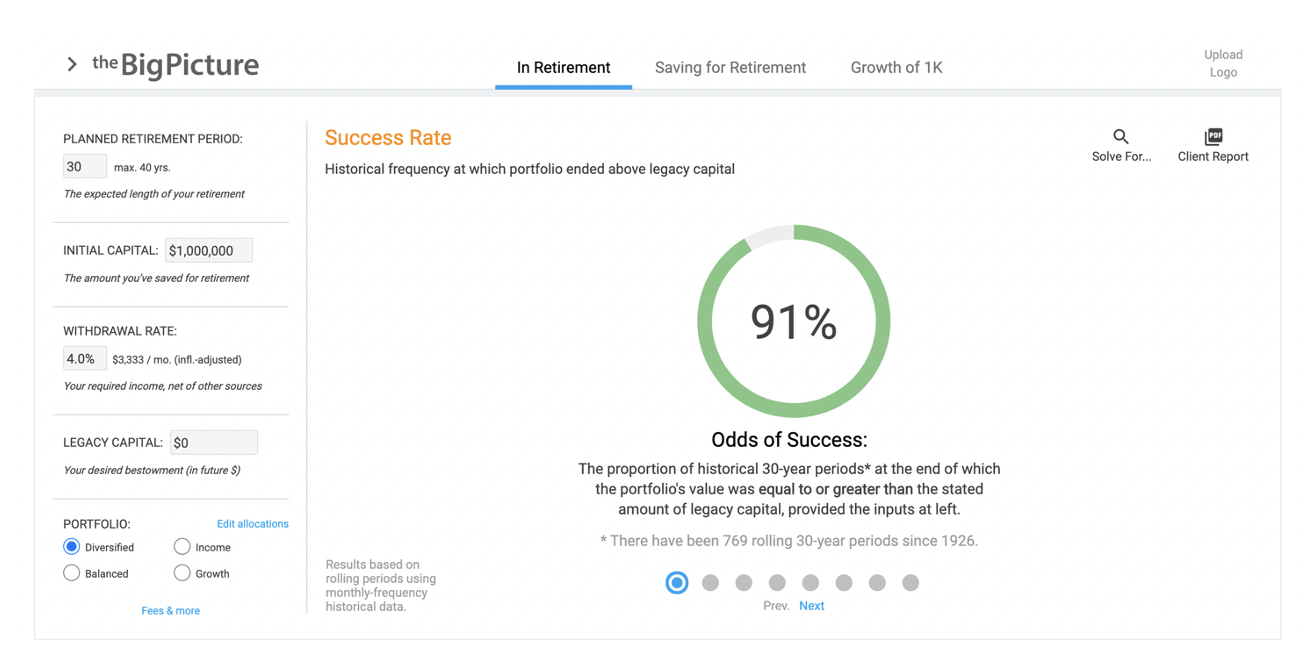
Bill Bengen’s research calculated how much a retiree can take out safely from a generic portfolio over 30 years without running out of money. Wouldn’t it be nice if you could take a prospective client’s asset allocation and calculate the percent of time periods since 1926 that it would have survived a 30-year retirement?
By almost any measure, 2020 has been one of the most volatile years for the market in recent memory. Through the first week of September, the S&P 500 SPX had more daily moves of +/- 2% or more this year than in any full calendar year since 2009.
On October 21st, 2020, the First Trust Focus Five Model FTRUST5 turns 11 years old. While many investors have been following this model for years, those of you who have not can read more about the model’s methodology in the First Trust Focus Five Model Fact Sheet, which includes a detailed account of the methodology, the inventory, and performance numbers that go back to inception.
2020 has proven a challenging year for numerous businesses and individuals, Grey Owl Capital Management included. While most domestic stock market indices have fully recovered from the February and March Covid sell-off, many of our accounts are still down slightly on a year-to-date basis through the end of September.
We’ve gone without a lot of things in 2020. Surprises aren’t one of them. After ten months of twists and turns, most of us are ready for a nice long stretch of the mundane. But this has been a strange year, and neither the year nor, I fear, the strangeness is over.
The tightrope walker has his blindfold off, the wind is blowing, and it’s a long way down. Technically speaking, high-yield bond prices broke downward through a “double bottom,” which could reasonably be taken as an indicator of coming trouble for the stock market as well, given the greater wariness among bond market investors this year.
The primary goal of this article is to explain what makes dividends different. Dividends provide investors with a growing stream of income that is largely independent of market volatility. On balance, dividends are a powerful financial planning tool many retirement models seem to neglect.
We would like to think that investing is a science, but, alas, it is not. Water freezes at 32 degrees. Light travels at 186,000 miles per second. We look for similar rules in investing. There are none.
My 2007 book, Wise Investing Made Simple: Larry Swedroe’s Tales to Enrich Your Future, contained 27 tales to educate investors about important investment concepts and strategies. This article is in the spirit of those tales.
Fostering immigration, encouraging family expansion, and stopping COVID-19 are tough problems with no easy solutions.
It’s the final countdown! Between the flared debate tensions and President Trump testing positive for COVID-19 on the campaign trail, the 2020 presidential election has arguably been one of the most contested and unique battles for the presidency in history.
We’d like to believe facts matter. In some situations, that is true, but I believe this quote attributed to Friedrich Nietzsche: “There are no facts, only interpretations.”
We are in a debt trap. Our political process can’t reduce spending and/or raise taxes enough to balance the budget, so the debt grows and grows. As it does, paying the interest plus the accumulated debt load pulls more capital away from more productive uses. This depresses economic growth, thereby generating even more spending and debt.
Actual third-quarter earnings may be less important than what business leaders say about their expectations.
The Dalio Center for Health Justice, a research and advocacy organization, will focus on reducing differences in access to quality health care that overwhelmingly affect communities of color.