Europe's defense landscape has undergone a paradigm shift—a rearmament cycle unfolding at a velocity unseen since the Cold War.
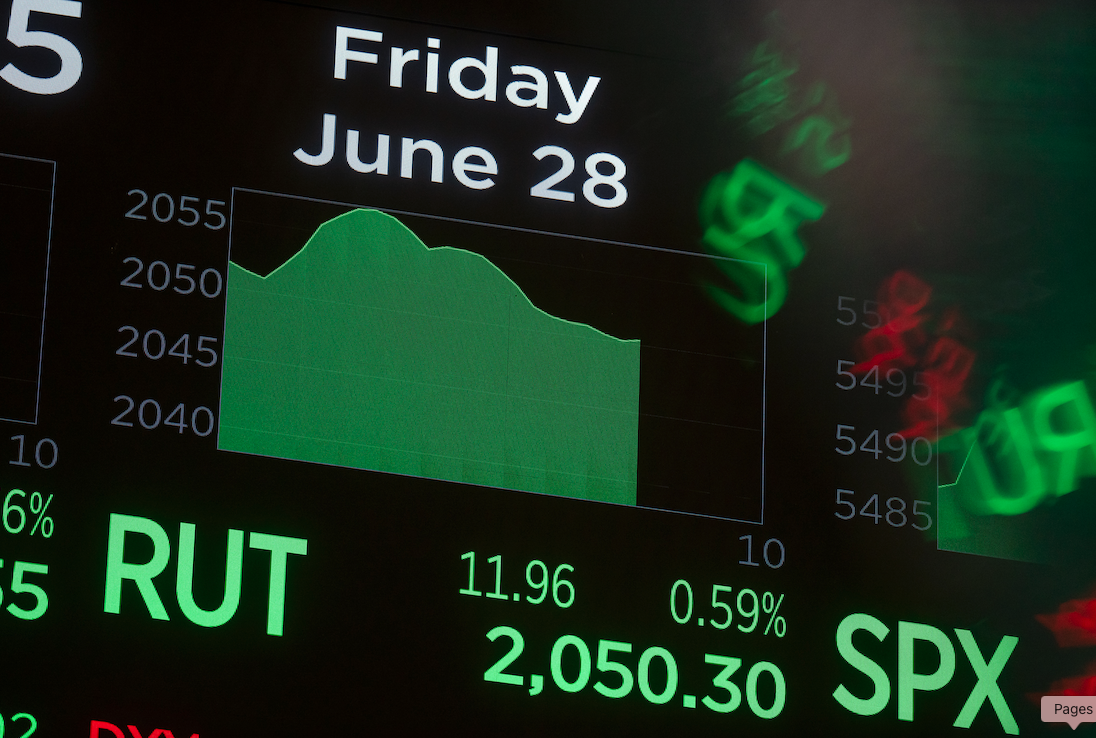
The Russell 2000 Index last posted an all-time high on Nov. 8, 2021, and is still almost 3% from that level. Unless something drastic happens by Friday, it will mark the small-cap gauge’s longest streak without a record since the dot-com bubble.
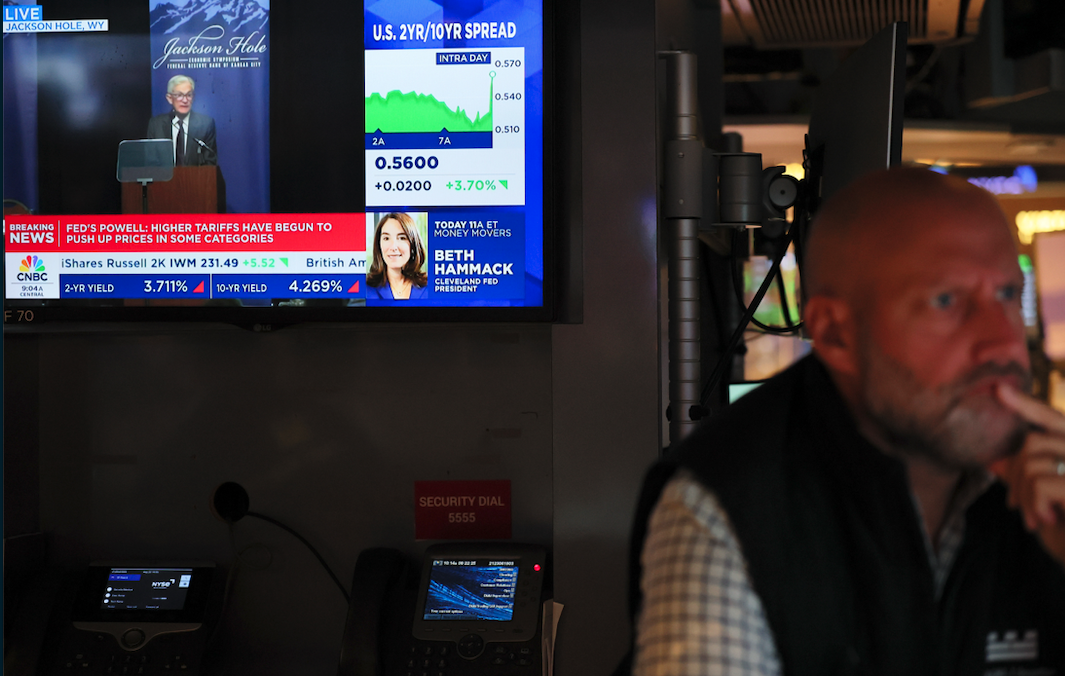
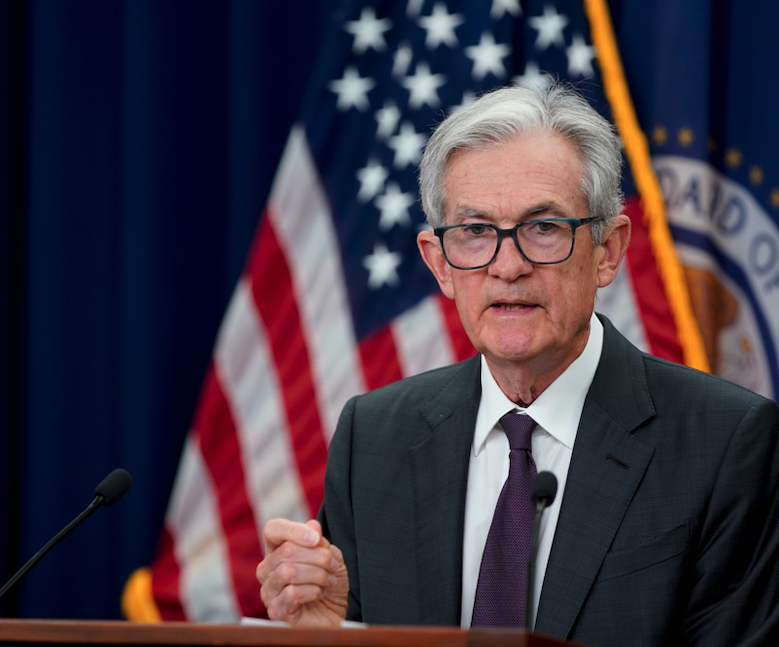
It’s hard to ignore the effect Fed Chair Jerome Powell’s comments made last Friday had on equities, particularly small-caps.
The recent passage of U.S. crypto regulatory policies follows on the heels of a convoluted path to bringing frameworks to digital assets.
A new China-buys-China narrative is taking shape as Beijing steps up its tech rivalry with the US. The world’s second-largest economy not only wants to build generative AI models, but power them with its own hardware, redrawing a supply chain dominated by Nvidia Corp.
If there were any doubts about SpaceX’s dominance in space, they were swept away after the company pulled off a near-flawless test of its massive Starship rocket late Tuesday.
While investors often look to the Federal Reserve for macroeconomic signals, Walmart’s earnings may offer even more insight. As a barometer of consumer behavior, pricing trends and tariff impacts, Walmart is a must-watch for anyone trying to understand the real-time U.S. economy.
Investors enjoying the pairing of domestic stocks and the momentum factor are likely familiar with some related ETFs. This includes the Invesco S&P 500 Momentum ETF (SPMO).
The prospect of lower rates could translate to falling yields, forcing investors to diversify their fixed income portfolios. One area that's been seeing renewed interest is mortgage-backed securities (MBS).
Contrary to some popular stereotypes about young investors, the kids are all right. They typically save more and invest in age-appropriate, low-cost funds at higher rates than previous generations did at the same age, all while avoiding frequent trading or excessive risk in their portfolios.
Last week was dominated by a major event in the financial world, the Jackson Hole symposium, and the subsequent reaction from the markets. Read through the major economic news form the week of August 18th - 22nd.
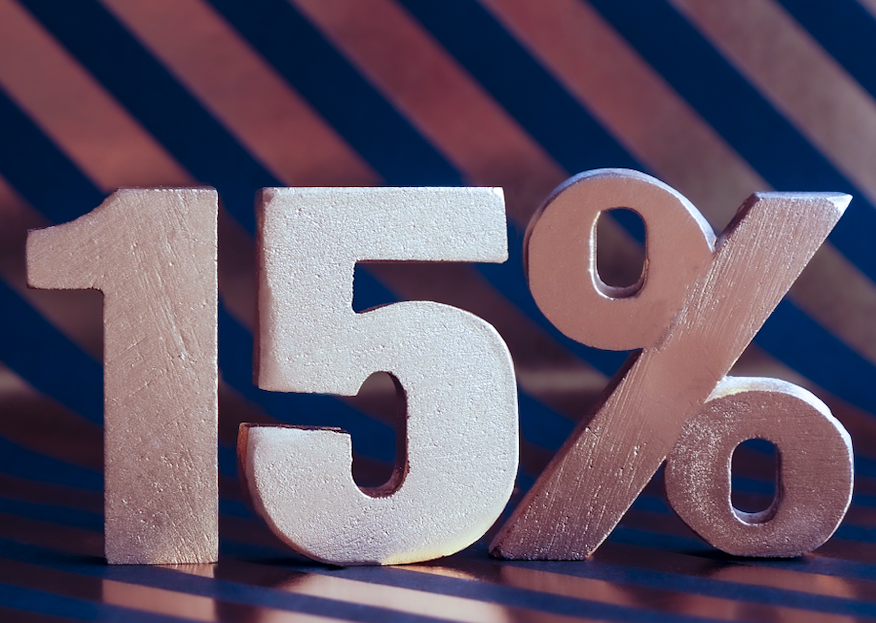
Money flowing to the U.S. Treasury from a source other than taxpayers may seem like a benefit. Yet any company required to give away 15% of its gross revenue, which could equal its entire profit, has to compensate in some way.
The U.S. dollar has experienced a notable decline in value this year relative to a broad basket of foreign currencies. This depreciation has meaningfully affected the investment returns of U.S. based investors holdings in international stocks and bonds.
The largest company in the world, with a market capitalization of about $4.4 trillion, reports Q2 results today, after the market close.
Today is the day that analysts and investors have been waiting for the entire earnings season—earnings and updated Q3 guidance from NVIDIA Corp. (NVDA).
Fund managers say returns on emerging-market assets are set to power ahead of their developed peers, having moved in lockstep since US President Donald Trump unleashed his tariff blitz in April.
It's never a great sign when a central bank governor says his country's predicament is a “pretty sad story.” That's how Bank of England Governor Andrew Bailey described the UK at the Federal Reserve symposium in Jackson Hole, Wyoming, last week.
International stocks have outperformed the broad U.S. stock market so far this year. If the U.S. dollar continues to weaken, it could boost international returns even more.
China’s economy has propagated itself through branches like trade, finance and infrastructure. But supply chains are where its roots have thickened into trunks, particularly across Southeast Asia.
“Buy Every Dip” has lately been the “Siren’s Song” for this market. Such is seen in the flows into ETFs over the course of this year. Retail investors treat pullbacks as temporary noise, and their behavior borders on mechanical. Every sell-off is seen as an opportunity, not a warning.
Travis Spence, Global Head of ETFs at J.P. Morgan Asset Management, walks through the firm’s expanding ETF lineup and shares his take on today’s markets. Jillian DelSignore, Head of Retail and Wealth Distribution Strategy at Nasdaq Indexes, highlights some of the hottest industry trends and offers insight into the evolving world of ETF distribution.
Amid the push to reshore, the United States faces a clear challenge when it comes to labor. Even though manufacturing has been contracting (PMI below 50 for more than two years), the U.S. still has 380,000 unfilled manufacturing jobs.
While the majority of the capital markets are anticipating rate cuts, certain economic data continues to run counter to the forecast. That’s why in times of persistent inflation, getting commodities exposure can be beneficial.
If I told you Argentina is the world’s hottest new market for copper, you might be likely either to scratch your head or just laugh.
Don’t Worry, Be Happy! Heading into summer, markets faced a wave of uncertainty—from shifting tariffs and debt ceiling debates to questions around the fate of the ‘Big, Beautiful Bill.’
For nearly two decades, U.S. electricity demand was flat. Between 2005 and 2020, consumption barely budged, thanks to efficiency gains in appliances and slower economic growth. Utilities planned for more of the same.
Last week, a tech rout that began on Tuesday led to notable declines in the Nasdaq Composite (-2.5%) and S&P 500 (-1.2%) by market close on Thursday, with the Dow Jones Industrial Average roughly flat. Investors engaged in profit-taking, amidst concerns about the high valuations of many technology companies.
Are there enough options among foreign equities ETFs? Plenty of funds exist, but some regions and markets may lack options.
On this episode of the ETF of the Week podcast, VettaFi’s head of research Todd Rosenbluth discussed the NEOS Bitcoin High Income ETF (BTCI) with Chuck Jaffe of Money Life. The pair discussed several topics related to the fund to give investors a deeper understanding of the ETF overall.
Different clients may prefer different ways to invest in bonds. This article isn’t about identifying which fixed income vehicle offers the highest yield or lowest fee. It’s about matching strategies to real-world investor behavior.
Despite not meeting three of the four criteria, UPS valuations provide a better margin of safety than many stocks. However, while it may fare better comparatively, we would want to see improvement in earnings and sales trends before committing UPS to our roster of rainy-day stocks.
VettaFi Voices provided a trailer on the current state of the ETF landscape and what's to come for the rest of 2025.
To some, $1 billion of ETF net inflows is not what it used to be. The US ETF industry has gathered more than $700 billion of net inflows this year.
In economic news other than that from Jackson Hole, the week included a new record high for margin debt and more.
2025 has seen international equities provide some significant upside following a spring swoon for U.S. stocks.
The regular college and professional football seasons are just around the corner. The smart money is betting on further upside with the Roundhill Sports Betting & iGaming ETF (BETZ).
For much of this month, Wall Street traders piled into stocks and bonds, betting that the Federal Reserve was finally ready to start cutting interest rates again. All they were waiting on was the green light from Jerome Powell to keep the rally going.
Active ETF have been in favor in 2025 but there remains confusion. Two industry experts discuss what investors should know.
Since the global financial crisis, value investing has been a lonely grind. Yet I know several managers who never gave up on value, and others who are uncomfortable with tech valuations and have been reallocating to lower P/E stocks.
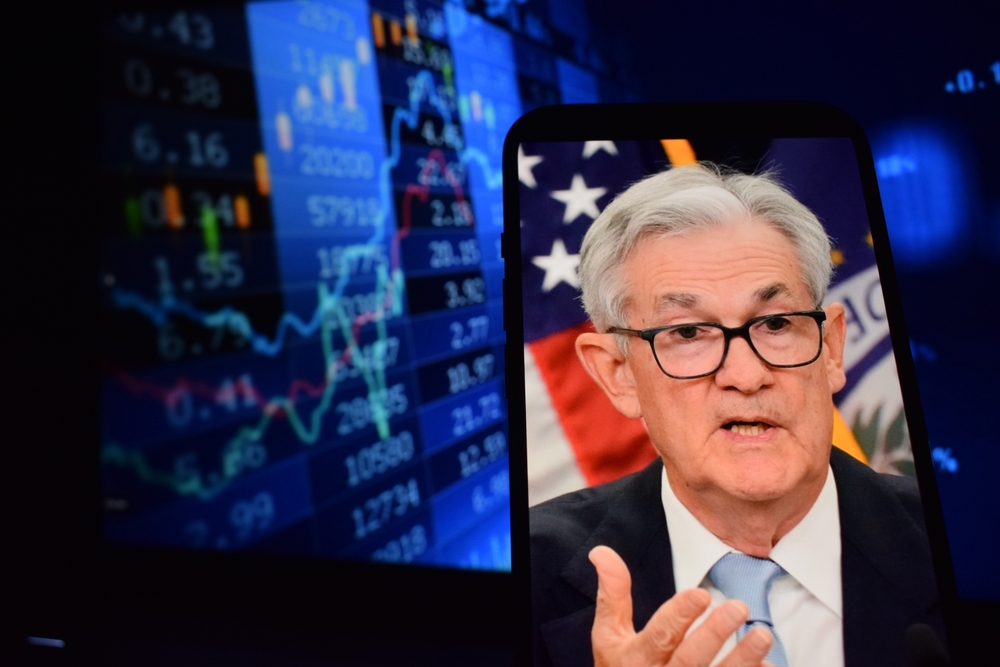
Treasuries soared and traders added to bets on a September interest-rate cut after Federal Reserve Chair Jerome Powell indicated a reduction may be warranted to support the labor market.
Investors are clamoring to buy the one kind of security that few companies want to sell now: long-dated bonds.
Bond investors are heading into Friday’s much-anticipated Jerome Powell speech largely expecting the Federal Reserve chair will indicate policymakers will start cutting interest rates next month.
Bitcoin, once the unruly child of finance, is showing signs of maturity as its wild swings fade, forcing speculative traders to hunt for a new playground.
Following the softer-than-expected July jobs report, the money and bond markets have fully embraced the narrative that a Fed rate cut will be coming at the September FOMC meeting.
Whether it’s the ongoing push by asset managers to expand reach into them, or the new regulatory muscle behind that effort (the recent executive order around private assets in 401(k)s is an example), there’s serious effort being put into broadening access to this category.
More and more clients, especially younger generations, are asking about Bitcoin, Ethereum, and the broader cryptocurrency market. Some are curious, others already hold positions, and nearly all expect their advisor to have an informed perspective.
While gold hit all-time highs in April before consolidating, he notes the pullback has been unusually mild—less than 6% versus an average 10.1% correction during the 2001–2011 bull run.
On the latest ETF 360, Kirsten Chang spoke to John Lawlor, managing director, portfolio manager/trader from MacKay Shields about the state of munis. Additionally, they discussed the NYLI MacKay Muni Intermediate ETF (MMIT).
Join three VettaFi voices – Todd Rosenbluth, Cinthia Murphy, and Roxanna Islam, CFA, CAIA – for a deep dive into the ETF trends that have shaped and will shape 2025.
Sharp losses in high-flying momentum stocks may present a dip-buying opportunity if history is any guide, according to Goldman Sachs Group Inc.’s trading desk.