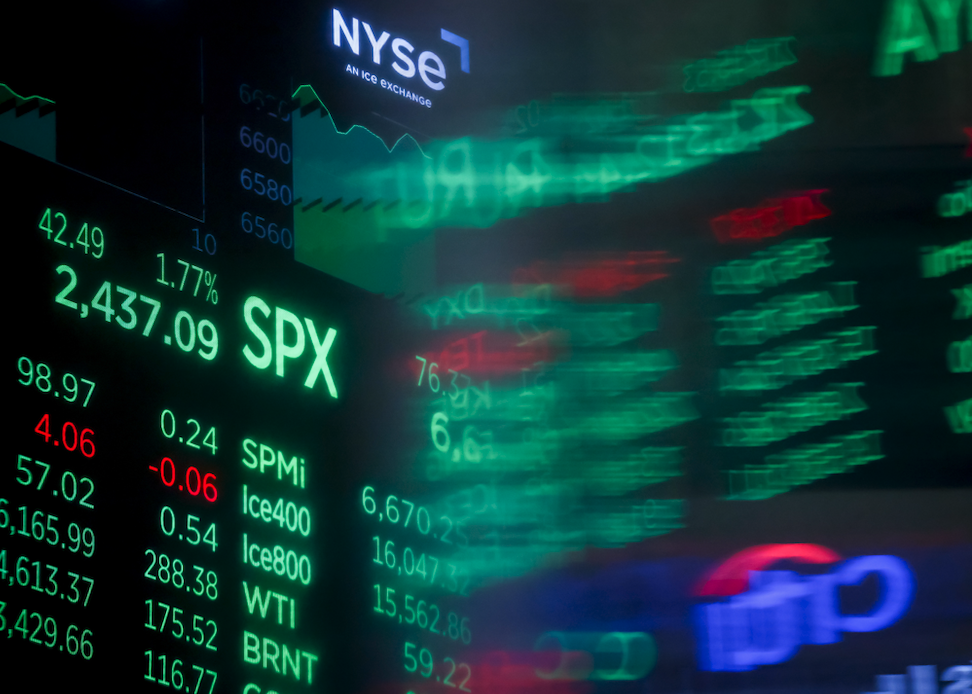
Part of the reason behind Japanese stocks’ discount to the U.S. is the profitability gap; the U.S. has a Return on Equity (ROE) of 18.3%, while Japan’s broad market has yet to break above 10% on that measure (though some forecasters believe Japan will get its act together).
This convergence creates a thrilling, unpredictable day for sports enthusiasts packed with drama. Interestingly, the financial markets are gearing up for their own version of a 'Sports Equinox' week. Just as fans juggle overlapping games on October 27, investors will face a crowded calendar of potentially market-moving events that have our attention.
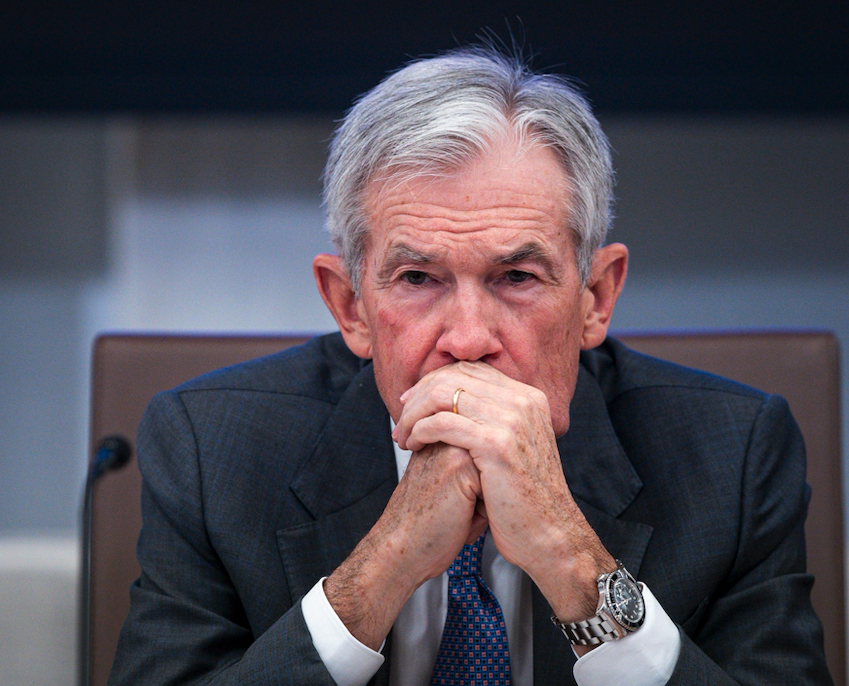
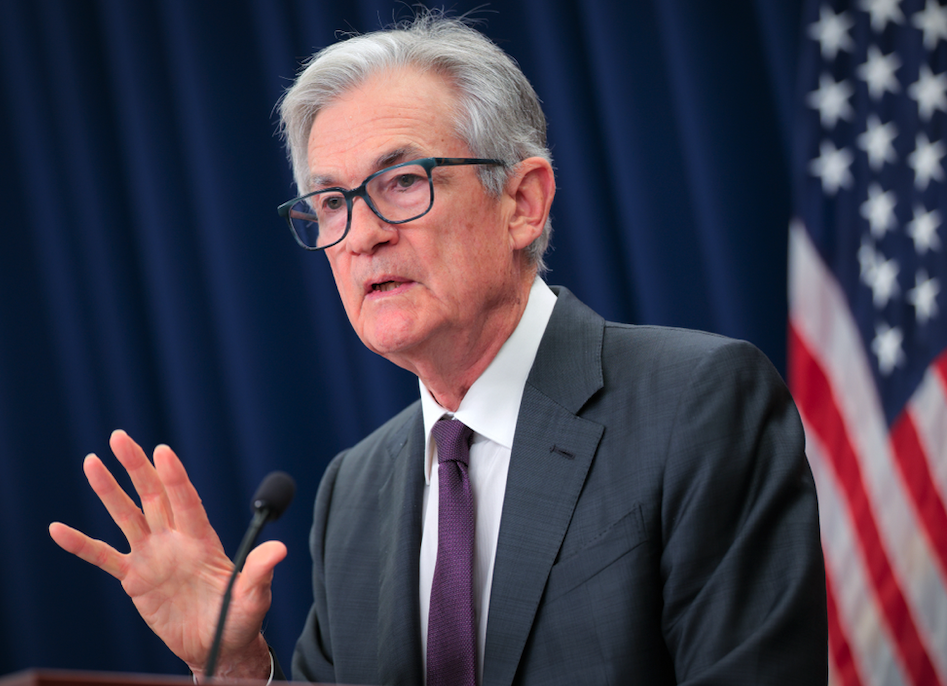
The more things change, the more they stay the same. As widely expected, the Federal Reserve (Fed) cut interest rates by 0.25% at its October Federal Open Market Committee (FOMC) meeting yesterday.
Register now and join AllianceBernstein’s fixed-income experts as they discuss how to navigate today’s shifting market landscape.
Join Kurv Investment Management for an educational webcast exploring how to generate income while remaining invested in growth.
At the very least, whether to cut the policy rate today is a close call for a Fed committed to a 2% goal — a fact that’s sharply at odds with investors’ near-certainty that it will happen.
By far the most finicky part of OpenAI’s necessary conversion into a for-profit company was reconciling its convoluted partnership with Microsoft Corp. With the year-end deadline fast approaching, they have made a deal both sides can live with for now, though it sets out the timeline for an eventual split.
Research shows that the U.S. wealth management industry will be facing an advisor shortage in the coming years as more advisors retire. One key to retaining talent is making sure the right pay structures and work arrangements are offered to advisors.
The truth is that most clients who had a positive experience with their advisor are happy to write a review, particularly if the process doesn’t take too long and isn’t terribly difficult.
If you are not striving in the same direction and the outcome doesn’t matter as much to one as it does to another, the three of you won’t bring about the alignment you seek.
We live in what Brett Arends claimed as“The Dumbest Stock Market In History,” but I believe it is potentially the most dangerous era. That phrase is not hyperbole as it reflects structural distortion, extreme valuations, and an investor base intoxicated by momentum and narrative.
With the stock market in record-high territory and up about 35% off the April lows, market participants clearly haven’t been too scared lately. But that doesn’t mean there aren’t plenty of things to worry about.
Stocks have surged since their April lows, with demand especially high for higher-risk equities and technology stocks—including those issued by firms with unproven profitability. But economic growth is slowing, and trade-related uncertainty has yet to be resolved.
The US Federal Reserve will soon face a crucial decision: What to do with the vast portfolio of securities it has amassed in its efforts to manage the economy?
The robotics space is entering earnings season with positive momentum, as solid performance in Q3 has continued into October. This note recaps the key themes and performance drivers from the quarter for investors, while previewing Q3 results.
The tradeoffs, drivers, and management of the Federal Reserve’s balance sheet have come back into market focus this month with Chairman Powell shifting market expectations for the end of quantitative tightening.
Strong credit ratings remain a key feature for midstream companies, providing significant cost savings on debt. The subsector is largely dominated by investment-grade players, which also offer attractive dividend yields. Learn more below about the importance of an investment-grade rating and why midstream indexes are skewed towards these creditworthy names.
Chief Economist Eugenio J. Alemán discusses current economic conditions.
These shifts are not signs of stress; shortfalls have been minor, and relief systems are working as intended. However, we can be certain the era of excess liquidity has ended. Fed speakers have characterized the pandemic-stimulated economy as one of “abundant reserves,” with bank reserves elevated beyond their natural level.
Review investments, estimate income, maximize retirement savings and consider charitable donations are among many year-end planning ideas. Our Bill Cass shares a helpful checklist to use as a guide when planning.
The future of wealth management — especially in the HNW segments — depends on advisors' ability to provide tailored, cross-disciplinary solutions. Case design is central to delivering that value.
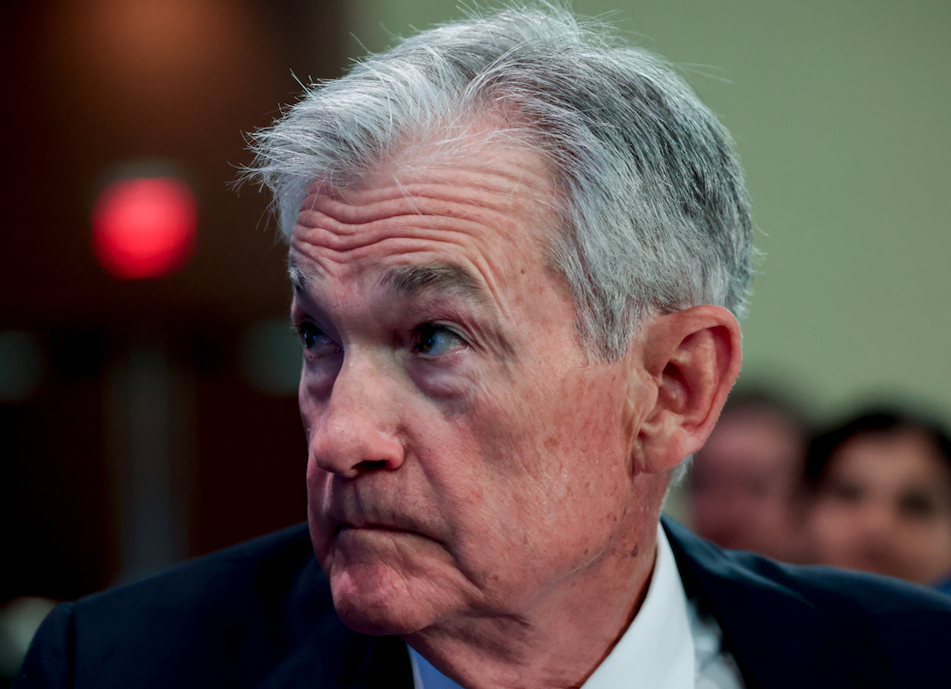
Investors expect the Federal Reserve to cut its policy rate on Oct. 29, and once more by the end of the year. Right now, amid enormous uncertainty about where the economy is headed, the case for cutting is weak. The Fed would be wiser to pause.
In the years after the internet stock boom-and-bust of the late 1990s and early 2000s, financial economists searched for more satisfying explanations of what had happened than “investors went crazy.”
The US government agreed a $80 billion deal with Westinghouse Electric Co. to build large-scale nuclear reactors, the latest push to meet rising demand for electricity from artificial intelligence.
The private market landscape has evolved tremendously, and it is exciting that evergreen options are available to meet the growing demand in this space. However, before making an allocation using an evergreen fund, it is essential to recognize and anticipate issues that could arise.
As I detailed in August, our most reliable valuation measures – based on their relationship with actual subsequent S&P 500 total returns across a century of market history – suggest that the expectations of investors for long-term market returns are wildly misaligned with the returns implied by discounted cash flows.
Money can’t buy you love and right now no one knows that better than UBS Group AG. Since the Swiss bank helpfully rescued its cockroach-riddled rival Credit Suisse in a state-brokered emergency takeover, its reward has been government plans to whack it with punishing new capital rules and a lagging stock price.
Local currency rates and FX screen very cheap, while hard currency credit is rich.
Earlier this week, several of my friends texted me in frustration, letting me know that they couldn’t place trades on Coinbase or Robinhood. The culprit wasn’t market volatility or government regulation, but something far more mundane: a cloud outage.
The recent high-profile bankruptcies and the timing of their collapse are consistent with this changing macro backdrop, although these cases were also allegedly exacerbated by inconsistencies in collateral accounting and pledges.
There have been no innovations to TDFs in their entire 19-year history, until now. It’s time. This article introduces trailblazing innovations that improve participant results.
Today, we introduce the Price of Certainty: How much do you need to invest to achieve a particular set of cashflows over time, with varying degrees of certainty?
This article does not discuss the rationale of owning gold as a long-term asset. Instead, it questions the recent jump in gold prices and whether the current levels are fundamentally justified.
The latest inflation data was softer than anticipated and has locked in expectations for a couple of Federal Reserve interest rate cuts to close out 2025. But inflation is far from dead, and the labor market is far from collapsing — policymakers would be wise to proceed cautiously.
Bold calls to “run to gold, silver, and bitcoin” make for strong headlines, but they oversimplify the reality of modern finance. As we’ve seen, money supply growth is not inherently a sign of debasement but reflects economic expansion. Far from being destructive, government deficits flow directly into private-sector savings and stabilize household balance sheets.
It’s not just the US, China, and Japan that have debt issues. It’s a large portion of the developing countries, and especially Europe. The developed world now has as much debt in terms of GDP as it did during the Napoleonic Wars. And as much or more debt (and growing!) than it did following World War II.
Technology stocks have continued to benefit from enthusiasm over the transformative potential of artificial intelligence (AI). Yet many investors are concerned that share prices and valuations may reflect overly exuberant earnings expectations.
As we move into the final quarter of 2025, I’m cautiously optimistic. The extreme policy uncertainty that plagued the first half has diminished significantly. The Fed is cutting rates but not in panic mode. Corporate earnings remain healthy.
U.S.-China frictions continue, highlighting that greater volatility is likely not a bug of the current trade stand-off but a feature of the emerging geopolitical landscape.
Many people see the stock market as a casino, but according to Chuck Carnevale, co-founder of FAST Graphs and “Mr. Valuation,” the truth is far more rational. How does the stock market work? The market isn’t about luck — it’s a mechanism for allocating capital and rewarding disciplined investors who understand value.
JPMAM has converted a major muni bond fund to the ETF wrapper, as muni bond ETF JMUB arrives on the stage.
Up to now, the Federal Reserve and the bond market have been operating under the assumption that the employment setting has been cooling in a somewhat visible fashion. In fact, recent comments from Powell & Co. underscore how the employment aspect of their dual mandate is where the greater risk may lie.
Though deemed to be “Modern” portfolio theory (MPT), the primary framework used to construct diversified portfolios and deliver risk-adjusted investment returns is now well over 50 years old. Enhancements have helped keep MPT’s 60% equity and 40% bond allocation formula relevant for decades.
A rivalry at the heart of Russia's oil trade is threatening the crucial operations the Kremlin relies on to fund its war in Ukraine, just as the US cranks up the pressure on Moscow.
Monthly checks for nearly 71 million Americans receiving Social Security benefits will increase by 2.8% next year, a slightly larger adjustment than seen in 2025.
The equity market has shown remarkable resilience over the past two weeks despite rising U.S.-China trade tensions, a spike in equity market volatility, and growing credit concerns tied to business development company (BDC) and regional bank lending losses.
For those new to the practice, it’s relatively straightforward. Nearly every investor and advisor has an investment that is on track for a loss this year. Not all investments hit, after all. Selling at a loss helps tamp down a portfolio’s overall gains for the record books, reducing the end-of-year tax bill, “harvesting” losses to offset gains.
For half a century, Vanguard has been the high priest of passive investing. Its low-cost index funds have reshaped finance, humbled stockpickers, and made the Pennsylvania-based firm an $11.6 trillion behemoth.
The investment case for private assets in DC plans hinges on choosing high-performing managers—specifically those in the top third of the performance spectrum, committing to long holding periods, and accepting the risk of underperformance over time.
The centerpiece of the One Big Beautiful Bill Act (OBBBA) is the extension of current income tax rates and brackets that were due to expire at the end of the year.