Get ready each week with high-conviction insights that go beyond media headlines.
France, Britain, and the Fight for Fiscal Credibility
Stocks and bonds staged a roller coaster on Fed day but finished essentially where they began—an apt metaphor for a market digesting a quarter-point cut, a split dot-plot, and a Chair intent on starting an easing cycle without declaring victory.
The VettaFi Q3 Fixed Income Symposium came just less than 24 hours after the Federal Reserve instituted its first rate cut of the year. While this was widely expected by the capital markets, investors may not be well-positioned to maximize their fixed income exposure. It’s an ideal opportunity to take advantage of active management.
Cybersecurity continues to grab consistent media attention as hackers become increasingly emboldened. They’re also more ambitious in terms of targets, many of which are familiar companies behind goods and services consumed by Americans on a daily basis.
The buildout of data centers and the power grid may offer the best opportunity to generate sustained growth. The scale of investment is large enough to matter, the economic multipliers are high, and the timeline aligns with when fiscal pressure will peak.
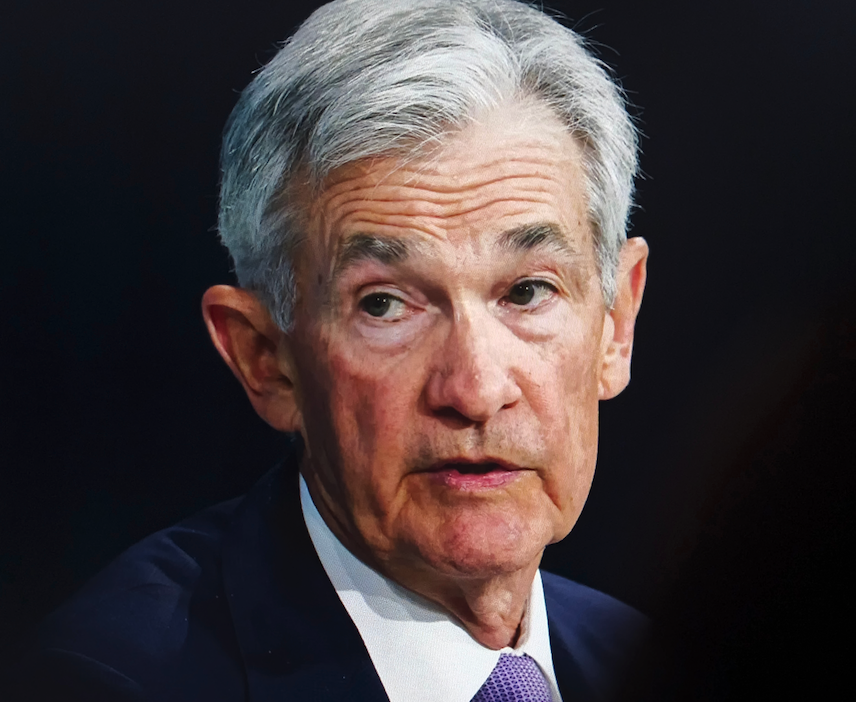
During last week’s press conference after the Federal Reserve’s (Fed) rate decision, Chairman Jerome Powell warned his audience there is no risk-free path for interest rates right now.
The Fed operates under a dual mandate: to promote price stability and maximum employment. Lately, employment has taken center stage, prompting the Fed to resume its easing cycle with a 0.25% rate cut this week.
As expected, the Federal Reserve cut interest rates by 25 basis points last week. How will this impact the gold market?
The stock market surged to new highs after the Federal Reserve cut the federal funds rate last week and the futures market has priced in more cuts to come. However, these cuts have not helped reduce long-term interest rates and the price of gold has surged to over $3,700 an ounce.
Learn how the Calamos Autocallable Income ETF (Ticker: CAIE) delivers this institutional strategy with radical simplicity: no minimums, no K-1s, just high monthly income potential: www.calamos.com/CAIE
In a commoditized industry where every advisor offers similar tools and services, the real differentiator is how you make clients feel. Emotional security is such a differentiator. It makes clients feel heard, prepared and reassured. It drives client loyalty, retention and referrals.
After FedEx Corp. and Amazon.com Inc. went through a noisy divorce in 2019, it was a bit jarring to hear Brie Carere, FedEx’s chief customer officer, welcome back volume from the e-commerce giant with such open arms.
Content marketing isn’t a short-term play; it’s a system that compounds over time. By building a consistent, strategic content plan, you position your firm to attract, nurture, and convert more of your ideal clients year after year.
FAs that retain clients and gain new ones aren’t just good at asset allocation and tax planning. They are great communicators. They especially know how to listen.
As a growing portion of the advisor workforce reaches retirement age, professionals will need to establish a plan — either training up the next generation to take over their business or positioning the company to attract the right buyers.
Nvidia Corp. will invest as much as $100 billion in OpenAI to support new data centers and other artificial intelligence infrastructure, a blockbuster deal that underscores booming demand for AI tools like ChatGPT and the computing power needed to make them run.
Risk parity — the investing style popularized by Ray Dalio — is quietly bouncing back.
Morgan Stanley is partnering with cryptocurrency infrastructure provider Zerohash to let E*Trade clients trade popular coins beginning in the first half of next year.
Sell-side strategists, who have rushed to upgrade their stock targets ever since the market rebounded from its early-year slide, keep underestimating the rally’s strength.
Last week’s Fed meeting resulted in a much-anticipated interest rate reduction of 25 bps, to a range of 4 percent to 4.25 percent. This move followed a nine-month pause in its rate-cutting cycle, which began a year ago.
With German fiscal spending rising, interest rates low and reforms continuing, European value stocks have the potential to shine despite the current political uncertainties, says Franklin Mutual Series.
Water scarcity, supply-chain risk and board-level decisions underscore the importance of a stewardship lens.
The Fed’s cautious stance underscores the uncertainty facing markets. Bitcoin’s muted response reflects investors’ hesitation to commit until policy direction becomes clearer. For portfolios, this environment highlights the role of diversification and shows how macroeconomic shifts continue to influence digital assets alongside traditional investments.
While the last 12 months were profoundly shaped by the incoming Trump administration’s DOGE program, tariffs, immigration and foreign policy, what hasn't changed over the last year is that the bond market still represents good value despite policy initiatives that cloud the outlook: “We think the Fed is poised to ease, given weak employment reports,” Pierson said.
We hope you enjoy the latest newsletter from Harold Evensky.
When I first wrote to you about quantum computing in October 2024, I called it the “next big thing.” Many readers agreed that the potential of quantum computing was exciting but felt it could be a decade or more away from commercial viability.
The Federal Reserve’s recent rate cut of 25 basis points didn’t come as a surprise to the majority of the capital markets.
VettaFi’s Head of Research Todd Rosenbluth discussed the VictoryShares Small Cap Free Cash Flow ETF (SFLO) on this week’s “ETF of the Week” podcast with Chuck Jaffe of “Money Life.”
In an interesting but problematic new book, After the Spike: Population, Progress, and the Case for People, two economists, Dean Spears and Michael Geruso, warn that the switch to a population implosion, currently underway, could have catastrophic consequences for human well-being and even survival.
One of the most critical resources in 2025 is compute power. Chips and the data centers that house them have become the 21st-century equivalent of refineries and power plants, and governments are increasingly treating them as such.
In this article, a behavioral approach is taken to determine if there is high confidence in a company’s cash flow estimates. Each of the behavioral indicators employs a “put your money where your mouth is” measure that provides a reward if correct and a penalty if wrong.
The U.S. population of 340 million people is only 4% of the world, yet its $62 trillion stock market is about half of the world’s total for equities. The U.S. is the tail that is wagging the world’s economic dog. Global economics are dynamic, so the current situation will change even though it may feel like the U.S. is invincible. It’s not.
China continues to struggle with deflation. Producer prices have been falling for more than two years, and consumer prices have been essentially flat over that time.
After decades of increasing global integration, signs of geopolitical and economic fracturing are becoming more visible.
To understand where the market might go, you need to weigh both the bull case and bear case in light of what is actually priced and what risks remain unacknowledged. The data support the bull momentum case, but many components are already baked into current prices.
Money managers and strategists are betting that the Federal Reserve’s shift back to cutting interest rates will pour fuel on the biggest emerging-market bond rally in years.
A $15 trillion rally in US stocks from April lows took a breather at the start of a week that will bring a handful of Federal Reserve speakers and a key inflation measure.
A record-busting stock market has done little for the prospects of most middle- and working-class Americans, who are falling behind as the labor market stalls and prices rise for the essentials. The way out of the hiring rut is significantly lower borrowing costs for businesses and consumers, but these have the potential to stoke painful inflation once again.
At BlackRock Inc., PGIM and other Wall Street firms, bond-fund managers are sticking to trades that will likely pay off even if the Federal Reserve’s path is again knocked off course by surprising turns in the economy.
Gold powered to a record in the week’s opening session after flows into exchange-traded funds hit a three-year high, with investors betting that the Federal Reserve’s rate-cutting cycle has further to run. Silver also rose, with year-to-date gains topping 50%.
I am growing more and more convinced that we simply can’t rely on historical precedents anymore. Economics is about human decisions, and humans, at least in a broad sense, seem to be making decisions differently than they did before the pandemic. I think we don’t fully understand how much has changed—for employment, inflation, consumer behavior, and more.
Senior Investment Strategist and Head of Canadian Strategy, BeiChen Lin, unpacked the latest rate decisions from major central banks. He also assessed the health of the U.S. housing market and potential opportunities in listed real estate.
From the lack of conviction in the previous meetings to last week’s “risk management cut,” Federal Reserve (Fed) officials continue to walk a very fine line, hoping for the effects of tariffs to be transitory.
Growth and income funds have a dual mandate to target both capital appreciation and current income, typically generated through dividends or interest payments.
ClearBridge Investments believes accelerating policy-driven investment and AI-driven data center growth are unlocking a multi-decade growth opportunity for listed utilities globally.
As regional misalignments risk significant performance deviations amid trade uncertainty, let’s look at how overlay management can potentially help to guide global equity portfolios.
Investors must know how to navigate the current fixed-income environment in which the Fed is easing monetary policy, and how best to maximize cash as opposed to letting it sit idly by on the sidelines.
The Federal Reserve’s September meeting may be remembered less for the modest quarter-point cut it delivered and more for what it revealed about the state of the institution itself.
The US Federal Reserve’s (Fed) recent interest-rate cut is a shift in monetary policy that could signal a change in how retirement plan sponsors view capital preservation strategies.