Signed into law in 2022, SECURE 2.0 legislation pursued many of the key themes of the original SECURE Act from 2019, including expanding access to retirement accounts and promoting plan participation.
U.S. equities edged higher last week, approaching all-time highs, fueled by steady consumer spending reflected in strong Black Friday retail sales, though data indicated consumers are increasingly prioritizing value.
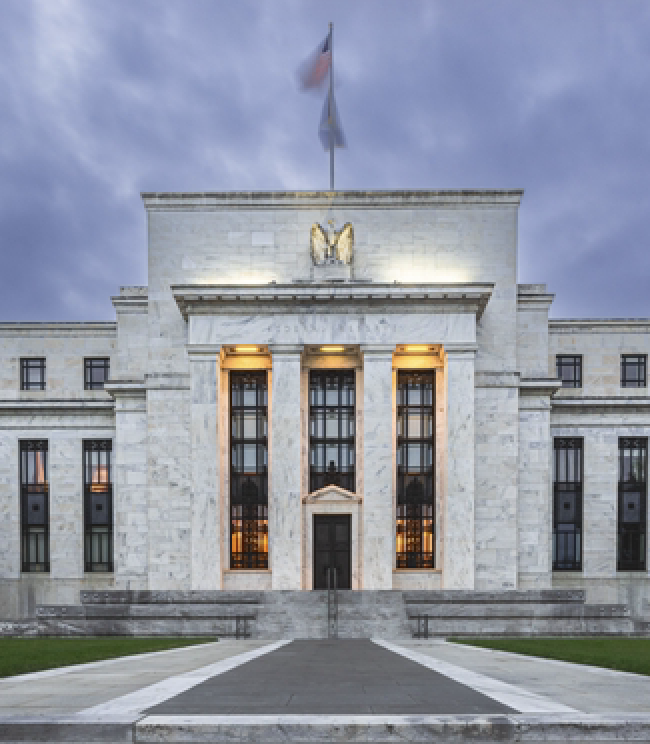
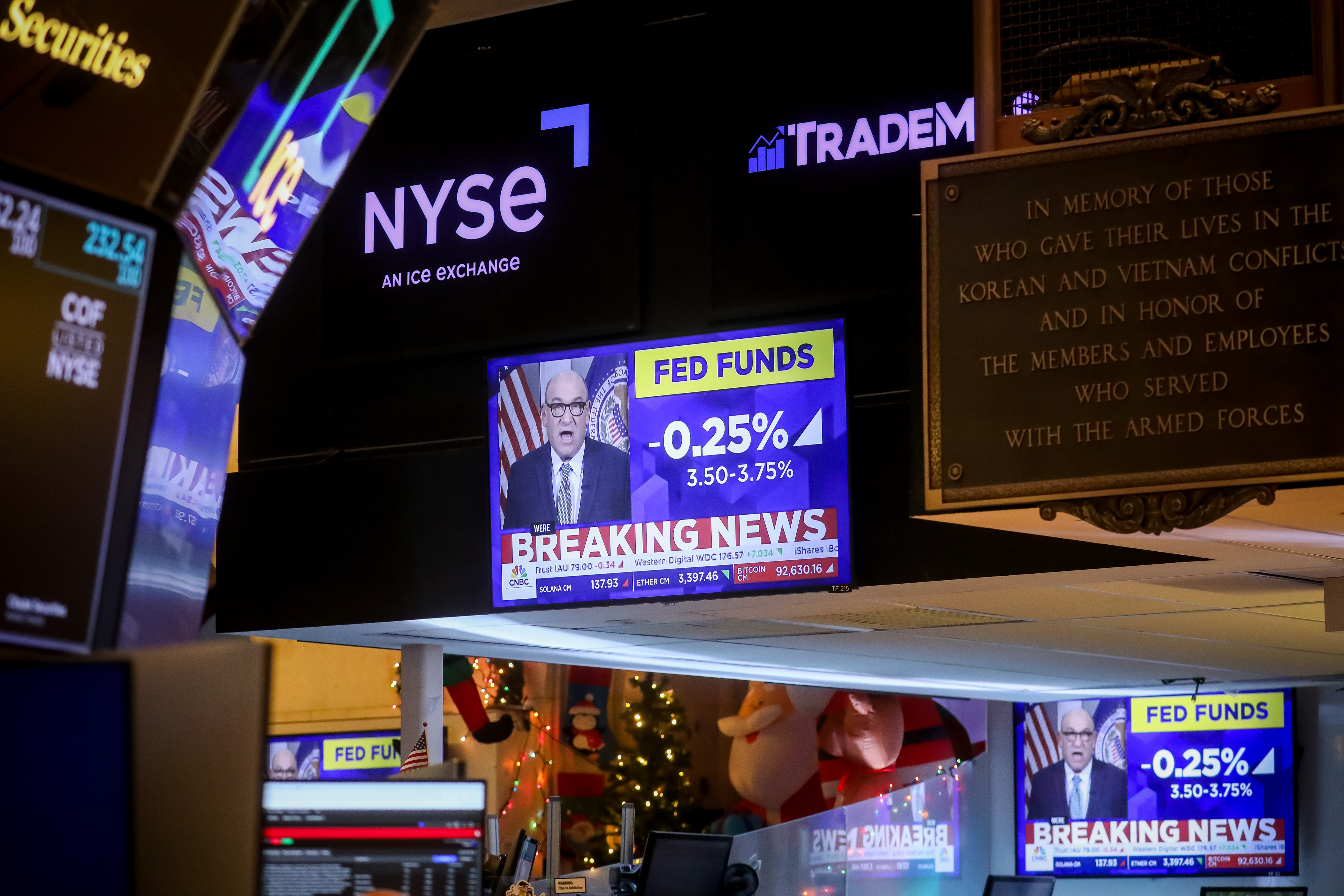
The Federal Reserve concluded its last meeting of 2025 with another quarter-point rate cut, while maintaining its outlook for only one cut in 2026.
Despite the concern post-2024 election about rising U.S. deficits and a potential return of "bond vigilantes," the supply side of the Treasury market has remained stable, with deficits settling near the $1.8 trillion baseline.
The U.S. economy depends on consumers buying stuff. Persistent price inflation forced Americans to blow through their savings and then turn to credit cards to make ends meet.
With a third consecutive rate cut bringing the Fed Funds range to 3.50%–3.75%, the Fed may pause for now as it reassesses the effectiveness of its “risk management” approach amid mixed economic signals.
US Treasuries rose after the Federal Reserve lowered interest rates by a quarter-point for a third straight meeting and left the door open to additional policy easing in 2026.
It appears the holiday shopping season is being sucked into the massive Debt Black Hole floating through the global economy.
The dot-com bubble burst in 2000. Now, 25 years later, anxiety abounds about the potential for a similar AI bubble burst and resultant crash.
The year 2025 exemplifies the prevailing regime — markets driven less by fundamentals and traditional business-cycle dynamics and more by fiscal and monetary policy influence. Today, policy decisions have emerged as one of the most impactful forces driving market direction.
After a turbulent start to 2025 defined by US policy shocks, attention shifted to AI optimism and corporate fundamentals, with earnings and capex intentions often eclipsing traditional data releases. Despite these twists, returns were solid across asset classes.
U.S. consumers are seeing a tangible rise in their monthly utility bills, with the average residential cost increasing to $142 in 2024, double the general inflation rate.
Growth, growth, and more growth — that’s been the common refrain in the current market environment. However, peeking from behind the curtains is the quality factor. While it has yet to receive the full spotlight in 2025 relative to growth, it’s due for a breakout performance (potentially in 2026).
We believe the macro environment will continue to be unstable given policy crosscurrents and a wobbly labor market, but stocks can likely churn higher given a firmer earnings backdrop.
After a "mini swoon" in November driven by AI bubble concerns, market tranquility has returned this December as investors await the Fed's widely anticipated 25 basis point rate cut and Chair Powell's subsequent remarks.
Two perspectives emerge when analyzing the state of US consumers. Sentiment surveys paint a picture of economic weakness, yet behavioral data tells a different story — spending remains in line with historical expansion trends.
Gold ETFs globally reported net inflows of gold for the sixth straight month, driven by a strong surge in Asian investment.
Energy commodities enter 2026 at an interesting crossroads. On one hand, oil and gas markets have abundant supply and somewhat softer pricing. On the other hand, the ongoing energy transition is accelerating investment in new energy sources.
Rising margin debt levels signal increasing speculation and leverage in the market, with the cost of carrying this debt nearing historical peaks that have typically preceded significant stock market corrections.
Three years with five reliable recession signals, five recession scares, and no recession. Why? And what comes next. A useful framing of the economy for the last three years and why a recession isn’t imminent now.
Active fixed income ETFs took center stage at VettaFi's recent 2026 Market Outlook Symposium, with two industry leaders sharing thoughts.
With the Fed's final 2025 meeting approaching, markets anticipate a third rate cut amid labor weakness, though the FOMC remains publicly divided on balancing a cooling job market against sticky inflation.
Our latest research investigates how U.S. corporations have managed to consistently increase profits, despite a secular trend of declining net domestic investment.
Starting in the aftermath of the 2008 financial crisis, a profound change to the Fed’s liquidity-providing role in the capital markets was underway.
Market focus is shifting to the Fed's 2026 outlook, as stubbornly elevated inflation and recent hawkish signals suggest the central bank may signal an "extended pause" after this cut. Consequently, traders have recently scaled back expectations for the total number of cuts next year, expecting the easing cycle to stop closer to 3.5% rather than the previously forecast 3%.
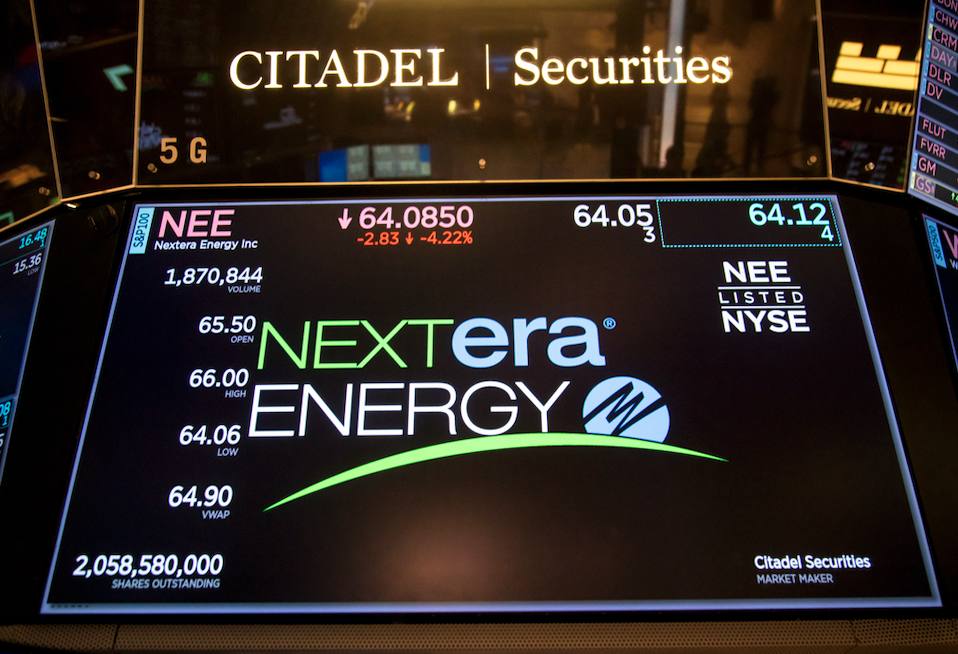
NextEra Energy, once the "tech darling" of the utility sector due to its vast renewables business, is pivoting its strategy to navigate political uncertainty and the booming power demands of Artificial Intelligence (AI).
The first full week of the holiday shopping season confirmed what I was looking for: consumers are still spending, and they are not being spooked by tariffs or headlines. Black Friday sales were solid, and the weekend into Cyber Monday largely matched expectations.
Recessions are less common today than they were before the 1980s. Some argue that the reason is that we have become better at conducting fiscal and monetary policy to reduce the ebbs and flows of economic cycles.
This week features two crucial monetary policy events: the widely anticipated Federal Reserve meeting on Wednesday, where a rate cut is expected along with new economic projections; and the Senate hearing on Thursday focused on "The Fed's Big Bank Welfare Program" (IORB regime).
Advisors should avoid centering long-term investment strategies on predicting the Federal Reserve's next interest rate move, as tactical bets based on the Fed's near-term calls often cause investors to miss out on returns.
Due to the federal government shutdown, official jobs data remains incomplete, forcing the Federal Reserve to rely on alternative private-sector reports to gauge the labor market. These alternative data sources, such as the ADP report and Revelio Labs estimates, indicate a widespread and concerning slowdown in employment, with job creation stalling, openings shrinking, and layoffs rising across many sectors.
Global equities closed November mixed, as investors began favoring proven earnings power over speculative growth. The MSCI World Index ended roughly flat for the month, with value, small-cap, and dividend-paying stocks outperforming large-cap growth names. Healthcare significantly outpaced information technology by over 12%.
The Social Security Administration and the Centers for Medicare & Medicaid Services recently announced key figures for 2026. After several years of above-average cost-of-living adjustments for Social Security, beneficiaries will receive a slight increase in the cost-of-living allowance (COLA) in 2026 based on the current inflation environment.
Marc Seidner, CIO of Non-traditional Strategies, explores opportunities across equities, bonds, credit, and commodities that have the potential to offer investors resilience and diversification.
I suspect almost 100% of my readers live well above the “poverty line.” I also suspect that probably 99% of you don’t know exactly where that line is. I didn’t really know the number either until I read the article we’ll discuss today.
The economic narrative last week was dominated by a mix of cooling inflation and a softening labor market.
Federal Reserve officials will vote to cut interest rates again next week to safeguard against rising risks of a sharp deterioration in the labor market, according to economists surveyed by Bloomberg.
For fixed-income investors seeking diversification, Mortgage-Backed Securities (MBS), specifically the VMBS ETF, are presented as a high-quality alternative to potentially overvalued corporate bonds, particularly those fueling the AI boom.
Federal Reserve officials are poised to cut interest rates again next week, but any benefit to the economy is likely to take much longer to show up than normal and may be blunted by factors that monetary policy can’t control.
In this third installment of the retirement income series, Chuck Carnevale (“Mr. Valuation”) walks through the completion of a hypothetical $2 million dividend portfolio designed for a retiree who requires at least $100,000 per year in income—equivalent to a 5% yield, with annual income growth to offset inflation.
here’s something comforting about dividends. For decades, investors have turned to them as tangible proof that a company is generating real cash flow and is willing to share it.
Investor appetites for international equities could continue after the Fed implemented a second rate cut. Investors looking to get international equities exposure would be wise to consider using an actively managed fund like the MFS Active International ETF (MFSI) .
Plenty of official economic data is already coming down the market’s chimney, much to the delight of our partners at Econoday. Now that the pesky government shutdown is over, the pace of macro updates is set to accelerate as we head into the end of 2025.
Geopolitical risks remain elevated as the markets continue to digest the impact of trade tariffs. What does this mean for private markets? Franklin Templeton Institute shares its outlook.
We expect 2026 to be another good year for fixed income investors. However, yields that are lower than where they were a year ago and less room for rate cuts by central banks likely will mean less-robust returns.
The traditional 60/40 portfolio (60% equities, 40% bonds) has long been a standard for investors. Its limitations, especially during "lost decades," suggest the need for a fresh perspective.
November’s markets were choppy but ultimately flat as investors weighed AI valuations, falling Treasury yields, and expected Fed rate cuts. This commentary breaks down what truly drove the month’s volatility and what the latest labor and policy signals mean heading into 2026.
The year 2025 has been a "baffling" year for markets, with surprising outcomes like gold and silver surging while stocks rose despite global conflicts, proving that "macro is hard."
Following the 2021–2022 inflation shock, the historic negative correlation between stocks and bonds—the foundation of modern portfolio diversification—temporarily broke, fueling debate over whether the "Greenspan Put" era of Fed-induced market stability has ended.
A mid-month bout of volatility focused primarily on the AI tech giants gave way to a broader rally in November’s final days amidst renewed expectations the US Federal Reserve (Fed) will cut interest rates in the coming weeks.