As GMO celebrates its 30th anniversary managing emerging debt this year, we offer our comprehensive guide to emerging debt markets. Given the tumultuous recent events – a global pandemic, defaults, repricing of interest rates, relentless strength in the U.S. dollar – we’ll focus on the Why as a starting point. Then we’ll dive into the proliferating How, covering strategies and vehicles.
It’s understandable that bank regulators, facing zealous industry opposition, are retreating from their effort to require the biggest lenders to fund their assets with more equity. After all, there hasn’t been a major blowup in 18 months and the banks insist they have more than enough capital.
The half-percentage point reduction at the September 17-18 FOMC meeting represents the largest non-COVID era cut by the Fed since 2008.
As the back-to-school season fills your social media feed with first-day photos and ads for the latest school supplies, it is also a prime opportunity for financial advisors to reconnect with clients about their education savings plans.
Policymakers indicated that more interest rate cuts were likely in coming months.
As the kiddos return to school, our fantasy football lineups are set, and the summer has ended, not only is the weather turning in the Northeast, but the inflation challenges are also cooling. The Federal Reserve’s (Fed) preferred inflation gauge, the PCE, was released at the end of August and came in at 2.5% month-over-month for July.
While the beach version of SoCal has had an epic, non-marine layer summer, it seems to have been enjoyed by few locals who instead violate the cardinal rule of adult life without children living at home and nevertheless travel to Europe in summer. We haven’t missed you.
It doesn’t take away from one’s success to share things that are troubling in order to deal with them differently and perhaps find another way. While you want to be careful, of course, about to whom you share your secrets or your inner feelings, you don’t want to bottle them up indefinitely.
Aligning a client’s values with their financial decisions is often touted as a best practice for financial advisors. It’s time to reexamine that premise.
The August jobs report highlighted a critical reality: the labor market is cooling off. While the headline figures seemed decent, the underlying data reveals clear warning signs that worker demand is slowing.
The markets closed quite strong last week and were approaching all-time highs again for the S&P 500. The most recent Presidential debate shifted the odds markets, as Harris became a 55-45 favorite on the betting site PredictIt and a very slight favorite on Polymarket. It is positive for the risk markets which did not pull back with Harris gaining strength.
The term “Complexity Curve” refers to the growing intricacies that come with managing the wealth of high-net-worth individuals. As their assets grow, so do the complexities of their financial portfolios. This includes everything from business ownership and large qualified plans to complex estate planning issues.
The August consumer price index report showed that U.S. inflation slowed to 2.5%
I have looked at market data on inflation expectations, Fed Funds futures, and other factors that influence interest rates. Today, I add an unorthodox factor to the list: cash cows.
Perhaps it’s unsurprising that Donald Trump and Kamala Harris are saying nothing about the country’s biggest economic-policy challenge – namely, how to rein in public borrowing. With an election to win, they’d rather emphasize lower taxes and/or higher public spending.
The S&P 500 index is a critical benchmark for the U.S. equity market, and its performance often dictates investor sentiment and decision-making. Between November 1, 2022, and September 6, 2024, the S&P 500 experienced a significant rally but not without volatility. Currently, investors have very mixed views about where markets are heading next as concerns of a recession linger or what changes to monetary policy will cause.
As we move into the final stretch of 2024, many investors may be asking themselves: Is it time to give airline stocks another look? According to a new report from Bank of America (BofA), the answer might very well be yes
In a niche corner of the bond market, an almost $140 billion wave of maturing debt is poised to lend momentum to what is already one of Wall Street’s hottest hedge fund trades.
Investors are using their massive cash piles to lock in attractive yields in global bond markets, helping to limit losses in the asset class, according to Mohamed El-Erian.
As we approach the end of 2024, the latest Consumer Price Index (CPI) report from the Bureau of Labor Statistics (BLS) has provided us with critical insights into the health of the U.S. economy, particularly concerning inflation.
Nvidia’s strong earnings exceeded expectations, but the stock fell as investors recalibrated their expectations given its high valuation.
Passive fixed income index investing has evolved significantly over the previous decade, offering investors the flexibility to align risk requirements and investment goals. Learn more from our experts.
Institutional investors, which have traditionally made up private debt’s largest pool of money, are no longer a source of growth for the $1.7 trillion industry.
All signs point to a tough few months ahead for investors charting the dollar’s path, after the US presidential debate and a key inflation reading left markets anticipating heightened volatility through year-end.
Tech companies of a certain size have long expected an easy ride from authorities, and for good reason. They always got it. Apple Inc. for years abused loopholes to pay virtually zero tax in the European Union while generating record profits there, thanks to special treatment from Ireland, where it bases its European headquarters.
Here’s a quote attributed to P. J. O’Rourke, an American author, journalist and political satirist: “There is a simple rule here, a rule of legislation, a rule of business, a rule of life: beyond a certain point, complexity is fraud.”
Mario Draghi wants Europe to follow the United States and China down the road marked “industrial strategy.” As Europe’s most influential economist — a former head of the European Central Bank, prime minister of Italy and technocrat supreme — Draghi had enormous leeway in preparing his report on European competitiveness.
While technology is a powerful driver of economic growth, it also presents challenges that can negatively impact productivity, equality, mental health, and societal cohesion. Addressing these issues ensures that technological advancements promote sustainable and inclusive economic growth.
If overlays haven’t been on your radar so far this year, it’s high time to start thinking about them.
In emerging markets, technological advancements present a unique opportunity to empower underserved communities.
Given the backdrop of monetary policy stimulus, the global economy is poised for growth and international stocks for continued leadership.
Apple Inc. lost its court fight over a €13 billion ($14.4 billion) Irish tax bill and Google lost its challenge over a €2.4 billion fine for abusing its market power, in a double boost to the European Union’s crackdown on Big Tech.
In this article, we’re going to throw some cold water on the DI love-fest by explaining why most tax-sensitive investors would be better off with a simpler approach to tax loss harvesting.
Cloud computing has been one of the first industries to get a demonstrable boost from artificial intelligence. Oracle Corp.’s quarterly results on Monday are likely to extend that trend.
Since the end of the “Yen Carry Trade” correction in August, bullish positioning has returned with a vengeance, yet two key risks face investors as September begins. While bullish positioning and optimism are ingredients for a rising market, there is more to this story.
We are entering a time I think will include a deep crisis. We are going to need each other. We really do need to “find our tribe.”
The U.S. economy may be heading into choppy waters, and investors might be wise to buckle up.
On the latest edition of Market Week in Review, Investment Strategist BeiChen Lin assessed the state of the economy, including the health of the services and manufacturing sectors, and the likelihood of a big rate cut at the upcoming Federal Reserve meeting.
The concept of portable alpha is over 40 years old. And while it has evolved through various forms over that time, it continues to be a valuable portfolio tool for institutional investors. Arguably, the most popular iteration right now is adding alpha expected from hedge funds on top of synthetic beta exposure.
US Treasuries gained and traders ramped up their bets that the Federal Reserve will opt for a supersized interest-rate cut this month after a mixed report on the US labor market.
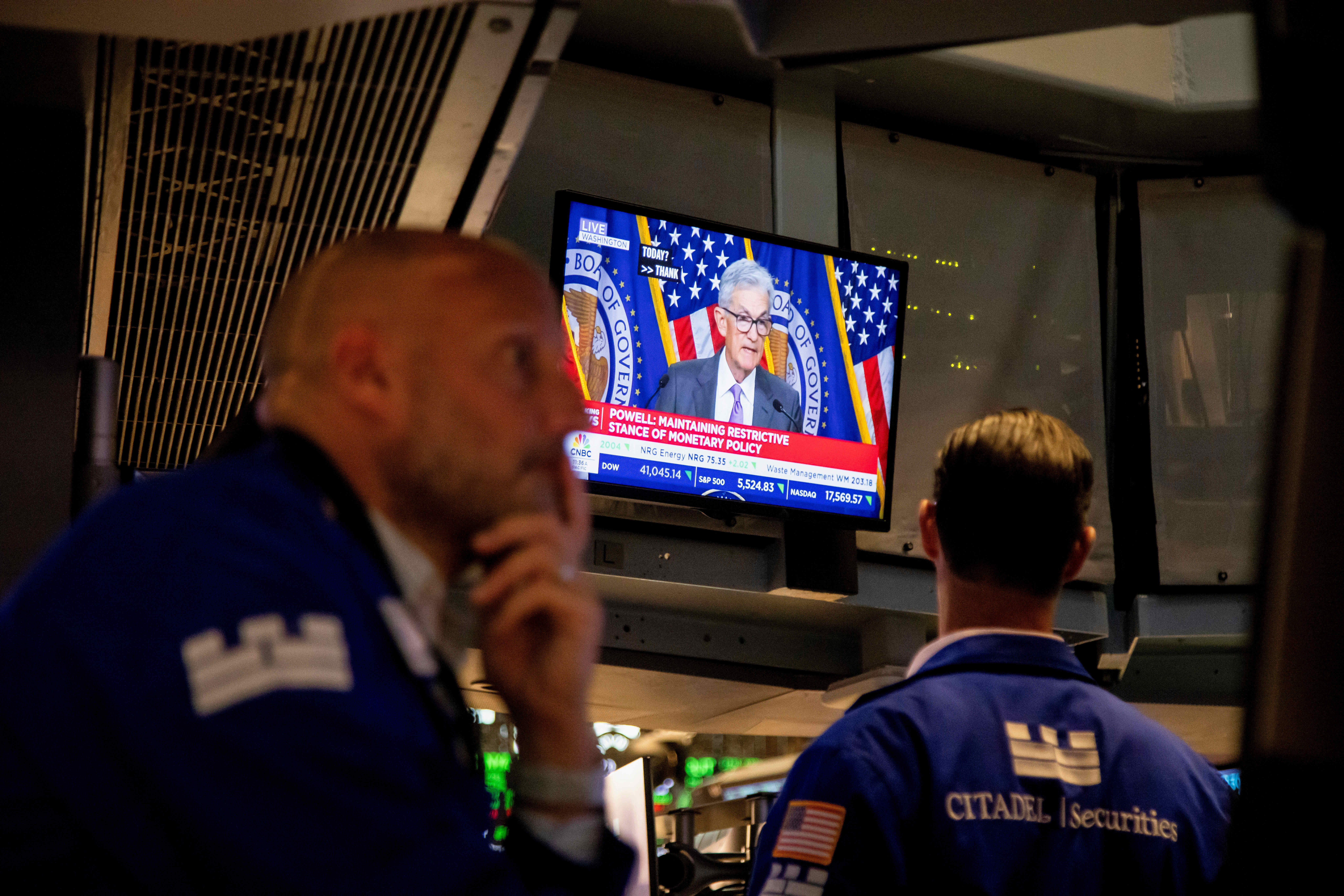
With Labor Day now in the rearview mirror, the money and bond markets will no doubt become laser focused on the September FOMC meeting. Yes, Fed Chair Powell telegraphed that a rate cut is forthcoming, but he also emphasized how monetary policy is still data dependent.
Presidential elections tend to have limited impact on market performance, regardless of party win (although markets prefer Democratic switches). Investors should capitalize on the uptick in market volatility, which investors can use for strategic investing.
Labor Day weekend, marking the end of the US summer driving season, is typically the year’s last hurrah for gasoline producers. This year, the high-fives were reserved for drivers (and White House occupants): The average pre-long weekend pump price was down 13% from last year after gasoline refining margins collapsed in August. Pump prices have eased further this week.
After a decade of consistent outperformance, Japanese small caps began underperforming their large cap peers in 2018, a trend that has accelerated since 2023.
In this edition, Harold Evensky explores the challenges facing sustainable and active funds, the implications of the new DOL Fiduciary Rule, and the value of long-term performance projections. With candid observations and critical analysis--read on to gain perspective on navigating the complex world of investing, the importance of risk management, and the role of fiduciary advisors in securing your financial future.
On the latest edition of Market Week in Review, Director and Senior Investment Strategist Alex Cousley and ESG and Active Ownership Analyst Zoe Warganz discussed key takeaways from the U.S. Federal Reserve’s (Fed) annual economic symposium in Jackson Hole, Wyoming.
Compliance officers in the RIA space feel the pressure of two major business goals. One, we need to help the firm grow. Two, we need to protect the integrity of the business itself and the financial safety of our clients.
Apple Inc.’s upcoming iPhone release has sent its stock price soaring because of promised artificial-intelligence features. Those gains appear vulnerable, at least in the short term, if history is any guide.
As I write this, gold continues to trade above $2,500 an ounce after surging past the psychologically important level for the first time ever in mid-August. For seasoned gold mining investors, this should be a moment of validation. After all, the yellow metal has long been seen as the ultimate hedge against economic uncertainty.
Has the tide turned decisively against King Dollar? A fall of around 5% in the greenback versus major currencies in the past two months, pushing the dollar index to a 13-month low, suggests its post-pandemic surge has meaningfully faltered.