The debate over ETFs versus mutual funds has never been particularly useful for advisors who actually build portfolios. In practice, the question was never which vehicle is better — it was always which vehicle is better for this objective, in this sleeve, for this client. In 2026, that discipline matters more than ever.
After more than three decades of watching oil markets upend economies, one pattern keeps repeating: investors learn the wrong lessons from the last shock. The 1973 OPEC embargo taught us that geopolitical disruptions are temporary.
March 2026 was a rough month for financial markets. Broad indexes experienced large selloffs, led by international stocks, though many of these still remain up in 2026. The dollar rallied strongly, breaking its year-plus downtrend.
The war in Iran has been costly, in a number of ways. First and foremost, the humanitarian consequences have been substantial: the price paid by those in harm’s way is immeasurable.
For much of the past decade, U.S. investors didn’t need much convincing to stay close to home. But according to experts at a recent AllianceBernstein (AB) Product Due Diligence Session, the tide shifted dramatically in 2025, signaling a “new dawn” for non-US stocks.
Amid hopes that the conflict in Iran will soon de-escalate, stocks rallied in recent days. This provided some much needed relief for the growth-heavy Nasdaq-100 Index (NDX). However, advisors and experienced investors know that things can change in a heartbeat.
Markets often react sharply to geopolitical developments, but just as often, they overreact. Investors today are grappling with heightened global tensions, rising oil prices and uncertainty around central bank policy. The key question is whether these risks meaningfully alter the economic outlook or simply create short-term volatility.
March 2026 ETFs: Investors pivot to safety with $29B in short-term bonds and a record $5B in Energy as Tech faced a Q1 recalibration.
Income ETFs using options have been one of the biggest categories in recent years. As global volatility has risen, advisor clients and investors of all kinds have clamored for some added income.
A look at ETF flows for the month of March suggests caution is back in vogue. Fixed income ETFs showed serious muscle in the asset gathering race last month, capturing nearly 45% of net creations.
Rising demand for critical microelectronics, bolstered by AI capex and defense spending, is driving semiconductor prices higher and posing upside risks to global goods inflation.
Every March people around the country start talking about their brackets. Most are referring to their basketball tournament bracket, hoping to predict the winners and maybe earn some office bragging rights.
The stock market is looking past the sharp interest rate hikes priced by Europe’s bond market, risking losses for investors backing the wrong outcome.
Total return is the entire amount of income passed to an investor holding a particular security. It annualizes any price change plus any dividends or interest earned over time.
Less than two months ago, projections showed the US government on track to borrow some $2 trillion this year with budget deficits exceeding 5% of gross domestic product indefinitely. Since then, this dire outlook has worsened — thanks to the Supreme Court’s ruling on tariffs, the war with Iran, the prospect of slowing economic growth and rising interest rates.
Unilever Plc’s Fernando Fernandez haslucked out by selling the company’s food businesses, including Hellmann’s mayonnaise and Knorr stock cubes, to McCormick & Co. But Fernandez, who’s been chief executive officer for just over a year, shouldn’t squander his good fortune; he needs a clear vision for what comes next.
When Edward Jenner inoculated an eight-year-old boy with cowpox in 1796, the principle was radical: Expose a healthy body to a mild, manageable version of harm, and it builds the defenses to survive something far worse. The cowpox patient never got smallpox. Markets work in much the same way.
Oil prices are the key transmission channel, and how far they rise and how long they remain elevated could shape the outlook for growth, inflation and policy, with implications for bond markets.
Systematic equity investing is a way to invest in the stock market using clear rules and data, rather than guesswork or hunches. Instead of trying to pick stocks based on trends or headlines, this approach uses research, data, and technology to systematically identify opportunities across global markets.
DoubleLine continues to fortify its presence in the ETF market, adding a new active fixed income solution designed for today’s complex interest rate environment. The DoubleLine Ultrashort Income ETF (DLUX) launched on NYSE Arca on April 1, marking the latest expansion of the firm’s rapidly growing ETF lineup.
All eyes were turned toward the Middle East throughout the month of March, with the US and Israel’s ongoing conflict with Iran causing energy prices to surge. The closure of the Strait of Hormuz, alongside damage to energy infrastructure across the gulf region, caused crude to rise above $100 a barrel for the first time since 2022.
How should RIAs think about advisor cash compensation? This article focuses on the salary, bonus, and benefits arrangements commonly used in the industry and typically documented in investment advisor representative (IAR) agreements.
The market environment of 2025 provided a compelling example of the benefits of multi-asset investing. Importantly, it is possible that the conditions that supported diversified, multi-asset portfolios last year may persist in 2026 and well beyond.
At ETF Exchange 2026, TMX VettaFi caught up with Dave Mazza, CEO of Roundhill Investments, to discuss the firm’s evolving strategy for ETF innovation in a market that’s continuously seeking specialized exposure.
Now that Nelson Peltz has won a surprise bidding war for Janus Henderson Group Plc, the activist investor can start to revamp the $493 billion asset manager he has circled for years.
Eli Lilly & Co.’s Zepbound is helping to solve one of the most intractable health challenges of our time: Obesity. Now, the drugmaker hopes to crack another significant public health problem: Sleep disorders.
OpenAI has completed a deal to raise $122 billion from investors at an $852 billion valuation, marking the company’s largest funding round to date by far and bolstering its costly push for more chips, data centers and talent.
Department of Homeland Security shutdown continues, and Congress considers addressing growing concern over prediction markets.
The fiat currency collapse narrative is one of the most emotionally satisfying arguments in all of financial punditry. It feels intellectually rigorous, draws on genuine history, and speaks to deep and legitimate anxieties about government overreach, monetary recklessness, and the long-term consequences of unlimited debt creation.
Jeff Buchbinder and Adam Turnquist explain why solid earnings, AI investment, and economic resilience underpin stocks, even as oil prices and volatility pressure markets.
In a recent episode of the Money Metals podcast, host Mike Maharrey sat down with renowned precious metals analyst Jeff Clark to unpack the sharp pullback in gold prices and the dominant narratives driving market sentiment.
The United Nations (UN) warns of a roughly US$4 trillion annual shortfall in financing for its sustainable development goals—a gap too large for the public sector to fill alone.
Hedge fund activist Boaz Weinstein is on the cusp of his most significant campaign victory yet — overhauling an investment trust whose claim to fame is an early bet on Elon Musk’s SpaceX rocket company. But the beleaguered target is doing a good job of trashing the prize pot.
The weight of evidence suggests that the current equity market decline should be viewed as a short-term pullback within an ongoing, longer-term bull market. However, we are watching indicators closely for changes in global economic/market health. Below are five charts we will be paying special attention to in Q2.
When investors look at a stock’s valuation, the price-to-earnings ratio is almost always the first number they reach for. It’s intuitive, widely reported, and deeply embedded in the language of financial markets. But the P/E ratio alone can be genuinely misleading.
The Iran war is challenging Japan’s safe-haven assets, once again forcing domestic investors to seek better returns abroad.
During the pandemic, my wife lived in constant fear that we would run short of paper products, disinfectants and other essentials. I was frequently sent out on reconnaissance missions to replenish supplies.
Stocks started the week on an upbeat note as the administration delayed a deadline to strike Iranian energy plants by five days, also announcing that the U.S. and Iran were in negotiations to end the conflict.
I suggest looking both inward and outward to answer two central questions: “Can we afford to help without harming our own financial future?” and “Will this increase or decrease the child’s movement toward financial independence?”
Retirement savers have plenty of questions about a recent executive order that opens a path for alternative investments, such as private equity, real estate and digital assets, in 401(k) plans. One advisor shares why individuals have good reason to take pause.
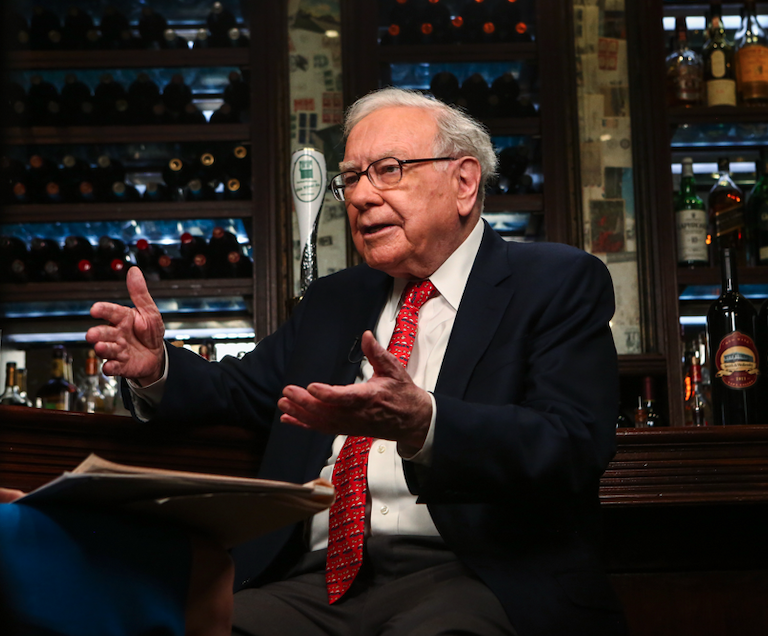
Warren Buffett cautioned that he’s seeing signs of fragility emerging in the banking system as it has become more connected to non-bank players.
On paper, Super Micro Computer Inc. is the type of company that Wall Street can’t get enough of, with soaring sales, an enviable list of partners like Nvidia Corp. and its placement at the center of the artificial intelligence boom.
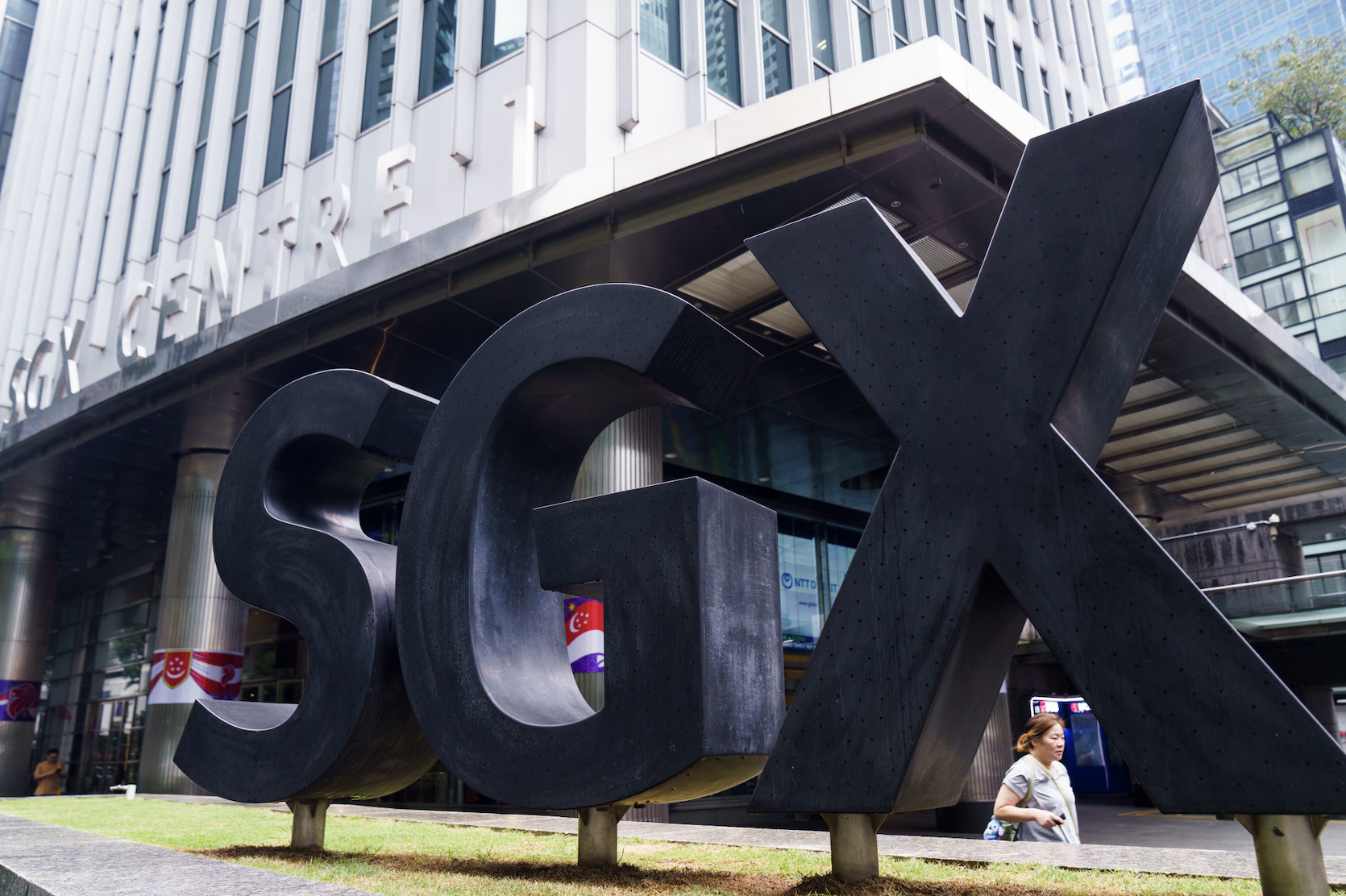
BlackRock Inc. plans to launch a fund next month focused on large Southeast Asian stocks, according to people familiar with the matter, a move supporting Singapore’s drive to boost liquidity in the local market.
Does artificial intelligence herald soaring prosperity or mass unemployment, political breakdown and Orwellian subjection? Nobody, not even AI, can honestly say. Forced to guess, I’d predict some of both.
The US economy grew a pedestrian 2.0% last year and the Atlanta Fed’s GDP Now is currently projecting real GDP growth at a 2.0% annual rate in the first quarter. If anything, we think there is more downside risk than up to the first quarter projection.
I just returned from the Investment U conference in Las Vegas, where I presented on gold and the great digital transformation. Sentiment among investors was upbeat, despite great uncertainty in the world right now.
Gold has fallen roughly 21 percent from its all-time high of nearly $5,595 reached in late January to approximately $4,430 as of this writing, and the prevailing narrative in markets is that this correction reflects a genuine shift in the metal’s outlook
Leveraging 529 plans and community support can significantly boost college savings. These plans offer potential tax benefits and flexibility. Our Bill Cass explains that involvement from family and friends can provide additional resources and motivation.
Get ready each week with high-conviction insights that go beyond media headlines.
When someone says a retiree is “living off Social Security,” it’s not usually $100,000 a year.