A better appreciation of the history of market bubbles should help advisors and their clients sidestep some of the carnage when they inevitably burst. It is our intention in this article to take a more clinical approach by quantifying what we mean by a “bubble” solely in terms of market action. In that way, it is possible to compare conditions between individual markets and arrive at a rough standard. There are of course, many other aspects to bubbles and manias, several you can read about here.
The word “bubble” is tossed around quite a bit in the financial markets, but it’s rarely used correctly.
A little over a hundred years ago, the United States emerged from the double whammy of a world war and deadly pandemic. Eager to get back to “normal” life, Americans went on a decade-long spending splurge, buying cars and radios and stocks.
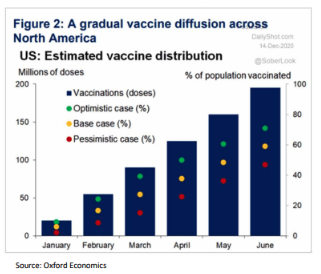
Global risk assets rose in the wake of positive developments on the two main fronts that have dominated headlines over the past 12 months – pandemic and stimulus.
Warren Buffett has been a fixture at the top of the world’s wealth rankings for decades, but in recent years he’s slipped down the list as tech fortunes soared and his hot hand cooled. Now, at 90, his net worth has blown past $100 billion.
Is the stock market disconnected from the economy? Perhaps, but less so lately.
Headline CPI inflation is almost certain to rise above 3% in June and July, according to Jeffrey Gundlach. It could even top 4%, he said, which would “really spook the bond market.”
There may be some incredible opportunities for investors in companies that produce the metals, minerals and other raw materials that will be needed with an increase in spending.
It would appear that nothing can pop the stock market bubble, but there is one straightforward “pin” that will do the job – rising interest rates.
Our Fixed Income CIO Sonal Desai has been ahead of the curve in flagging the risks of inflation and rising rates that have now entered the mainstream debate.
Accelerating growth is generally a good thing for stocks, evidenced by bond yields and stock prices typically rising and falling together.
With equity markets reaching new heights at a time of rising income and wealth inequality, it should be obvious that today's market mania will end in tears, reproducing the economic injustices of the 2008 crash.
We hope you enjoy Harold Evensky's latest NewsLetter.
Weighing the costs of global vaccine access, minimum wage and the energy rally.
Rather than going deep into one theme, this week we will do a “Random Thoughts” from the Frontline. Today we will cover several topics in shorter form: valuations, infrastructure, the debacle in Texas, and a lot more.
Millions of Texans were without power this week when the state was hit with a record setting winter storm. An overhaul of its aging infrastructure would require massive amounts of metals and other materials, which would be positive for miners and producers.
In late 2020, a new kid emerged on the bargain-of-the-decade block. UK stocks, and notably UK value, reached very cheap levels relative to value stocks in other developed economies. Today, UK value remains at remarkably low valuations relative to most of its fundamentals.
One of my favorite investing legends is Oaktree Management’s Howard Marks. His investing wisdom and in-depth knowledge of investor psychology and market dynamics are unparalleled. Given the “speculative mania” we continue to watch in the market, I thought a review of some of his previous thoughts is appropriate.
Apart from some high-profile downgrades, the muni credit markets finished 2020 buoyed by breakthrough vaccines and signs that state and local tax collections were better than anticipated.
Ever since the stock market bottomed in 2009 during the financial crisis, people have been coming up with reasons why the bull market was about to end. We heard every reason – Brexit, the end of Quantitative Easing, too much debt, COVID, etc. – and while we understood each may be a cause for consternation, we focused on valuations, which suggested the bull market would continue. Over time, math wins.
The object of the game was to get to the finish line first and then become the leader the next round. The stock market has its own game of “Simon says” and that is in the mall property world.
Despite questions over financing the European Union’s (EU’s) new Green Deal, the green transition is now under way.
Happy Year of the Ox! Today China and a number of other Asian countries celebrate the Lunar New Year, also known as the Spring Festival.
Rob Arnott: “There hasn’t been a better time to be a value investor at any other time in my career. I look back at the tech bubble and I never thought I would see valuations stretched the way they were then. We're back to that, and then some." We invite you to revisit “Reports of Value’s Death Have Been Greatly Exaggerated” now published in the Financial Analysts Journal.
2021 has certainly started off interesting. From Reddit readers chasing the most heavily shorted stocks, to the new Administration discussing more stimulus, investors have had plenty to deal with. A market review seems appropriate as the bulls seem to remain bulletproof even as the mania grows.
It’s hoped that an extra $1,400 in the pockets of everyday Americans may help support lagging U.S. consumption. We believe the stimulus, along with improved vaccine roll out, may also help support commercial air travel.
The COVID-19 crisis opened up cracks in the muni market, but we don’t expect those cracks to alter the reality that municipal bonds can be a relatively conservative investment option. Many municipalities are under stress, but that’s not a reason to avoid munis, in our view.
Advisor Perspectives, the most-read eNewsletter for financial advisors as ranked by the Erdos & Morgan “FAMOUS” Study in 2019 and 2020, has announced its Venerated Voices™ awards for commentaries published in 2020.
Those of you with kids and grandkids may at some point have stepped inside a GameStop. If so, you might be familiar with the video game retailer’s tagline: “Power to the players.”
Read our year-ahead report to learn how this shift could lead to investment opportunities in 2021 and to understand RBA's positioning.
As expected, the new administration has hit the ground running. In his first two days in office, President Biden issued executive orders which rescinded a number of previous directives or were aimed at ending the pandemic and easing the pandemic’s economic impact.
In the years since the end of the gold standard, there’s been a significant lack of discipline in government spending. Today, the federal debt is closing in on an astronomical $28 trillion, which is more than 130% of the size of the U.S. economy.
The 2020s are going to be about rifle shots, not the shotgun approach of index funds.
Janet Yellen invoked an enduring era of low interest rates in delivering the Biden administration’s opening argument to lawmakers for its $1.9 trillion Covid-19 relief proposal.
Our outlook for 2021 is formed by the need to get away from the crowd and to expect some very stormy weather in the U.S. stock market. We are not afraid of drowning. Therefore, we will review the circumstances at the bottom of the market in 2009 with today’s market to see where the crowd is and where we need to go to avoid the coming storm.
The speculative “V” is one of the most interesting and challenging features of the market cycle. For passive investors, it can be a period of exhilaration followed by panic.
Judging by recent phone calls and email queries, inflation is a serious concern among investors this year.
Emerging-market stocks rebounded in 2020 even as the COVID-19 pandemic spread globally. As vaccines and other favorable conditions unfold, investors have good reasons to consider EM equities in 2021 while strategically considering their potential risks.
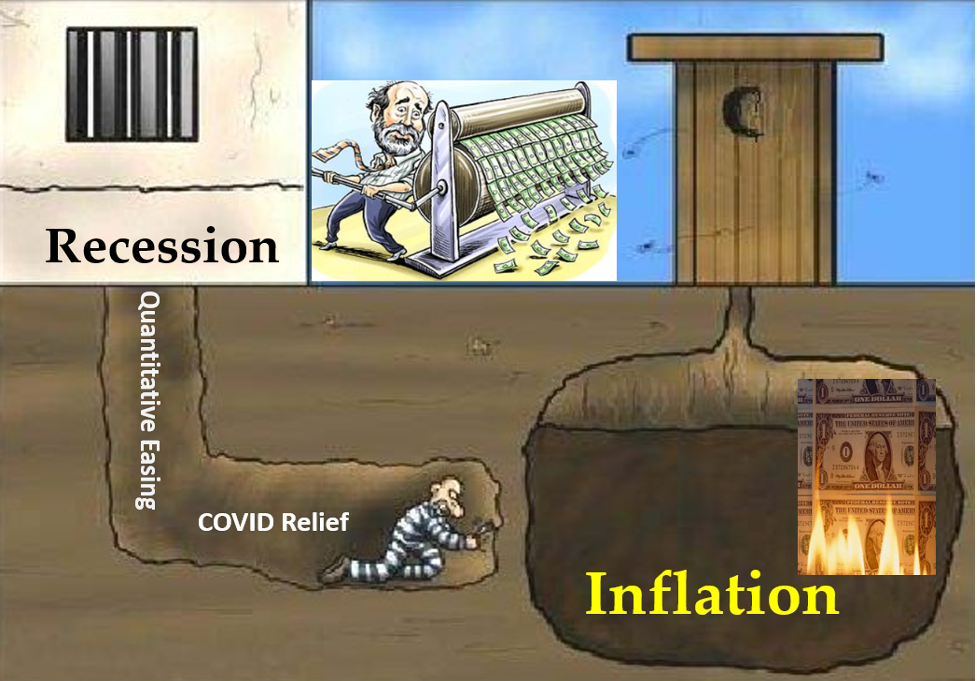
Rescues by the Federal Reserve and aggressive monetary policies have helped stock and bond investors, but the degree of money printing will be paid for by future generations.
Founding Father Benjamin Franklin said it best: “They who can give up essential liberty to obtain a little temporary safety deserve neither liberty nor safety.” In this light, what are we to make of Trump’s social media suspension?
A brief monthly update on what's happening in the municipal bond market.
The forceful rise of the markets from March depths continued in the fourth quarter. After stalling out in early Fall, market participants floored the accelerator in November with vaccine approval in tow and the election overhang in the rearview.
PIMCO’s “Income to Outcome” framework offers strategies to navigate retirement’s stumbling blocks.
While valuations are high across the market, on a relative basis, they are still most attractive for international stocks. The pandemic has delivered a global growth shock, but in doing so, it has accelerated the timeline for mega trends such as productivity enhancement (robotics, automation, and software), e-commerce, electronic payments, and rapid drug development.
The dichotomy of “value” and “growth” investing has become a sharp stylistic divide. But is it helpful? Howard Marks writes in his latest memo how he views the art and science of value investing, especially in the increasingly efficient and complex world we face today.
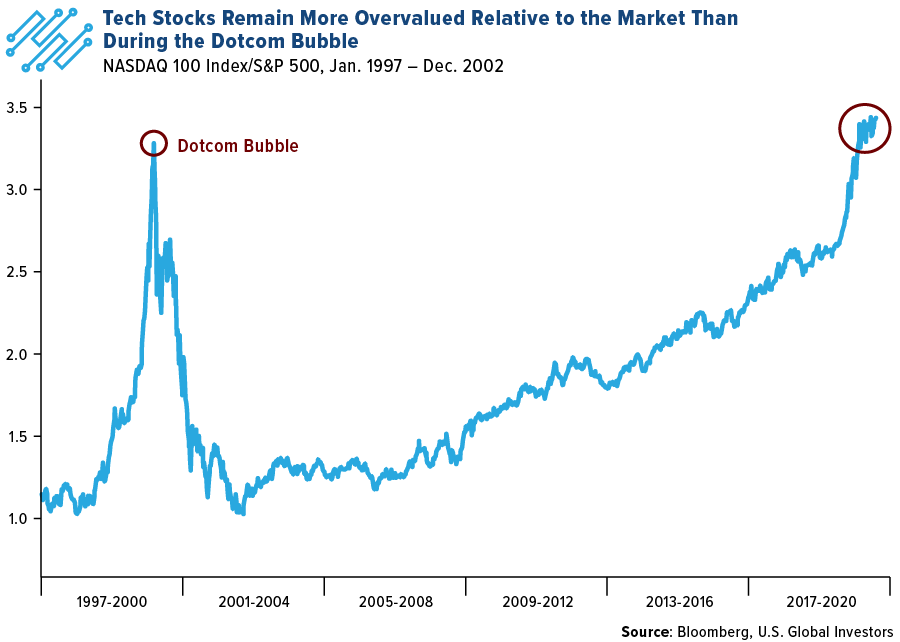
As we enter 2021, there are two myths told to investors to support the bull market narrative. The first, as we debunked recently, is that low-interest rates justify high valuations. The second is that since valuations are not as high as the “dot.com” crisis, there is no “stock market bubble.”
Despite extensive economic and human costs, 2020 may be a turning point in multiple ways.
Free from a house view on economies, markets or stocks, J O Hambro Capital Management’s (JOHCM) fund managers invariably see the world in different ways. We asked a number of our managers for their thoughts on the outlook for their asset class next year, what they would like to see and the possible surprises that 2021 could bring.
Featuring extreme overvaluation, explosive price increases, frenzied issuance, and hysterically speculative investor behavior, I believe this [bull market] event will be recorded as one of the great bubbles of financial history, right along with the South Sea bubble, 1929, and 2000.
Now that 2020 has drawn to a close, I’m revisiting my most popular investment posts of the year, based on views. It was a truly historic 12 months, to say the least, but I won’t be covering everything that happened.