I just returned from the Investment U conference in Las Vegas, where I presented on gold and the great digital transformation. Sentiment among investors was upbeat, despite great uncertainty in the world right now.
Gold has fallen roughly 21 percent from its all-time high of nearly $5,595 reached in late January to approximately $4,430 as of this writing, and the prevailing narrative in markets is that this correction reflects a genuine shift in the metal’s outlook
Emerging-market (EM) equities have been hit hard since the Iran war began, as investors worry about fallout from the conflict. Yet, history suggests that periods of heightened market stress—when volatility is elevated and uncertainty is still being priced—have created favorable entry points for EM investors in the past.
Get ready each week with high-conviction insights that go beyond media headlines.
When someone says a retiree is “living off Social Security,” it’s not usually $100,000 a year.
Amid geopolitical uncertainty, dispersion across credit markets – rather than a broad risk-off move – has become the dominant investment signal.
Discover why Strait of Hormuz disruptions extend beyond oil, how supply shocks are transmitting into agriculture markets, and what third-order commodity effects may mean for portfolios.
Investors have no shortage of metrics to evaluate equities, but not all measures capture the same economic reality. In an environment defined by elevated capital spending and market concentration, earnings-based measures may not fully reflect how efficiently companies convert investment into cash.
A progressive rallying cry to tax the rich is being welcomed by traditionally Republican states, including Florida and Georgia, looking for a new pitch to draw migrants — especially wealthy migrants — from the coasts.
Some of Wall Street’s biggest bond-fund managers say financial markets are underestimating the risk that the US war in Iran will cause a sharp slowdown in an already sputtering economy.
Sovereign bonds rose around the world as concern the Middle East conflict will derail global economic growth revived demand for beaten-down government debt.
I have just spent the last two days with members of our Inner Circle. We visited four technology companies and listened to six other CEOs make presentations here in El Segundo, California. What I want to write about today is a summary of what I’ve seen, which made every single one of our participants extraordinarily optimistic about our future.
Thanks to strong gains in markets over recent years, with many indices at or near record highs, the 60/40 default portfolio has quietly morphed into a bundle of expensive U.S. growth equities and credit exposures offering narrow spreads over Treasuries. In our view, such a portfolio is likely to disappoint investors by delivering low single-digit real returns.
Government statistics are invaluable in deciphering the state of the U.S. economy. But they don’t always tell the whole story.
The conflict in the Middle East has raised concerns about oil prices, global growth and market volatility. Chief Investment Officer Sean Taylor assesses the potential economic impacts of the crisis and its implications for growth and diversification in emerging markets and Asia.
Rationally, no one should feel happy about an income tax refund. The refund is a correction of a tax overpayment; the recipient effectively gave the government an interest-free loan over the course of the prior year.
Heavily influenced by escalating geopolitical conflicts, last week's economic snapshot reveals a sharp erosion of confidence among consumers and investors alike.
Sharp moves in energy prices rarely arrive at a convenient moment for policymakers. When shocks occur, governments are left juggling two competing imperatives: cushioning households from rising costs while preserving fiscal credibility. T
For investors who understand this distinction, the current pullback may represent an opportunity rather than a warning. Short-term sentiment may dominate headlines, but long-term fundamentals continue to point in a very different direction.
Next week’s releases should help clarify whether recent volatility remains contained or begins to translate into weaker fundamentals.
The war in Iran may be showing few signs of easing, but Wall Street strategists are encouraging investors to start buying stocks again.
In today’s era of automation, some situations demand a more active approach. Municipal bond investing is one.
Geopolitical volatility is not only increasing investor demand for infrastructure assets; it is urgently reshaping where and how capital is deployed. As energy security, supply chain resilience, and digital sovereignty rise up policy agendas, infrastructure investments that expand capacity and relieve bottlenecks are becoming critical.
Rapid advances in artificial intelligence, persistent geopolitical tensions – particularly the conflict in Iran – and ongoing trade uncertainty have kept headlines loud and emotions elevated, ultimately demanding investors remain adaptive and disciplined. In this kind of environment, the biggest mistakes come from reacting to noise rather than fundamentals.
Many people forget that gold was in a bull market in early 2008 but suffered a significant selloff at the onset of the financial crisis when the yellow metal fell 32 percent, giving up about 40 percent of its previous bull market gain. Gold then took off and soared by over 153 percent over the next few years.
Bearish sentiment has taken over the markets. As one analyst put it, “Wall Street has thrown in the towel on gold.”
In a world of intensified uncertainty and dispersion, investing becomes less about forecasting and more about favoring more liquid, high quality assets that can be resilient across a variety of scenarios.
The Iran conflict has changed the paths for inflation and central bank actions.
As portfolios limited to public equities capture a smaller slice of corporate growth, private investments are increasingly finding a place in long-term wealth-building strategies, including 401(k)s.
US mortgage rates climbed for a third straight week, pushing home-financing costs to the highest since October and dealing a blow to both purchasing and refinancing activity.
A rush by bond traders to unwind US futures positions amid the selloff triggered by war in Iran is running its course, setting the stage for new wagers that will determine whether the rout reverses or deepens.
Software stocks are down big YTD, but AI-targeted companies have signaled confidence through increased buyback announcements. Record YTD buyback authorizations suggest potential equity market support—but execution remains the wildcard.
The Fed’s decision made sense: don’t change the target for short-term interest rates if we don’t know what the world will look like tomorrow. But investors need to remember a couple of important things. Rate cuts, if they ever come, are less important than the money supply.
Geopolitical headlines rarely arrive quietly. The recent escalation in the Middle East is a reminder of how quickly tensions can feel destabilizing.
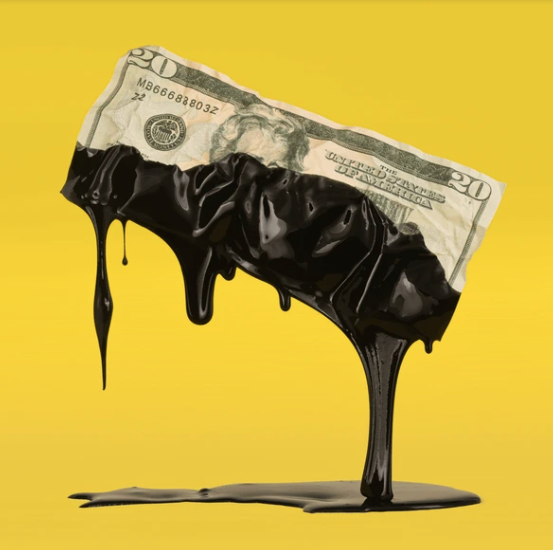
Although the US now produces more oil than it consumes, it still exports lighter crude and imports heavier crude that US refineries need. As a result, global supply disruptions continue to play an outsized role in determining what US consumers pay at the pump. In short, during geopolitical crises, international oil markets matter more for gasoline prices than domestic production alone.
Stocks fell for the fourth consecutive week as rising interest rates and surging oil prices—driven by the ongoing conflict in the Middle East—continued to weigh on investor sentiment.
Uncertainty persists in 2026, affecting the broader fixed income market. Collateralized loan obligations (or CLO) have emerged as a viable option with the advent of exchange-traded funds (ETFs), which have democratized access to retail investors.
The Federal Reserve (Fed) kept interest rates unchanged after its Federal Open Market Committee (FOMC) meeting earlier this month. Although investors and economists largely expected this outcome, stocks and bonds sold off immediately after Fed chair Jerome Powell’s post-meeting news conference.
BlackRock Inc.’s Rick Rieder, the firm’s top bond-market executive who was passed over by President Donald Trump to be chair of the Federal Reserve, is pursuing investor cash for his first hedge fund in years.
Faster productivity growth lifts earnings, improves the long-run fiscal arithmetic, and allows the economy to run stronger without recreating the inflation regime of 2022. Historically, markets are slow to recognize when the supply side of the economy has improved. This time should be no different. The productivity story is more durable than this week’s Iran developments, which is dominate trading over the near term.
With apologies if this is the tenth investment piece you’ve read this week about the impact of the Iran War on asset markets, but we wanted to share our thoughts on what’s going on with our investors. First a recap. The S&P 500 is down 5.4% since the February 28, 2026 start of the Iran War.
As 2026 unfolds, market leadership is shifting in ways that go beyond the usual sector rotation. While AI-driven growth fueled recent gains, rising capital expenditures, energy demands, and valuation pressure are forcing a reassessment across both public and private markets. At the same time, economic data—particularly beneath headline job growth—suggests a more uneven expansion than many expected.
Since hostilities began in the Middle East three weeks ago, I’ve urged investors to stay calm and resist the temptation to panic-sell. While I still stand by that advice, it’s important to point out that this conflict isn’t resolving as quickly as initially expected.
The key swing factor remains oil prices. If the conflict ends within this window, we still expect only limited impacts on our economic and asset‑class outlooks.
With liquidity and credit stress in the private credit market rising, we must consider whether the Fed might once again ignore its mandates to backstop exuberant markets.
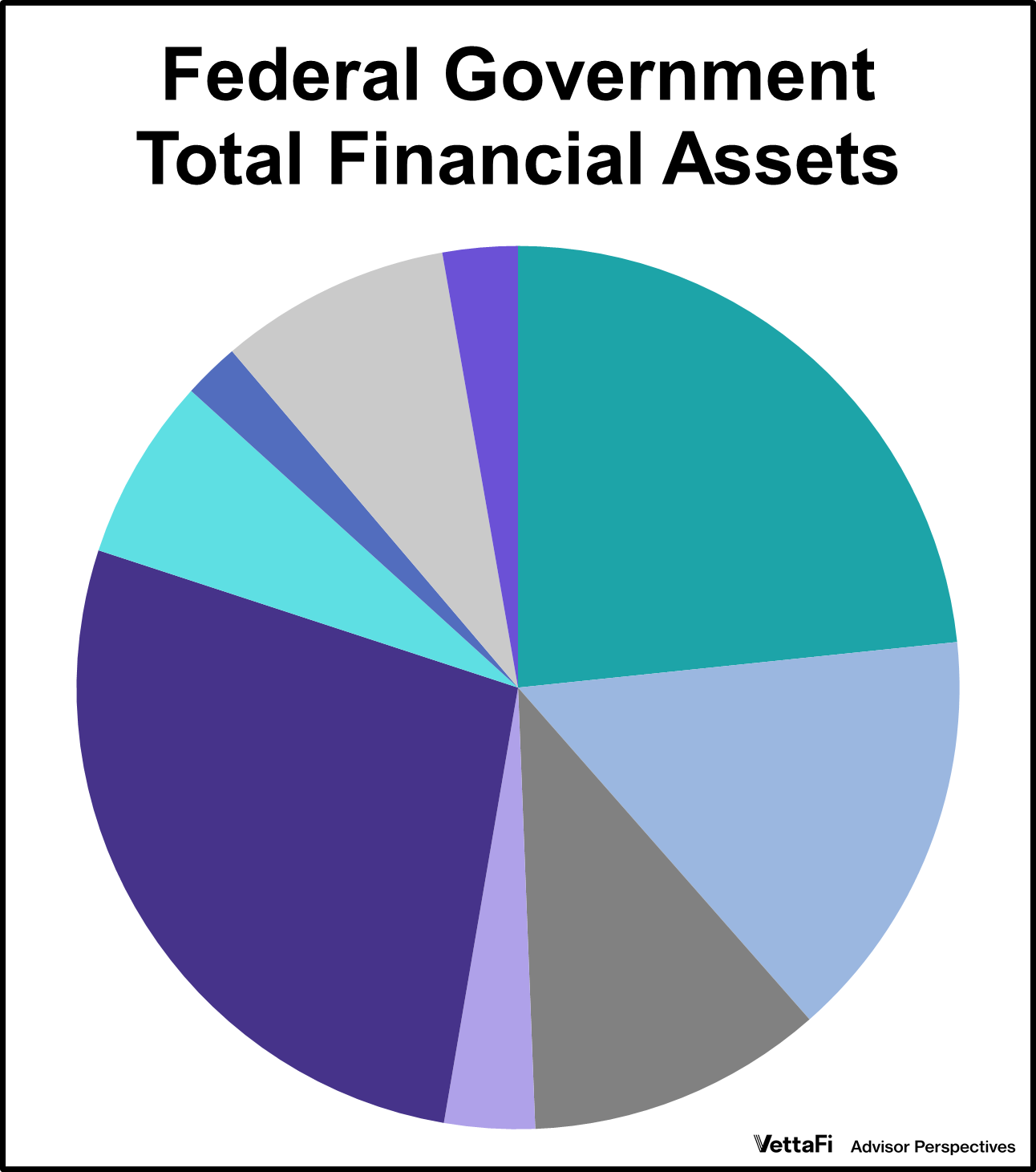
When we think of the U.S. government's finances, we often focus on the massive debt. But what about the assets? What does Uncle Sam actually own, and which asset is the largest?
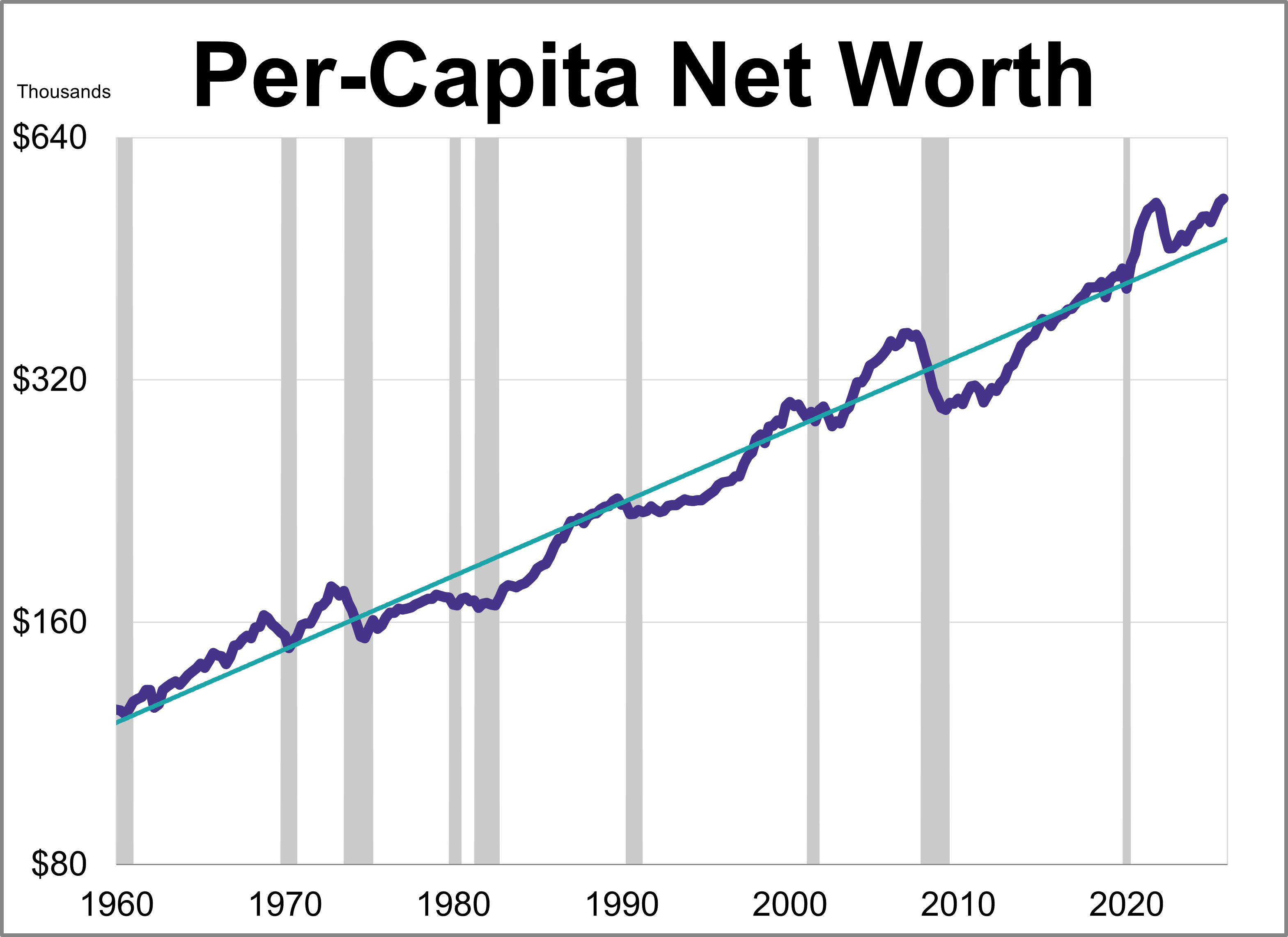
How much wealthier are Americans since the Great Recession? While a look at the headlines shows a staggering 211% increase in household net worth since 2009, adjusting for inflation tells a much different story.
Recent market performance for US consumer-discretionary stocks has been so ugly that it may be a great time to buy.
Let me lay out the case for what should be the answer. Today we will explore how long this condition could last and what we can do about. I think it will make for interesting letter.
Markets have already priced the most visible consequences of a disruption in the Strait of Hormuz. Oil prices have surged, gasoline prices are moving higher, and inflation concerns have re-emerged. The initial market reaction has been the most visible but least revealing.