In economic news other than that from Jackson Hole, the week included a new record high for margin debt and more.
For much of this month, Wall Street traders piled into stocks and bonds, betting that the Federal Reserve was finally ready to start cutting interest rates again. All they were waiting on was the green light from Jerome Powell to keep the rally going.
Treasuries soared and traders added to bets on a September interest-rate cut after Federal Reserve Chair Jerome Powell indicated a reduction may be warranted to support the labor market.
Investors are clamoring to buy the one kind of security that few companies want to sell now: long-dated bonds.
Bond investors are heading into Friday’s much-anticipated Jerome Powell speech largely expecting the Federal Reserve chair will indicate policymakers will start cutting interest rates next month.
Following the softer-than-expected July jobs report, the money and bond markets have fully embraced the narrative that a Fed rate cut will be coming at the September FOMC meeting.
Whether it’s the ongoing push by asset managers to expand reach into them, or the new regulatory muscle behind that effort (the recent executive order around private assets in 401(k)s is an example), there’s serious effort being put into broadening access to this category.
In this video, Chuck Carnevale—co-founder of FAST Graphs and known as Mr. Valuation—shifts focus from growth stocks to income investing in this video of 6 dividend growth stocks. He explains how dividend-paying stocks can be a powerful strategy for investors seeking steady income, particularly in retirement, and why they differ from growth or total-return approaches.
On the latest ETF 360, Kirsten Chang spoke to John Lawlor, managing director, portfolio manager/trader from MacKay Shields about the state of munis. Additionally, they discussed the NYLI MacKay Muni Intermediate ETF (MMIT).
Uncertainty remains high, but so are bond yields, leading to attractive opportunities for active investors, in our view.
Ample volatility and shifting rate expectations have sent investors on an avid search for stability and diversification.
Last week, the S&P 500 had a rally that took it to three straight record highs but the momentum cooled as economic data painted a complex picture. Read through the major economic news from the week of August 11th-15th.
There’s a new fox sniffing around the private credit henhouse. Last year, Apollo Global Management Inc. engineered an innovative trade for its insurance arm Athene Holding Ltd., with the help of an obscure Luxembourg-based firm. It’s fascinating and troubling in equal measure.
Traders are piling into one specific options wager that relies on a dovish Federal Reserve slashing interest rates by over a quarter-point next month.
We received a slew of economic data this past week, but the true market mover lies ahead this Friday: Chair Powell’s upcoming Jackson Hole address.
In this article, Russ Koesterich discusses his latest recommendations around portfolio positioning in anticipation of a potentially more volatile fall.
A portfolio of longish-term bonds held to a shortish-term horizon did appear to benefit from a drop and suffer harm from a jump in interest rates. This article’s purpose is to sharpen that observation and remove the ambiguity.
Lauded for their yield, credit quality, and of course, their federal tax-free income, municipal bond benefits are also extending into the containment of tariff contagion.
Investment assets – things such as stocks, bonds, companies, and buildings – have a value, which is sometimes referred to as their “intrinsic value”: what the asset is “worth” at a point in time. This value is subjective. It can’t definitively be found anywhere – not even by AI, as far as I know – and opinions will differ as to what it is.
On the latest edition of Market Week in Review, Global Chief Investment Strategist Paul Eitelman recapped the stock market’s latest record-setting run. He also dug into the health of the global economy and the latest inflation numbers from the United States.
Elevated yields and conservative balance sheets are helping high yield stay resilient amid trade uncertainty.
Despite triple the amount of tariff income, the July budget deficit surged to $294.14 billion, 19 percent higher than a year ago, according to the Monthly Treasury Statement.
The latest wholesale inflation numbers in the U.S. took some of the wind out of Wall Street’s sails this week, but they haven’t dulled investor enthusiasm for gold.
Foreign investors are flooding into South Africa’s government bond market to take advantage of one of the best emerging-market trades of recent years.
While stock indexes generally give a broad idea of what is happening, they can greatly overlook the performance of many individual stocks.
U.S. economic growth slowed decisively in the first half of the year amid concern about rising tariffs, although corporate fundamentals have remained strong.
High yield bonds have historically delivered attractive long-term returns, and since the Great Financial Crisis they have also become higher quality, as weaker borrowers have departed the sector for the private credit and leveraged loan markets.
For the second quarter of 2025, most energy infrastructure companies maintained their payouts, with MLPs largely providing sequential growth.
In this video, Chuck Carnevale, co-founder of FAST Graphs, aka Mr. Valuation discusses Growth at a Reasonable Price (GARP) and presents five small- to mid-cap growth stocks at a reasonable price he believes are worth researching.
Last week, the S&P 500 had a rally that took it to 3 straight record highs. The momentum cooled as economic data painted a complex picture.
July’s Consumer Price Index (CPI) report showed headline year-over-year inflation remained steady at 2.7%, below the anticipated level of 2.8%.
Traders are snapping up risky assets of all stripes in the hope that falling US interest rates will add rocket fuel to an economy that’s so far been able to withstand the effects of Donald Trump’s trade war.
Economic resilience allowed the Fed to remain in wait-and-see mode in July, but July’s non-farm payroll report may cloud the horizon.
As investors re-evaluate their allocations to US assets, we think they should consider euro-denominated bonds.
Income diversification is necessary considering that rate cuts could be ahead. One area that could help bridge the gap — private credit.
This video examines two key market valuation metrics: the Trailing Twelve-Months (TTM) P/E ratio and the more reliable P/E10 ratio. Using data through July 2025, we explore their differences, historical context, and what they reveal about the current market's valuation.
US short-dated bonds yields fell to their lowest levels in more than three months, reflecting conviction among traders that the Federal Reserve will cut interest rates in September.
The ETF landscape continues to grow and change, and this time, it’s Neuberger Berman adding to the space.
Chuck Carnevale, co-founder of FAST Graphs (“Mr. Valuation”), reviews six regional banks that are all Dividend Champions—companies that have raised their dividends for at least 25 consecutive years.
The first full week of August offered a concise lesson in how quickly the policy calculus can shift when both politics and data align. Equity markets wobbled after reports that Governor Christopher Waller, not Kevin Warsh, is now the front runner for the next Fed chair.
Now that we are six months into the second Trump administration, it is worth revisiting the economic philosophy that I refer to as “TrumpBessenomics.” The term captures the fusion of Donald Trump’s populist, growth-oriented agenda with the strategic and data-driven approach of Treasury Secretary Scott Bessent.
The U.S. economy is slowing down but don't expect a hard landing.
The central theme of “Our Dollar, Your Problem” is the global dominance of the U.S. dollar and what might dethrone it in the future. Rogoff’s concern about U.S. government debt and its possible effect on the value of the dollar is warranted.
As the specter of stagflation ripples through equity markets, investors are zeroing in on the upcoming consumer inflation report to see how close the dire economic scenario is to becoming a reality.
Jack McIntyre’s US global bond fund, aided by a slumping dollar, is posting one of the best performances in its almost two decades of existence. His challenge is convincing investors that it’s more than just a flash in the pan.
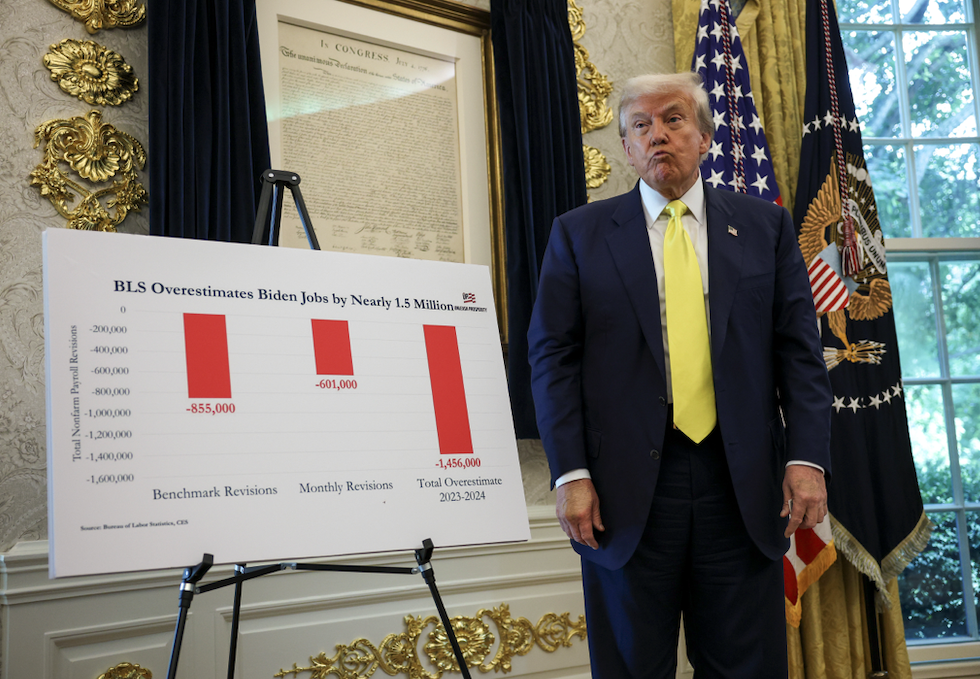
The Fed has long been criticized for reacting too slowly to economic developments, an inevitable consequence of relying on lagging government data. Now the Fed and BLS are likely to face even more pressure to catch up.
Despite inflation pressure, tariffs and immigration policy are leading to slower job growth and consumer spending, which may prompt the Federal Reserve to cut interest rates soon.
Gold inflows into ETFs through the first half of 2025 hit levels not seen since the pandemic, and that trend continued through July.
The likelihood of recession has declined during our three-year forecast period, as such we increased equity exposure.