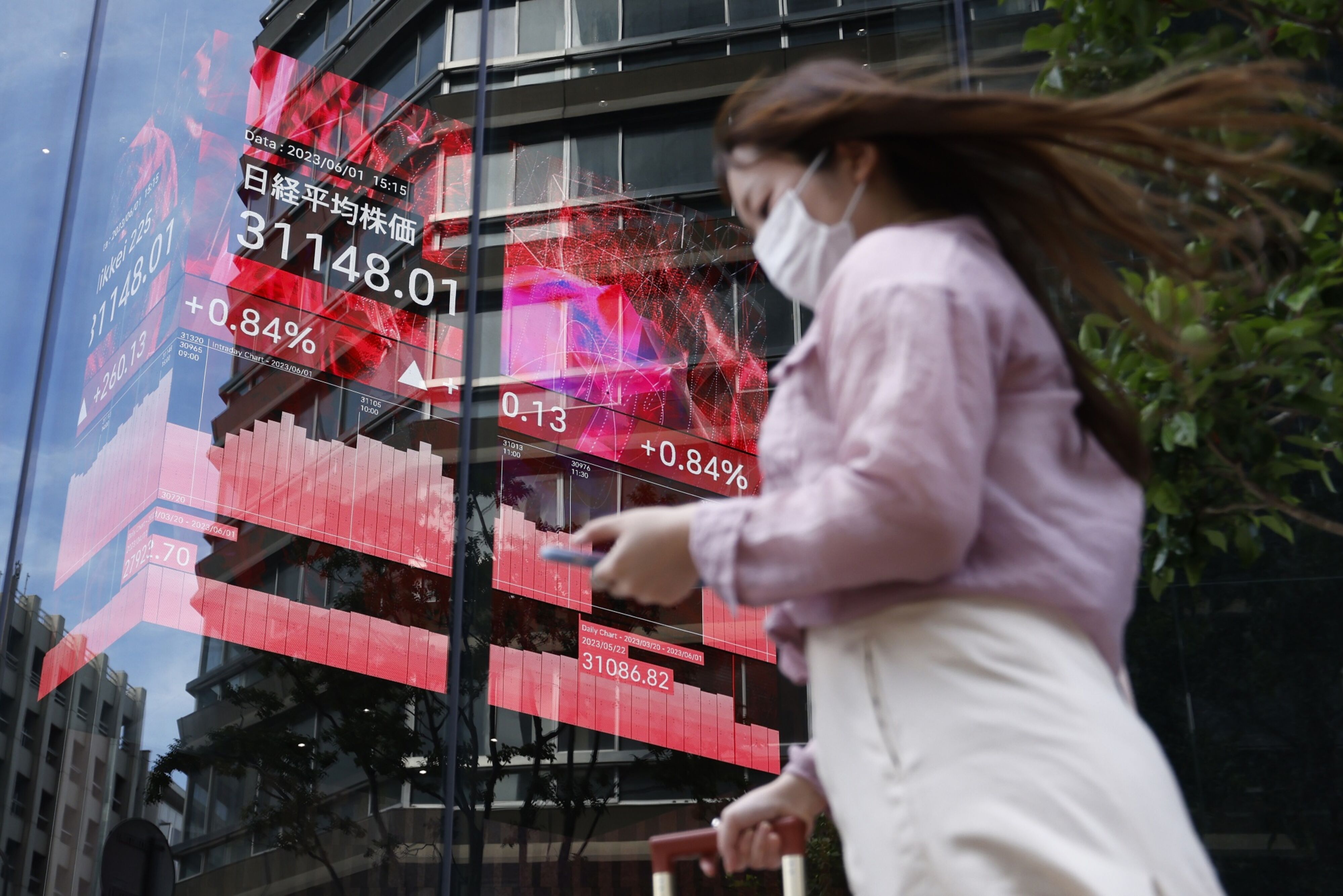
Signs are emerging that Japanese retail investors are getting on the equity bandwagon after having largely missed out on a historic rally.
To provide some insights into what is going on with AI, we use data pulled from LOGICLY to gain an in-depth perspective on the three-month performance of the two largest AI-focused ETFs.
While we agree with the enthusiasm for AI that has helped the market rally, investors may be better served by patience than by chasing recent risk-on sentiment.
The dollar has defied predictions of a prolonged slump since at least the beginning of the year but top money managers say it’s now on borrowed time as US exceptionalism wanes.
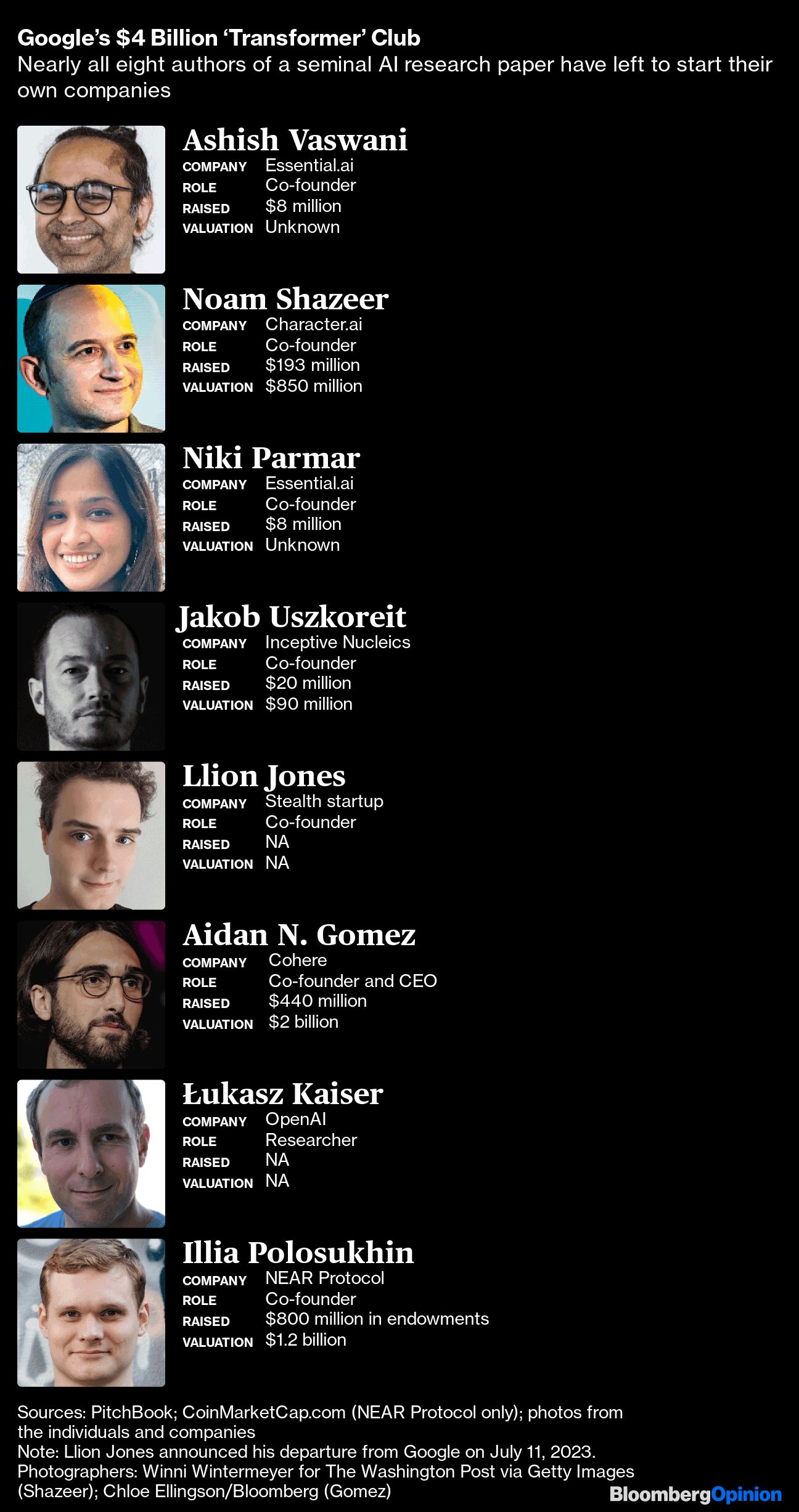
It seems fitting that one of Google’s most important inventions — one that would come back to haunt the company — was initially devised over lunch.
Silicon Valley venture capitalists are racing to get into artificial intelligence companies — including investors who once bet big on crypto.
Millions of young Americans will face the end of the student loan payment moratorium this summer. Why is this happening now, after a three-year break from payments?
What a year it has been for financial markets. There have been several negative factors in play, including a high-single-digit inflation print, the ongoing war in Ukraine, and several regional bank failures. Nonetheless, the S&P 500 finished the second quarter up 17 percent for the year. Go figure!
In this article, we will explore the performance and characteristics of key ETFs representing the semiconductor and technology categories, respectively, using advanced data analytics tools provided by LOGICLY.
Municipal bonds posted positive absolute and relative performance in June. Modest primary and secondary supply was outpaced by improved demand. While July has historically been a top-performing month, we maintain some near-term caution.
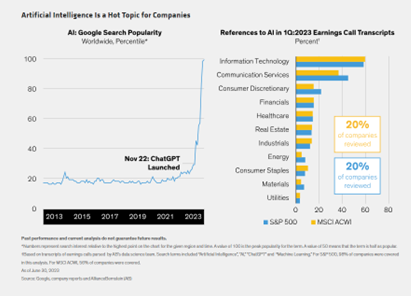
Artificial intelligence has quickly become a hot topic around dinner tables and in corporate boardrooms. But delivering business benefits from AI will take time. Investors should proceed with caution.
Chief Economist Eugenio Alemán and Economist Giampiero Fuentes note that while it is taking longer to bring inflation down, the Fed will continue to conduct monetary policy to reach its target rate.
Against the backdrop of the funds' goal of long-term capital appreciation, we aim to generate excellent financial performance that is fueled in part by the strategic sustainability focus of the companies in which we invest.
VettaFi’s vice chairman Tom Lydon discussed the ALPS Alerian MLP ETF (AMLP) on this week’s “ETF of the Week” podcast with Chuck Jaffe of “Money Life.”
It will be increasingly important to consider the best ways to connect with and support Gen Z as they make some of their biggest financial decisions.
Schwab Asset Management is seeking to draw investors to its high-yield bond exchange-traded fund with one of the lowest fees in the industry, even as rising rates and default fears rattle the asset class.
Wall Street is finding ways to trade the “special rebalance” of the Nasdaq 100 as the overconcentration of mega-cap firms breaches an upper limit in the tech-heavy gauge. They’re investing in QQQE.
Cathie Wood’s Ark Investment Management LLC pared its holding of Coinbase Global Inc. for the first time in almost a year on Tuesday.
Formed in 2017, the firm is headed by ETF visionaries Bruce Bond and John Southard, founders of PowerShares ETFs, one of the largest ETF providers in the world.
Drawing on data from LOGICLY, this article will dive into the Treasury ETFs that boast the highest YTD inflows, shedding light on some of their standout features and key characteristics.
Tech giant Microsoft is on a mission to use technology to solve some of the world’s most pressing problems.
Factor investing can help drill through broad sector labels to help investors better understand past performance and expected returns.
Global equity markets have had a very strong first half of the year, but it’s a pretty unusual time because, on the one hand, equities are contending with a pretty difficult macro backdrop.
Wall Street is divided on whether a new bull market has begun, and it's easy to see why based on the divergent performance of the major U.S. indices.
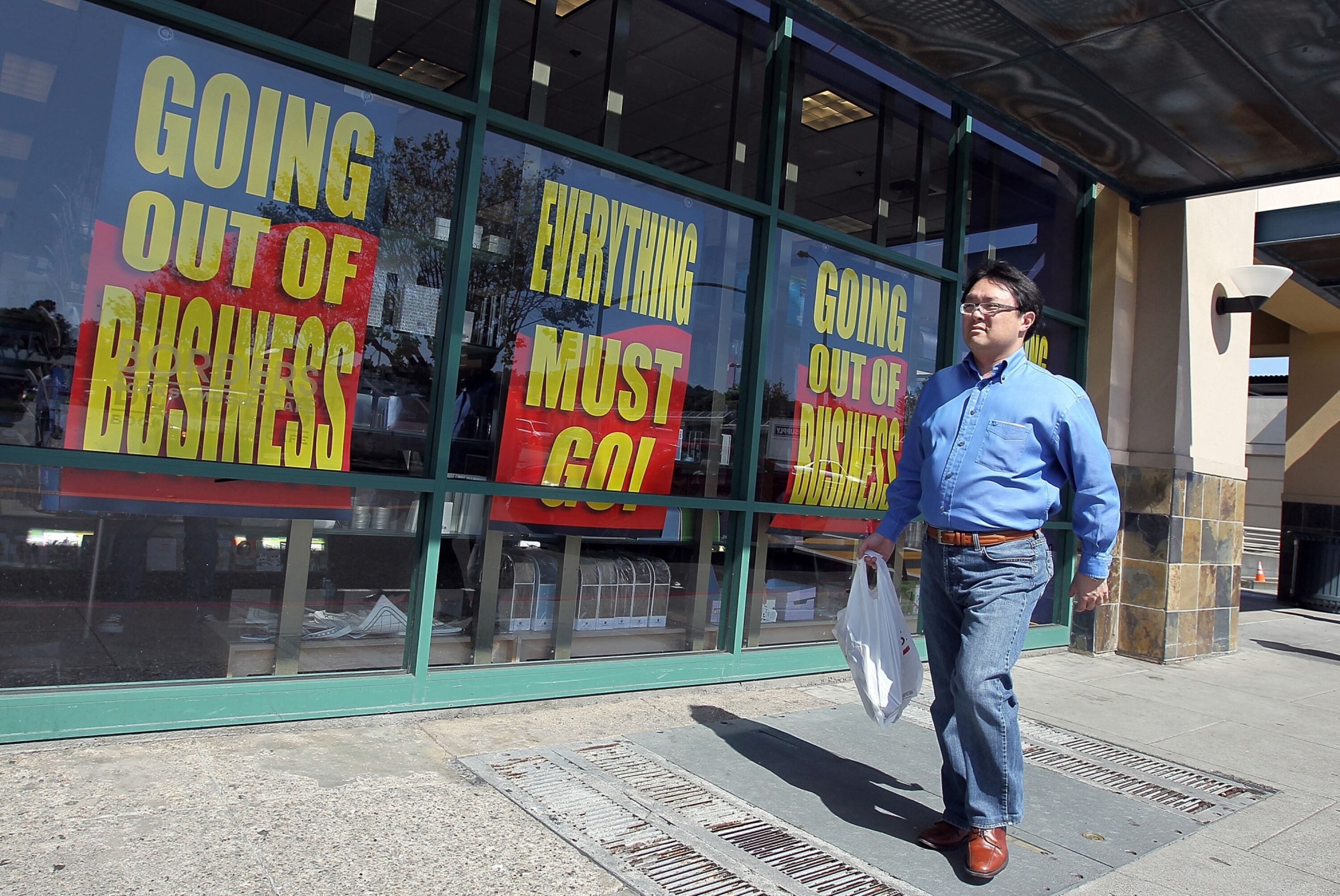
Business bankruptcies are surging around the world, in some countries reaching volumes not seen since the aftermath of the 2008 financial crisis.
Standard Chartered is ramping up its bullish Bitcoin prediction, targeting as much as $120,000 by the end of 2024 — almost quadruple the current price — as increasingly cash-rich miners reduce sales of the token.
Investors are once again flocking to the certainty — and relatively high yields — of cash as conviction grows that the Federal Reserve will continue raising interest rates.
BlackRock Inc. expects the model-portfolio realm of money management to grow to a $10-trillion business over the next five years.
America’s biggest tech companies have become too large even for the stock index tracking America’s biggest tech companies.
Economic indicators are released every week to help provide insight into the overall health of the U.S. economy. In this article, we cover three of the most important economic releases from the past week: the BLS employment report, job openings, and labor turnover (JOLTS), and the ADP employment report.
Higher expected corporate earnings mask broad pressure under the surface. We see more earnings pain ahead and look for opportunities at the sector level.
VettaFi’s Dave Nadig checks-in on some of the hottest ETF topics over the past several years. Cambria’s Meb Faber discusses the firm’s continued growth and spotlights the Cambria Shareholder Yield ETF (SYLD). Strategas’ Todd Sohn provides the 10 ETFs he’s using to track market conditions in the second half of 2023.
In his latest memo, Howard Marks discusses five market calls he’s made during his career. He argues that investors seeking to know the market’s likely direction should focus on taking its psychological temperature and understanding the nature of cycles. Just as importantly, they should learn to control their own emotions and have the humility to know when not to make a call.
You may be able to add up to 200 basis points of excess return when a fund’s handicaps are applied as supplemental assessment to Morningstar gold-rated funds.
There are days when our trade press is even more misleading than the consumer rags.
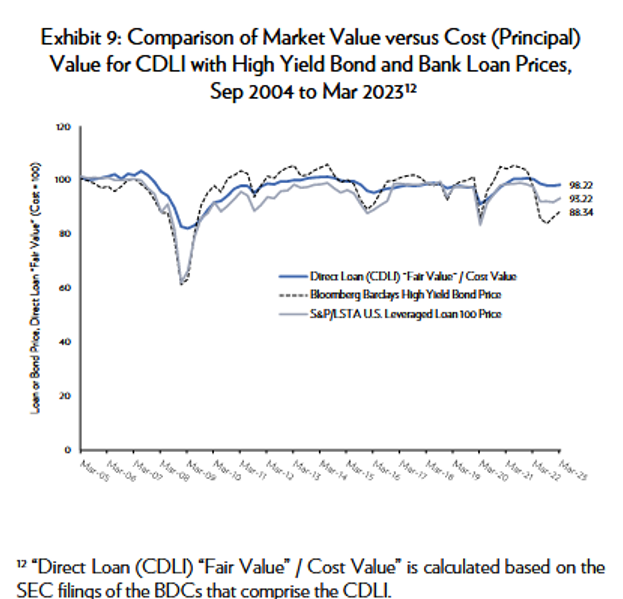
Investors seeking higher yields and relatively low risk, and are willing to sacrifice liquidity, will find attractive opportunities in interval funds that invest in senior-secured, sponsored middle-market loans.
A strategy of stripping China out of emerging-market portfolios is fast gaining traction as stock managers seek to reduce the risk of investing in a country that faces unique policy and geopolitical headwinds.
A pair of exchange-traded funds tracking corporate credit saw a nearly $2 billion flight after data underscoring jobs strength solidified bets the Federal Reserve will resume its interest-rate hikes.
I discuss recent regime changes and reveal findings from the SPIVA scorecard and Morningstar’s U.S. Active/Passive Barometer.
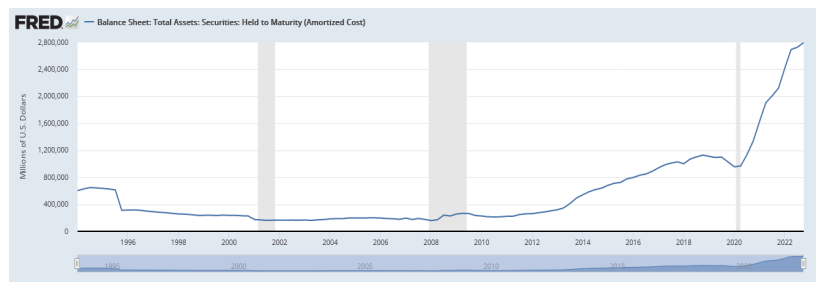
Tucked away in hours of congressional testimony by Federal Reserve Chair Jerome Powell last month was an admission that the central bank was blindsided by the impact of shrinking its balance sheet four years ago.
There's more pain on the way for the S&P 500 as profit warnings and fears of higher interest rates combine to threaten the key US stock indicator, according to the latest Markets Live Pulse survey.
A year ago this week, the US government told us that inflation as measured by the Consumer Price Index soared to 9.06% in June 2022 from a year earlier, the highest reading since 1981.
Shifting the risk-reward ratio in your favor.
Several ETFs offer targeted exposure to the burgeoning Indian economy. In this article, we will dive into four top-performing India ETFs, exploring their key characteristics.
Given attractive yields and strong credit conditions, we have a positive view on the municipal bond market for the second half of the year.
Diversity, equity, and inclusion (DEI) practices drive growth and groundbreaking innovation. As business change accelerates, deploying intentional DEI actions develops diverse thinking and new ideas that can break new ground and build business resiliency.
A conversation with Dave Nadig, Financial Futurist at VettaFi and Elisabeth Kashner, CFA, Director of ETF Research & Analytics at FactSet on ETF capital markets, regulation, and adoption.
One of the hardest parts of economic forecasting is separating what we expect from what we want.
The second half of 2023 has officially begun, meaning it’s time for us to reflect on the commodities market so far this year. Lithium increased by 10.81%, making it the best-performing commodity and one of only two that recorded a positive return, the other being gold.
Corporate credit has failed to live up to lofty expectations of double-digit returns so far this year, fueling a string of bearish bets into the second half of 2023.