Nearly a year ago, I – provisionally and with qualifications – declared I-Bonds to be the fabled “free lunch” due to the remarkable 9.62% rate they were paying. That rate came down – a lot – so should you still buy them?
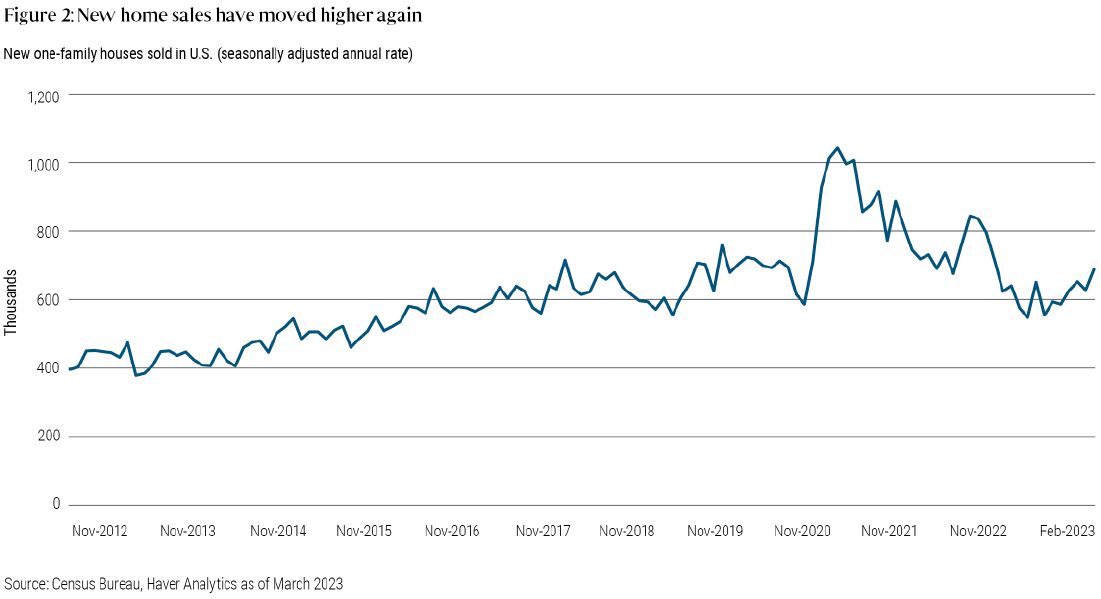
Although affordability remains an obstacle, recent data offer reasons to be more constructive as broader conditions still appear supportive of home prices.
Whether it’s high inflation or greater market volatility, Monte Carlo analysis will reveal how those uncertainties impact a client and provide peace of mind about their plans.
We think the U.S. debt limit showdown will spark renewed volatility in markets. That risk reinforces why we stay invested and cautious by going up in quality.
The risk of a US debt default is greater than it’s ever been, threatening to tip global markets into a brand-new world of pain. For investors, there are few places to hide other than the oldest hedge in the book: gold.
Technological progress in the last two centuries, and especially in the recent past, has been nothing short of amazing. So why are we so unhappy? Why aren’t we all rich?
As the credit market grows more stringent, investors should consider high-quality, longer-term bonds. Here are some fixed-income strategies.
When planning for retirement, taking even the smallest risk can be life changing. Discover why financial advice during retirement planning is crucial with Harold Evensky.
Depending on your financial situation, you may qualify for a subsidized loan or an unsubsidized loan. Here’s the breakdown of subsidized and unsubsidized loans, along with how to get each of them.
Political brinkmanship in Washington adds to concerns about the economy.
There is a disconnect between the Fed’s message regarding taking a pause in hiking interest rates this year and the market’s expectations of rate cuts.
The Banking emergency arising with mid-sized, regional banks is a direct consequence of policy decisions. Examine the causes of bank failures in 2023 and the potential for larger contagion.
Portfolio manager John Paul Lech explores the defining changes of the last three years. Here he explains how he is navigating the new era of rising interest rates and financial tightening.
Saving for college can be daunting. Many parents don’t know how prepared they will be for college costs in the future. Parents face the question of how much to save and which funding vehicles to use.
The longer-term risks of sticky inflation, monetary policy changes, and slowing economic growth continue to challenge the markets. Within this uncertain backdrop, Franklin Income Investors’ Ed Perks shares his latest outlook and the investment opportunities he sees across fixed income and equities.
Join the thought leaders at WisdomTree and VettaFi for a robust discussion about the challenges and opportunities available in the fixed income space.
So far this year, the ETF industry has witnessed as much sound as fury. While we haven’t seen the record-breaking flows of past years, we have seen plenty of launch and closure activity.
Markets want to believe policy interest rates will soon fall—but inflation and growth data tell a very different story, argues Franklin Templeton Fixed Income CIO Sonal Desai.
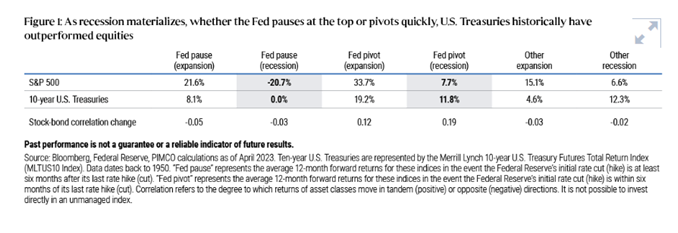
An allocation to fixed income may help investors navigate a potential recession as well as uncertainty around the Federal Reserve’s policy trajectory.
Fixed-income markets are likely to be volatile given macro-driven risks and the higher cost of borrowing.
The Cboe's new 1-Day Volatility Index, launched on April 24, and was built to measure the expected volatility of the S&P 500 over the next day of trading. VIX1D is a response to a surge in the use of extremely short-dated options.
After moderate gains in March, markets continued to rally in April. U.S. markets were up by low single digits, while bond markets were moderately positive. International markets were mixed, with developed markets showing modest gains while emerging markets ticked down.
Doug Drabik discusses fixed-income market conditions and offers insight for bond investors.
Economic reports and corporate data last week highlighted the cautious stance of corporations, contrasted against a resilient consumer, who continues to be propped up by strong demand in the labor market and increasing wages.
When March’s bank failures ignited a historic bond rally, few, if any, made more money than Josh Barrickman. His army of funds gained roughly $26 billion, the equivalent of more than $1 billion in paper profits every single trading session.
Financial cracks from rate hikes have led to jitters over commercial real estate. Yet granularity is key. We see opportunities in some U.S. industrial properties.
With regional bank volatility grabbing headlines, CIO Larry Adam looks at what this activity means for the economy and asset classes.
If the Fed pauses, will that revive risk assets? Tom Nelson and Miles Sampson of Franklin Templeton Investment Solutions weigh in on the investment implications of the latest US central bank actions.
For this edition of Bull vs. Bear, Karrie Gordon and Nick Peters-Golden debated the long-term investing case for gold ETFs. Have the yellow metal’s fundamentals fundamentally changed?
Research has shown that investing in IPOs has been a bad deal – you lose money compared to a comparable index fund. But a new paper shows that certain VC-backed IPOs deliver alpha for investors.
The biggest risk to a planner/client relationship lasting through the client’s lifetime can be the adult children the client has appointed to hold their power of attorney.
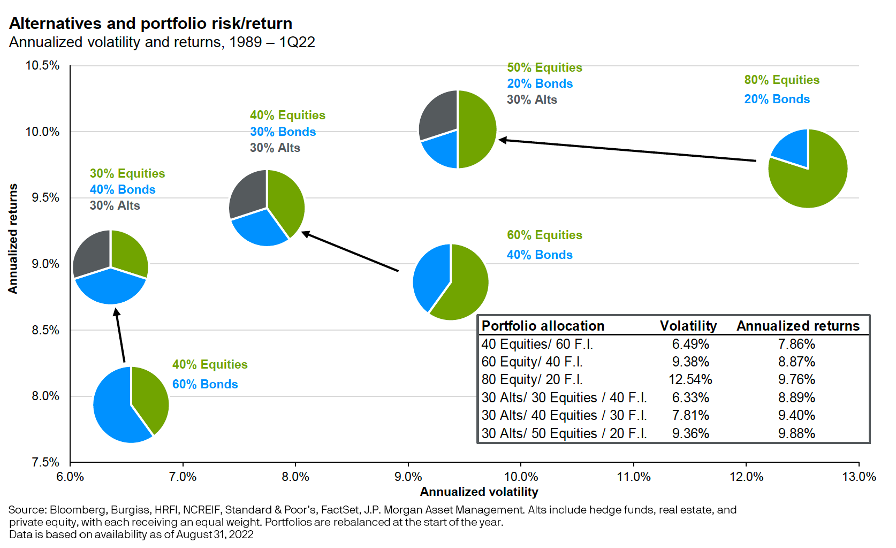
Investments in a selection of private markets – also known as “alternatives” – reduced the volatility of portfolios in 2022.
Taking risks is no longer necessary to make a return on your savings.
Investors are bailing on preferred shares at a historic clip because of the growing concern about the health of US regional banks.
Hedge funds supercharged bearish Treasury bets to historic levels just days before the US banking turmoil took a turn for the worse and spurred a stampede for the world’s safest assets.
A direct repercussion of higher central bank policy rates is on the cost of capital for corporations and other issuers of debt. However, not all issuers feel the impact of higher rates at the same time, and we’re more cautious on asset classes that are experiencing higher interest costs sooner.
If there was a message the Federal Reserve (Fed) wanted to make clear after the end of the Federal Open Market Committee (FOMC) meeting on May 3, it was that it reserves the right to remain hawkish.
If you act quickly, you can prevent your mistake from ruining your credit score and jeopardizing your financial future.
Japan’s business and government leaders have undertaken efforts to revitalize the country’s economy. Dina Ting, Franklin Templeton ETFs’ Head of Global Index Portfolio Management, discusses some of these positive developments.
Berkshire Hathaway Inc. Chief Executive Officer Warren Buffett made his name by being greedy when others were fearful and fearful when others were greedy, dispensing folksy wisdom along the way.
The federal Pell grant provides financial assistance to low-income students. Since it’s a grant instead of a loan, it’s essentially free money that students can use to cover their college costs.
It is not yet clear when or if we’ll have a recession in 2023— but it has certainly been a challenging market environment, and with dislocation comes opportunity.
An investment in Comcast today offers the opportunity to more capital appreciation with a margin of safety, a dividend yield approaching 3%, and is growing rapidly.
Some of the world’s biggest asset managers are buying up European corporate bonds — seeing the region as a safer bet as turmoil engulfs US regional banks.
Anne Walsh, CIO of Guggenheim Partners Investment Management, joins Bloomberg TV from the Milken Global Conference to discuss the implications of ongoing issues in fixed income and how capital rationing favors private credit.
Along with identifying your goals and time horizon, assessing risk is a key part of building a holistic financial plan. And while affluent investors generally have higher risk tolerances, determining their individual risk profiles isn’t straightforward.
Investment Strategist Devon McKenna believes intermediate-maturity corporate bonds can offer a fresh value proposition that may help defend the segment against rallying rates and widening spreads.
I want to write a bit about artificial intelligence from the standpoint of a market person who knows little about technology.
Floating-rate bank loans tend to do well when conditions are just right: the Federal Reserve is raising rates and the economy is growing. But such conditions typically don’t last long.
With unanimity, the Federal Open Market Committee raised the Fed funds rate by 25 basis points in May and signaled that further tightening will depend on various economic factors.