The Fed downshifted to smaller rate hikes but isn’t close to done.
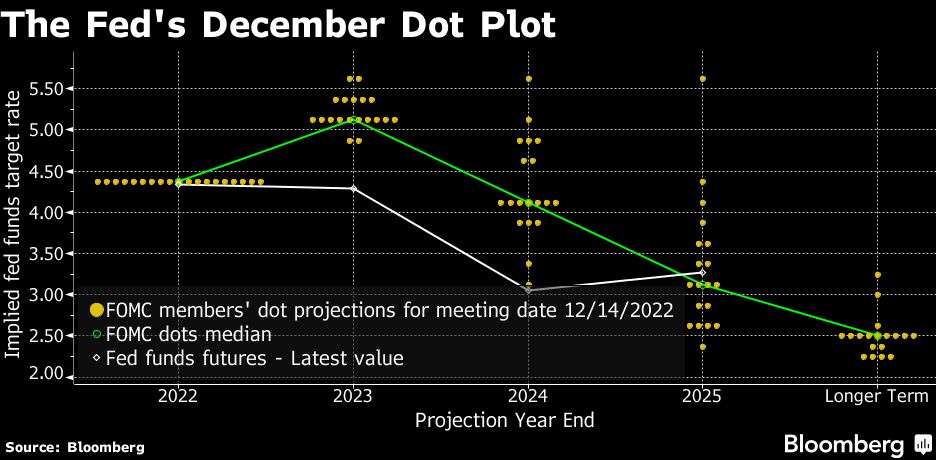
The Federal Reserve downshifted its rapid pace of interest-rate hikes while signaling that borrowing costs, now the highest since 2007, will outstrip investors’ expectations as the central bank works to rein in inflation.
In his latest memo, Howard Marks writes that the investment world may be experiencing the third major sea change of the last 50 years. Events in recent years – especially the spike in inflation and the Federal Reserve’s response – appear to have caused a reversal of the market conditions that prevailed after the Global Financial Crisis and for much of the last four decades. Howard discusses what this potentially new era could mean for lenders, especially bargain hunters.
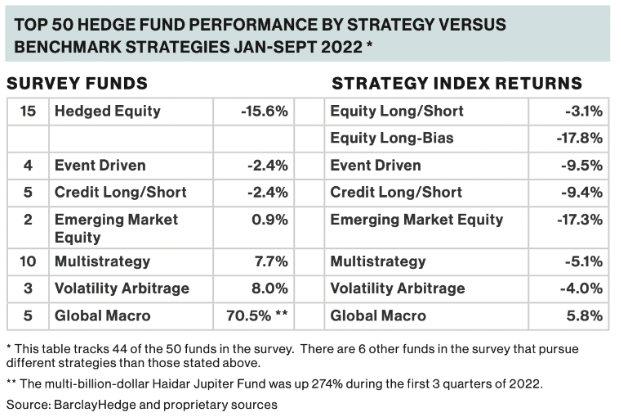
Global Investment Report's 3Q Update of the 2022 hedge fund survey.
Falling prices for cars and holiday discounting contributed to softer U.S. inflation, creating more room for the Fed to potentially dial back its hawkish stance.
Things are looking up for people who are close to retirement, according to a Morningstar report published Monday.
Professional speculators with billions in bearish trades on the line endured a rough ride after Tuesday’s report on US consumer prices brought the latest sign that the Federal Reserve is making progress in its battle against inflation.
The world’s biggest bond market got the ammo it needed from a below-forecast consumer price figure to fully lock in a Federal Reserve downshift in their policy-rate tightening pace, though not enough to wave an all clear sign for Treasuries.
The battle against inflation is far from over, but markets can’t be blamed for rushing to judgment after an unequivocally positive consumer price index report Tuesday.
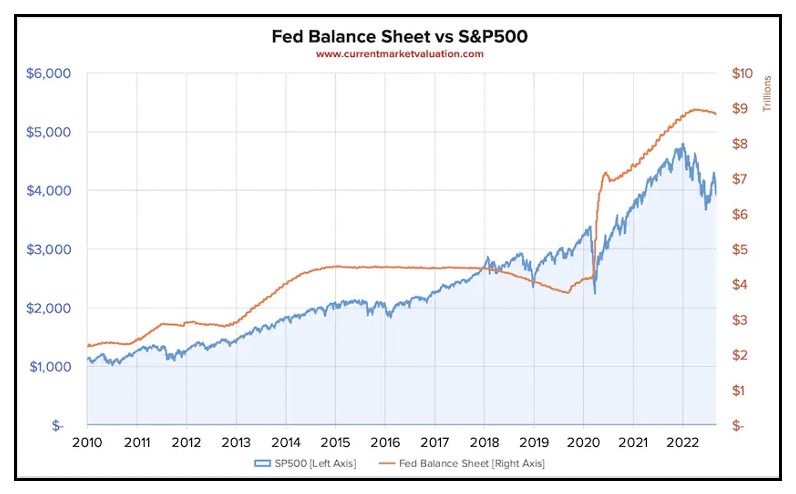
Yield is set to be a more important component of total return for investors during the next few years as the “Fed Put” exerts less influence on markets.
Goldman Sachs Group Inc., UBS Group AG and Deutsche Bank AG are among banks profiting as the growth of Brazilian hedge funds forces them to look overseas to fuel returns.
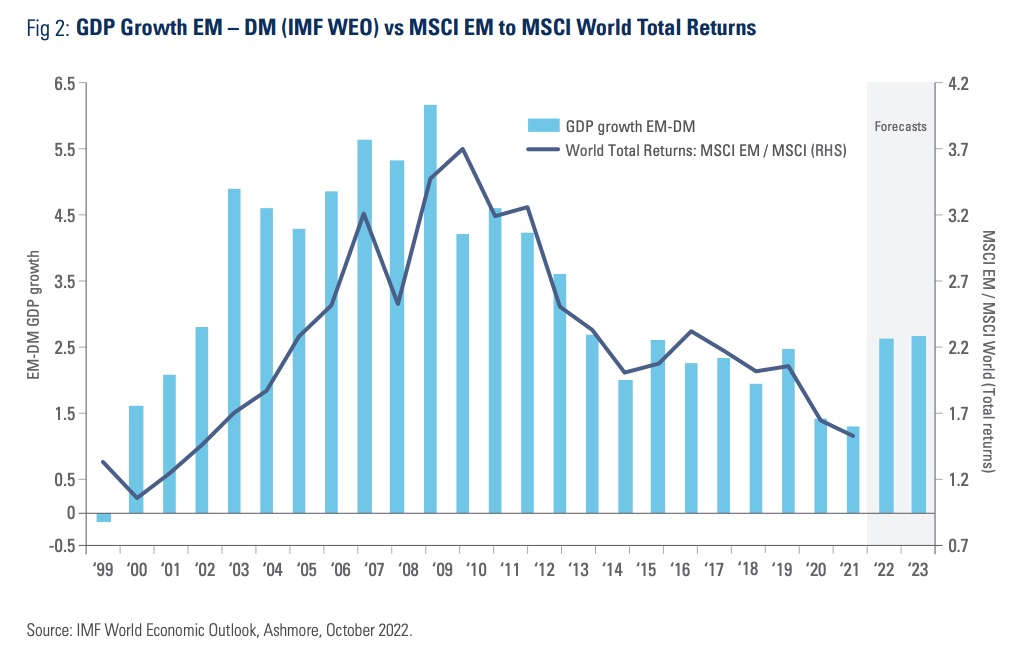
Emerging Markets (EM) assets were subject to three strong headwinds in 2022, namely, China’s zero Covid-19 and real estate crisis, aggressive interest rate tightening from the US Federal Reserve (Fed), and the Russia invasion of Ukraine.
Federal Reserve officials are set to increase their 2023 unemployment projections for a third straight time amid warnings that their inflation-fighting campaign increasingly risks tipping the US economy into a recession.
The chorus of buy calls on government bonds is growing louder but BlackRock Inc. begs to differ.
President Joe Biden’s administration outlined a new rule in October whereby the Department of Energy could buy oil for future delivery — most likely 2024 — at fixed prices to refill the Strategic Petroleum Reserve.
The current market environment is attractive for a covered call strategy.
U.S. stocks are soaring in pre-market trading amid a softer-than-expected November consumer price inflation report.
The U.S. Superbubble, as Jeremy Grantham has termed it, featured the most dangerous mix of factors in modern times at the end of last year: all three major asset classes – housing, stocks, and bonds – were critically historically overvalued.
On his first visit to Japan since the pandemic, portfolio manager Shuntaro Takeuchi found new opportunities as well as familiar ones intact.
By any measure, America is failing at that task. For the sake of the economy, society and even the environment, it must do better.
As the US economy veered toward the biggest inflation shock in four decades, investors flocked to the one corner of Wall Street that seemed a sure-fire refuge: Treasuries that provide extra compensation to keep up with rising consumer prices.
The path of US inflation in 2023 may have more surprises in store after a year in which consumers suffered the biggest cost-of-living hit in 40 years, spurring steep interest-rate hikes by the Federal Reserve and spooking investors.
Ahead of this week’s Federal Reserve meeting — and in a year when many didn’t make the right calls — professional investors and do-it-yourselfers are sharply divided over the best way to position ahead of the central bank’s rate decision on Dec. 14.
Rather than feudalism, we are headed toward hyper-capitalism, where each person is an entrepreneur constantly selling his or her services to the highest bidder.
The Fed’s mandate is stable prices and maximum employment.
Since the beginning of October, the market has performed better as a “Fed Pivot” bull case pushed investors into the market
As the super-growth cycle is ending in dramatic fashion, we are already seeing some of the most attractive valuation opportunities in years.
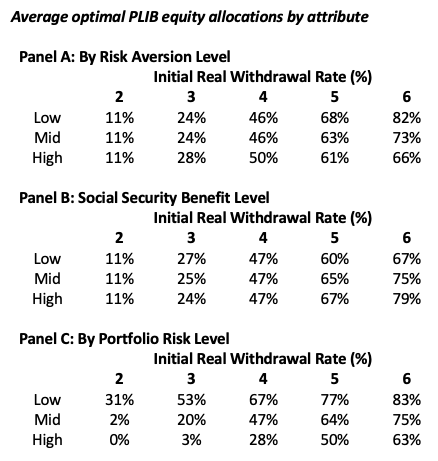
More balanced risk strategies in PLIBs are likely to be optimal (e.g., 40-50% equities), although the ability to personalize the risk level is important based on the household situation and preferences.
Federal Reserve Chair Jerome Powell has history on his side as he and colleagues split with Wall Street over how long interest rates will stay high in 2023.
For the first time in a long time, muni investors may be able to earn attractive yields without having to take undue risk.
The recent escalation in interest rates is squeezing household budgets.
Many have been asking this question since earlier this year, a question that has no easy answer. As economists – us included – continue to forecast the most ‘telegraphed’ recession in history, it is important to point to those things that make this economic cycle very different from past economic cycles.
For a long time, one acronym reigned supreme on Wall Street — TINA, or “there is no alternative,” which was used to talk about the allure of stocks in a low interest-rate environment. But now, BARB — or “bonds are back” — is the new queen.
A near-total ban on imports of Russian crude into the European Union is finally hitting Russia’s oil revenue. Concerns that it would provide the Kremlin with a windfall to fund its war in Ukraine have been confounded — for now.
For some investors, this year’s rout in high-flying technology stocks is more than a bear market: It’s the end of an era for a handful of giant companies such as Facebook parent Meta Platforms Inc. and Amazon.com Inc.
The steady drumbeat of warnings that the American economy is careening toward a recession finally struck a nerve on Wall Street.
Economic news—and market reactions to it—increasingly resemble a tennis game. Spectators follow the ball back and forth, thinking something will happen but usually it doesn’t.
Ole Hansen, respected commodity strategist at Denmark’s Saxo Bank, says it’s possible once markets realize that global inflation will remain hot despite monetary tightening. I believe, as I’ve said before, that gold could climb as high as $4,000.
The pay negotiation season is looking increasingly fraught this year as workers fret about 8% inflation — and their job security.
Mixed news on US inflation reinforced the precariousness of the bond market’s recent gains ahead of next week’s consumer prices gauge and the Federal Reserve’s last rate decision of the year.
Review the latest Weekly Headings by CIO Larry Adam.
The Federal Reserve is set to disappoint Wall Street as it keeps rates at their peak throughout 2023, dashing hopes markets have priced in for rate cuts in the second half and making a recession very likely.
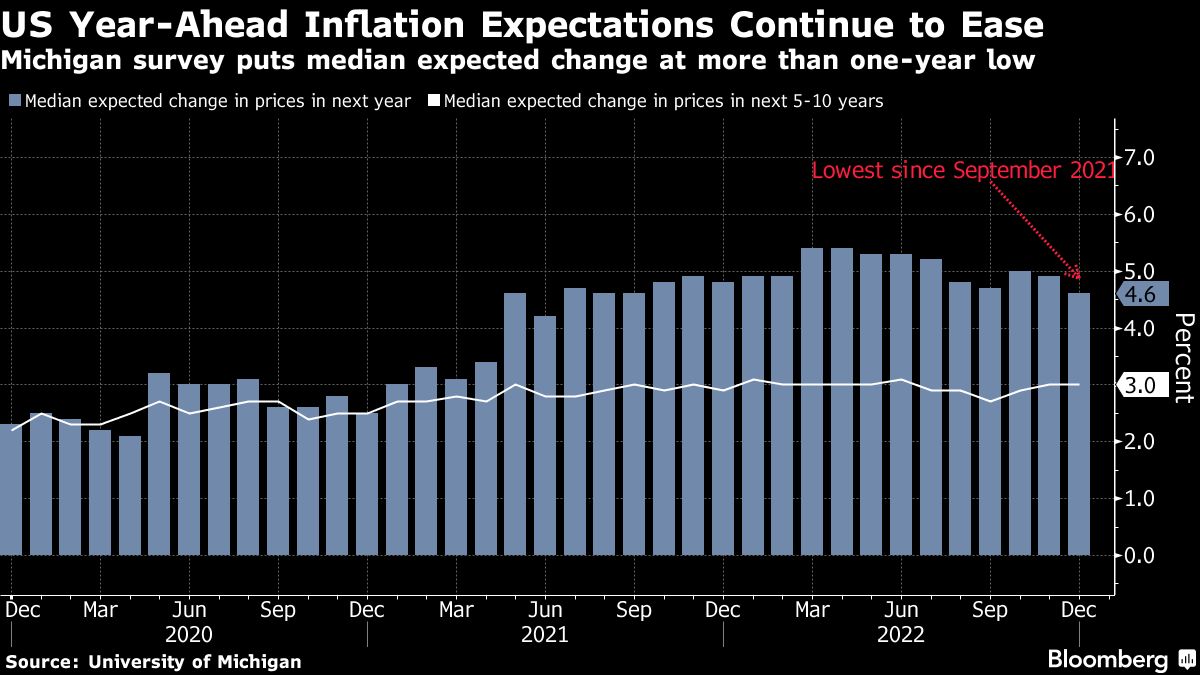
US short-term inflation expectations unexpectedly declined to the lowest level in more than a year and consumer sentiment picked up, helped by falling gasoline prices.
From homeowners renting out spare rooms to publicly traded real estate investment trusts, landlords in colder areas of the US are bracing for their heating costs to soar this winter.
Some of the world's biggest investors predict that stocks will see low double-digit gains next year, which would bring relief after global equities suffered their worst loss since 2008.
Recently, Bank of America discussed the “5-Lessons From The Nifty Fifty.”
It's the end of the world!
U.S. stocks ended higher in a quiet day, trimming some of the week's losses.
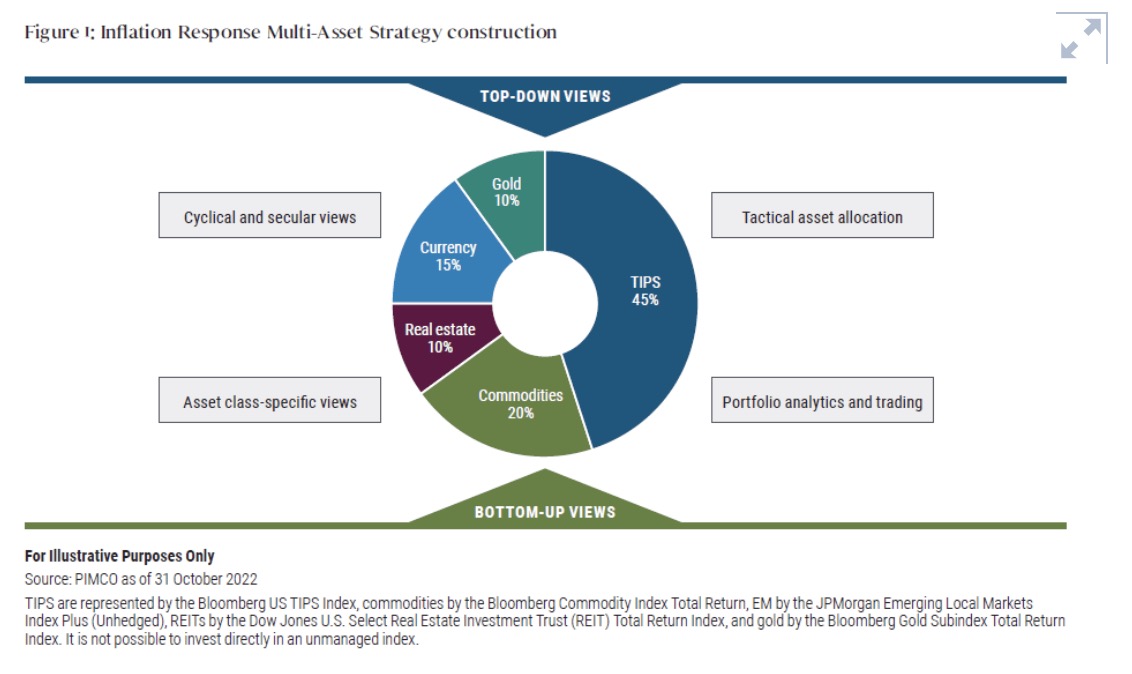
A multi-real-asset strategy may help plan participants preserve and grow purchasing power, enhance portfolio diversification, and mitigate inflation risks.
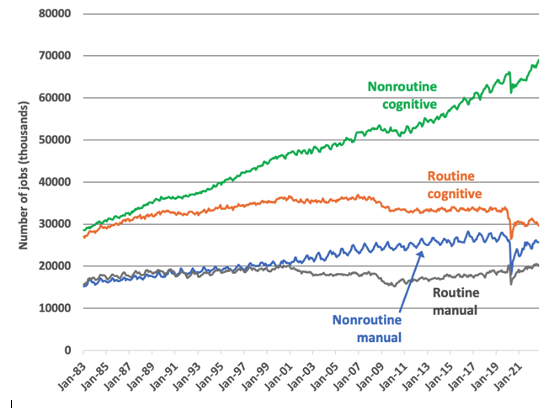
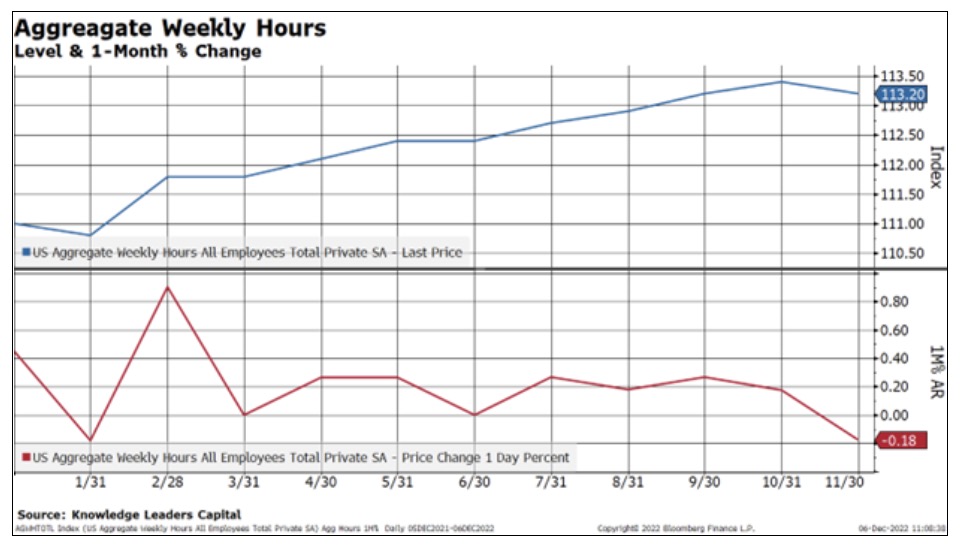
While many seemed to focus on the basics of the employment report like average hourly earnings (which don’t take into consideration industry mix shifts among the employed) and the payroll job beat for the month, there is one very important variable that revealed the weakness in last month’s jobs report.