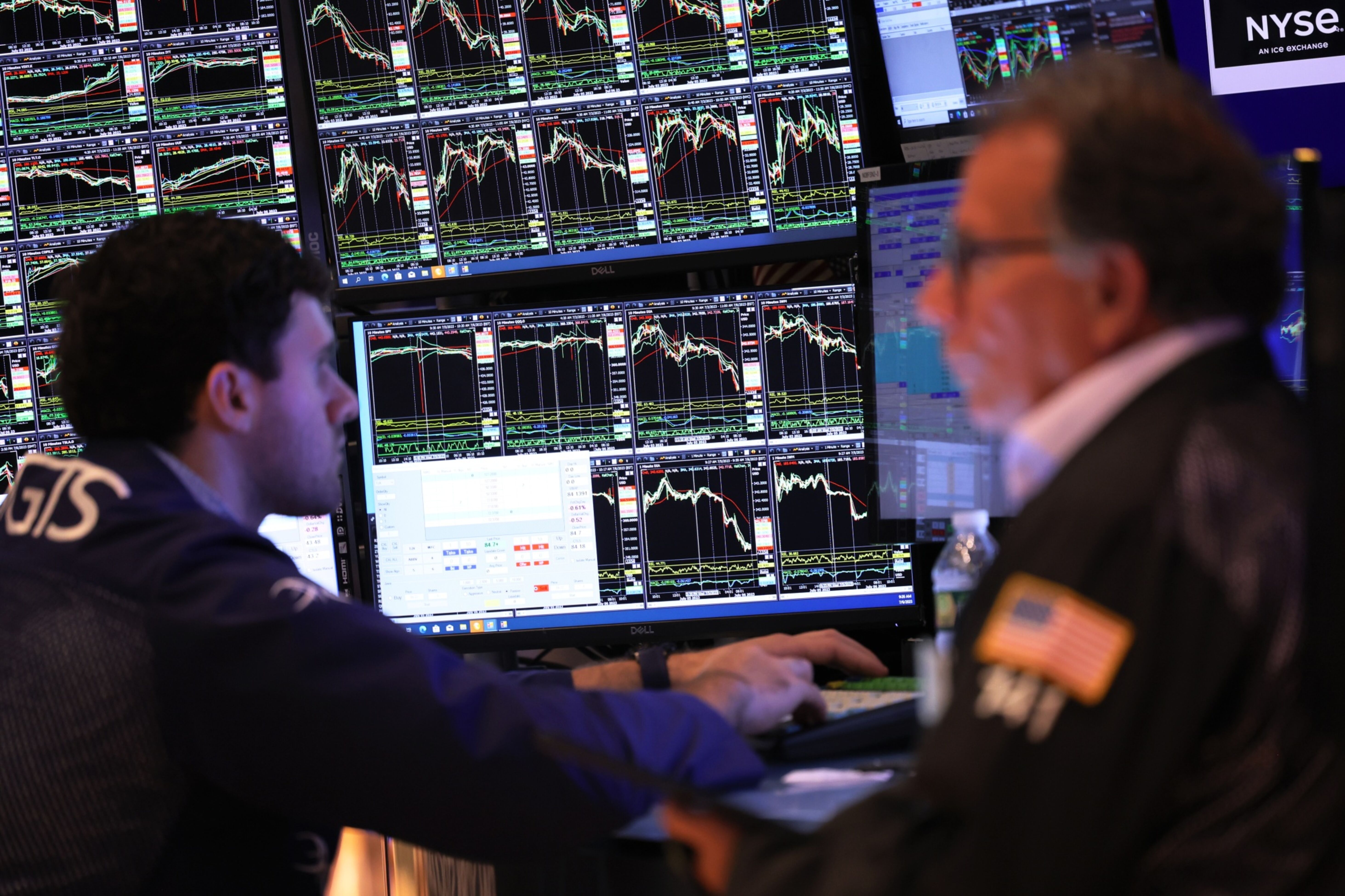
The stock market has got to be the weirdest market in existence. It is the only place where people go to buy things and hate it when those things go on sale.
Last December, Florida’s legislature passed a controversial but necessary set of reforms aimed at shoring up the state’s teetering property insurance market, where a string of insurers had canceled policies and even filed for bankruptcy, leaving homeowners with dwindling options.
Global corporate bond returns just hit their highest level this year on bets that the inflation crisis is coming to an end. Some investors say this may be as good as it gets, with dangers lurking in credit markets for the second half.
China’s ultra-long government bonds are seeing heated demand as the economy’s dire outlook and expectations for modest stimulus drive bets for further gains.
An out-of-cycle rebalance in the Nasdaq 100 is adding another layer of wrinkles to stock trading with a flood of options expiring Friday.
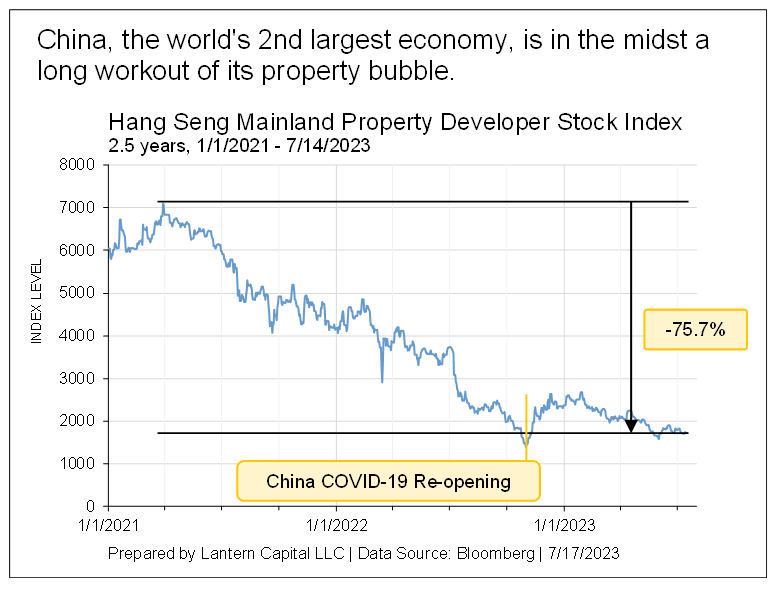
The Chinese economy’s current travails illustrate the growth challenges facing many other countries around the world. By re-engineering ineffective growth models and improving domestic economic management, developed and developing countries can avoid falling into the growth trap China now finds itself in.
Home country bias means that investors may be overlooking international bonds. Certainly, the flows into U.S. fixed income ETFs dwarf the flows into international bond ETFs. That could be a missed opportunity.
Transitioning to a green net-zero economy requires climate solutions that enable the economy to decarbonise, such as renewable energy, electric vehicles, and recycling technologies.
Markets can present challenges for investors as volatility, direction, supply, outside influences, and future expectations are continuously changing.
Health care’s innovation-driven growth and inherent resilience makes it a natural fit for dividend growth investors, according to Franklin Equity Group.
Amazon is the world’s largest online retailer and a prominent player in the field of cloud services, digital streaming, and artificial intelligence. This Knowledge Leader has redefined the landscape of e-commerce and technology.
The MSCI EM index is up 20% from its bottom last October, but is almost 30% below its February 2021 peak. Thus, it has lagged other major markets globally. We have seen and heard investors getting more positive on emerging equities and reallocating capital accordingly.
We’ve known for a long time that CPI-adjusted lifetime guarantees are the ultimate bedrock for a secure retirement.
Appealing yields and cautious markets.
Tesla Inc.’s latest results gave bulls a lot of what they wanted: An earnings beat, tantalizing shots of the Cybertruck, and an “internal projection of Dojo compute power,” referring to the in-house supercomputer.
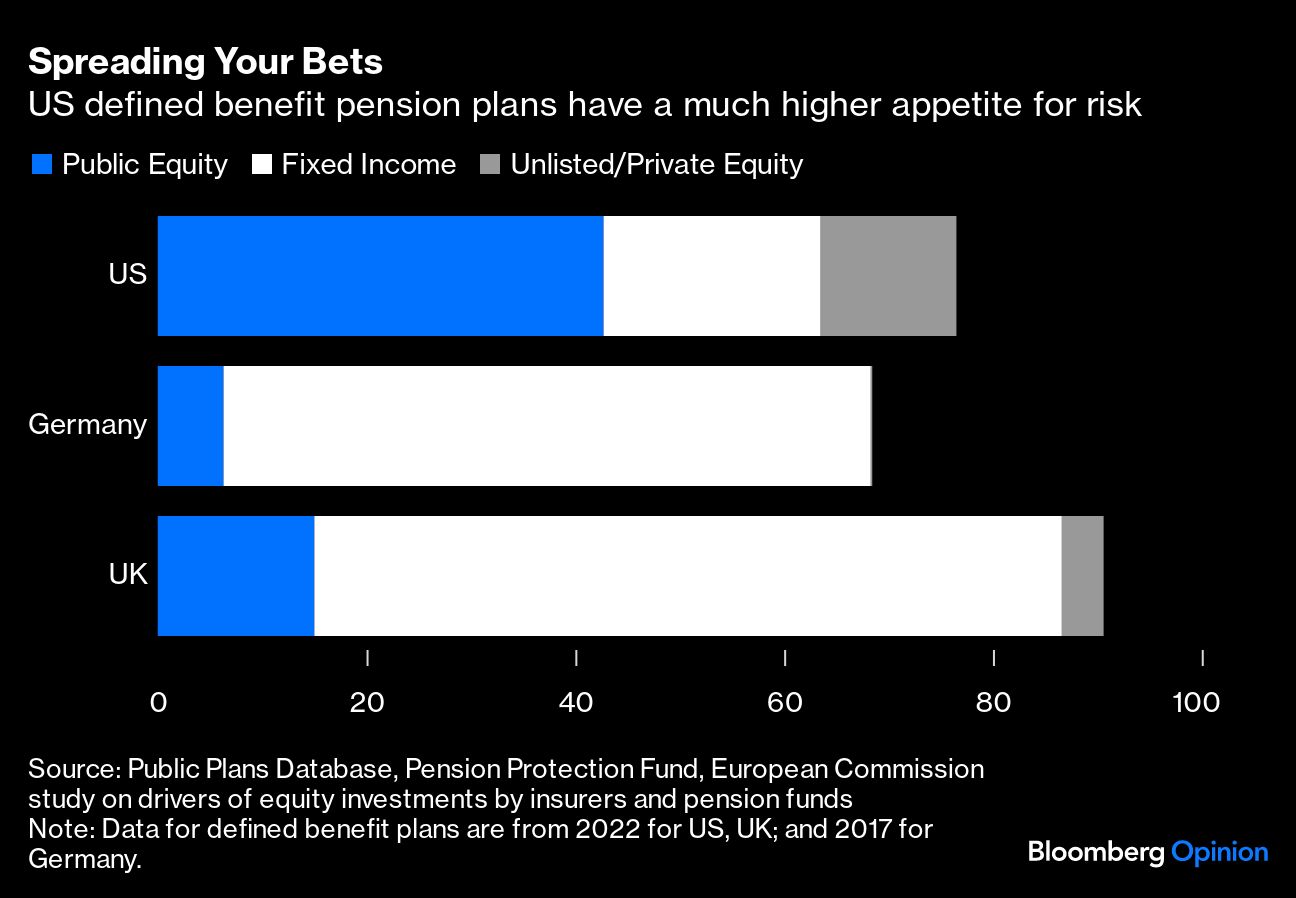
Perhaps taking a page from the US, where retirement funds have long made significant equity investments, the UK is hoping that adding lots of private equity to its pension pots will drive higher returns and superior growth outcomes.
Wells Fargo & Co. grabbed the most trading and dealmaking market share in years, a key milestone for Chief Executive Officer Charlie Scharf’s quest to build the fourth-largest US bank into a more formidable Wall Street player.
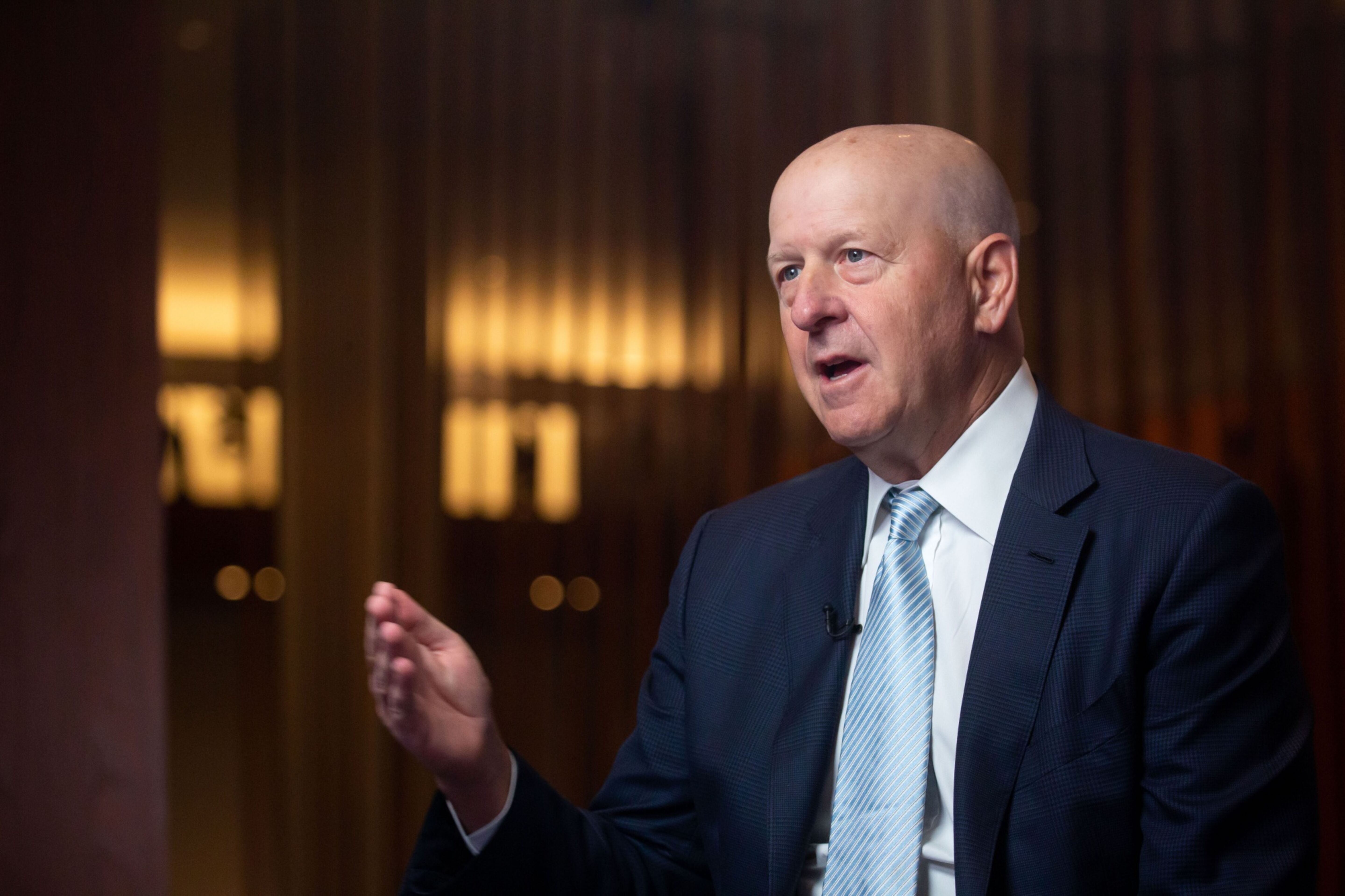
Goldman Sachs Group Inc.’s profit plunged as the Wall Street giant notched one of its weakest quarters under Chief Executive Officer David Solomon.
Using LOGICLY’s data and analytics platform, this article looks at the top funds in the equity asset class that have brought in the most assets YTD.
We favor emerging market (EM) to developed market (DM) assets on a brighter macro backdrop. We get granular and harness mega forces, per our playbook.
The beginning of the banking and commercial real estate crisis this year has many parallels to the start of the residential real estate crisis in 2007.
Nokia Corporation is a global leader in networking. Based in Espoo, Finland, this Knowledge Leader’s mission is to bring together the world’s people, machines, and devices to realize the potential of digital in every industry.
Even benchmark-makers are starting to address the supersized influence of heavyweight stocks. Nasdaq’s plan to reconfigure the weights of its constituents should prompt investors to think about the broader concentration risks in US equity markets, particularly in passive portfolios.
The economy has held up remarkably well despite the Fed’s tightening program, but with two more hikes likely in 2023, the risk of a slowdown remains elevated.
NEOS is an ETF sponsor, and its ETFs aim to deliver the next evolution of options strategies that seek income as the outcome. Built on decades of research and experience, NEOS ETFs aim to empower investors with portfolio building blocks to provide high monthly income, tax efficiency, and diversification through data-driven options-based ETFs. Today, we’ll be speaking with Garrett Paolella of NEOS investments, to learn more about its suite of ETFs, its potential benefits, and where they may fit in investment portfolios.
After a stretch of wildly positive economic surprises, the latest US retail sales data felt like more of a mixed bag: the top-line number missed forecasts and, partially in response, stocks drifted aimlessly between losses and modest gains.
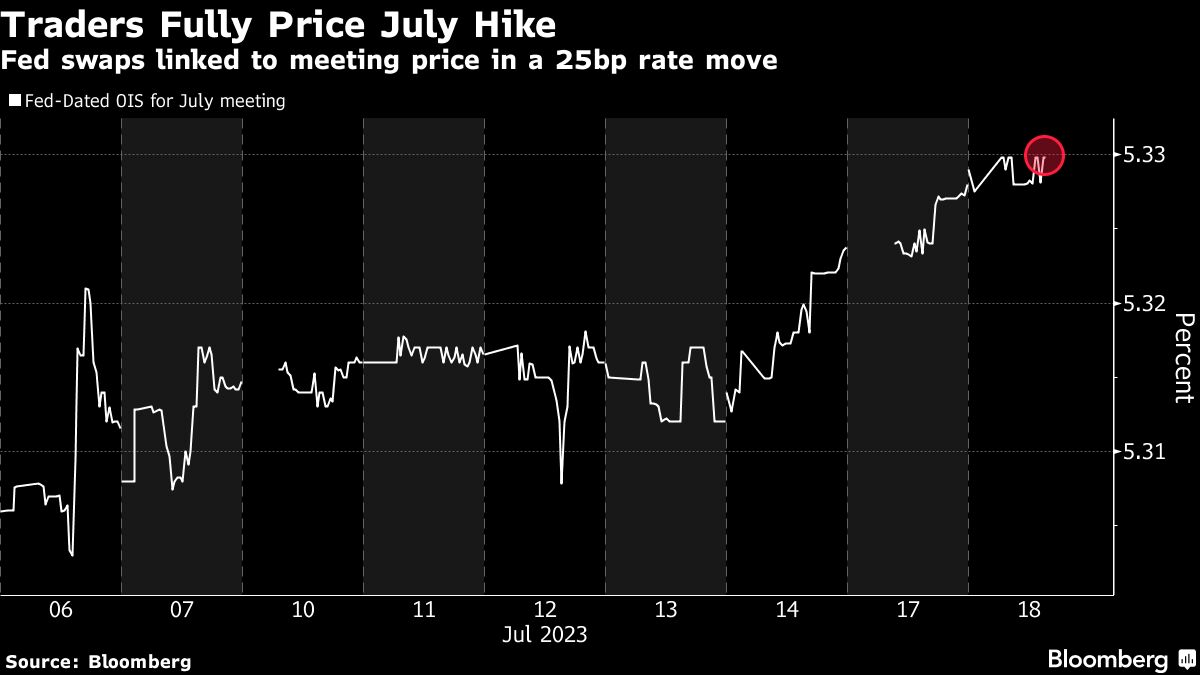
Traders now have no doubt: the Federal Reserve will start raising interest rates once again next week.
The best argument in favor of approving new Bitcoin exchange-traded funds is that they already exist, tracking futures. Sadly for the crypto crowd, that’s also the best argument for why nobody needs a new one.
An improved income outlook for multi-asset investors, including higher yields, sharply contrasts with cloudy conditions at 2023’s start.
A high probability for an El Niño event in the second half of 2023 brings concerns of extreme weather, persistent inflation, supply chain disruptions, and market volatility.
Chief Economist Eugenio J. Alemán discusses current economic conditions.
The global economy remains in a fragile state. Headline inflation is above-target in almost all major economies, and core inflation is sticky and elevated.
The S&P 500 has generated double digit returns so far in 2023, but the gains have been narrowly focused. Heading into the second half, we will be watching to see whether the rally broadens or the market capitulates.
The Fed is executing its playbook according to plan – get interest rates up quickly, keep tightening albeit at a more moderate pace, and then hold rates steady to allow real rates to nudge higher as inflation recedes.
Investors with $250,000 or more to spend on municipal bonds are increasingly seeking opportunities to pick and choose what goes into their portfolios.
Dial into any bank earnings call these days and you will hear lots of talk about “deposit beta.” The phrase came up 29 times in the presentations following results from four of the largest US banks last week. A metric that analysts have tracked for years has hit the mainstream.
Japan may uniquely benefit from a wage-price spiral.
Falling airfare prices in the U.S. don’t appear to have any effect on airlines’ revenue, according to Goldman Sachs. In fact, Delta just reported record revenue and profits in the June quarter.
The next time someone expresses a firmly held opinion about homelessness, ever so gently recommend that they read Homelessness is a Housing Problem. The more people who read this book, the closer we’ll be to a solution.
Earnings reports on Friday showed Citigroup Inc., JPMorgan Chase & Co. and Wells Fargo & Co. gained big time from their size and the extra support the Federal Reserve injected into the banking system in March.
Whether you are examining the evolution of the US economy or the impact of monetary policy, one of the noteworthy developments this year is not what has happened but rather what has not.
Investors loading up on long-term bonds have a history at their back.
Nikko Asset Management presents an analysis of global market trends, offering insights into the surprising performance of equities and the resilience of the global economy to date.
Ed Mills, Managing Director, Washington Policy, discusses how recent U.S. policy decisions are the foundation for an industrial renaissance aimed at building up the economic base and protecting it against certain geopolitical and supply chain risks.
VettaFi’s Fixed Income Symposium, happening on July 24th, is fast approaching. The symposium will bring together industry thought leaders.
As summer temperatures peak, inflation just won't completely cool down. The question is how much more the Federal Reserve should do about it.
JPMorgan Chase & Co.’s revenue soared to a record in the second quarter, boosted by the Federal Reserve’s interest-rate hikes and its acquisition of First Republic Bank.
The US Federal Trade Commission has opened an investigation into OpenAI Inc., questioning whether its popular ChatGPT conversational AI bot puts consumers’ reputations and data at risk, according to a person familiar with the matter.
Investors have more investment options than ever before, thanks to the number and variety of exchange-traded funds available to everyone. Think of an investment strategy, and it’s probably available in an ETF.