Generative artificial intelligence has a reliability problem. Here’s how investors can gain confidence in portfolios that deploy the technology.
After the underperformance of stocks and bonds last year, it’s no surprise that diversification strategies are a significant focus this year. Alternatives continue to garner advisor and investor interest as market dispersion grows, including managed futures and long/short strategies.
Collateralized loan obligations, or CLOs, may be a way for advisors to enhance retail clients’ portfolios. They provide investors with access to a diverse pool of senior secured loans. While they have been primarily used by institutional clients to date, CLOs could enhance risk-adjusted returns for individual clients.
Franklin Templeton recently hosted due diligence meetings with financial advisors where Tony Davidow, Senior Alternatives Investment Strategist, led discussions focused on alternative investments.
In a year in which little has gone right in the US bond market, November turned out to be a month for the record books.
Federal Reserve Chair Jerome Powell pushed back against Wall Street’s growing expectations of interest-rate cuts in the first half of 2024, saying the committee will move cautiously with borrowing costs at a 22-year high but retain the option to hike further.
OpenAI’s power brokers seem to have decided that the quickest fix for last week’s dysfunction is to borrow a page from corporate America’s playbook by adding some establishment figures to its board.
In the wake of recent underperformance, healthcare is entering the new year with compressed valuations just as innovation picks up and a post-COVID reset winds down. That should make for a positive outlook, says Janus Henderson Portfolio Managers Andy Acker and Dan Lyons.
The likes of consumer resiliency based on the earliest readings on Black Friday sales and the degree to which the Artificial Intelligence theme continues support the idiosyncratic tendencies of the markets concentrated in the Magnificent 7.
VettaFi is thrilled to announce that the ETF Express U.S. Distribution Awards will be part of Exchange in 2024. Exchange is just a few short months away. The financial services community will be gathered in Miami Beach February 11-14. Accordingly, Exchange is an ideal venue for the ETF Express awards.
The fourth quarter has seen a strong performance from gold. In early October, the price of gold stood at $1,820 per ounce, according to Kitco, and looked as if it would continue to drop in value as it had done the previous five months.
VettaFi’s vice chairman Tom Lydon discussed the SPDR® S&P® Homebuilders ETF (XHB) on this week’s “ETF of the Week” podcast with Chuck Jaffe of “Money Life.”
“I have never been more excited about the future,” wrote Sam Altman, the reinstated chief executive officer of OpenAI, to his subordinates on Wednesday, in a statement formally announcing his return and the rebuilding of the company’s fractured board.
Persuasive architecture is an effective strategy to create a website that answers your ideal clients’ questions and concerns while guiding them down a path that leads to conversion.
Even Ken Griffin is a little worried. Multimanager funds like Griffin’s Citadel have come to dominate the hedge fund industry, riding a steady run of outperformance to oversee more than $1 trillion, including a healthy dose of leverage.
The last time the municipal bond market rallied so much, it was Paul Volcker — and not Jerome Powell — who was winning a war on inflation.
As a rush of Wall Street strategists call for all-time highs in US stocks in the year ahead, JPMorgan Chase & Co. stands apart, releasing the gloomiest forecast so far among its peers.
Real estate headlines seem to only focus on bad news right now, from remote work’s impact on offices to struggles for city center retail.
There is broad agreement that economic damages will increase with warming, but there is substantial disagreement on the magnitude of these damages.
Broad commodities have struggled this year. The S&P GSCI Index is down more than 5% year-to-date. However, there are still opportunities when investors dig a little deeper, according to Teucrium’s Senior Portfolio Specialist Jake Hanley.
Whether famous or infamous, the Magnificent 7 stocks have been 2023’s stock market story. However, the fundamentals of the Magnificent 7 aren't uniquely superior, and the breadth and depth of other growth opportunities seems historically large and attractive. In our latest insight, we complete an analysis of US companies with expected earnings growth greater than 25% and compare it against the Magnificent 7 stocks.
Free-cash-flow yield is the surplus cash after expenses and investments divided by the price of the security. Free-cashflow yield has been used for a long time by active hedge funds. Now it has become part of the indexing landscape, competing for assets with other quantitative approaches. It has historically outperformed in markets that favored value stocks and shown resilience in growth markets. My guest today will explain why, in today's intangible asset-driven economy, traditional metrics like price to earnings and price to book face challenges, making free cash flow a more relevant valuation metric. We will discuss how advisors should think about free cash flow and the steps VictoryShares & Solutions has taken to enhance traditional approaches.
All investments involve some degree of risk.
On November 28, 2023, VettaFi hosted an Alternatives Symposium with an excellent turnout of nearly 750 advisors and investors registered for the event.
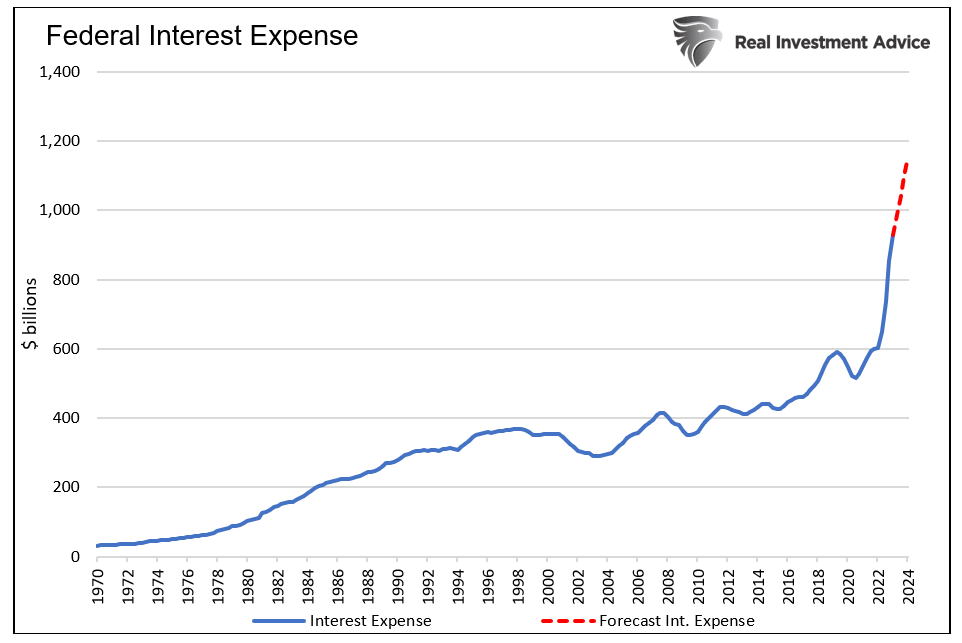
The problem is not a deficit or a debt-issuance problem. It's an interest rate problem.
The private equity industry’s push into credit is so well advanced that no one bats an eyelid when the same buyout firm is invested in the debt and equity of the same portfolio company.
Ever since Alan Turing’s “imitation game,” we’ve been acutely aware of the importance of measuring the capabilities of computers against our own miraculous brains.
Let’s go back four decades and consider a few key indicators of wellbeing.
Global bonds are soaring at the fastest pace since the 2008 financial crisis.
US regulators’ swift action in March to ring-fence the banking sector after the collapse of Silicon Valley Bank might have had an unintended consequence of driving cash out of bond funds, by enhancing the appeal of deposits.
Bitcoin climbed back above $38,000 on Tuesday amid optimism the US central bank may be closer to lowering borrowing costs if inflation continues to decline.
It’s the latest critique of the passive-investing boom: Fresh academic research claims that the relentless flood of index-chasing cash on Wall Street is distorting stock prices and causing extreme market moves.
While equity styles go in and out of favor, quality companies continue to serve clients as a core holding, resilient to economic headwinds and market drawdowns. For long-term investors searching for a durable equity solution, we believe quality is “the real McCoy"
Often misunderstood, crypto has an important role to play in the alternatives sleeve of a portfolio.
Commodities entered 2023 behind a strong performance in 2022. For investors revisiting their portfolios ahead of 2024, it may be worth assessing the commodities outlook. From energy to precious metals, commodities can add meaningful diversification to a portfolio.
Economic pain is likely in 2024, but that doesn’t mean stocks will struggle all year, especially if there is a continuation of the rolling recessions that have hit the economy.
What were the big ETF trends of 2023? David Mann, Global Head of ETF Product & Capital Markets, reviews some of his predictions for this year—and how they panned out.
VettaFi’s Tom Lydon offers perspective on using alternative ETFs in a portfolio. Madison’s Patrick Ryan discusses the firm’s recent ETF entrance and explains the rise of active ETFs. Cerulli’s Daniil Shapiro highlights several of the industry’s biggest trends.
The rebound in Adyen NV and its European fintech peers this month has been notable, but investors should brace for a bumpy road ahead.
BMW AG Chief Executive Officer Oliver Zipse was incredulous when asked this month whether the German premium carmaker would respond to a brutal price war in electric vehicles by cutting production.
When the crypto bubble was on the rise, it prompted governments to step up development of their own form of electronic cash, known as central bank digital currencies. Now that enthusiasm for crypto has waned, will CBDCs fade away, too?
The rally that led the S&P 500 to one of its best November gains in a century is now running out of steam, according to Citigroup Inc. strategists.
Researchers working inside a unit of BlackRock Inc. estimate that a reform of public financial institutions could free up as much as $4 trillion in additional investment to help emerging markets tackle the fallout of climate change.
If investors needed another sign the heyday for meme stocks has passed, an exchange-traded fund designed to ride the pandemic-era rise of retail traders is shuttering after just two years.
Brooks Friederich is a little-known figure in the world of investment advisory, even among the Wall Street cognoscenti. Yet every year, the 39-year-old — and his Berwyn, Pennsylvania-based employer Envestnet — helps steer billions of dollars into tailor-made strategies for financial advisers, part of what’s known as the model-portfolio boom.
A robust growth backdrop, a key input for cross-asset positioning, benefited from pent-up demand and an accommodative fiscal policy stance.
Don’t look now, but markets are once again getting excited about the prospect of potential rate cuts. Following months defined by rising rates, investors are looking forward to inflation cooling sufficiently for the Fed to finally cut.
Technological turning points in the past have taught important lessons about how to identify long-term winners from transformative innovation.
While Treasury inflation-protected securities (TIPS) may seem complex and daunting, it’s important to dive into their intricacies. After all, their current yields present an enticing opportunity and a compelling alternative to conventional Treasury bonds.
When Argentina entered the 20th Century, its prospects looked bright. On a per person basis, its economy was on par with Canada and Sweden and about two-thirds of the United States.
On this episode of the “ETF of the Week” podcast, Tom Lydon discussed the iShares MSCI EAFE Small-Cap ETF (SCZ) with Chuck Jaffe of “Money Life.” The pair talked about several topics regarding the fund to give investors a deeper understanding of the ETF overall.