Is a stock market correction coming before the Santa Claus rally at the end of the year?
With more than 3,000 ETFs to cover and many new ones launching each month, it is easy to forget. For many people, S&P 500 Index-based ETFs remain the core of their portfolio. Heading into 2024, these products topped the latest monthly flow leaderboard.
The AQR Style Premia Alternative Fund (QSPIX) was introduced a decade ago to provide pure exposure to four market factors that had historically delivered excess returns. Let’s look at how it performed over that period.
What were the big ETF trends of 2023? David Mann, Global Head of ETF Product & Capital Markets, reviews some of his predictions for this year—and how they panned out.
VettaFi’s Tom Lydon offers perspective on using alternative ETFs in a portfolio. Madison’s Patrick Ryan discusses the firm’s recent ETF entrance and explains the rise of active ETFs. Cerulli’s Daniil Shapiro highlights several of the industry’s biggest trends.
It’s the major casualty of November’s sizzling stock rally: Investor caution.
CIO designate Sean Taylor gives his take on what Asia has to offer global and emerging markets investors, from growth, to diversification, to innovation.
Former Bridgewater Associates LP executive Bob Elliott’s plan for exchange-traded funds that employ hedge fund strategies has sharpened the debate about whether retail investors should have access to such approaches.
Taxes can have a significant and ongoing impact on an investment portfolio. Advisors can help their clients minimize that impact with a tax-smart approach. Advisors can prepare for capital gains season now, and potentially maximize their clients’ after-tax returns.
The primary holder of U.S. Federal debt is, surprising to many, the U.S. federal government itself, accounting for approximately 40% of the total outstanding debt.
Dina Ting, Franklin Templeton’s Head of Global Index Portfolio Management, sheds light on the benefits of single-country ETF allocations against what has been a rocky macro backdrop and discusses ways to re-evaluate potential opportunities in terms of tax-loss decision-making.
For the better part of two years, investors have been primed with hope of a “Fed pivot” that will presumably restore easy monetary policy and supportive conditions for the financial markets.
Investors should embrace a genuine long-term perspective, extending their time horizons to at least 20 to 30 years. The traditional notion of long-term investing (five to 10 years) may fall short of realizing the full benefits of long-term strategies.
I find for many the same is true with ETFs and capital gains. However, the ETF pie continues to expand with newer investors each year. The persistent lack of a capital tax gain burden simply for holding onto an investment is worthy of celebration.
Investors starved for yield since the great financial crisis can now have it merely by holding cash reserves. At least for now (as of November 8), the U.S. three-month Treasury Bill was yielding 5.4%, up from 0.50% at the end of 2021 and 4.4% at the end of last year.
In the latest episode of the Alternative Allocations podcast series, Franklin Templeton’s Tony Davidow has an insightful conversation with the firm’s CEO, Jenny Johnson, regarding the burgeoning opportunities in alternative investments, especially in the current financial climate.
The price of gold just had its best October in nearly half a century, defying tough resistance from surging Treasury yields and a strong U.S. dollar. The yellow metal rallied an incredible 7.3% last month to close at $1,983 an ounce, its strongest October since 1978, when it jumped 11.7%.
Treasury yields have dropped as weak economic data suggests the Federal Reserve may begin cutting the federal funds rate target earlier than previously expected.
Where is the line between selling a financial product and providing investment advice? That question is at the heart of a debate over a new proposal that aims to protect Americans’ retirement savings.
New investors are overwhelmingly choosing ETFs as their investment vehicle of choice. Between June 13 and June 28, Charles Schwab conducted a comprehensive survey of 2,200 investors for its 2023 ETFs and Beyond Study.
The potential for a Fed pause presents an opportunity for investors to consider adding duration back into their portfolios. In this market regime, we believe duration serves well as hedge and equity diversifier.
For this edition of Bull vs. Bear, Nick Peters-Golden and James Comtois debate whether this is truly the year active ETFs turned pretty.
Zacks Investment Management has been managing money for more than 30 years. It is a subsidiary of Zacks Investment Research, which is one of the largest independent research providers in the United States. In 2021, Mitch Zacks, its CEO, decided it was time to bring the research-driven approach to investing that the firm has become known for to the exchange-traded product market. The firm's first active ETF was launched in the summer of 2021. Since then, it has been focused on being committed to expanding its footprint in the ETF product space while bringing continued risk-adjusted returns to clients.
The so-called dividend aristocrats have an impressive track record. But much of that outperformance can be attributed to its exposure to certain factors.
Investment taxes can have a real impact on a portfolio. Investors should be aware of four key tax realities they currently face. Without a plan to manage these taxes, investors may find their ability to retire comfortably could be compromised.
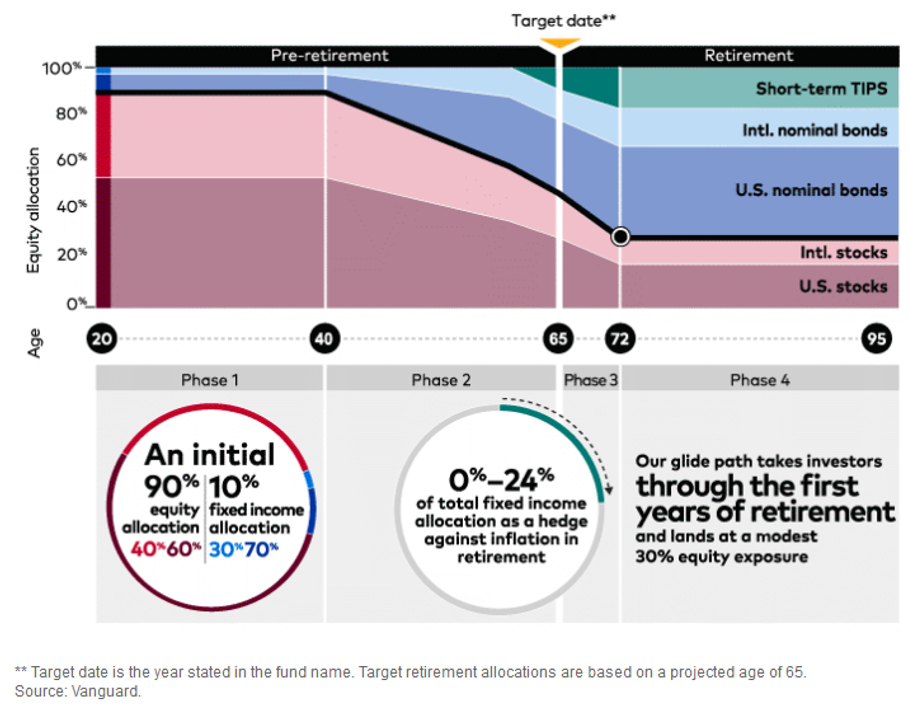
Whether retirement savers in TDFs know it or not, and I presume most don't, they are mindlessly investing their wealth.
VettaFi’s Lara Crigger discusses ARK Invest’s future, Fidelity’s recent ETF share class filing, and key stories to watch the remainder of the year. ETF.com’s Jeff Benjamin offers an inside look at how the media covers ETFs, including important tips for financial advisors and industry professionals seeking exposure.
Direct Indexing empowers RIAs to transform tax losses into valuable assets, helping clients offset capital gains on federal tax returns and minimize annual income tax liabilities.
With the Federal Reserve poised to change direction, investors who have been investing in very short-term securities may soon face "reinvestment risk."
On this episode of the “ETF of the Week” podcast, Tom Lydon discussed the VanEck Morningstar Wide Moat ETF (MOAT) with Chuck Jaffe of “Money Life.” The pair discussed several different topics regarding the fund to give investors insight into it.
There are periods of time in the investing world when contradictions and disagreement among “experts” run rampant. Often, those periods tend to coincide with inflection points in cycles, although you only really know that with the benefit of hindsight, in my opinion.
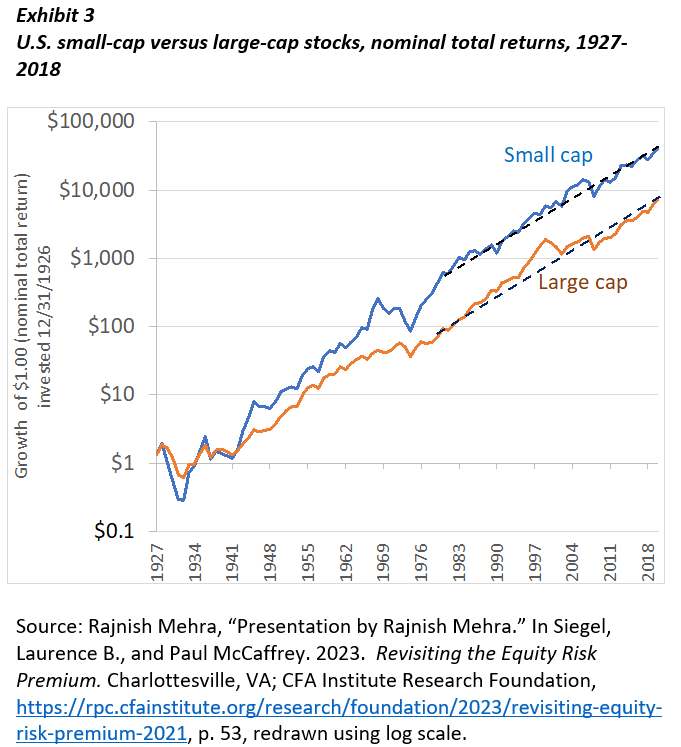
The calendar third quarter of 2023 was a messy one for financial markets at large, and we were not immune to its lack of charms. Nonetheless, it’s been a pretty good year for our small-cap strategy.
Tony Muhlenkamp shares his notes on charitable donations and income tax deductibility.
As interest rates have risen dramatically over the past year, income-oriented funds have become more attractive. With the income finally back in fixed income, advisors are searching for new opportunities to generate yield while mitigating risk in their bond investments. That’s why Madison Investments, an independently owned investment firm managing $22.9 billion in assets, recently launched its first suite of four income-oriented ETFs. The firm provides a range of investment strategies across mutual funds, managed accounts and customized investment portfolios. It added ETFs to its offerings in August. Two of the funds in its suite – the Madison Aggregate Bond ETF (NYSE: MAGG) and the Madison Short Term Strategic Income ETF (NYSE: MSTI) – seek to capitalize on the growing demand for dynamic, risk-managed fixed income strategies. My guest today will discuss how advisors can use these actively managed ETFs to get the most value out of their fixed income allocation.
The US Federal Reserve’s efforts to quell inflation have sent long-term interest rates to their highest level in a generation, putting a lot of stress on banks, companies and anyone looking to finance a new home.
With artificial intelligence, systematic investing is entering a new era of disciplined decision-making. Yet, firms face many snags. Rigorous implementation requires collaboration among skillful investment, technology, and quantitative capabilities.
A money market fund is a type of mutual fund that invests in debt securities, specifically those characterized by short maturities and minimal credit risk. A money market fund generates income with little to no capital appreciation, making it a low-risk, low-return investment.
Savvy investors are aware that geopolitical tensions and uncertainty can significantly influence the financial markets.
Getting John Beatson to pick stocks for you used to require a cool $25 million or thereabouts. Thanks to the newest trend in money management, these days it’s more like $25.
This article will demystify what a 401(k) rollover truly entails, why it’s an option to consider, and how it could play a role in shaping the landscape of your financial future.
Plenty of ink has been spilled about how much money has gone into active ETFs in 2023, and from a pure top-line flows perspective, it’s true.
We can and are building much taller skyscrapers. But they are impractical money losers because so much floor space is taken up by elevators. A new book explains the interplay between size and scale, and what it means for our economy and investments.
Hedge funds are in regulators’ sights again. Their risk-taking with borrowed money must be better monitored and will sometimes have to be limited, the head of a global group of supervisors told the Financial Times last week.
Active management in ETFs are gaining market share in 2023, as leading managers bring their best ideas into the ETF industry.
The post-Covid era seems ripe for a Yogi-ism since economists and policymakers have been so wrong about the path of the economy and inflation. Yes, inflation is finally on a downward trend, but it has proven far stickier than the Federal Reserve and most economists predicted and remains above the Fed’s 2% target.
In many ways, 2023 continues to be the mirror image of 2022, with the most volatile assets being some of the best performers for much of the year.
By applying artificial intelligence and Chat GPT to statements made by active fund managers, researchers have found that their underperformance can be partly explained by overconfidence that led to, among other things, excessive risk taking.
Bond investors face the crucial decision of just how much risk to take in Treasuries with 10-year yields at the highest in more than a decade and the Federal Reserve signaling it’s almost done raising rates.
Financial advisors often face the challenge of transitioning a new client into their practice in a tax-efficient way.