Sharp losses in high-flying momentum stocks may present a dip-buying opportunity if history is any guide, according to Goldman Sachs Group Inc.’s trading desk.
Small-cap stocks have provided a return pattern quite different from large-cap stocks. Typically, small caps either race ahead of larger companies or else fall behind. They’re rarely in synch.
Companies touting their artificial intelligence and crypto-sector ties are speeding up their IPO timelines, after triple-digit first-day pops became a regular feature in this summer’s sizzling US market for new issues.
This week, the focus shifts to US retailers, particularly after recent economic data.
Since the last update of our three ‘Tactical Rules’ on June 17th, both domestic and international equity markets have rallied, increasing roughly 6.9% and 3.7%, respectively.
After a mega, multi-year run of outperformance in U.S. equities over non-U.S. equities, investors have begun to question their regional equity weights.
Advanced Credit Solutions is a tiny finance firm based in Luxembourg that was founded by a Belgian and works with insurers. Despite its outwardly bland appearance, the business it does is anything but.
With economic data, the challenge is that our instruments are more error prone. The monthly jobs reports rely on employers responding to surveys correctly and quickly.
U.S. economic growth slowed decisively in the first half of the year amid concern about rising tariffs, although corporate fundamentals have remained strong.
With 90% of S&P 500 companies having reported second quarter results, corporate America has handily topped expectations, displaying resilience in the face of a challenging policy environment.
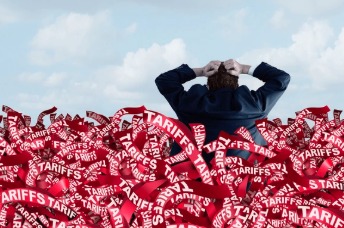
The 24-hour news cycle reminds investors that tariffs still remain a factor. As such, for those looking to get commodities exposure as a portfolio diversifier will want to make sure they allocate strategically.
For the second straight month, consumer borrowing was weak, indicating Americans might be close to their credit limits.
The summer months and October are known being tough on stocks, but seasonal trends don’t always repeat. Even when they do, it’s not necessarily a call for long-term investors to move away from equities. This year could be an example of a good time to remain invested during the summer doldrums.
Despite inflation pressure, tariffs and immigration policy are leading to slower job growth and consumer spending, which may prompt the Federal Reserve to cut interest rates soon.
Recessions in the United States have become less frequent over time.
S&P 500 dividend growth remains sturdy. But more and more companies are leaning into share repurchase programs as avenues for returning capital to shareholders.
Another week of stellar earnings led to the S&P 500 and Nasdaq Composite hitting record levels by Thursday, but what a difference a day makes.
What's the outlook for private equity in the second half — and the retail investors potentially interested?
The tech sector has trounced the broader market in the second quarter. So, it’s not surprising some market participants are growing concerned about concentration risks. Those worries are valid.
If you’ve been following the luxury sector, you’ve probably seen your fair share of sobering news.
U.S. trade strategy is a top worry among economists.
Is this period different from the high-beta boom-and-bust cycle during the dot-com era? Only time will tell. While there are some similarities, key differences exist.
The opportunity set for emerging market (EM) equities has changed dramatically over the past three and a half decades – geographically, at a sector level, and in terms of market capitalization.
In a May report on alternative scenarios for the long-term US budget outlook, the Congressional Budget Office estimated the impact of productivity growth that was faster or slower than the 1% annual average in its baseline forecast. It made a big difference.
Tell me if this rings a bell. You worked hard your entire life. You maxed out your 401(k) every single year of your career and invested those assets inside your employer 401(k).
When markets decline—especially after long periods of sustained growth—the familiar advice resurfaces: “Be patient. Stay invested. Ride it out.” The rationale? The market always goes up over time. But there’s a critical flaw in this narrative.
The ability of the US economy to avoid a recession in 2022-2023 rested, in part, on the resilience of non-residential investment, which was propped up by a strong private investment push from companies taking advantage of provisions in both the CHIPS Act as well as the IRA.
The 2025 bitcoin bullishness has stirred much chatter about why the largest cryptocurrency is one of this year’s best-performing assets.
“Everyone knows” falling interest rates are good and rising interest rates are bad for bond investors. But “everyone” is generally wrong.
Today I’ll continue talking about uncertainty. I want to highlight the complexity we face and also describe the jarring surprise some of us feel when our most trusted sources say things we didn’t expect… and the importance of listening to them anyway.
The second quarter of 2025 started with a bang and ended with a whimper.
All the pieces are falling into place for silver’s bull market to accelerate, with a breakout into the $40s now looking increasingly likely in the near term.
In the one-year period ended June 2025, the S&P 500 Momentum Index rose 30%, essentially double the gain of the S&P 500.
This week, the White House released America’s AI Action Plan. This plan is the clearest signal yet that Washington now views AI as launching the next industrial super-cycle.
A solid earnings season shows Corporate America’s profit engine is humming along, potentially easing worries that the record-setting rally in US stocks is starting to overheat.
Passed by Congress and then signed into law by the president, the GENIUS Act builds legal and some regulatory frameworks around stablecoins.
In January, our emerging markets (EM) debt outlook called for steady growth, manageable inflation, and resilience in the face of geopolitical noise.
The Invesco QQQ ETF (QQQ) is one of the oldest and is the fifth-largest ETF. Pending shareholder approval, the $350 billion fund is about to get cheaper and modernize.
We continue to maintain a Marketperform rating on all sectors, a position we adopted in April after the White House unveiled a policy of steep but fluctuating global tariffs.
As we move into the second half of 2025, it is an opportune moment to reassess our market outlook and provide updated insights for investors.
Chief Economist Eugenio J. Alemán discusses current economic conditions.
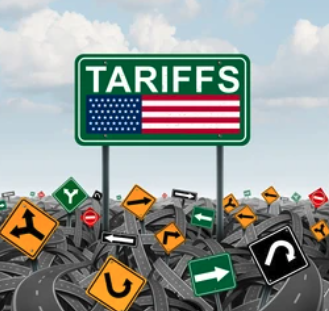
U.S. customs duties topped $100 billion for the first time ever in a single year this month. That number is even more remarkable when you consider that most of President Donald Trump’s new tariffs haven’t even taken full effect yet.
Unfortunately, the lush financial terrain we enjoyed from 2008 to 2022 was more like artificial turf. It wears out, gets ugly holes, and eventually needs replacement. But how to replace it without causing other problems? That turns out to be a real problem.
Volatility often evokes emotional responses from investors. Two big sell-offs in early 2025 reminded us why it’s important to fight those responses and stay invested through downturns.
Bitcoin is not “appropriate” for long-term investors. Also, digital assets are more a speculation and less an investment.
GE Aerospace just hit it out of the park on earnings.
Contrary to popular belief, investors can use TradFi best practices to analyze on-chain KPIs of DeFi networks and the underlying fundamentals of the tokens that drive them.
The capital markets have become an increasingly complex space for investors, complexities that are heightened by the sheer number of ways one can invest.
With inflation proving to be sticky, sovereign debt burdens escalating, and trust in institutions coming under scrutiny, investors are reassessing the role that hard assets play in protecting and preserving long-term purchasing power.
Not sure which to choose? Here are some things to consider about individual bonds vs. bond funds.