A new wave of opportunity seems set to flow into private credit markets, which could enhance risk-adjusted returns and diversify portfolios. What's driving this potential?
The TCJA is set to expire at the end of 2025, bringing unprecedented uncertainty. From potential tax rate hikes to changes in deductions, our Bill Cass highlights what you need to know to plan ahead.
Explore fixed-income tools that generate income and infrastructure.
The economy is not the stock market. And that’s good news.
Tax cuts are popular but not affordable for most nations.
High-dividend-yielding equity investments are likely to get closer looks in the fourth quarter after strong recent performance.
In theory, growing a pool of wealth over decades – whether for a family, an endowment, or a pensioner – is a straightforward endeavor.
Buyout heavyweights are increasingly resorting to the old-fashioned way of making money — actually running the companies they’ve bought.
Financial services companies are office hunting on one of New York City’s fanciest addresses, Park Avenue, and the biggest beneficiary may be a once-beleaguered real estate investment trust that happens to find itself in the right place at the right time.
Sam Altman has his hands in countless projects while also building “mankind’s last invention”: artificial general intelligence, or AI systems that surpass our own cognitive abilities. These galactic aspirations were reinforced on Monday when Altman published a dramatic blog post reminding us that superintelligence will bring prosperity for everyone. It’s just a “few thousand days” away, he added.
Financial services, like many institutions, are losing Americans’ trust. That’s a problem. Economies depend on a healthy financial system, as became painfully evident during the 2008 financial crisis, and that system operates largely on trust — confidence that people can access the money in their bank accounts, that their investment accounts are secure, and that their trades will be filled at quoted market prices, to name just a few everyday financial interactions.
America’s financial industry has long had trust issues. Never mind the Great Financial Crisis of 2007-08; mistrust of the markets dates back to at least 1929, if not the Dutch East India collapse of 1769. But this history has an upside: Financial institutions have a lot of experience creating systems to build, maintain and restore trust — and have learned lessons that can be applied across the economy.
When stock markets rise, the bullish narrative tends to dominate, overlooking the potential impact of market declines. This oversight stems from two main problems: a basic misunderstanding of math and time’s critical role in investing.
Policy, more likely to be dictated by economic circumstances, may not resemble generous populist proposals, which could limit their impact on stock markets.
In the span of a few days in late July, the market got live to two contrasting theories at once: that U.S. inflation is collapsing while Japanese inflation will remain stubbornly high.
Fixed income strategy and opportunities have remained relatively unchanged over the past few months. However, the much-talked-about monetary policy change has commenced.
On September 18, 2024, the Federal Reserve cut interest rates by 0.5%, bringing the federal funds rate down to a range of 4.75% to 5%. This move, aimed at managing inflationary pressures while addressing the gradual rise in unemployment, underscores the Fed’s balancing act between fostering economic growth and taming inflation.
Historically, investors have struggled to add meaningful alpha through security selection. A dynamic new credit scoring approach could change that.
Fixed income investors may want to take a middle-ground approach with bonds and opt for debt with intermediate maturity dates.
A surprising trend has emerged when it comes to discussing inheritance. While very and ultra-high-net-worth clients often engage in these conversations, they tend to occur far less frequently with other segments.
Care about being a financial “doctor” and don't assume all is well because you have addressed the surface issue. Here are some ways to avoid delivering a poor bedside manner when clients need help.
With the advent of artificial intelligence (AI) in financial services, the pressure to move away from the AUM model is mounting. Has the time come for you to rethink your approach to compensation?
The global market for AI-related products is ballooning and will hit as much as $990 billion in 2027, as the technology’s quick adoption disrupts companies and economies, Bain & Co. said.
News of that day included rioting in northern England, apparently in response to misinformation spread online claiming the person who stabbed to death three children and injured eight others in Southport was a Muslim immigrant.
Taxes may be the biggest fee your tax-sensitive clients are paying on their investment portfolios. And neither they nor you, their advisor, may be aware of just how big that fee is.
With their unrivaled depth and breadth, US capital markets lend themselves well to multi-asset strategies. The US equity market is a key portfolio building block and has outpaced the stock markets of other developed markets over the past decade.
Schwab Sector Views is our six- to 12-month outlook for stock sectors, which represent broad sectors of the economy. The Schwab Center for Financial Research (SCFR) combines a factor-based approach with a market and economic assessment to determine the ratings. For the basics on sectors, please see Stock Sectors: What Are They? How Are They Used?
Fiscal responsibility is not a priority in this election.
ETF Action’s Mike Akins offers perspective on many of the biggest stories in ETFs and looks ahead to the industry’s future. VettaFi’s Stacey Morris highlights a bright spot within the energy sector and discusses the potential impact of the upcoming election on energy prices.
If you select appropriate colors that are most appealing to your target market, you’ll have an influential edge over your uninformed competitors.
On September 18, the Federal Reserve cut the Federal funds rate, as expected, announcing at the same time that the Fed will continue to reduce its balance sheet. In my view, both of these decisions were appropriate. The Fed reduced short-term rates by 50 basis points, which was consistent with economic conditions that remain near the threshold of recession.
Investors poured money into exchange-traded funds that buy emerging-market bonds last week as optimism around the Federal Reserve’s easing cycle fueled risk appetite.
MassMutual Head of Annuity Distribution Matt DiGangi recently sat down with VettaFi to discuss the increasing demand he is seeing for annuities, and how MassMutual has sought to meet client investor needs.
A potential recession could push even more investors to bond, but recession or not, investors can reap the benefits of core bond exposure.
At this year's Future Proof, Jeffrey Gundlach took to the main stage and sat down for a candid conversation with CNBC’s Scott Wapner.
Since mid-2022, when the Federal Reserve was in the midst of its aggressive hiking cycle, investors piled over $1.6 trillion into money market funds, which include Treasury bills.
In 2021, the stock/bond correlation flipped to positive after remaining negative for a majority of the preceding 20 years.
Corporate tax rate policy is a routine hot-button issue during every presidential election cycle, and this year’s campaign is no different.
After more than six months of indicating that it lacked conviction regarding the path of inflation, the Federal Reserve (Fed) seems to have gotten a conviction boost so large that it pushed it to lower the federal funds rate by 50 basis points at the September Federal Open Market Committee (FOMC) meeting.
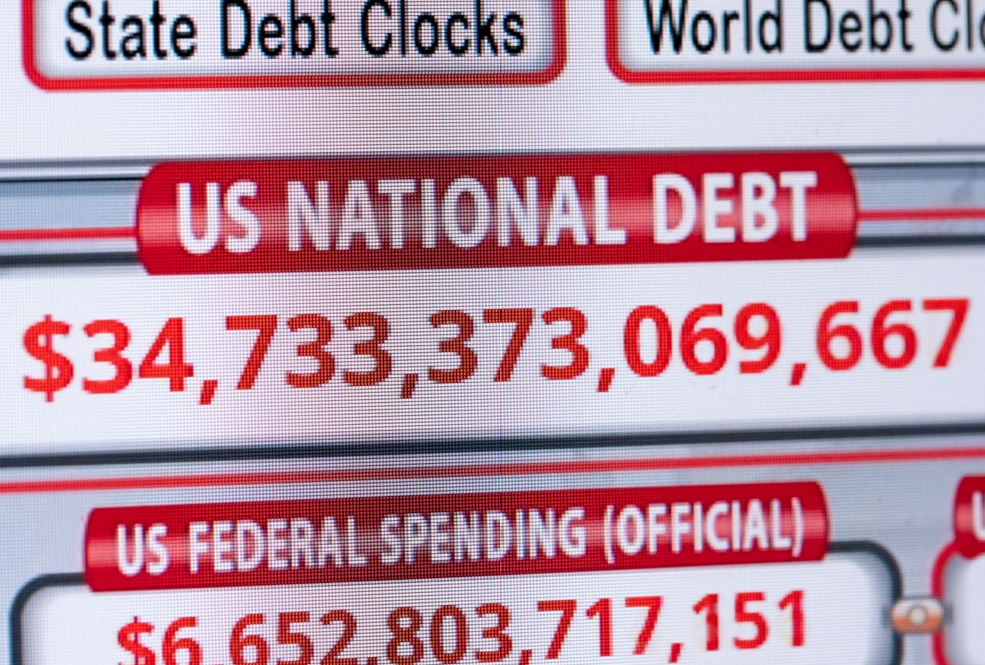
A popular rebuttal of the idea that the US ought to worry about its surging public debt is, “What about Japan?” America’s taxpayers are currently on the hook for 123% of gross domestic product, exceeding the previous record of 118% in the aftermath of the second world war, and the number is going up.
Not surprisingly, Donald Trump and Kamala Harris are floating opposite approaches to modifying the corporate tax code. If enacted, both proposals would significantly impact corporate profits and, thus, share prices. Currently, the plans are only campaign promises
We expect the Fed to cut rates by 25 basis points at each of its remaining meetings in 2024 and to sustain that pace into 2025. This trajectory would get the Fed down to our estimate of the normal or equilibrium rate of interest of 3%-3.25% this time next year.
As GMO celebrates its 30th anniversary managing emerging debt this year, we offer our comprehensive guide to emerging debt markets. Given the tumultuous recent events – a global pandemic, defaults, repricing of interest rates, relentless strength in the U.S. dollar – we’ll focus on the Why as a starting point. Then we’ll dive into the proliferating How, covering strategies and vehicles.
From "how" to "why now," here are four things investors should understand about bond investing.
Trend-following is an exercise in technical analysis, systematic rules following, and signals reading that’s objective and agnostic.
Despite forthcoming volatility, it's an ideal time to get municipal debt exposure, especially in the current market environment.
Now that the Fed has begun the rate-cut cycle, investors can use option income ETFs to provide long-term income and risk protection.
With the decision on Wednesday to lower interest rates (for the first time since March of 2020) by a substantial 50 basis points (bps), rather than the 25 bps cut we typically see at the beginning of an easing cycle, the Fed is showing confidence that the disinflation trend will continue.
What history can tell us about seasonal returns.
Many financial planning actions are linked to age milestones. Our Bill Cass highlights what key birthdays and other dates could mean for your financial plan.