Treasury yields climbed for the third straight day amid growing expectations that the Federal Reserve will lower interest rates at a gradual pace and as traders fretted about the potential inflationary implications of the US presidential election.
Vanguard Group Inc. sees more opportunities in the lowest rung of investment-grade bonds, even as spreads for triple-B notes reached their tightest since 1998 last week.
Global oil markets are working through many disruptions.
Recent events, particularly the devastation caused by Hurricanes Helene and Milton in 2024, provide a clear example of why destruction does not create long-term economic prosperity. Despite the short-term boost in economic activity from rebuilding efforts, the broader economic implications are far more detrimental.
Explore how AI fuels nuclear investments, drives energy demand, and attracts tech giants to nuclear power.
Advisors recommend having a clear understanding of how giving will align your values – and also be the most tax efficient.
Join the pioneers in the options-based ETF space from NEOS Investments for an educational webcast that explores the key considerations when choosing options strategies.
I often hear my clients talk about the struggles with the next generation and how hard it is to work with them. Here are some of my best tips for how to lead the next generation (or potentially any generation that needs a little boost).
In this new economy, your prospect is assessing you, the opposite of the way things should be and used to be. The advisory industry is now officially in a trust recession.
The cautiously optimistic American consumer braces for financial strain as inflation and debt delinquencies are expected to rise.
I have developed a seven-step framework that has been used countless times to assist advisors looking to build a $1 million, 100-days-off practice, as well as help leaders of seven-figure firms scale their success to new heights.
Markets fluctuate for numerous reasons, but investors often focus on just a few, like how a presidential election will impact the markets.
Bonds extended losses as investors mulled the prospect of slower US interest-rate cuts, a trend that risks upending debt positions everywhere.
Big Tech is going nuclear in its pursuit of artificial intelligence. Power-hungry datacenters are just one part of a broader freak-out over how the US grid will handle even bigger loads including electric vehicles and re-shored factories, plus withstand extreme weather, all while decarbonizing at a reasonable cost.
US stocks are unlikely to sustain their above-average performance of the past decade as investors turn to other assets including bonds for better returns, Goldman Sachs Group Inc. strategists said.
The S&P 500 is on track to deliver its second consecutive year of 20+% returns – a milestone it has not achieved since 1998. It is also on pace to deliver its strongest performance leading into an election year since 1932.
Even without new staff projections, the European Central Bank makes policy less restrictive and lowers its relevant rate to 3.25%.
On this episode of the “ETF of the Week” podcast, VettaFi’s Head of Research Todd Rosenbluth discussed the T. Rowe Price QM U.S. Bond ETF (TAGG) with Chuck Jaffe of Money Life. The pair discussed several topics related to the fund to give investors a deeper understanding of the ETF overall.
Risk. It’s a tiny word for a critical investment concept, one that necessarily merits ample discussion by advisors with their clients. Unfortunately, evidence suggests this may not be happening evenly across the advisory industry.
Rather than go back and reminisce about the articles I’m most proud of, I think a better exercise is to look at those I got wrong and reflect on what might be learned.
It's important to stay informed regarding the latest updates to 529 college savings plans, for both current account holders and prospective savers. In recent years there have been significant changes, including The Setting Every Community Up for Retirement Enhancement (SECURE) 2.0 Act in December of 2022, which helps enhance the flexibility and benefits of 529 plans.
We take this opportunity to help you better understand implied volatility. Furthermore, we discuss other lesser-followed measures of implied volatility that help better assess whether implied VIX readings infer bullish or bearish sentiment.
The integration of artificial intelligence (AI) within financial institutions is no longer the future; it’s the present reality rapidly transforming the industry. In an extremely competitive landscape, AI offers banks new opportunities for efficiency and innovation.
Price action in some of the world’s most risk-sensitive assets is signaling concern that the Federal Reserve’s decision to begin lowering interest rates may have been premature — or unsustainable.
Investors laser-focused on the risks looming in the next few weeks may be left unprepared if their worst fears don’t come to pass.
A dark cloud will be hanging over Boeing Co. when it releases its third-quarter earnings report Wednesday morning and Chief Executive Officer Kelly Ortberg, who has only been in the job since August, presides over his first quarterly conference call with analysts for the storied planemaker.
While greed is necessary to build wealth, excessive greed often has far more terrible consequences when investing.
Housing prices matter to everyone, even if you aren’t trying to buy, sell, or rent a home. They are the key to inflation, which drives Fed policy and interest rates, which drive financial markets. We’re all part of this, like it or not. Today we’ll review what is happening.
If you’ve been paying attention to the markets, especially in recent months, you’ve likely noticed something interesting happening with nuclear energy stocks.
Markets changed character to broad-based optimism relating to the economy. The economic picture began to come into focus with inflation continuing to moderate as the economy maintains steady growth and employment. The result was a stark turnaround for economically integrated or interest rate sensitive assets, which resulted in a great quarter for diversified multi-asset portfolios. New Frontier sets a major milestone in Q4, marking 20 years of investing at the end of October.
The cost of higher education has skyrocketed over the last few decades, and shows no signs of slowing. That’s why it’s more important than ever that parents start saving as early as possible for their children’s future.
Economic data releases have surprised to the upside in recent weeks, but inflation does not remain a threat right now.
The Nasdaq-100 Index (NDX), which is half composed of tech stocks, including a slew of AI names, is usually more volatile in October.
Netflix Inc. added more than 5 million customers in the third quarter and eclipsed Wall Street’s expectations on every major financial metric despite a new programming slate constrained by last year’s strikes in Hollywood.
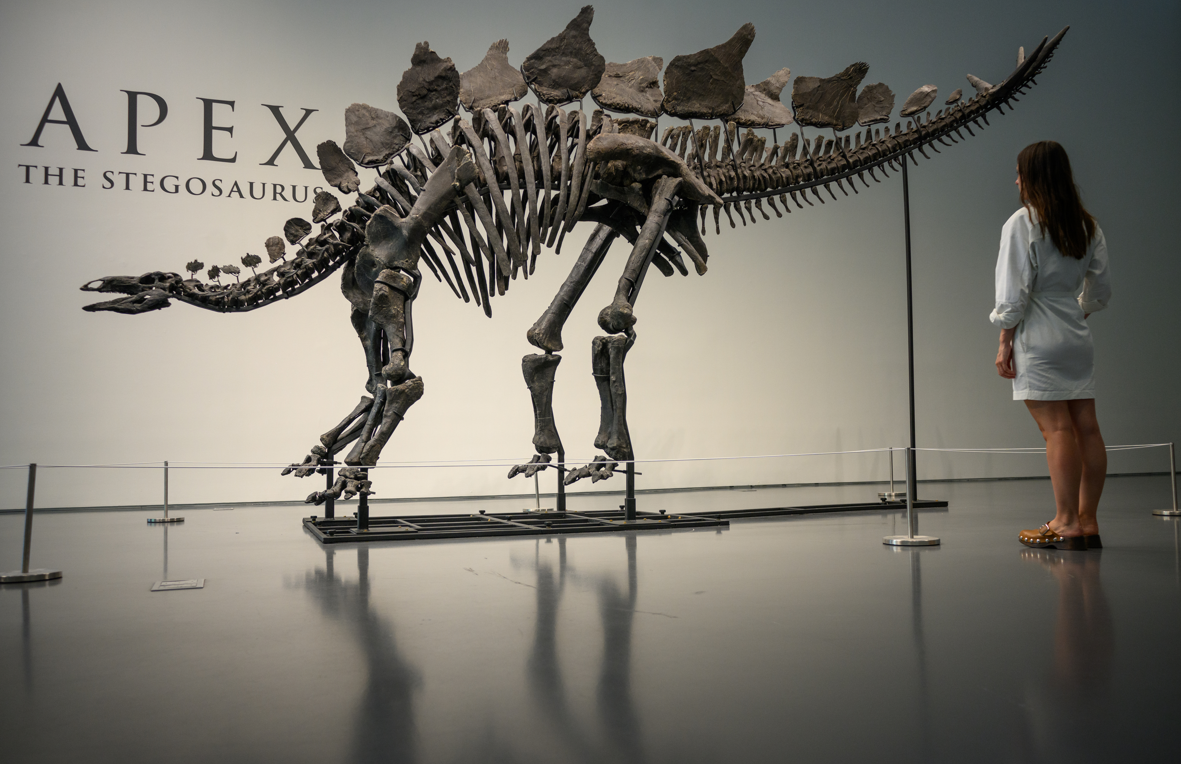
Around 110 million years ago, a dinosaur went hunting. Stalking through ferns along a riverbank, he twitched his nose to the wind and caught scent of a plant-eater ahead. His head darted upward. His eyes locked on the target. The dinosaur drew his sickle claws upward, ready to make a lethal strike. But something wasn’t right.
In China’s resurgent stock market, there’s a lesson for investors about the perils of market timing.
Navigating space is hard. It’s expensive, complex, time-consuming and dangerous. And yet you have to hand it to Elon Musk: His SpaceX firm makes it look easy.
Municipal bonds bucked the seasonal trend and posted strong performance in September.
Just 5% of board directors are under the age of 50. But research indicates that more age-diverse boards may possess unique business advantages.
Fed easing cycles and lowered target interest rates impact various economic sectors, such as mortgages, consumer credit and cash investments.
Markets broadened as anticipated. After the strong rally, our investment models advise a reduction in risk-appetite.
The introduction of crypto ETPs in the US market this year has been incredibly successful, with investors showing a tremendous amount of interest in these funds. To date, Bitcoin and Ethereum funds have seen a combined $17B in net inflows.* Yet, many investors remain uncertain about crypto's portfolio applications and how digital assets are distinguishable from one another.
We are excited to release our October 2024 Chart Pack, our visual quarterly designed to walk investors through what’s happening in markets.
The unwinding of positions in Treasury futures stands to rekindle a popular bond-market wager that’s been burned as traders pare back expectations for aggressive Federal Reserve interest-rate cuts.
US mortgage rates rose sharply for a second straight week, reaching the highest level since early August while prompting steep declines in both home-purchase and refinance activity.
Taiwan Semiconductor Manufacturing Co. raised its target for 2024 revenue growth after quarterly results beat estimates, allaying concerns about global chip demand and the sustainability of an AI hardware boom.
Boeing Co. is flexing its financial muscle even in light of a crippling labor strike and a disgraceful period of execution that resulted in two deadly plane crashes, the near-disaster of a midair door-panel blowout and whistleblowers who have detailed a culture of putting profit over quality.
When BlackRock Inc. completed its initial public offering in 1999, it fell a bit flat. There was no first day pop; Founder and Chief Executive Officer Larry Fink didn’t even get to ring the opening bell at the New York Stock Exchange. Valued at just under $900 million, the firm was one of 30 large investment-managers in the US, managing $165 billion of assets.
The bar is raised for Q3. With a handful of earnings reports delivered from major banks, companies from other sectors begin now to report results to the street.
My father is 86 and the topic of financial markets and his investment accounts invariably comes up at every family gathering. Mainly, he talks about how my mother and he have lived from their retirement accounts since they both retired more than 25 years ago.