Whether in sports or financial markets, averages often grab headlines, but they can conceal as much as they reveal. Variation—including the dispersion of metrics like credit spreads for high-yield bonds—is the real story.
This has been a bumpy year for the US economy. Although there was a massive boom in AI-related investments in 2025, policy-induced uncertainties and disruptions to official data releases clouded the picture.
U.S. stocks, as measured by the S&P 500 Index, are on pace for 14% growth in earnings for Q3 2025. This marks the fourth consecutive quarter of double-digit growth and comes in well ahead of analysts’ Sept. 30 estimates of 7%.
Despite the increasing need for retirement income security, many defined contribution (DC) plan sponsors hesitate to adopt new lifetime income solutions due to concerns over fiduciary liability and plan flexibility.
Following a rocky start to the year, the municipal bond market has shown strong performance in Q3 2025, outperforming broader bond indexes due to factors like easing oversupply and growing demand.
This article argues that the Federal Reserve's decade of ultra-loose monetary policy following the 2008 crisis, including nearly ten years of near-zero rates, has warped the perception of a "normal" interest rate environment.
Despite an intra-year drawdown of 18.9%, the S&P 500 is poised for a strong 2025, currently up about 14%. This pattern of experiencing a large correction on the way to significant annual gains is common; since 1980, the average yearly drawdown has been over 14% while the index gained an average of 10.7%.
Nvidia's strong earnings initially squashed AI bubble fears but a deep dive into its financials, revealing high customer concentration, triggered a major tech sell-off.
This article questions if the high valuation multiples are justified, arguing that investors will soon need to see actual cash flow results from this massive CapEx bonanza.This aggressive spending has caused their collective free cash flow growth to turn negative, raising concerns since stock valuation is based on future free cash flow.
Despite the "America First" focus of the current administration, international markets, particularly emerging markets (EM), have outperformed domestic financial markets. This surprising trend is highlighted by the strong performance of EM debt and equities, driven primarily by U.S. dollar weakness and corresponding monetary easing by EM central banks.
This month, the global investment community is celebrating the 25th anniversary of the world’s first fixed income ETFs, the iShares Core Canadian Short Term Bond Index ETF (XSB) and the iShares Core Canadian Universe Bond Index ETF (XBB).
Financial planning helps families organize, save, and invest intentionally. It turns goals into a roadmap, budgeting for major purchases, setting aside for retirement, and aligning investments with life milestones. But at some point, the question shifts from how to grow wealth to how to protect and structure it.
This year has certainly been a significant one for me. For the markets and the economy, it has been a big year as well. Rate cuts and no recession have been positive for stocks and bonds.
As wealth continues to grow along with soaring equity markets, and technology enables customization and choices once reserved for a select few investors, financial advisors are tasked with constantly evolving to maintain their value position.
Interest rates are undergoing one of the steepest reversals in half a century. In 2020, governments could borrow for 30 years at just over 1%. Fast forward to 2025 and U.S. 30-year yields have risen above 5% for the first time since 2007.
According to market theory, persistent outperformance shouldn’t exist. However, companies with high and stable profitability, strong balance sheets, and disciplined capital allocation have demonstrated the ability to deliver superior returns with lower risk over time.
The trade dispute with the U.S. is proving to be a 'full-blown blizzard' for Canada, threatening to freeze cross-border commerce in a deeply integrated relationship. Despite the majority of goods remaining duty-free, new tariffs—reaching 35% in key sectors—have caused a sharp decline in Canadian exports, pushing the nation toward recession.
At Vanguard, we are always working to make our target-date funds (TDFs) better. That means regularly reviewing our glide-path design and diving into specific asset allocation topics to ensure that our strategies evolve with the market and continue to meet our clients' needs.
Corporate America delivered another exceptional earnings season, with third-quarter S&P 500 earnings growth tracking over 13% and achieving one of the highest beat rates ever recorded. Companies successfully adjusted to shifting macroeconomic pressures, including tariffs, as expectations continued to rise. The impressive results were bolstered by robust revenue growth and significant investment from mega-cap technology firms.
Although most economists have issued dire warnings about the damage tariffs and other ill-advised policies would cause, the US economy’s aggregate indicators have remained quite robust. Some of the costs may simply have been postponed, but rapid advances in AI could well offset them when they fall due.
This impressive performance, fueled largely by the prominent allocation to the "Magnificent Seven" tech stocks, highlights the strong adoption of ETFs and VOO's role as the premier choice for U.S. equity exposure amidst a challenging macro environment. This success helped the entire ETF industry surpass its previous trillion-dollar record.
This article argues that a grateful mindset is a powerful strategy for improving financial and investment decision-making, citing research that links gratitude to better outcomes and overall well-being.
Jeff Schulze, Head of Economic and Market Strategy at ClearBridge Investments, discusses key spending, employment and other policy factors he is following as we look forward to 2026.
Like ducks on a pond, markets often appear calm on the surface while churning furiously underneath. For financial markets, above the surface, attention has focused on equity market valuations and record-tight levels of credit spreads, but a deeper look reveals even more extreme dynamics below.
In a recent episode of the Money Metals podcast, host Mike Maharrey sits down with Jordan Roy-Byrne, CMT, MFTA, editor and publisher of The Daily Gold, to unpack where gold and silver are in the current cycle.
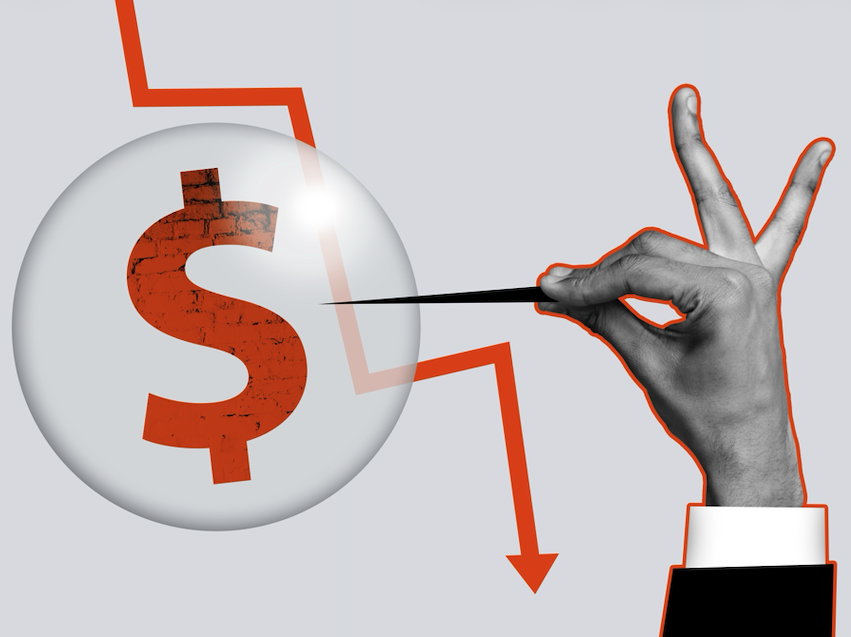
Yes, we may be in the second market bubble of this century. Alternatively, the market may be pricing in a shift as fundamental as the transition to either electricity or the internet. Either way, investors must think clearly, act deliberately, and avoid the kind of blind speculation that turned past booms into bloodbaths.
Investors are needy. Insatiable, really. But it makes sense: If an investor buys a share of a company, they’re going to want some benefit from it.
Emerging market (EM) equities have seen exceptional outperformance in 2025, with major countries like South Korea and Brazil posting massive gains. The primary driver of this trend has been a weakening U.S. dollar, which historically encourages capital flow outside the United States. The critical question now for investors is whether this dollar weakness marks the start of a multi-year downtrend or is simply a temporary correction.
Today’s massive and still-growing investments in AI and its accompanying infrastructure could well pay off like the internet did, following the investment boom of the late 1990s. But, for now, the gains from AI look more muted, and the macro downsides larger, than in the case of the dot-com bubble.
This article reviews historical and contemporary attempts by world leaders—from Nixon's price controls to European energy subsidies—to contain costs, ultimately illustrating the limits of policy intervention in combating inflation. While some measures provided temporary relief, the persistent challenge of high prices remains a central political concern.
Despite facing rising tariffs and trade barriers globally since the U.S.-China trade war began in 2017, Chinese exports have surprisingly continued to grow. Total annual exports have expanded by 58% since 2017, reaching a staggering $3.58 trillion, which is a performance far better than many analysts predicted given the severity of the trade conflict.
Retail earnings ahead of Black Friday show a clear split: value-focused discounters like TJX and Walmart are thriving, while Target and home improvement stores struggle with consumer pullback on discretionary items. This shift reflects broader economic pressure, as consumers trade down due to high prices, weakening income sentiment, and increased reliance on credit.
The ALPS Electrification Infrastructure ETF (ELFY) is drawing investor attention as U.S. electricity demand heads for its fastest growth in decades, driven by artificial intelligence data centers, manufacturing reshoring, and expanding electric vehicle infrastructure.
Nvidia CEO Jensen Huang turned heads earlier this month when he told the Financial Times he believes China will win the artificial intelligence (AI) arms race due to the country’s expanding power capacity and lack of regulatory bottlenecks that slow things down here in the U.S.
Amid concerns that the traditional 60/40 investment mix no longer works, financial experts are recommending a 20 percent allocation to gold as a necessary portfolio adjustment. This shift is driven by the fact that gold is increasingly viewed as the most reliable hedge against inflation and government spending, unlike bonds which have lost their safe-haven status. Consequently, investors are initiating a "quiet revolution" by moving billions into gold ETFs.
Bitcoin miners are landing contracts with some of the world’s largest technology companies. This happens as they pivot from cryptocurrency mining to artificial intelligence infrastructure, according to recent research from CoinShares.
In this new series, Chuck Carnevale, co-founder of FAST Graphs and widely known as “Mr. Valuation”, begins the process of constructing a F.I.R.E. Dividend Growth Portfolio from the ground up. F.I.R.E., which stands for Financial Independence, Retire Early, is built on the idea of creating enough growing income to eventually support early retirement.
Returns from emerging market bonds hinge on five factors, our economic research suggests. And for the first time in two decades, four of these are now favourable, heralding a new phase of outperformance for the asset class.
While financial innovations often emerge on the system’s periphery, beyond the reach of regulation, if they prove to be systemically important, they end up being integrated into the system’s regulated core. Stablecoins are likely to follow this trajectory.
Although the September employment report surprised to the upside, the overall stance of the US labor market remains weak, something that was underscored by the third consecutive increase in the rate of unemployment, from 4.1% in June to 4.4% in September.
Transitioning to an independent RIA model involves complex challenges, from navigating compliance and non-solicitation agreements to setting up scalable technology. This article highlights how specialist partners, specifically Terrana Group’s Advisor Transition Consultants, provide the strategic guidance and hands-on support needed for a seamless and profitable move.
After a gangbuster stock market rally since the early-April lows, many of the prior highfliers have taken a breather amid AI bubble and valuation concerns.
Many of you may have recently seen a chart circulating on the internet suggesting a nationwide collapse in home prices is on the way, that we are in the “biggest bubble in history,” the collapse is “inevitable and nothing can stop it.”
Markets traded with an unusual mix of strong micro data and fragile macro sentiment last week and nowhere was that clearer than the reaction to Nvidia’s excellent earnings. The fundamentals showed strong demand, a robust product cycle, and clean forward guidance—yet the stock slumped after an early surge.
The U.S. economy’s recent growth has a distinctive engine: large‑scale capital expenditures (capex) tied to artificial intelligence (AI). Firms such as Microsoft, Alphabet (Google), Meta Platforms, and Amazon have announced massive investments in data centers, servers, networking equipment, and AI infrastructure.
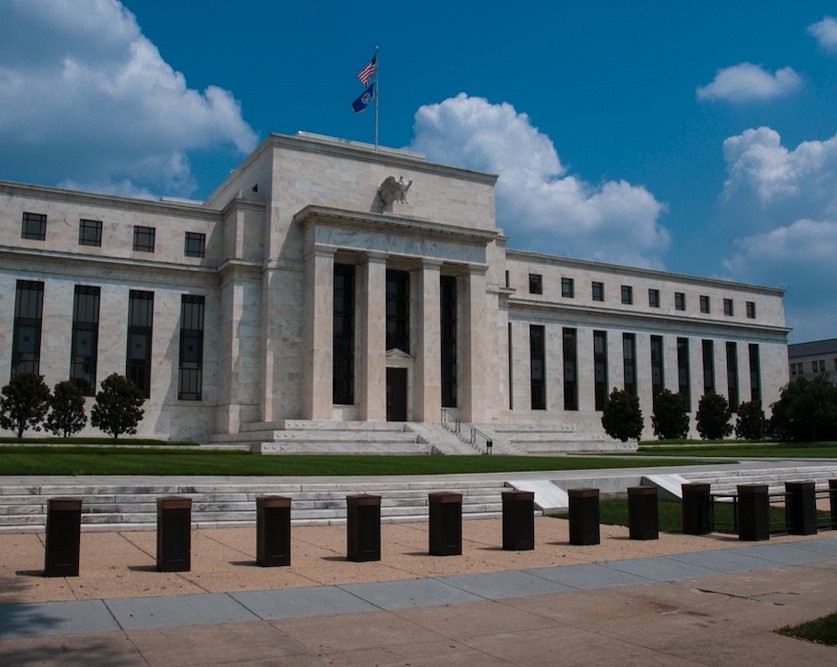
This article explores the growing changes and challenges facing the Federal Reserve. It argues that due to political pressure and fiscal irresponsibility from Congress, the Fed is losing its policy effectiveness and its long-held tradition of consensus voting is breaking down, leading to an era of unpredictable decisions.
AI looks like a classic investment bubble to us, with very high valuations and signs of rampant speculation. But we recognize that while many investors harbor fears that AI might be a bubble, they are far from sure of that fact and tend to assume the market is appropriately priced as a fairly strong prior.
With Thanksgiving around the corner, there’s so much to be thankful for in 2025, especially for investors. After a challenging start to the year, the economy and markets regained their footing quickly, with nearly all asset classes on track for solid gains heading into year-end. Looking ahead, there are reasons for optimism to continue into 2026 as well.
Answers to questions investors are currently asking about Treasury bonds, tax policy, credit quality and other issues currently affecting fixed income investments.
The SEC has granted Dimensional exemptive relief to offer dual share class funds, a move that allows certain mutual funds to offer an ETF share class under the same structure. This monumental decision, following the expiration of Vanguard's patent, is expected to open the floodgates for other asset managers seeking to offer their existing mutual fund clients the tax efficiency and structural benefits of ETFs.