2025 brought new tax policy changes. Prepare early to understand deductions, charitable giving and retirement contributions. Our Bill Cass explains how organizing documents and consulting an advisor can optimize your filing, ensuring a smoother process.
When it comes to investing, you don’t have to do it alone. Whether you’re planning for the future with your spouse, growing wealth with a family member, or expanding your goals alongside a business partner, a joint brokerage account allows you to share the opportunities and responsibilities that come with growing your money together.
Kevin Warsh began his April 2025 lecture to the International Monetary Fund (IMF) by comparing today’s economic environment in a period of extraordinary consequence, arguing that the greatest risks to prosperity originate not from external forces but from decisions made within leading economic institutions.
Our underlying theme for 2026 is that investors should focus on Process Over Predictions. The instinct of many investors is to chase the "winners" of the previous cycle or expect spectacular growth to continue indefinitely.
The challenge for investors is that the moments when action feels most urgent are often the moments when patience is most valuable. Much of modern investing is built around the illusion that more information always leads to better outcomes.
Investors seeking protection from geopolitical volatility and stubborn inflation in 2026 may find opportunity in short-term bonds, where active management has historically delivered returns 25% higher than passive strategies, according to Vontobel Asset Management.
New research connects intensifying natural perils to their future implications for asset classes.
Tech stocks and the AI trade have powered global markets ever since the bull run began in October 2022.
The term private credit is often reduced to its most literal meaning – lending money privately. While accurate, Chris Getter, managing director and portfolio manager at Simplify Asset Management, believes that definition does a disservice to the asset class.
Throughout most of 2025, silver has recently outperformed gold, proving (ironically) that it is not always second place. Strength in silver built gradually through last year, but the latest pullbacks are a reminder that near-term market reactions can outweigh fundamentals and long-term investor sentiment.
We believe we’re entering a new era of dispersion in the performance of financial assets. Behind buoyant index averages are sharply bifurcated cohorts of winners and losers.
As the ETF universe continues to expand, a fundamental shift is underway with investors moving beyond simple market access toward outcome-driven construction. Dina Ting, Head of Global Index Portfolio Management, discusses how different index-based ETF strategies are being used to design portfolios aligned with specific goals rather than just reacting to market noise.
Earnings results are shaping up to be quite solid this season, albeit a bit weaker relative to prior quarters when it comes to beat rates and price reactions.
It may be fitting that Groundhog Day occured on a Monday this year. Punxsutawney Phil has been officially prognosticating the weather since 1887.
Client demand for tax planning is high, yet many advisors may still fall short of meeting expectations. Direct indexing can offer tax benefits such as the potential for tax-loss harvesting but remains underutilized across the advisor community.
Natural gas prices surged to multi-year highs in January on the back of sharply increased demand resulting from a major late-month storm and persistent cold snap that left much of the United States blanketed in ice and snow.
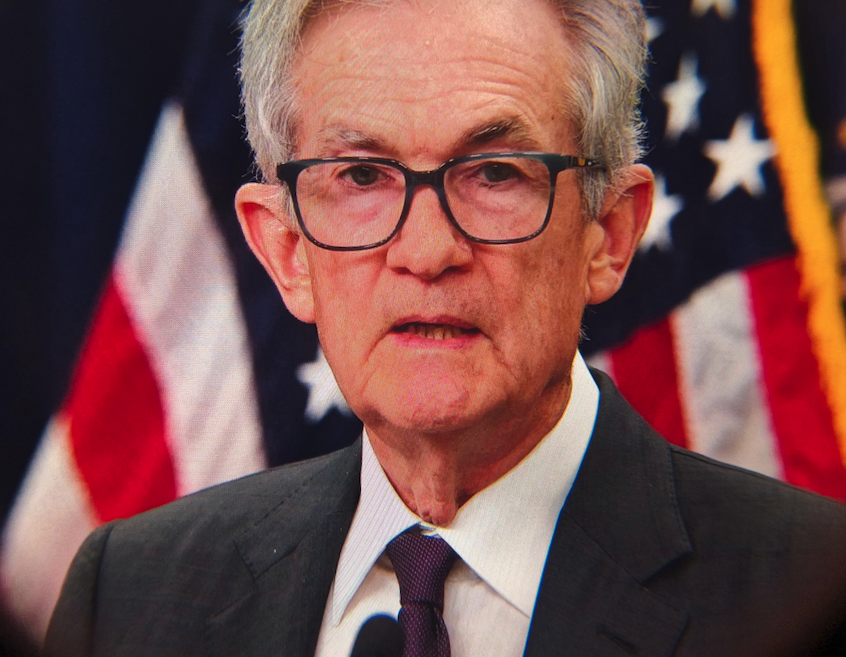
Federal Reserve Chairman Jerome Powell stuck to the script by announcing on Wednesday that the Fed would keep interest rates unchanged. Powell has historically telegraphed interest rate moves, and this time was no exception: the financial markets expected the Fed to stand pat.
Despite an aging credit cycle, private credit still plays a starring role.
Morgan agreed that the move looks parabolic on a chart. He also cautioned against assuming the rally is just retail euphoria. He pointed out that many physical silver holders have been net sellers even as prices rise, which implies the strongest buying pressure may be coming from larger, more strategic sources.
Active fixed income ETFs stand out amid the broader transition from mutual funds to ETFs, with DSCO a recent switch.
The start of 2026 has brought no shortage of challenges for advisors, ranging from shifting rate expectations to valuation concerns in a top-heavy market. Nonetheless, ETFs gathered an impressive $165 billion of new money in January, more than the previous three Januaries combined, according to State Street Investment Management.
There’s an ongoing shift in how investors access income through ETFs. No longer is sourcing income a pursuit centered solely on fixed income assets. Today, it increasingly includes the use of derivatives to boost yield and total return, and to capitalize on equity volatility.
Last week began with a quiet Fed meeting, but markets quickly received a new catalyst with Trump announcing Kevin Warsh was Trump’s choice to be the next Federal Reserve chair. Warsh was always my first choice. I expect the Senate to confirm him.
So, President Trump has announced his pick for Federal Reserve Chairman, and the markets are not pleased. Everybody seems convinced that Kevin Warsh is a “hawkish” pick, and markets are throwing a temper tantrum because they think he might take the easy money punch bowl away.
After much speculation and wild swings in market expectations, President Trump has nominated Kevin Warsh as his Fed chairman. If confirmed, he is expected to replace current Chair Jerome Powell in May at the end of his term.
With rising geopolitical tensions, sharp market swings and Congress at odds over Department of Homeland Security funding – likely to cause a brief government shutdown – there’s no shortage of factors influencing sentiment. Here, we address some of the most prominent headlines shaping sentiment and offer our perspective.
Market cycles are once again at the center of the investment narrative as we head into 2026. The optimism is familiar as earnings held up in 2025, the economy avoided recession, and big tech lifted the indexes. However, those victories are already reflected in the price.
Get ready each week with high-conviction insights that go beyond media headlines.
Affordability and the cost of living have become frequent topics of conversation. Costs rose, but incomes did not immediately keep pace. The rate of inflation has moderated, but consumers remain sensitive to high prices, worried they are falling behind.
President Trump has announced his intention to nominate Kevin Warsh to become the next chair of the Federal Reserve Board of Governors. We believe Warsh will be confirmed by the Senate and serve as an effective, thoughtful Fed chair. He brings intriguing ideas on ways to change and ideally improve how the Fed operates.
LPL Research examines how the Fed is entering 2026 amid constrained conditions and as growth and inflation meet an unsustainable fiscal trajectory.
Since ChatGPT burst onto the scene in 2022, artificial intelligence (AI) has moved from science-fiction to reality. For many, AI has become a necessity. The transformation has been swift. Nearly every company now wants to integrate generative AI into their business model, while governments are scrambling to develop sovereign AI infrastructure.
January reinforced our key theme for 2026 – returns must be earned. Markets moved beyond the mag 7 as solid economic growth, a more patient Federal Reserve, and widening market leadership rewarded disciplined diversification. Gold’s parabolic rally and violent reversal showed what happens when discipline breaks down.
Climatically, Europe has been fortunate: its winter has been moderate so far. But Europe’s need for fuel remains substantial, and the cooling of relations between the U.S. and the European Union (EU) may make it more difficult to keep EU homes and the EU economy warm.
February arrives quickly, and for many high-net-worth individuals and families, tax preparation may still be sitting on the to-do list. If your financial life includes multiple income streams, investment accounts, business interests, trusts, or philanthropic strategies, tax season is not something to rush.
The dollar finished the month down 1.3% for a litany of reasons, including our progressively nastier spat with Canada and the Trump administration's insistence on liberating Greenland.
This week’s press conference by Federal Reserve Chair Jerome Powell was one of the most consequential of his tenure at the helm of the Federal Reserve (Fed).
President Trump finally made his pick for Fed Chair and it is Kevin Warsh. A Wall Street Journal editorial said Warsh has been “the leading voice in public life for reforming the Fed.”
Headline whiplash returned to US equity markets last week, but this time the drama wasn't geopolitical. On Thursday, the tech-heavy Nasdaq fell 1.3% as the market digested mixed results from some Magnificent Seven earnings reports.
The ETF industry has carried its record-breaking momentum from 2025, surpassing $100 billion in flows before the end of January.
Momentum investing often looks Wile E. Coyote chasing the Road Runner off a cliff. Investors rush into hot trades, and instead of stopping at the cliff's edge, enthusiasm and a disregard for fundamentals expose their portfolios to unexpected risk.
Mainstream expectations, those from Wall Street, economists, and corporate strategists, have congealed around a bullish economic outlook for 2026. Most forecasts project stronger economic growth, with contained inflation, and continued investment in technology and capital expenditure.
In a move that underscores the relentless downward pressure on investment costs, Vanguard announced that it has slashed fees for 84 mutual fund and exchange-traded share classes. These reductions, spanning 53 different funds, represent nearly $250 million in estimated savings for investors in 2026 alone.
Today we’re going to explore this “affordability” issue, looking at economic facts, survey data and simple intuition. As you’ll see, it’s not as simple as some people think. I also make a quick comment about the appointment of Kevin Warsh as Fed chair at the end.
Even though it’s still early days in the age of artificial intelligence (AI), it sometimes feels like this innovation has been around forever. In that short time, the pace of change has been staggering.
At its January meeting, the U.S. Federal Reserve (Fed) voted to pause its rate-cutting cycle, a move that aligns with recent signs of stabilizing labor markets and easing inflation pressures.
Advisors who understand the latest industry trends can better position their practices for sustainable growth and long-term success. Let’s explore the top trends driving RIA growth in 2026, from consolidation and digital client acquisition to expanded services and the rising influence of private capital.
Investing in common stocks is rarely a smooth experience. Stock prices fluctuate daily, sometimes dramatically, driven by market sentiment, economic data, and short-term news. Even company earnings, while more stable than prices, can experience cycles and periods of volatility.
Municipal credit remains strong in 2026 with high reserves and sector resilience. Still, policy changes and economic pressures ahead warrant attention.