As index investing continues to evolve, it does not have to be towards ever-expanding complexity. Sometimes progress comes from asking simpler questions and answering them consistently.
According to just about every significant economic indicator, including the December jobs numbers released Friday, the US economy is doing fine. Not great, mind you: Job growth stalled in 2025. But unemployment is low, gross domestic product growth is solid, and inflation is seemingly trending downward.
Going public used to be a sign that a company had made it. In the last decade or so, however, IPOs started to become a little … cringe.
Living in a bipolar economy is hard. Last year saw wild swings in attitudes about the economy and financial markets. Not a bad year overall, but it was a rough ride at times. Today and next week, we’ll look ahead to 2026, drawing on my expert network and my own ideas as well.
The removal of Venezuelan President Nicolás Maduro under “Operation Absolute Resolve” has materially improved the country’s outlook by breaking a long-standing political and economic impasse that had prevented reform, external engagement and debt resolution.
Well-known factors such as value and momentum are widely recognized to have predictive power. Advanced systematic approaches, however, seek to identify additional drivers of performance—including proprietary factors—to integrate into their multifactor models.
The ETF ecosystem grew once more in December with more than 100 new launches joining the fray. Three funds invite a closer look.
As we kick off the new year, here are some suggestions for areas to focus on with your team in 2026 to build momentum, enhance momentum or change direction
The defining feature of every bubble is the same: a growing inconsistency between the long-term returns that investors expect in their heads - based on extrapolation of the past, and the long-term returns that properly relate prices to likely future cash flows - based on valuations. Every bubble smuggles the same tragic past into the same tragic future by packaging it with new wrinkles that convince investors that this time is different. Ultimately, they still end the same way.
Trillions of dollars hang in the balance of two questions that dominated this year and loom perilously large over the next. “Will the artificial intelligence bubble burst?” and “Will China beat the US?”
RiverFront’s Investment Team is proud to present the summary of our 2026 Outlook, which will be released this Friday, December 19th. In 2025, the tech-heavy US stock market rode a wave of AI awareness and spending.
In 2025, Advisor Perspectives’ most-read commentaries mainly centered on uncertainty around U.S. equities and on record-high valuations, in particular. Key themes included the bleak forecast for U.S. equities and the opportunities presented by non-U.S. stocks. Other articles weighed in on the risks around private equity that await retail investors delving into the space and on the investment potential of utilities due to AI and the shift to clean energy.
Like previous generations, most young people are going to end up owning homes. The housing market is in transition, and despite the current lack of affordability, there’s compelling evidence that we’re grinding back toward more normal levels.
As we pass the halfway mark of the 2020s, comparisons now abound between our current decade and the roaring 1920s. F. Scott Fitzgerald best captured the opulence of the Flapper Era in The Great Gatsby, “They were careless people, Tom and Daisy — they smashed up things and creatures and then retreated back into their money or their vast carelessness.”
Finding ways to effectively diversify a multi-asset portfolio allows investors to maintain their strategic equity allocation while managing risk. We may be entering a period when bonds can, at least in part, start to once again fulfill that function.
Planet-warming greenhouse gas emissions kept rising in 2025 and country pledges to cut them are nowhere near where they need to be to avoid catastrophic climate change, but there were silver linings too.
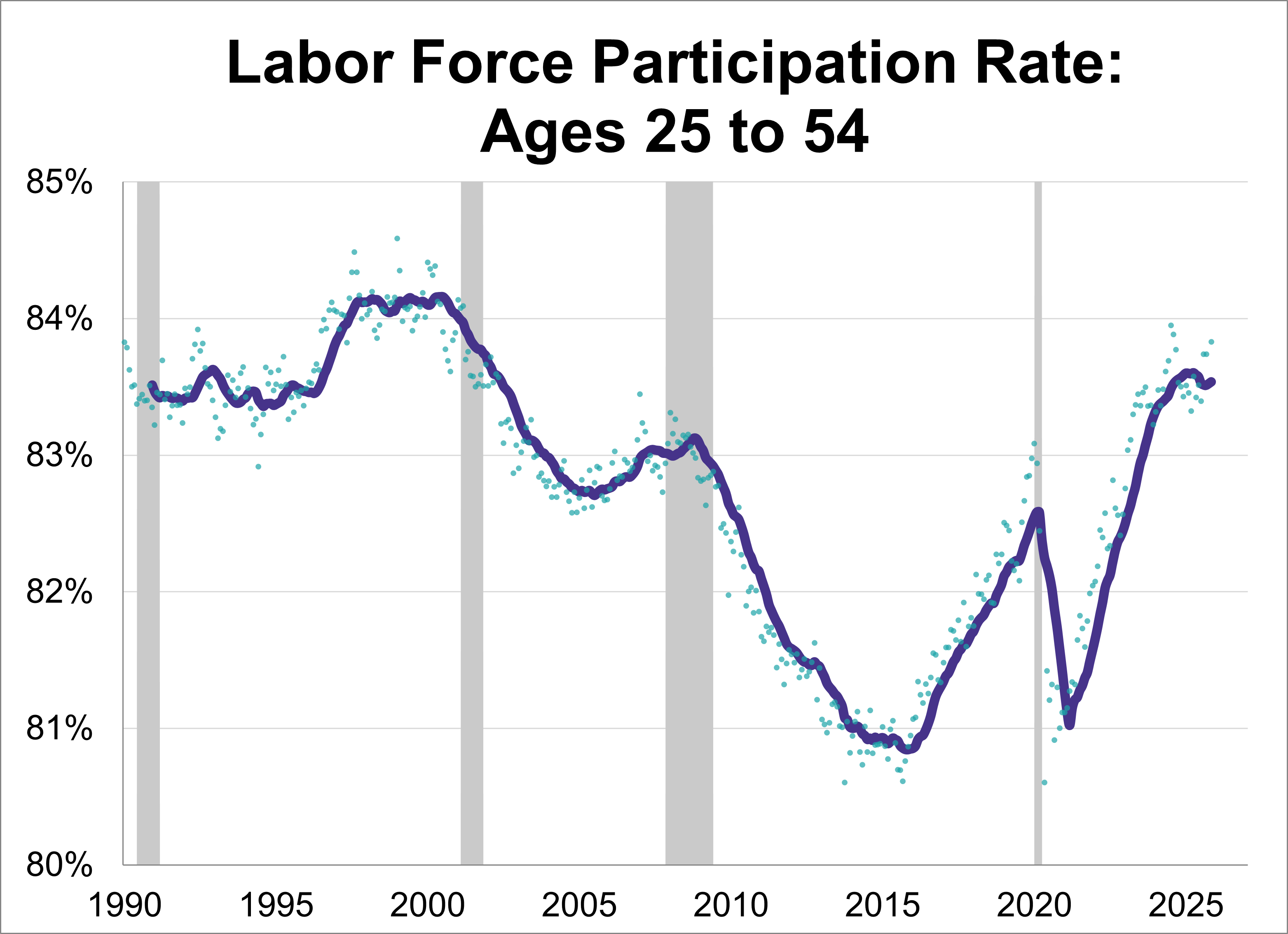
Our monthly workforce recovery analysis has been updated to include the latest employment report for November. The unemployment rate inched up to 4.6%, its highest level since 2021. Additionally, the number of new non-farm jobs (a relatively volatile number subject to extensive revisions) came in at 64,000.
This week, President Donald Trump ordered a blockade of oil tankers entering and leaving Venezuela, dramatically escalating U.S. pressure on the Maduro regime.
Many beneficiaries who inherited retirement accounts after 2019 must begin taking required minimum distributions in 2025 under the SECURE Act's 10-year rule. Our Bill Cass notes that heirs should plan distribution strategies based on their individual tax situations.
On this episode of the “ETF of the Week” podcast, VettaFi’s Head of Research, Todd Rosenbluth, discussed the VictoryShares Free Cash Flow Growth ETF (GFLW) with Chuck Jaffe of Money Life. The pair discussed several topics related to the fund to give investors a deeper understanding of the ETF.
One of the most important roles of a financial advisor is to help retired clients determine how much they can afford to spend each year. It might be a good idea for advisors to ascertain whether their client’s spending goals are actually consistent with a retirement paychecks approach.
ClearBridge Investments expects a broadening of market participation that should benefit more diversified portfolios in 2026.
Emerging market carry trades, a popular strategy that returned about 17% in 2025, are widely expected to continue yielding gains in 2026 due to persistent interest rate gaps and a weakening US dollar.
Investors are navigating not just uncertainty, but an unstable environment influenced by tariffs and inflation, among other factors. While volatility may increase, there is likely room for another solid year in 2026, especially for fixed income and international stocks
Value seems to be having a moment — over the last six weeks value style and value factor indexes (a subtle but real nuance, as we will show) are outperforming representative broad market and a representative growth style index.
Despite the concern post-2024 election about rising U.S. deficits and a potential return of "bond vigilantes," the supply side of the Treasury market has remained stable, with deficits settling near the $1.8 trillion baseline.
The U.S. economy depends on consumers buying stuff. Persistent price inflation forced Americans to blow through their savings and then turn to credit cards to make ends meet.
The dot-com bubble burst in 2000. Now, 25 years later, anxiety abounds about the potential for a similar AI bubble burst and resultant crash.
Growth, growth, and more growth — that’s been the common refrain in the current market environment. However, peeking from behind the curtains is the quality factor. While it has yet to receive the full spotlight in 2025 relative to growth, it’s due for a breakout performance (potentially in 2026).
We believe the macro environment will continue to be unstable given policy crosscurrents and a wobbly labor market, but stocks can likely churn higher given a firmer earnings backdrop.
While Netflix Inc. and Paramount Skydance Corp. vie for President Donald Trump’s blessings in their competing bids for Warner Bros. Discovery Inc., investors have an irony to consider.
A conventional data center uses between 5,000 and 15,000 tons of copper. A hyperscale data center, on the other hand—the kind being built to run artificial intelligence (AI)—can require up to 50,000 tons of copper per facility, according to the Copper Development Association.
Federal Reserve officials are poised to cut interest rates again next week, but any benefit to the economy is likely to take much longer to show up than normal and may be blunted by factors that monetary policy can’t control.
In this third installment of the retirement income series, Chuck Carnevale (“Mr. Valuation”) walks through the completion of a hypothetical $2 million dividend portfolio designed for a retiree who requires at least $100,000 per year in income—equivalent to a 5% yield, with annual income growth to offset inflation.
here’s something comforting about dividends. For decades, investors have turned to them as tangible proof that a company is generating real cash flow and is willing to share it.
Spreads are essential for investors who utilize leverage, but for most fixed income investors, yields are much more important. Fortunately, in today’s market, yields are relatively attractive despite historically tight spreads.
We expect 2026 to be another good year for fixed income investors. However, yields that are lower than where they were a year ago and less room for rate cuts by central banks likely will mean less-robust returns.
The passage of new US stablecoin legislation has intensified Wall Street debate over the tokens' potential to significantly boost the dollar and become a multi-trillion-dollar source of demand for short-dated Treasuries.
Thanks to AI-generated power demand, the utilities sector is losing its traditional defensive role. Is this a permanent move, or will utilities ultimately regain their place?
November’s markets were choppy but ultimately flat as investors weighed AI valuations, falling Treasury yields, and expected Fed rate cuts. This commentary breaks down what truly drove the month’s volatility and what the latest labor and policy signals mean heading into 2026.
AI’s buildout is dominated by a handful of companies that are spending on a scale so large, it has macro impact. The challenge for investors is reconciling whether AI will generate revenues of the same order of magnitude as the huge capital spending plans.
High-quality stocks have underperformed sharply across markets in 2025. For instance, in U.S. small caps, companies with negative earnings have outperformed profitable ones by about 20% since Liberation Day, while the Russell 2000’s rally has favored high-volatility, unprofitable names.
Let me introduce you to an approach I call the "Book of Life" methodology, a research-based strategy that transforms how new advisors build both their knowledge and their networks.
Interest rates are undergoing one of the steepest reversals in half a century. In 2020, governments could borrow for 30 years at just over 1%. Fast forward to 2025 and U.S. 30-year yields have risen above 5% for the first time since 2007.
According to market theory, persistent outperformance shouldn’t exist. However, companies with high and stable profitability, strong balance sheets, and disciplined capital allocation have demonstrated the ability to deliver superior returns with lower risk over time.
Like ducks on a pond, markets often appear calm on the surface while churning furiously underneath. For financial markets, above the surface, attention has focused on equity market valuations and record-tight levels of credit spreads, but a deeper look reveals even more extreme dynamics below.
After a gangbuster stock market rally since the early-April lows, many of the prior highfliers have taken a breather amid AI bubble and valuation concerns.
We enter 2026 after a year of robust global stock gains on AI optimism, falling interest rates and a resilient world economy. Beneath this stability, however, lies a more fragile environment.
The continued slump in the housing market is now being compounded by a weakening U.S. labor market and a surge in mass layoffs. This labor uncertainty is making potential buyers reluctant to commit to purchases, even as affordability improves and mortgage rates stabilize. This dynamic is leading homebuilders to reduce construction and staffing, further worsening the job market.
While passive portfolios have excelled recently due to mega-cap dominance, the article warns that market disruption and concentration make them vulnerable to a sudden reversal in sentiment. It asserts that skilled active management is essential now to identify future winners and benefit from a potential broadening of the equity market.