This is the fifth and last blog in our 2020 series, discussing why Russell Investments believes in the value of advisors. Here we discuss tax-smart planning and investing.
For some of my clients, retirement has not been what they imagined or hoped it would be; particularly for a generation of men who didn’t come to terms with the loss of their career identity or finding new and appealing ways to stay active.
Here are five growth opportunities that will help you advance your firm while the competition sits on the sidelines.
During the recent Advisor Perspectives Thought Leader Summit, two of the industry’s most respected experts shared their best practices and insights on growing and scaling your business with fintech solutions.
I celebrated my birthday on November 3. Every year, I step back and take stock of what I have learned over the previous year. What insights or ideas can I bring to advisors for them to think about for the upcoming year?
While the election is still not certified, and court battles will drag on, it appears that we can draw two firm conclusions from the 2020 election. First, the pollsters were horribly wrong again. Secondly, American voters do not want a radical shift in economic policy.
Advisor Perspectives, a leading publisher serving financial advisors and the financial advisory community, has announced its Venerated Voices™ awards for commentaries published in Q3 2020.
The United States faces a $3.1 trillion annual deficit supported with interest rates at or near zero. The Fed and government are rapidly exhausting their arsenal to fight current and future recessions. Equally troubling, almost all of their actions offer little or no future benefit, but the costs stay with us.
Defensive equities are usually found in sectors that have withstood market shocks, such as utilities and real estate. But as COVID-19 shakes up investment conventions, companies with intangible assets are being more appreciated for their volatility cushion.
I want to discuss a recent WallStreet Journal article by Ruchir Sharma entitled “The Rescues Ruining Capitalism.” We talk much about the bailouts and stimulus programs related to the economic shutdown and pandemic. However, the bailouts began back in 2008 when the Federal Reserve intervened with the insolvency of Bear Stearns.
Businesses love Congressional gridlock. Tech stocks had been trending down for days before the election as they faced antitrust scrutiny, but now that it appears certain Congress will remain divided, they’ve recovered most of their losses. The tech-heavy Nasdaq 100 jumped close to 10% for the week.
Today I want to use the election to illustrate just how complex a seemingly simple situation can be. This matters not just politically, but economically as well.
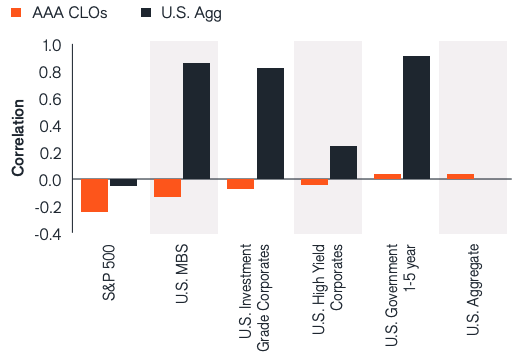
In an environment where interest rates are low and the risk of higher Treasury yields has risen, Portfolio Managers from Janus Henderson Investors discuss how allocations to AAA rated CLOs may help investors diversify a traditional fixed income portfolio, offering lower volatility, higher credit-quality and less sensitivity to any rise in interest rates.
In today’s blog, I will update the current status of the election results, extend the conversation with regards to the market reaction at this point and revisit what we see as the most important factors investors should be considering going forward.
Reflecting on the post-election landscape, Jeffrey Gundlach expects a split government to emerge, with a Biden presidency, Democratic House and Republican Senate. That outcome explains the gains in U.S. equities this week, but stocks are now “really overvalued.”
The post-pandemic world is charging into change. Trends that were in play prior to the onslaught of COVID-19 have been accelerated, and many of the companies that were already leading the charge are emerging supercharged.
History does not repeat, but it rhymes, as Mark Twain observed. As such, we are struck by the eerie and dangerous parallels between today’s markets and the markets back in 1999. Back then, Value investing and Value managers were under the gun for having underperformed their Growth brethren for too long.
At dinner tables throughout emerging markets, middle-class families tuck into comfort food, share details about their day and toast each other's successes. Languages and cuisines may differ, but many elements of everyday life are often quite similar.
When you run an equity portfolio which is concentrated in 25-30 common stock selections, there are usually three stocks which stick out as particularly attractive at any given time.
Fear of failure keeps you from trying anything.
While getting into a groove with your social media plan may take some trial-and-error, there are some crucial commandments to maximize your potential and reach.
It isn’t right for my firm’s partners to avoid dealing with each other and then make us the problem.
With just two days remaining before the final votes are cast, President Donald Trump’s obstacles to re-election look insurmountable. The pandemic he wished would miraculously go away is entering its third wave.
Jeffrey Gundlach, who famously predicted Trump’s victory in 2016, says the president will secure another term. David Rosenberg acknowledged that possibility, but is not so sure of the outcome. Both offered their predictions for the post-election economy and markets.
With the economic and market uncertainty brought on by the pandemic, investors, especially those nearing retirement, are looking to protect their savings. They need to guard the wealth that they worked hard to build. That has led to a growing interest in certain types of annuities that provide shelter against market volatility and offer the promise to grow one’s wealth and income.
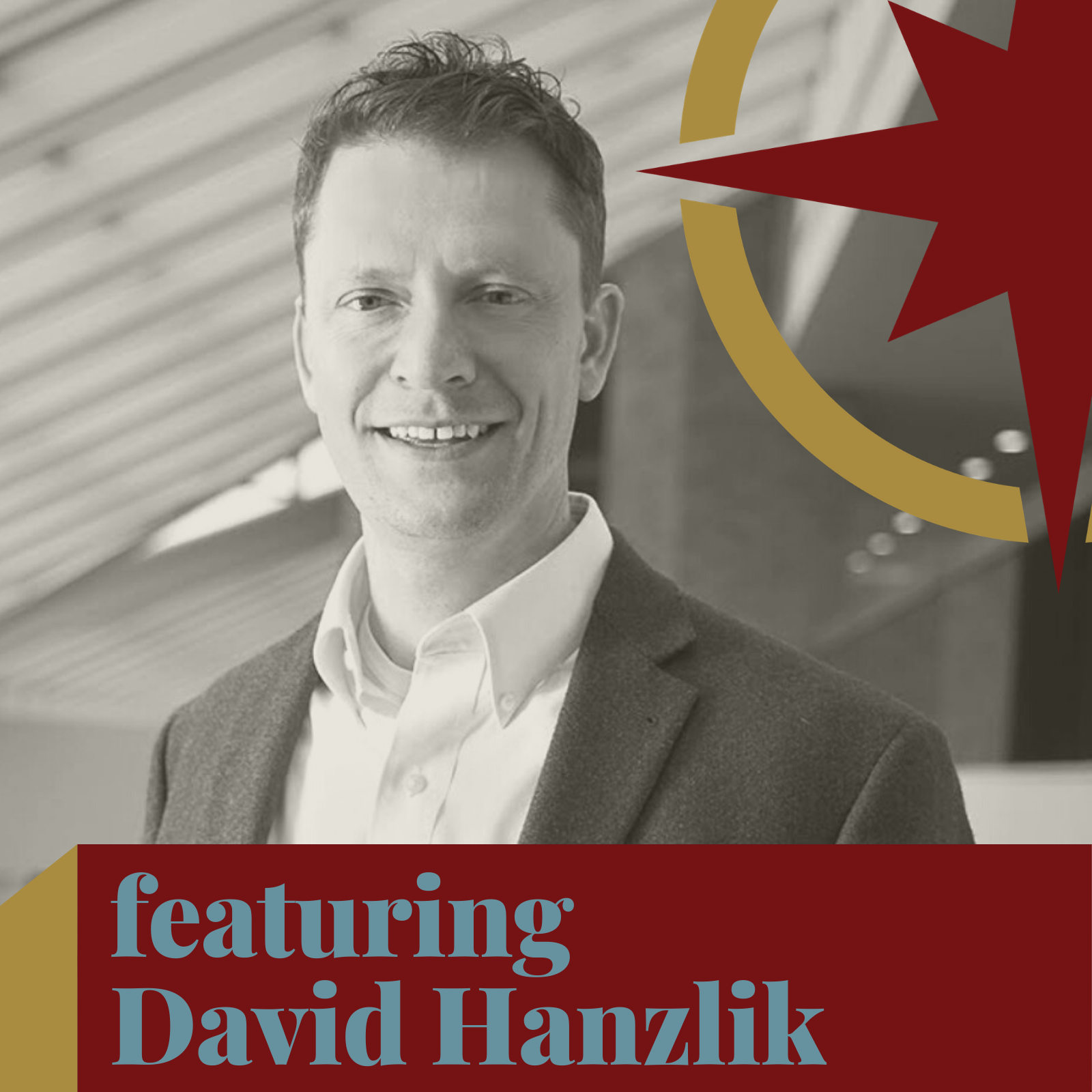
David Hanzlik is the vice president of annuity and retirement solutions at CUNA Mutual Group, where he brings a relentless energy, passion and focus to developing solutions that help guarantee consumers a brighter financial future through simplicity and accessibility. Trained as an actuary, David leverages a financial discipline and a concern for his clients’ long-term risk. He leads the CUNA’s retirement and annuity product management, including the development of its structured annuity offerings, the fastest growing segment of the annuity industry space in the United States.
Here is a link to the CUNA Mutual web site, where you can find more information about its annuities.
The volatility of the cross-currency basis was a point of focus throughout March and April, swinging wildly in either direction as funding stresses surfaced. A scramble for liquidity and dollars was, with impressive effectiveness, ultimately satiated by the handiwork of central banks, most notably the U.S. Federal Reserve’s flooding the monetary system with the pre-eminent reserve currency.
Want to hear something really scary? Inflation, the scourge of the modern economy, may be running much faster than we’re led to believe.
Investors often think of emerging markets as taking cues from their developed counterparts—for example, by aiming to boost consumption and to achieve productivity gains. It may come as a surprise that some emerging economies have made an earlier start in adopting environmental, social and governance...
The U.S. economy’s record third-quarter surge has already given way to a more moderate pace of growth, with a fresh jump in coronavirus infections and an extended deadlock over further stimulus threatening to weigh on activity.
Equity price gains in Japan may be driven by innovation over the long term. Portfolio manager Shuntaro Takeuchi discusses the opportunity set.
The latest on how equity managers across the globe fared during the third quarter, plus how the upcoming U.S. election is impacting manager viewpoints.
The relative calm we feel in the markets right now isn’t the end of the storm, it is just the eye.
Enjoy Harold Evensky's latest Newsletter.
The advisor for whom I have worked is retiring, but nothing has been communicated about what’s going to happen to me.
When clients come to me, 90% of the time they want to be told what to do. They have the will and energy to run at goals but have no idea where to start or how to best get there.
What is impacting investing? How is it different from ESG? Equity investor Eric Rice answers these questions and more in this one-minute read.
Beauty has restorative powers. Just ask visitors to the Metropolitan Museum in New York, to the desert monoliths in Moab, to the new Dries van Noten store in Los Angeles since the start of the novel coronavirus pandemic. Even if objets d’art can’t cure Covid-19, they calm the mind, soothe the soul, inspire the heart.
The primary goal of this article is to explain what makes dividends different. Dividends provide investors with a growing stream of income that is largely independent of market volatility. On balance, dividends are a powerful financial planning tool many retirement models seem to neglect.
We would like to think that investing is a science, but, alas, it is not. Water freezes at 32 degrees. Light travels at 186,000 miles per second. We look for similar rules in investing. There are none.
Here at U.S. Global Investors, we’re very bullish on commodities, particularly industrial and precious metals.
Today I want to discuss why the economy will recover, how that will happen and what it will look like. It won’t look like 2019, but the recovery will have its own flavor as we fast-forward future industries. I think that’s a good thing.vvv
The coronavirus pandemic has created many challenges for individuals, businesses and governments around the world. In Europe, there’s a new vehicle to help finance the economic recovery there—social bonds. David Zahn, our Head of European Fixed Income, discusses this exciting new bond issuance, earmarked for funding employment initiatives.
We are earlier than usual this month because of the upcoming presidential election. See why a US constitutional crisis could unfold in the days and weeks to come if Trump delivers on his earlier ‘promise’ not to accept the outcome, should he lose on the 3rd November.
Jeremy Grantham has made a science of studying asset bubbles, correctly predicting the path of the Japanese, dot-com and housing overvaluations. Today’s bubble in U.S. equities is unlike any other, he says, but it will burst in months, if not weeks.
We could also see a so-called “blue wave,” whereby the Democrats pick up control of not just the White House but also both chambers of Congress.
With the coronavirus largely under control in China, we have an opportunity to consider what the post-COVID investment environment there might look like.
We’d like to believe facts matter. In some situations, that is true, but I believe this quote attributed to Friedrich Nietzsche: “There are no facts, only interpretations.”
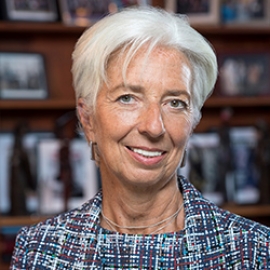
European Central Bank President Christine Lagarde said the unexpectedly early pickup in coronavirus infections is a “clear risk” to the economic outlook, in a sign that policy makers are gearing up for more monetary stimulus.
Markets have continued to rally despite the ongoing economic impact of the pandemic and the uncertainty of the upcoming U.S. election. We’re expecting increased volatility in the near term, and we think a cautious approach is the best course of action.
U.S. Treasury bonds are not likely to repeat their spectacular performance as income-producing risk reducers in portfolios of the past four decades. While bonds still have an important role to play in some settings (e.g., liability hedging for retirement plans), we believe investors should look at alternatives for diversification, including inflation-protected securities, gold, defensive currencies and stocks and option protection.