Lufthansa’s blockbuster report is just the latest signal that commercial aviation, one of the hardest-hit industries during the pandemic, may be ready to make a landing again in investors’ portfolios.
Today’s inflationary market landscape is fraught with risks for investors. Despite these circumstances, Scott Welch and Kevin Flanagan outline how bond investors can generate yield.
Review the latest Weekly Headings by CIO Larry Adam.
Economic growth and inflation have surprised to the upside so far in 2023, not only thanks to the reopening of the Chinese economy, but also due to the resilience of the labour markets.
Markets this month were unable to build upon January's momentum following speculation that the central bank will continue with interest rate hikes.
The US 30-year yield rose to the highest level since Nov. 16, Thursday, joining the rest of the Treasury market in offering investors a return of at least 4% after another batch of strong labor-market data.
January’s optimism about the bond market seems like a long time ago.
Strength in employment and inflation has caused markets to raise the implied terminal rate while still expecting the Fed to normalize policy – which is different from easing – in 2024.
U.S. stocks are subdued in pre-market action as the global markets remain choppy amid the backdrop of uncertainty regarding the ultimate impact of aggressive monetary policy tightening.
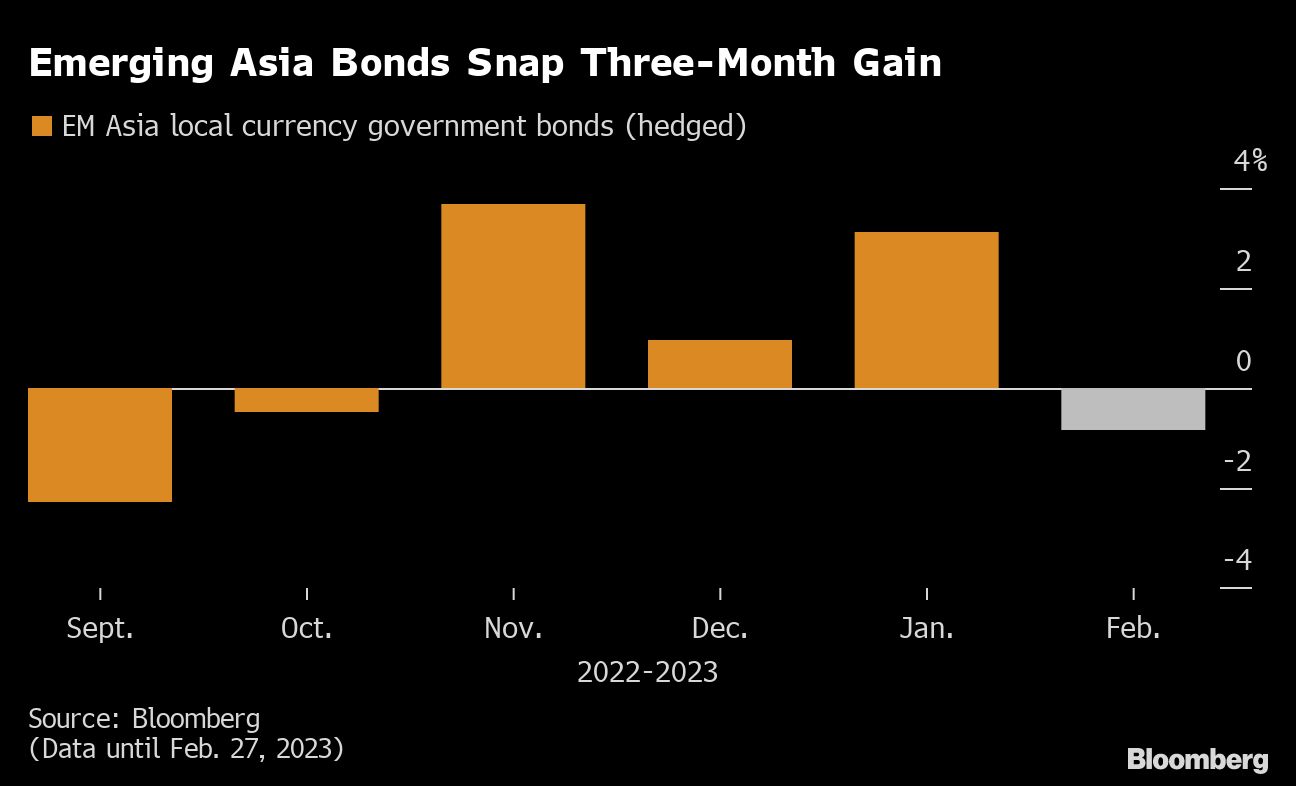
In just one month, emerging Asian assets have gone from a buy to sell. And all signs point to continued caution as March draws near.
Turbulent equity markets and lofty bond yields has cash back in high demand.
Wall Street’s vaunted leveraged finance desks are reeling. Billions of dollars in losses on mistimed loans have forced them to dramatically scale back lending, leaving the private equity firms that rely on them to help fund acquisitions in a bind.
There’s something of a ritual performed each time Federal Reserve Chair Jerome Powell speaks to the press: A reporter asks Powell about financial conditions; he says they’ve tightened a lot; the Wall Street crowd snickers.
Stock-market believers are looking past the roughest stretch in months for US equities and clinging to bets on a rally in the back half of the year once the Federal Reserve stops hiking interest rates.
A cohort of Wall Street’s emerging-market bulls is growing wary of calling a new dawn for riskier assets, opting for a more cautious approach to developing-nation currencies.
Close to 90% of the world’s central banks are at some point in the process of creating their own digital currency. Are you ready?
The credit cycle lies at the heart of our financial system.
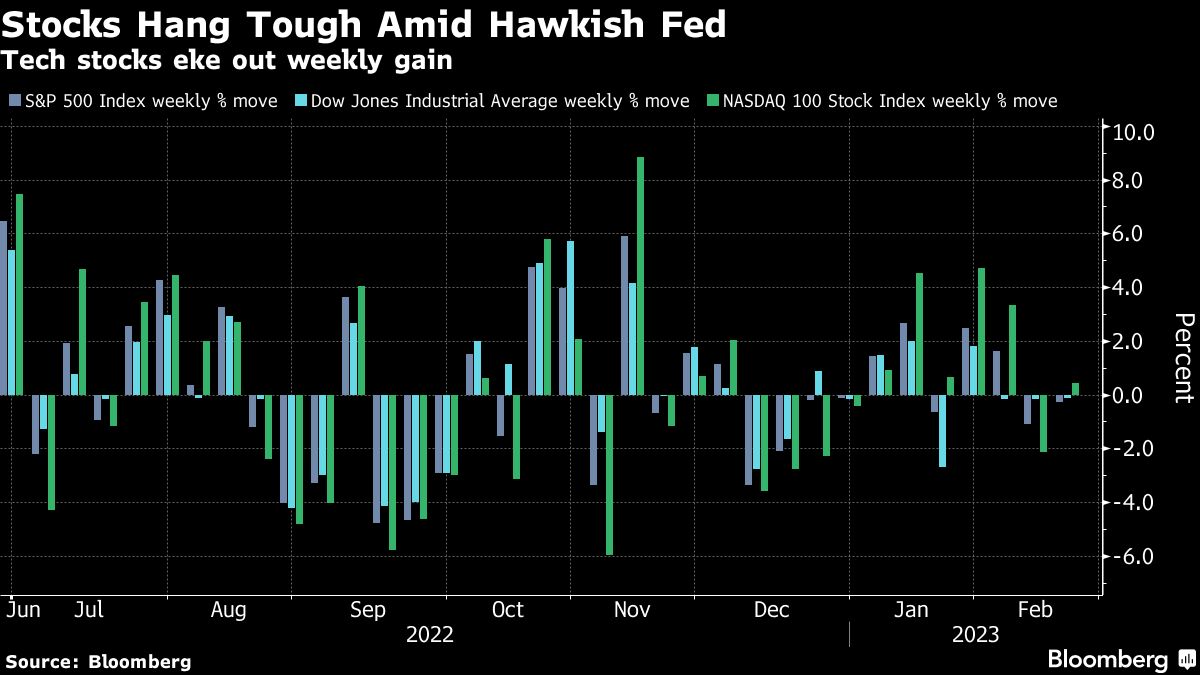
The S&P 500 is rising after falling the past four sessions as equites have shown some volatility amid festering uncertainty regarding the ultimate economic impact of aggressive global central bank tightening.
Bond markets are pricing in additional Federal Reserve interest rate hikes, acknowledging the central bank’s emphatic resolve to tame inflation despite the likely trade-offs.
Gold investors are betting the Fed will continue to be negligent with its monetary policy.
Global bonds are poised to erase all of the gains they made in their best start to a year on record.
A swift reassessment of how high the Federal Reserve will raise interest rates this year has rocked the bond market in recent weeks.
A malinvestment bubble has persisted for years, sucking in a considerable amount of capital from many sources.
The bond market finally got the Federal Reserve’s message on rates, while stock investors continue to ignore it, for the most part.
For the first time in nearly two decades, investors can earn more than 5% on some of the safest debt securities in the world. That’s competitive with riskier assets like the S&P 500 Index.
Investors continue to seek signs of a change in season—and clues about how the Federal Reserve might react to it.
Many investors have attempted to capitalize on the inverted yield curve by purchasing long-term Treasuries (assuming continued declines at the long end will cause their bonds to appreciate). In his latest commentary, Venk Reddy, CIO of our Sustainable Credit Strategies, explains why he feels this approach is materially riskier than investing in short duration fixed income.
Federal Reserve officials like to call their decisions “data dependent.” Business leaders say it a little differently, often “data driven.” The point, in both cases, is something like: “We consider relevant data when making important decisions.”
Gold is nearing its strongest buy signal in four months as the U.S. dollar eases off a rally that’s carried the greenback to its highest point since early January.
Professional speculators are turning risk-on by gobbling up technology shares, after largely missing out on the new-year rally in the stock-market’s biggest winners.
Review the latest portfolio strategy commentary from Mike Gibbs, managing director of Equity Portfolio and Technical Strategy.
Stocks mixed around mid-day as investors digest data.
Surging bond yields have been rattling investors for a year. Why they’re a problem for people hooked on an asset as volatile as equities can be seen by juxtaposing stocks with some of the safest securities in the world.
Drew O’Neil discusses fixed income market conditions and offers insight for bond investors.
Contrarian investing requires extra due diligence to identify traits that give investors confidence and conviction to invest in a company when everything and everyone is against it.
Most think so.
US consumer prices rose briskly at the start of the year, a sign of persistent inflationary pressures that could push the Federal Reserve to raise interest rates even higher than previously expected.
Following the 25 basis-point (bp) increase that the Fed announced on February 1, 2023, Franklin Income Investors Chief Investment Officer Ed Perks answered questions about his outlook on US interest rates as well as fixed income and equity securities for the rest of 2023.
For months now, an uneasy truce has prevailed between the Federal Reserve and stock investors.
US stocks are ripe for a selloff after prematurely pricing in a pause in Federal Reserve rate hikes, according to Morgan Stanley strategists.
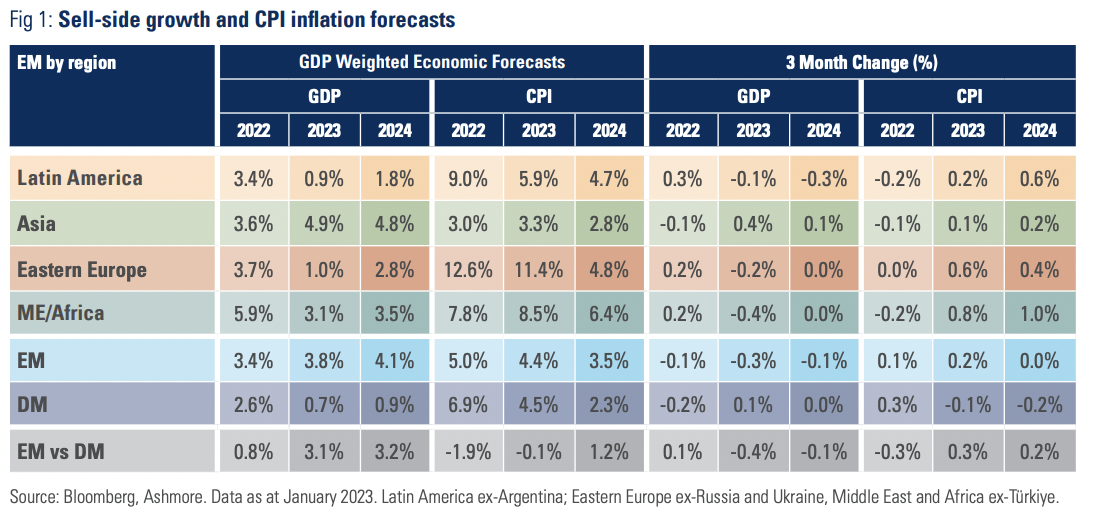
After withstanding a multitude of global challenges last year, emerging markets look poised for improvement as inflation recedes and the path of monetary policy comes into view.
Assumptions can be wise or unwise. They can be unduly optimistic or excessively pessimistic. Slightly different assumptions can produce giant changes in predicted outcomes. Assumptions are necessary but we shouldn’t make them lightly, nor forget we are making them.
This Super Bowl will also be remembered, I believe, as a major turning point in sports betting in the U.S. More than 50 million American adults are expected to bet on the game, the most ever and a remarkable 61% increase from last year.
Just weeks after professional stock pickers celebrated their best year since 2017, the wind in the stock market has shifted, upending their fate.
Despite enduring a brutal start to the year for their portfolios thanks to a surprise market rally, two top-ranked fund managers are sticking to the bearish views that made them winners in the 2022 stock crash.
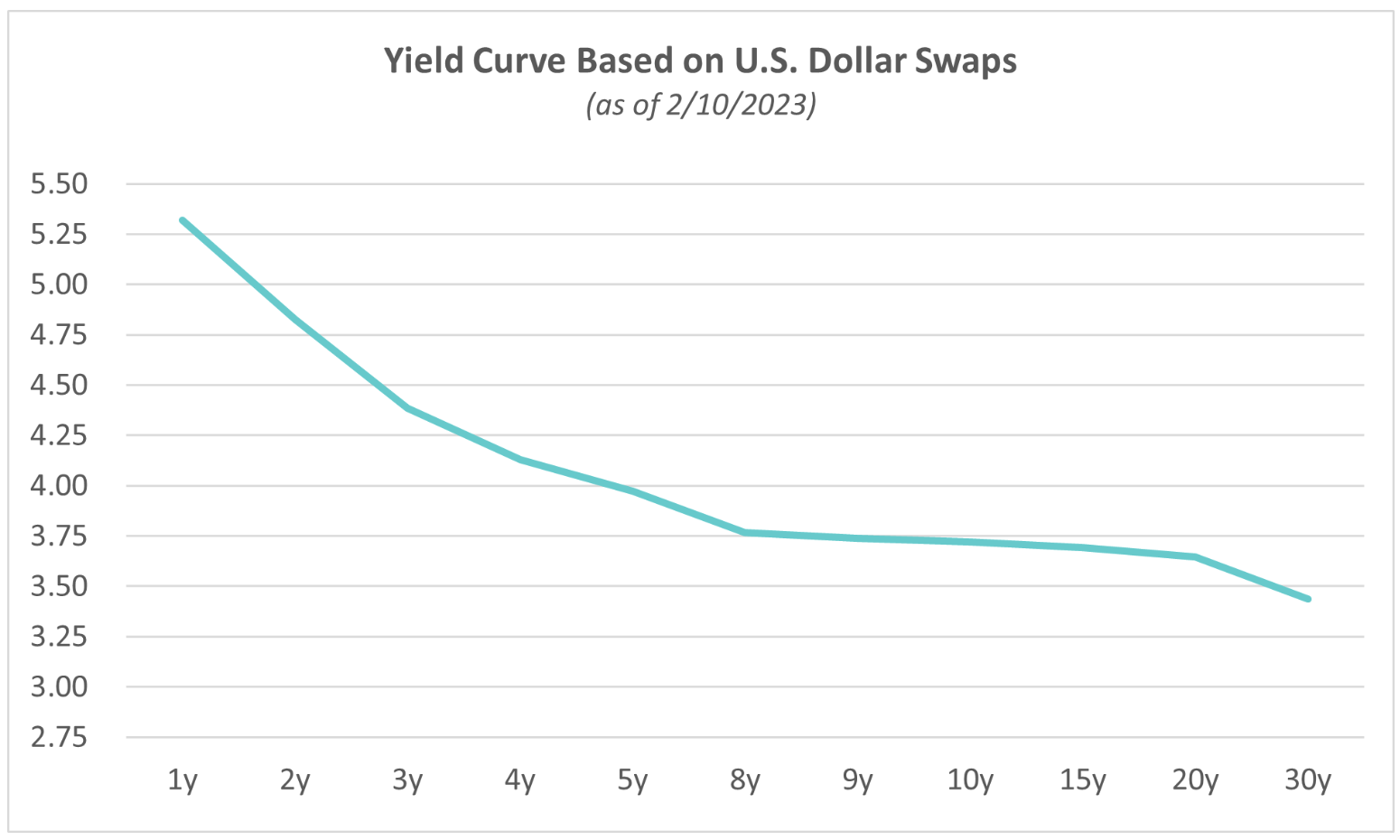
US government bond investors pushed two-year yields above 10-year yields by the widest margin since the early 1980s Thursday, a sign of flagging confidence in the economy’s ability to withstand additional Federal Reserve interest-rate hikes.
Mortgage rates in the US rose for the first time in more than a month.
Traders wagering this week on the Federal Reserve lifting its benchmark interest rate to 6% are still aiming way too low, according to Dominique Dwor-Frecaut.
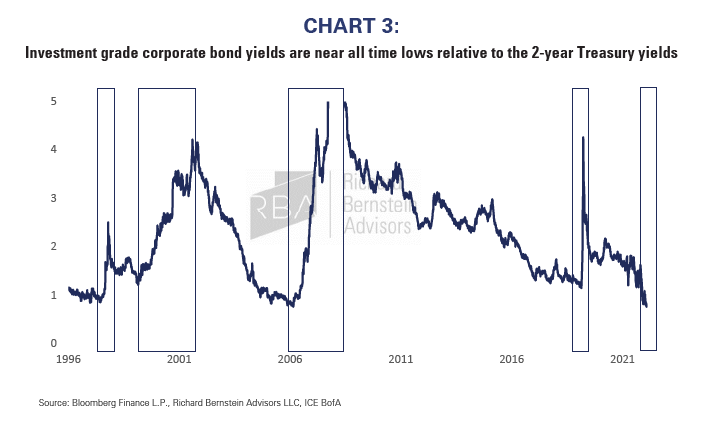
Read Michael Contopoulos' latest report highlighting opportunities outside of Investment Grade corporate bonds and why one does not need to own credit to generate income at the moment.