Something unusual is happening in shareholder activism. The grandmaster of the craft, Elliott Investment Management, has set out a strategy to push shares in US consumer icon PepsiCo Inc. up 50%.
Advisors and investors aren’t the only ones looking to pick up exposure to bitcoin these days. Even the most old-school and traditional firms on the market are starting to consider building exposure to the cryptocurrency.
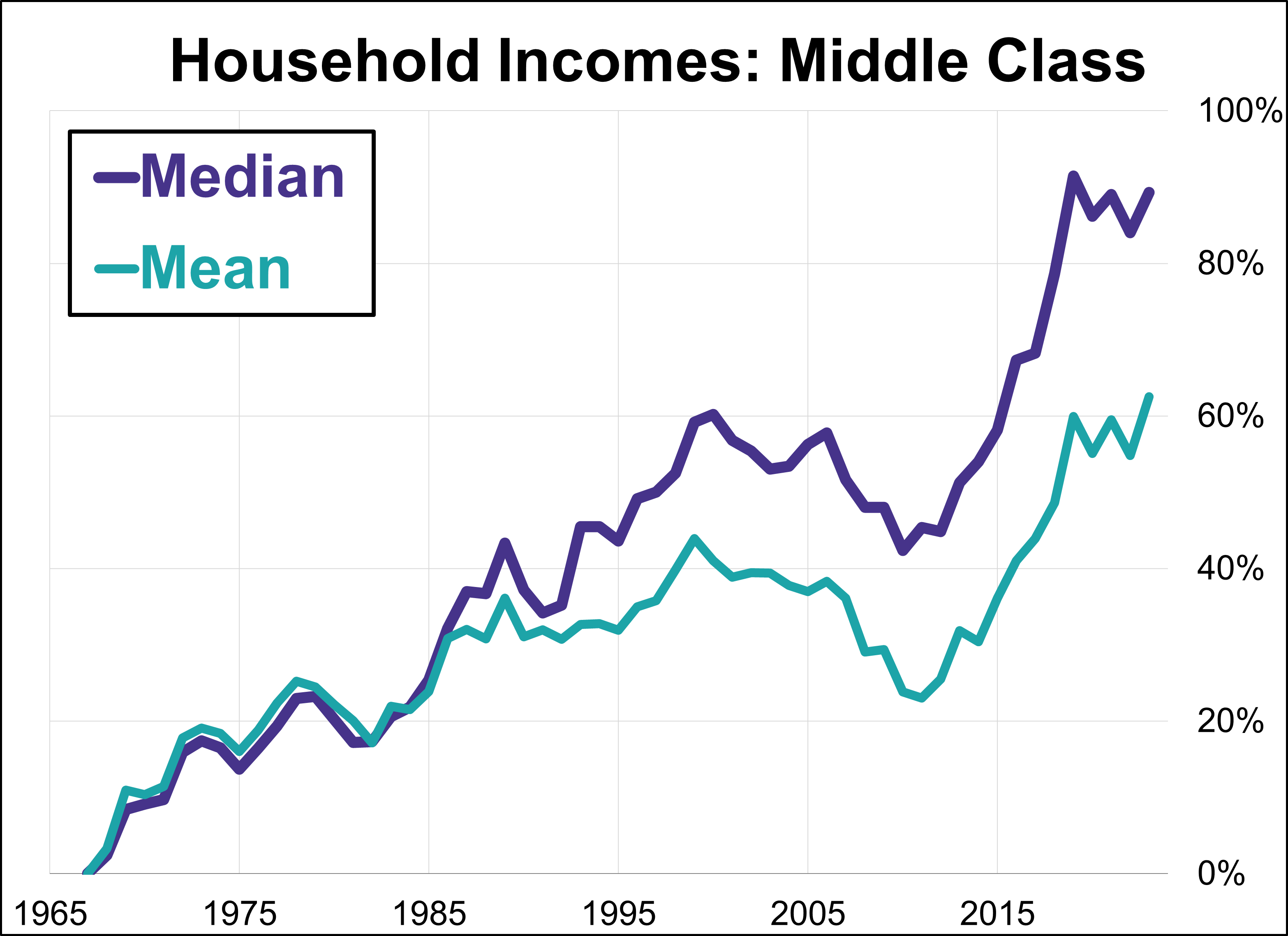
The median household is the statistical center of the Middle Class. Let's take a closer look at the Census Bureau's latest annual household income data with a focus on middle class income. In this update, we'll focus on the growing gap between the median (middle) and mean (average) household incomes across the complete time frame of the Census Bureau's annual reporting from 1867 to 2024.
A call between US President Donald Trump and Chinese President Xi Jinping is underway, in a discussion that promises to determine the fate of TikTok — and potentially ease trade tensions between the world’s two biggest economies.
Talking to the former Fox News host Tucker Carlson recently, Altman, the chief executive officer and co-founder of Open AI, was only half-joking when he said he hadn’t “had a good night’s sleep since ChatGPT launched” in November 2022.
The US Securities and Exchange Commission cleared the way for the first exchange-traded fund bundling a basket of cryptocurrencies, marking a breakthrough for the industry after a swath of approvals largely limited to Bitcoin and Ether.
The Fed lowered rates by a quarter of a percentage point (0.25%) at its September meeting, citing increased risks to employment; Powell emphasized ongoing inflation and a divided Committee, with future moves dependent on incoming data.
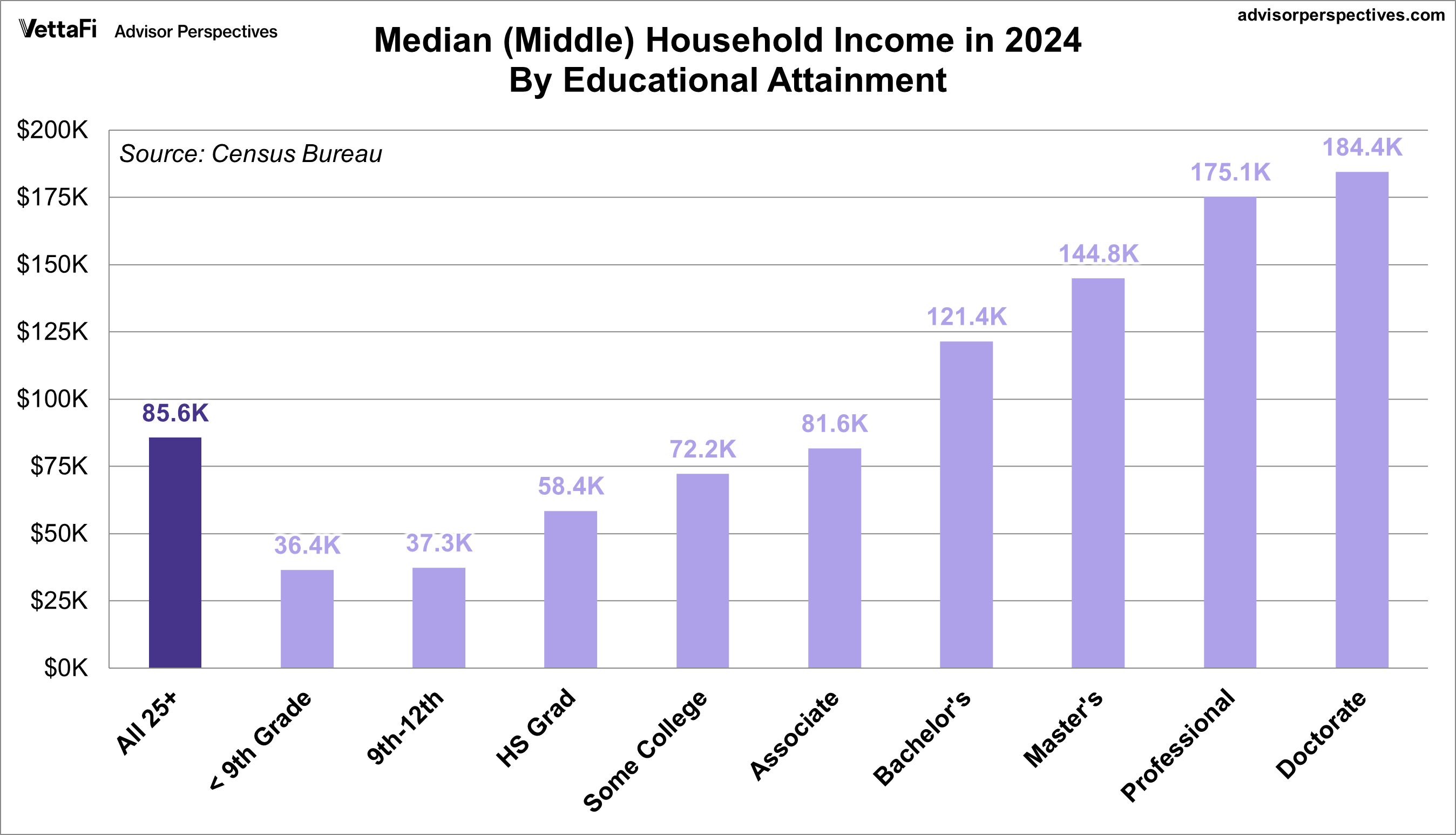
What is the relationship between education and household income? The Census Bureau’s 2024 annual survey data provides valuable insights into this question. The median household income for individuals aged 25 and older was $85,580, but how does this figure vary based on educational attainment?
The One Big Beautiful Bill Act (OBBBA) solidifies the current tax rate schedule, introduces new tax changes for individuals and businesses, and offers opportunities tax-smart strategies. Our Bill Cass shares some planning considerations for 2025 and beyond.
Target date funds represent the investment industry's best thinking about how people should invest for retirement.
The Federal Reserve cut interest rates today by 25 basis points (bps), following months of speculation about inflation, politics, and economic data.
The summary of economic projections and “dot plot” that reveals where members of the Federal Open Market Committee (FOMC) expect the economy and rates to go in coming years will be interesting given the recent slowdown in job growth and relatively little upward pressure on inflation.
Although the Fed does focus on its dual mandate of employment and inflation, there is no question that the primary focus right now is on the employment side of the equation, especially given the recent stalling out in new job creation.
As expected, the Federal Reserve cut its short-term interest rate, citing concerns about slowing job growth. Where Fed policy goes from here is less clear.
Nvidia Corp. agreed to invest $5 billion in Intel Corp. and said the two will co-develop chips for PCs and data centers, a surprise move to help prop up an ailing archrival that sent Intel shares soaring.
Artificial intelligence is poised to revolutionize healthcare. Its headline-grabbing potential in drug discovery is still years from materializing. However, its impact is already tangible in diagnostics and treatment selection. Leading this immediate charge is Tempus AI, a company focused on structuring the complex data needed to make personalized patient care a reality.
The U.S. Federal Reserve today implemented an interest rate cut of 25 basis points. The question remains: Just how aggressive will they be the rest of the year and beyond? That may cause anxiety for fixed income investors who have long been accustomed to higher yields in an environment of persistent, sticky inflation.
EQT AB is considering a US initial public offering of waste management firm Reworld that could raise $1 billion or more, according to people familiar with the matter.
Wall Street took profits in high flying technology stocks on Wednesday, rotating into cheaper corners of the market after the Federal Reserve delivered a widely expected interest rate cut under what Chair Jerome Powell described as an “unusual” situation of emerging labor-market weakness while inflation remains elevated.
The world’s largest publicly listed hedge fund is breaking ranks with tradition — and stepping into the ETF arena under its own name.
Over the last decade many of those advantages have been eroded. Pounding the pavement, smiling and dialing were no longer necessary. Because those hard-earned insights were being emailed, tweeted, livestreamed, YouTubed, podcasted and more.
In our last discussion, we spent some time reviewing the use of tariffs in the 19th century. Since contemporary discussions of tariffs usually begin and end with the Smoot-Hawley Tariff Act of 1930, there is a tendency to view tariffs myopically through the lens of the Great Depression.
The S&P 500 is often recommended as the default choice for individual investors. While it has delivered strong long-term results, today’s valuations and concentration raise important questions about whether it suits every investor’s goals.
One question we’ve been fielding quite a bit of late is what do you think the Treasury (UST) yield curve will do?
In recent years, pension funded status has markedly improved, with average funded ratios surpassing 100%.
Cinthia Murphy, Investment Strategist at VettaFi, recaps the ETF landscape so far in 2025 and shares her outlook for the rest of the year. Daniel Noonan, Executive V.P. and Head of the Wealth Management Consulting Group at Cohen & Steers, discusses the firm’s entry into the ETF space, the growing momentum behind active management, and ETF strategies focused on real assets and alternative income.
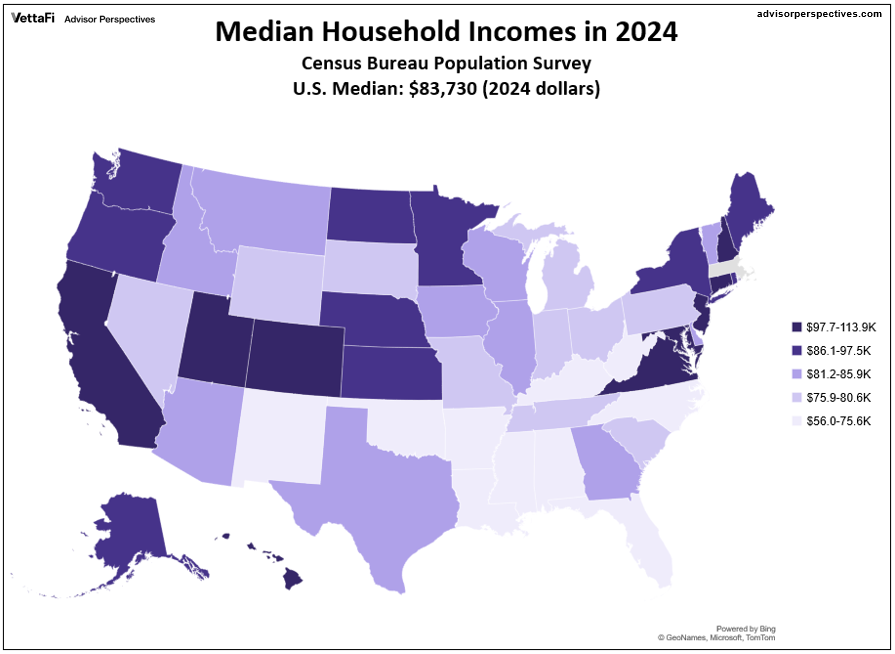
The median US income in 2024 was $83,730, up from $22,420 in 1984 — a 274% rise over the 40-year time frame. However, if we adjust for inflation chained in 2024 dollars, the 1984 median is $60.420 and the increase drops to 39%.
What a year it’s been for gold investing! As we approach the end of the third quarter, gold prices are up nearly 40% year-to-date, triggering upward forecast revisions by big firms, and attracting investor dollars on its way up.
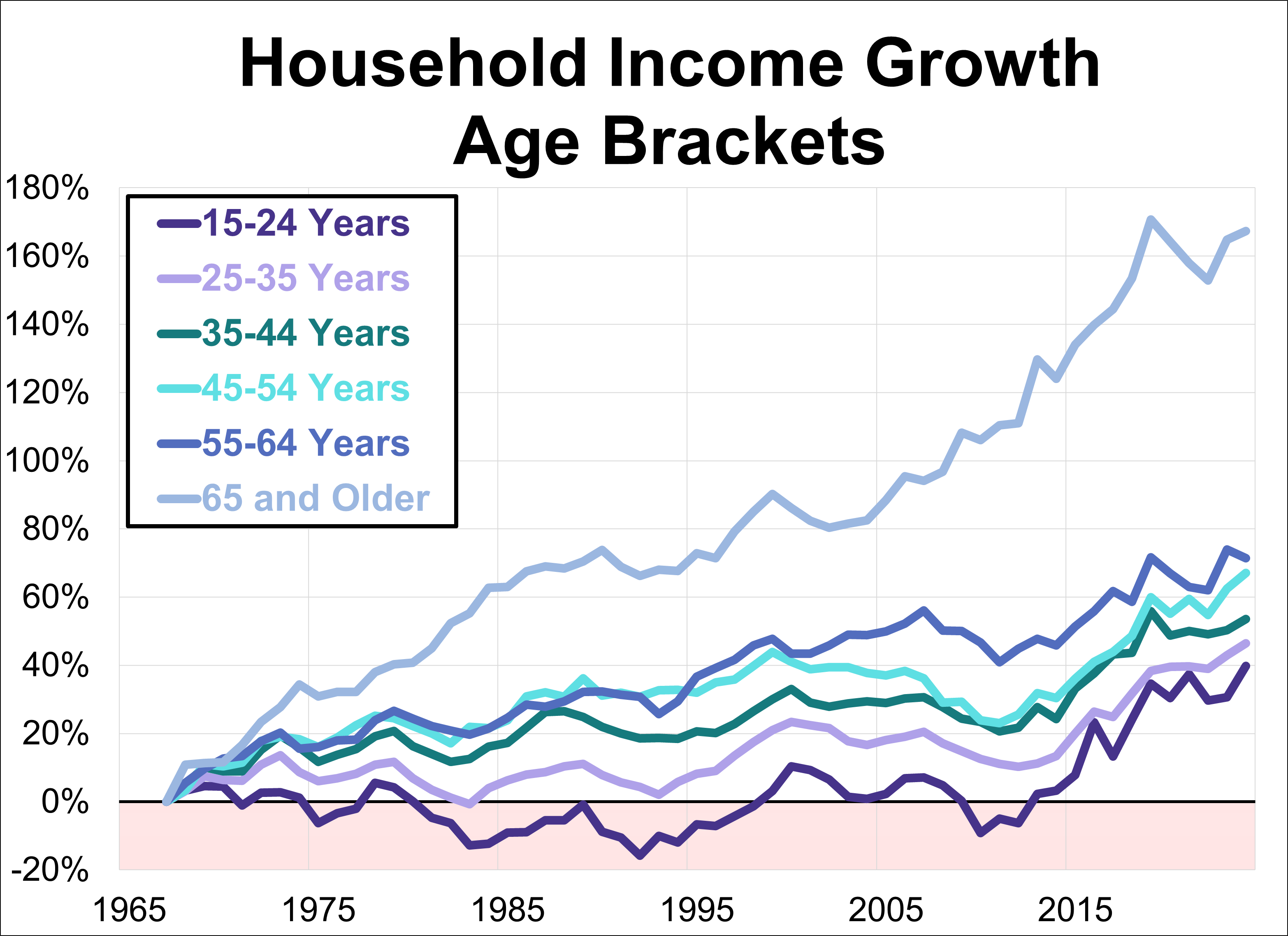
Our commentary on household income distribution offers some fascinating insights into average U.S. household incomes, but misses the implications of age for income. In this update, we examine household income with a focus on age bracket.
A stablecoin bidding war on one of crypto’s fastest-growing platforms is offering a preview of the industry’s next phase — and who might control it.
Customization can significantly impact after-tax yield. Explore powerful tools for tailoring investment strategies to meet unique client objectives.
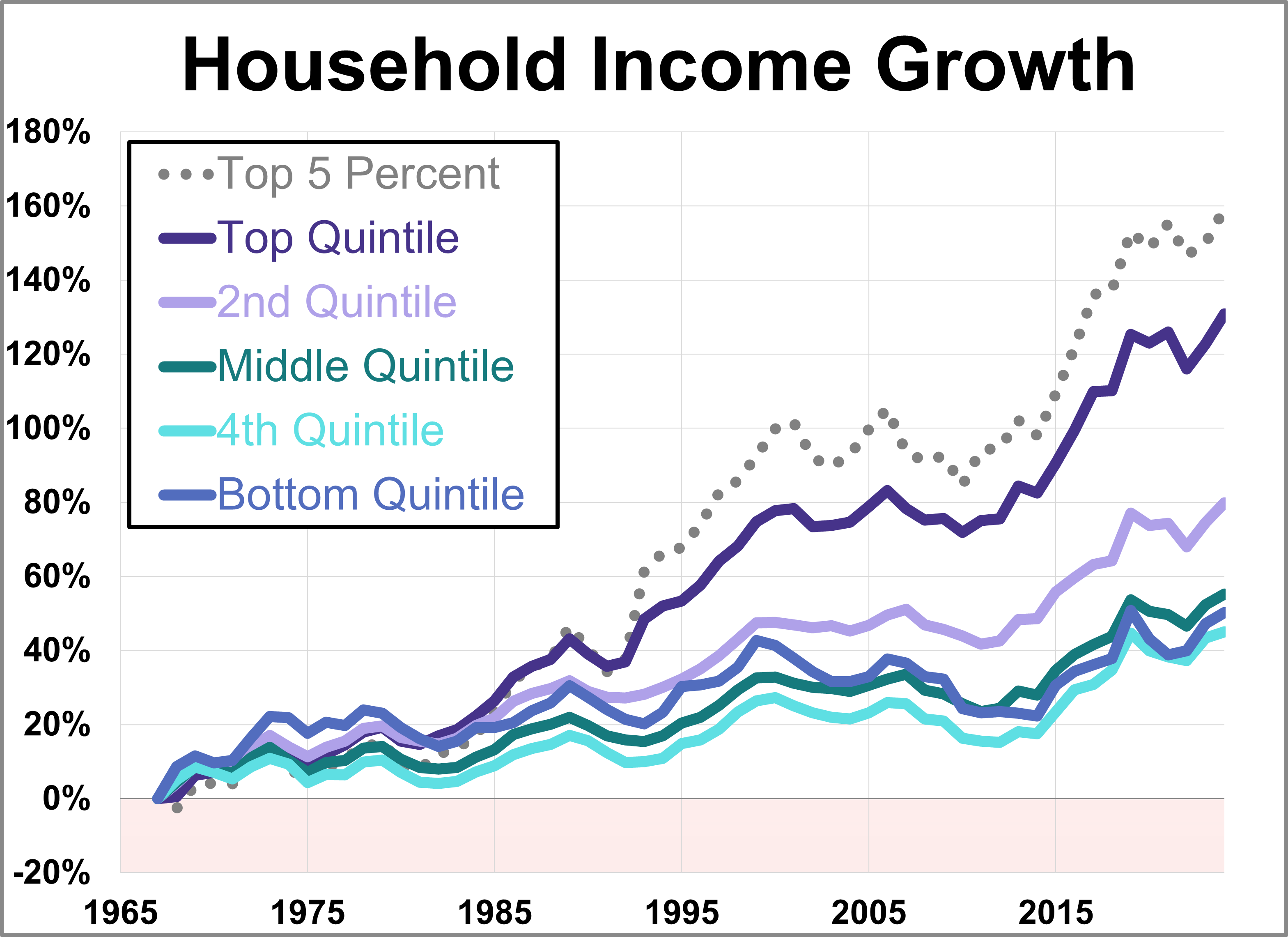
The Census Bureau recently released its annual report on household income data for 2024. The mean (average) household income for the middle quintile rose 4.5% to $84,390. Let's take a closer look at the quintile averages, which date back to 1967, along with the statistics for the top 5%.
Global bond markets have sold off recently due to uncertainty surrounding key political changes most notably in France and Japan.
Nick Goetze discusses fixed income market conditions and offers insight for bond investors.
The late-summer calm in financial markets shows an undercurrent of optimism. Stocks have been on a tear, with the S&P 500 rebounding strongly to notch roughly 18% gains for the year, while overseas equities are up even more.
Greater mega-cap stock exposure carries significant upside risks, but concentration can also work against investors—helping make the case for diversification in portfolios.
The U.S. economy in late 2025 presents a complex but increasingly coherent picture. Labor market dynamics, trade policy uncertainty, and evolving monetary conditions are each contributing to a recalibration of the economic landscape.
Treasuries have powered into first place among major sovereign bond markets this year as the prospect of a new round of Federal Reserve interest-rate cuts overturns widely held bearish views on US debt.
Technology has made customization operationally viable across entire books of business. But the real opportunity lies in how it reshapes the advisor/client relationship. When complexity is handled behind the scenes, advisors can focus on deeper conversations, clearer guidance, and lasting alignment.
With the Federal Open Market Committee (FOMC) meeting on the horizon, we’ve taken a closer look at recent economic developments to better understand the landscape Federal Reserve (Fed) officials will be navigating during the two-day meeting, which begins September 16.
In spite of what appeared to be relatively good data, many polls throughout the 2024 election cycle showed more than half of all voters rated the economy as “poor.” That left the Biden/Harris team often wondering why they couldn’t get credit for what official statistics said was a robust economy.
We will examine five major investment strategies: value, growth, momentum, dividend, and index investing. Each comes with strengths and weaknesses. More importantly, each offers lessons from history’s greatest investors, including Benjamin Graham and Warren Buffett.
VettaFi’s Head of Research Todd Rosenbluth discussed the Thornburg Multi Sector Bond ETF (TMB) on this week’s “ETF of the Week” podcast with Chuck Jaffe of “Money Life.”
We steer our financial course through life, choosing how much to spend and how to invest what’s left, periodically updating our choices as circumstances evolve. This is the essence of financial planning: specifying in advance a desired spending and investment policy conditional on relevant aspects of our life, varying investment opportunities, and our preferences for the benefits derived from our wealth.
Until this year, U.S. stocks had consistently been the best-performing asset class over the past 15 years, so diversification did not work. And as a result of that runup, the U.S. stock market became very expensive. However, this year, diversification outside the U.S. into foreign stocks has added value, and gold is shining very brightly.
Conversations with clients about alternatives should focus on their specific goals, whether that's potentially enhancing returns, reducing risk, generating income, or achieving better diversification.
Clients work a lifetime for financial freedom. Once retirement comes, they often have a large nest egg to spend. However, there can also be a huge fear of spending the portfolio down.
T. Rowe Price Group Inc. has secured financing from Walmart Inc. heir Lukas Walton’s impact platform for a new corporate bond fund, which will support investments in themes including water security and marine protection in emerging markets.
China ruled that Nvidia Corp. violated anti-monopoly laws with a high-profile 2020 deal, ratcheting up the pressure on Washington during sensitive trade negotiations.